

Improve your swimming technique for next year
Paul Newsome explains why stroke technique matters and how to improve it for next year’s open water swimming season
As those of you up in the northern hemisphere head into the winter season, many of you will shift your focus away from performance-driven sessions into more technical work. It’s the perfect time to lay the foundations for 2025 by honing in on the fundamentals of your stroke technique. While it may be tempting to rest or maintain basic fitness through light swimming, dedicating some time now to improving your technique will pay significant dividends when you ramp up your training next year.
Why good stroke technique is so important
From my years of coaching and personal experience, I’ve seen how a swimmer’s technique can be the defining factor in their progress, speed, and overall enjoyment of the sport. Good technique not only helps you swim faster, but it makes swimming more efficient and enjoyable. One of the key benefits of refining your technique is injury prevention.
Everyone regales in the fact that “swimming is a sport you can do for your entire life”, and whilst it is arguably better than running on your joints, there are technical issues that you need to be aware of to swim pain-free and efficiently.
Poor technique is like driving a car with flat tires. You’re expending more energy than necessary and inviting strain that could easily be avoided. Whether it’s shoulder pain from a thumb-first entry or cross-over, lower back issues due to poor posture and snaking in the water, or elbow pain due to too much emphasis on the final push at the back of the stroke, many common swimming injuries are rooted in technical flaws.
As an open water swimmer and triathlete, I learned this the hard way. I remember training for my first Rottnest Channel Swim in 2008/9 and realising that my shoulder pain wasn’t from a lack of strength, but from a left-hand thumb-first entry and preference for breathing to the right which led to a significant cross-over in front of my head. A simple correction to the angle of my hand as it entered the water allowed me to swim further, faster, and pain-free. From that moment on, I became a staunch advocate for technical refinement (and the ability to breathe to both sides), both for myself and for my swimmers.
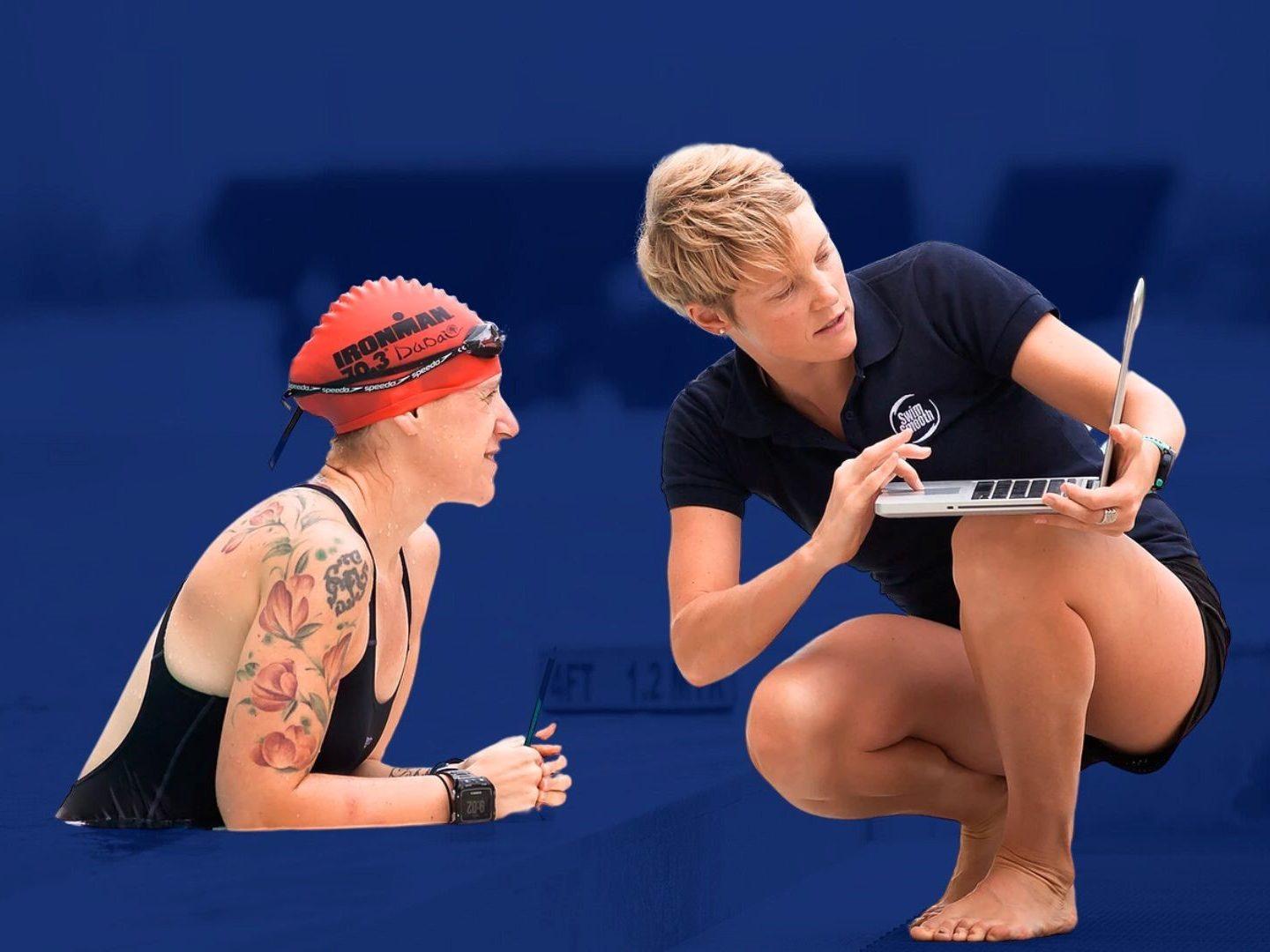
So important in fact is injury prevention that all Swim Smooth coaches are versed in exactly how to help someone remedy this within their stroke technique via video analysis*, which is a great thing to consider at this time of year to expedite your development. People always say after the session that they’d wished they’d done one years earlier!
Where most adult swimmers can improve
For adult swimmers, the biggest scope for improvement typically lies in three areas: more balanced breathing, reducing drag and increasing effective propulsion. Let’s break these down.
- Balanced breathing:
Breathing is often overlooked, but it’s vital for efficient swimming. Many swimmers only breathe to their dominant side, which can create imbalances in their stroke and lead to overuse injuries on one side of the body, just like I experienced for my first marathon swim. Bilateral breathing (breathing to both sides) can help even out your stroke and improve your rhythm. Start with simple drills like 6-3-6 where you kick for six strokes, swim three strokes, and breathe to alternating sides. This also helps train you to control your breathing in more challenging open-water scenarios. - Reducing drag:
Many (male) adult swimmers struggle with maintaining a streamlined, horizontal body position, especially in the pool where non-saline water can really mean that the legs can drag. Pop a wetsuit on (or swim in the sea) and this issue is usually remedied quite easily, but it still makes sense at this time of year to address this in the pool as any improvement will help. A common issue related to point 1 that causes this is holding your breath, which causes the hips and legs to sink, creating unnecessary drag. Simply remembering to exhale smoothly under the water will help your breathing feel more relaxed and reduce some of the buoyancy that keeps your chest too buoyant. - Increasing effective propulsion:
Finally, the catch is where many swimmers miss out on generating significant propulsion. The catch refers to the point in your stroke where your hand ‘catches’ the water and begins to pull you forward. I like to think of it as “gathering the water” – pressing the water back behind me. Many swimmers have a poor catch because they drop their elbows or over-reach. If you feel like your hand is slipping through the water, this might be happening to you. A drill I use often with my squad is the Doggy Paddle Drill, where swimmers focus on the feeling like they’re pulling themselves along a rope or climbing up a step-ladder from one rung to the next. This gives a sense of anchoring your hand in position and then your body moving past that point.
Exercises to identify common faults
Identifying your own technical faults can be tricky without the guidance of a coach, but there are several self-assessment techniques you can try.
- Stroke contrasts: are a powerful tool for improving your stroke technique by heightening awareness of inefficiencies. By intentionally performing the correct technique, followed by the wrong technique, and then returning to the correct form, swimmers can immediately feel the difference in efficiency, propulsion and ease. This method brings to light subtle errors in body position, catch, or breathing that might otherwise go unnoticed, helping swimmers make the necessary adjustments to refine their stroke and swim more effectively.
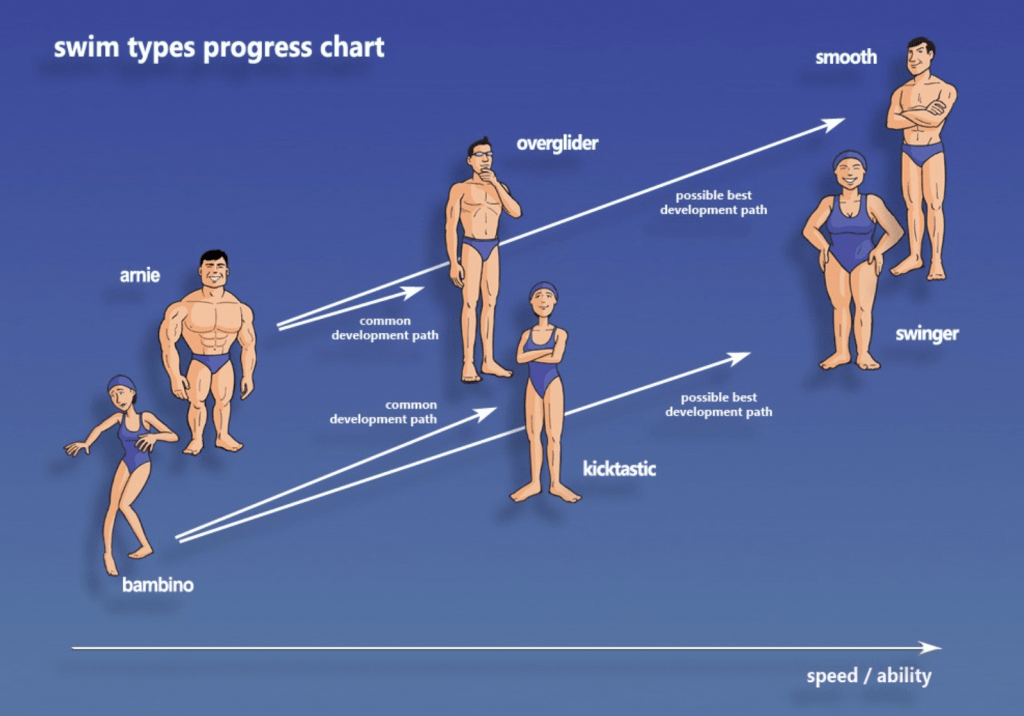
- Use Swim Smooth’s Swim Type System: The Swim Smooth Swim Type System is another excellent tool for selfassessment. It helps categorise your stroke tendencies into six types, each with a different set of recommendations for improvement. For example, a swimmer who ‘over-glides’ may need to work on maintaining momentum and improving their catch, whereas someone who is more of an ‘Arnie’ may need to focus primarily on their body position above their propulsion.
Technique-based sessions to fix these problems
Here’s a technique-based session you can try this off-season to address common stroke faults.
300m easy warm-up, focus on good stroke rhythm Perform the following six stroke contrasts in turn as: 100m introducing stroke flaw + 15 seconds rest + 100m focusing on good technique in that area
- Putting on the brakes: Bad – Drop the wrist and show the palm forward, braking your stroke. Good – Keep the hand lower with fingertips slightly below the wrist for better rhythm.
- Pushing down during the catch: Bad – Press down in front of the head, lifting the body and sinking the legs. Good – Bend the elbow and press the water backward to create more propulsion.
- Thumb first hand entry: Bad – Enter the hand thumb first, causing shoulder rotation and potential injury. Good – Enter fingertips first with the hand facing down to protect the shoulder.
- Lifting the head to breathe: Bad – Lift the head out of the water, sinking the legs and straining the neck. Good – Keep the head low, breathing into the bow wave for better balance and catch.
- Holding breath underwater: Bad – Hold your breath until the last moment, creating tension and CO2 buildup. Good – Exhale smoothly and consistently to feel more relaxed and aerobic.
- Tapping big toes together: Bad – Allow the legs to scissor kick or drift apart during the stroke. Good – Lightly tap the big toes together with a gentle flutter kick for proper alignment.
200m easy cool down, focusing on correcting the biggest flaw you diagnosed in your stroke. Only think about a single aspect, don’t try and focus on several things at once!
Get focused for 2025:
By incorporating technique-focused sessions like this into your weekly routine, you’ll build a strong technical foundation for 2025. In my years of coaching, I’ve found that swimmers who prioritise technique over pure speed in the winter season are not only faster, but healthier and more injuryresistant when race season comes around. Take this time to fine-tune the small things, and you’ll see the benefits when you’re back in full training mode.
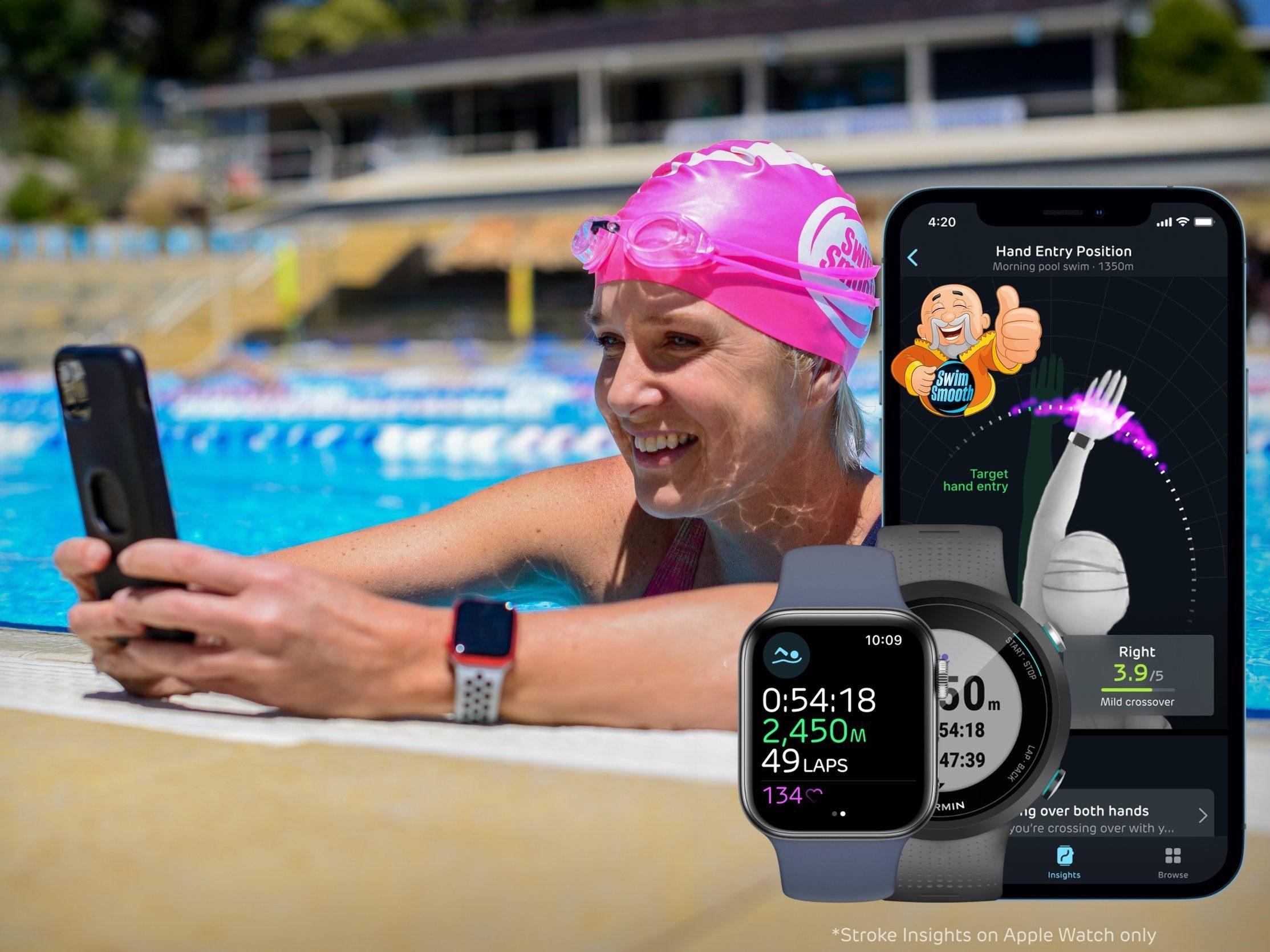
*If you can’t make it down to a session to have your stroke assessed, you could instead try the Stroke Insights feature within the Swim Smooth GURU which uses the accelerometers and gyros within your smartwatch to map out what your stroke is doing to give you instant feedback after your session on your technique and how to correct it DIY-style.

Outdoor Swimmer
Outdoor Swimmer is the magazine for outdoor swimmers by outdoor swimmers. We write about fabulous wild swimming locations, amazing swim challenges, swim training advice and swimming gear reviews.