

So, you want to be a swim guide?
Guiding swimmers in the water, around the world or locally in the UK sounds like a dream job, but what does it take to be a swim guide and is it as great as it looks? Ella Foote shares what it is like when swimwear is your workwear
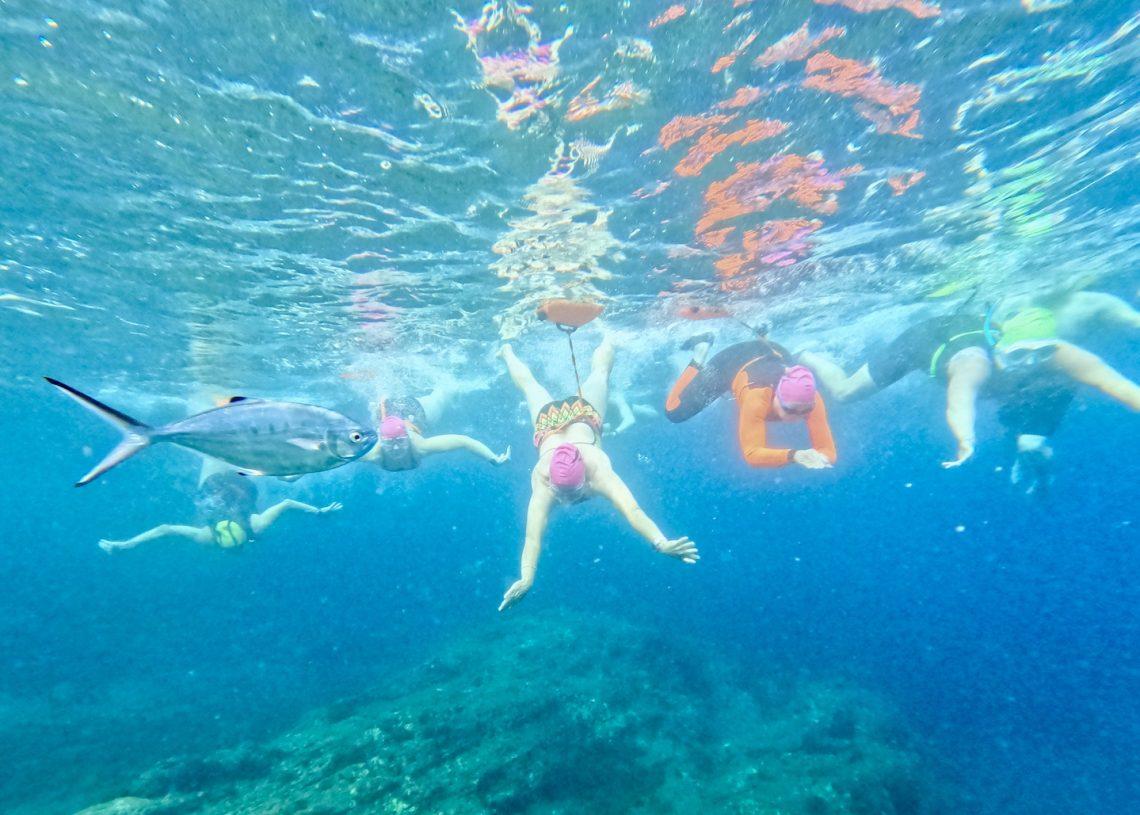
If you have ever been on a swimming holiday hosted by expert guides and swim coaches or paid for a swimming experience with one of the many experts we have across the UK and throughout the world, you might have wondered how you could do a similar role or romanticised how a life as a swim guide might look. But behind every Insta-perfect image of a group of swimmers in an interesting location there is a whole lot of work that is unseen by many.
Merging work and pleasure can be both a joy and challenge. If your hobby becomes your job, do you still get the enjoyment and escape from the activity when you are not working? We all know the age-old saying about doing what you love and not working a day… but when money is being exchanged, it doesn’t matter what you do, you have a duty to deliver a product or service. Swim guiding is all of these things – full of joy, community, adventure and growth, but it also comes with a huge responsibility. Yes, pursuing your passion can make work feel less of a burden, but even work you love can still involve challenges, effort, stress and burnout – especially if not balanced with other aspects of life.
What is a swim guide?
In simple terms, a swim guide is a person who leads or supports others in open water swimming experiences like oceans, lakes, or rivers with a focus on safety, navigation, and enjoyment. As outdoor swimming has become increasingly popular, there have been huge developments in products, services and expertise on offer. Like with other popular pursuits, as an industry grows, so do the people in it. There is a blend of psychological, social and economic forces in action when something becomes fashionable and people don’t just rush to participate, but they also are quick to teach or guide others.

When I set up my swim-guiding business, Dip Advisor, in 2018 there was a huge gap in what was being offered to casual swimmers looking for adventure and experiences without the need for long, or challenging goals. Many people could swim but didn’t know ‘how’ to swim in open water and just wanted somewhere safe to swim, play and explore with the knowledge and comfort that someone else had scoped out the risk and was on hand to help if needed. While there is still demand for similar, there are more people who offer experience and expertise within communities. Peer support groups like The Bluetits, Mental Health Swims and open water venues are stepping into this space, which is changing the swim-landscape again.
Suzanna Cruickshank, known as Suzanna Swims, is an outdoor swim guide based in the Lake District and author of Swimming Wild in the Lake District. She set up her business in 2016 and has seen many ebbs and flows in the industry since. “The best thing about the job is facilitating experiences for people who wouldn’t otherwise do it – those who are anxious, inexperienced and those with a lack of local knowledge,” says Suzanna. “Seeing how your skills and knowledge make a positive difference for people is really rewarding. However, it can often feel like it isn’t a legitimate way to earn a living and you are doing it for altruistic reasons even though the set-up costs are eye watering. Now there is also competition with an overwhelming amount of content on social media, with dangerous online advice from inexperienced influences and there is a trend for confidence over competence.”
Why would you pay someone to swim outdoors?
On a recent trip with SwimQuest, another tourist stopped to chat to ask what we were doing and when I explained we were all on a swimming holiday they seem surprised.
“Why would you pay for someone to take you on holiday to swim,” they said. “Just go on holiday and then go swimming,” they continued with a laugh. It isn’t the first and won’t be the last time I am challenged about the need for a swim coach, guide or expert and perhaps you agree. But here’s the thing, when you have confidence in your own ability, or have a decent amount of personal experience in any discipline, it is easy to forget what it is like to be a beginner or unskilled in your chosen activity.
Today, we have access to a huge amount of free information, instruction and lessons. If you don’t know how to do something, you could search the internet and there will be someone telling you how or showing you on a video. But with swimming, especially outdoors where the environment and conditions can change in an instant, there is a level of risk that, thankfully, many people are not willing to take without proper guidance.

Swimming guides, experts and coaches don’t just rock up and take you swimming. A good guide will have a wealth of experience and skills they have learnt by doing and learning through qualifications that can keep you and them safe. A fellow swimmer may be kind enough to take you to a swim spot they wish to share, or keep you company on a more adventurous swim, but what if something went wrong? Do either of you have the knowledge and skills to make a risk assessment, rescue, problem solve or administer basic first aid?
Too often, especially in spring and summer, we read headlines about swimmers getting into difficulty and often fatalities could have been avoided with some basic information or consideration from those involved. A good guide will have a lifeguarding qualification that meets the needs of the location they are swimming, will know first aid including CPR, will understand and have knowledge of outdoor environments and how to mitigate risk. They will have insurance, perhaps a swim teaching or coaching qualification. They will know their own abilities and limitations and will take time to understand yours. Their role is to facilitate the best and most joyful experience but also keep you safe.
Location, location, location
One of the best things about swim guiding is being able to support and offer swimmers opportunity to swim in beautiful, adventurous, challenging and exciting locations. This could be a simple dip in a new-to-them location or supporting a personal challenge like crossing a Channel or swimming the length of a lake. There are some brilliant swim-holiday companies across the world such as SwimQuest, The Big Blue, Strel Swimming Adventures, SwimTrek and Active England Tours. These all offer longer swims between islands, encounters with local wildlife, swimming in clear-blue waters, companionship and support. These business spend time scoping out locations, mapping swims, risk assessing, training and organising clients. People who attend these trips often talk about life-changing experiences and meeting new friends, all while doing what they love – swimming.
Paul Parish is a swim guide and coach for SwimQuest as well as supporting swimmers who take part in charity swims for Aspire. Paul was late to learning to swim properly, not mastering a proper stroke until his late 30s, but perhaps that is what makes being supported and guided by him so enjoyable. This year Paul is taking on his own solo crossing of the English Channel, which is fitting after he has supported so many other swimmers with their goals. “I love seeing the transformation in swimmers over the course of a week on a SwimQuest trip,” says Paul. “People really grow in confidence and by day three you begin to see people transform and realise their own potential. Often people will say: ‘I can’t believe I did that / swam that far/ kept up with the group / learnt that.’ You really feel like you have been the catalyst for good.”
Blame it on the weatherman…
Working outdoors in the elements isn’t for the faint-hearted. As well as learning, understanding and scoping out forecasts and conditions leading up to a swim and before anyone dips a toe, you also have to be actively monitoring the situation as soon as swimmers enter the water. When you start really examining a swim location, you will see and understand there are often thousands of risks to people when swimming outdoors. A swim guide’s job is to mitigate the risk and in some cases, not allow swimming to take place at all, which for clients can be disappointing and frustrating. “There’s nothing more frustrating than knowing the swims you could offer but can’t put into practice because there’s a force seven blowing across the sea and all you can do is try to be creative with guests in other ways,” says Paul.
It’s difficult to disappoint people when they have paid good money and are willing to get in the water regardless. But a good swim guide puts the wellbeing and safety of the group above all else. As frustrating as it can be, there is always another chance to swim or a different way to enjoy a location; it is truly better to be safe than sorry. Because, bluntly, the alternative is putting people in danger and having to deal with a fatality. I have often made decisions that have been on the edge of what might be seen as unsafe by some but overly cautious by others. Making a risk assessment is about so much more than the swimmer and the location. It is about people’s ability to cope in the conditions based on their skill and experience. It is about ever-changing conditions and environmental factors, some you can see, some that may be upstream or across the ocean.

Gilly McArthur (pictured above left) is a cold-water swim coach working predominantly in the Lake District and Scotland. “I love finding opportunities to create work in the outdoors on my own terms,” she says. “I love giving people that first experience in cold water; it’s like throwing a pebble into still water and seeing where the ripples go. Helping people believe they are greater than they think and can achieve more is a true gift, and I never tire of seeing people’s faces light up with that experience. But, the paperwork, risk assessments, health waivers and keeping up with relevant qualifications can be arduous. The weather, especially in the north, can be tough. Sometimes, I simply don’t want to be outside getting wet with strangers!”
Sounds wild, I want to do it…
There isn’t an exhaustive list of qualifications that you need to be a swim guide, coach or expert. That is the scary thing, there isn’t one governing body to monitor, protect you and/or your clients, which means it is your job to do the research, work and qualifications required in the places you wish to guide. If you want to take people up a mountain to find remote swim spots, a mountain leader qualification is probably a good idea as well as a lifeguarding certification. If you are hoping to largely work in and around an ocean, you will need a different set of skills.
Here are some organisations to explore:
Swim teaching and coaching
• STA (Swimming Teachers Association), sta.co.uk
• Swim England, swimming.org
Lifeguarding and water safety
• RLSS (Royal Lifesaving Academy), rlss.org.uk
• RNLI (Royal Lifeboat Institute), rnli.org
• Surf Lifesaving GB, slsgb.org.uk
Mountain & outdoor skills
• Mountain Training, mountain-training.org
Boating & motorcraft
• RYA Royal Yachting Association, rya.org.uk

Ella Foote
Ella is renowned outdoor swimmer and journalist. As well as leading the editorial, digital and experiential outputs for Outdoor Swimmer she is also Director of Dip Advisor, a swim guiding business helping people enjoy wild water. Ella also teaches swimming to children and adults, is an Open Water Coach and RLSS Open Water Lifeguard.


