


Masters swimming: get ready for the pool
Add a new dimension to your swimming with Masters racing, says Simon Griffiths
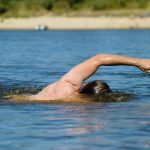
As outdoor water temperatures cool, and open water races wrap up for the year, my focus turns to the pool. Those long river swims of the summer get shorter, until they are reduced to brief cold plunges. Unless I’m lucky enough to escape to another country, there are no more open water events to look forward to for about six months.
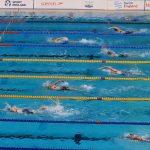
However, if you’re interested in racing in the pool, there’s a good selection of Masters events to choose from. If you watched any of the Olympic swimming you’ll be familiar with pool racing. Masters swimming events are just like the Olympics, except we’re older, slower and 95 per cent of the spectators are your fellow swimmers. Also, they are mostly contested in 25m pools, rather than 50m.
Pool racing events take place year-round but because I’m often committed to open water events in the summer, I usually only do them in winter and spring.
Where does Masters swimming take place?
In England, The National Masters Championships takes place at Ponds Forge in Sheffield at the end of October. It’s one of the highlights of the swimming year. Events take place over three days and it’s a good opportunity to test your fitness and catch up with swimmers from around the UK.
To race at National Masters, you must have a recent qualifying time from a sanctioned event. It’s not the place to go for your first pool racing experience. Unless you’ve already got a qualifying time, it’s probably too late for this year – but now is a good time to start preparing for next year.
To do that, you will want to take part in a licensed event. Check out the Swim England listings to find something suitable (or search the website of your local national governing body if not in the UK). You will also need to be a member of your national governing body. The easiest way to do that is usually through an affiliated masters swimming club.
How to get involved
Joining a Masters club is also the best way to practise for pool events. To perform at your best, you should practise starts and turns, and tune up your sprint gears. A 50m splash and dash is swum very differently to an open water 5k.
Pool events require a different sort of courage to open water ones. In open water, you might be worried about the distance, water temperature or conditions. In a pool race, you feel exposed, standing on a starting block ahead of an empty lane. There’s nowhere to hide when you swim. Your finishing time is displayed for everyone to see.
But don’t be put off. Nobody pays much attention. And while everyone looks as if they know what they are doing, they often don’t. There are often swimmers who take up the sport later in life doing an event for the first time. The referees and officials know this and create a supportive environment.
If you want to compete at a high level, you would need to dedicate a lot of time to training and refining your pool racing skills. Luckily, there’s space in masters swimming for a wide range of abilities, so don’t let inexperience put you off. You don’t need to train like an Olympian to take part and enjoy the fun.
How to prepare for Masters swimming
Try adding some of the following to your swimming practice to help you prepare for pool racing.
Regularly swim all four competitive strokes if you can (and start learning if you can’t).
- Include short sprints with lots of rest in some of your sessions.
- Practise turns and learn to tumble turn on front crawl if you can’t already.
- Practise underwater dolphin (watch replays from the Olympics to see how effective this can be).
- Learn how to do a racing dive (you will almost certainly need to be in a club for this – few pools will let recreational swimmers use the diving blocks).
Pool racing will add a new aspect to your swimming and may make you faster in open water next summer. What’s not to like?

Simon Griffiths
I started Outdoor Swimmer in 2011 (initially as H2Open Magazine) as an outlet for my passion for swimming outdoors. I've been a swimmer and outdoor swimmer for as long as I remember. Swimming has made a huge difference to my life and I want to share its joys and benefits with as many people as possible. I am also the author of Swim Wild & Free: A Practical Guide to Swimming Outdoors 365 a Year, I provide one-to-one support to swimmers through Swim Mentoring and I'm the creator of the Renaissance Swimmer project.