
Pitch perfect: swim and stay
Ella Foote and her family head to East Sussex for a weekend of swimming, camping and adventure with Vango Outdoors
Sponsored content
A good friend of mine has a general rule about camping in the UK – don’t try it before the first May Bank Holiday! The weather and conditions in a typical British springtime are changeable; you could experience blissful warm sunshine or every type of weather possible, all within 24 hours. The weekend we headed out camping was every bit as springlike as you can imagine. The forecast offered up sunshine, but this came with strong winds, cooler than normal temperatures and possible precipitation. No matter, it would offer a great opportunity to seriously test some camping kit.
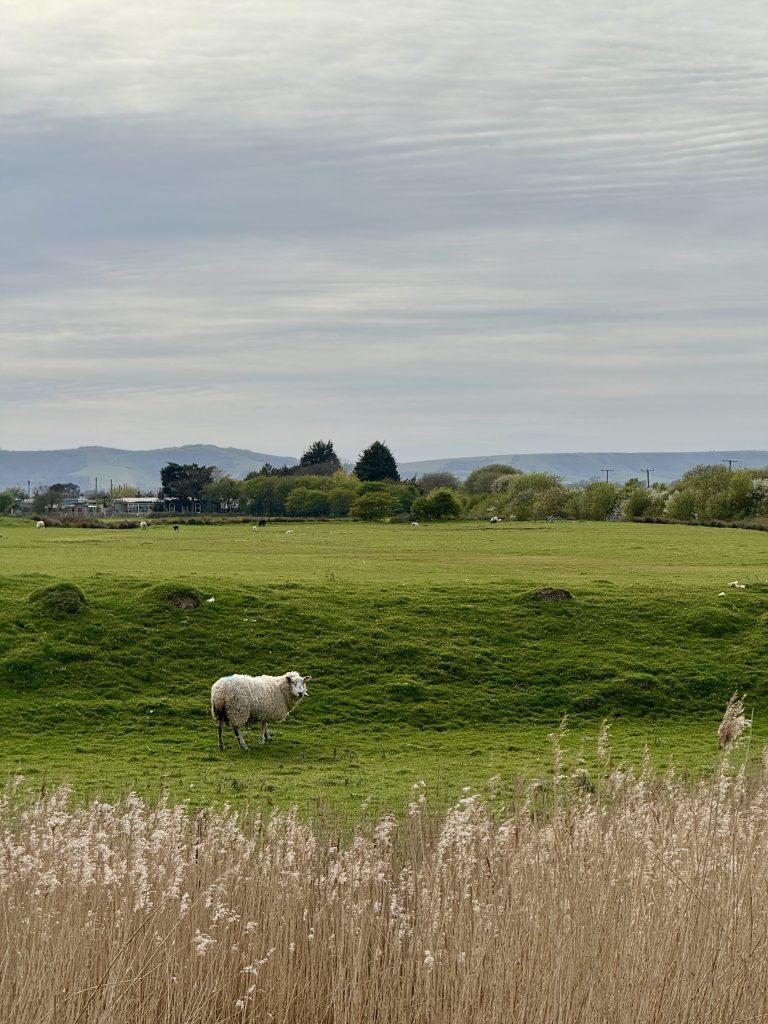
Our destination was Norman’s Bay in East Sussex. It is a long stretch of beach between Eastbourne and Bexhill, where the campsite sits alongside the sea meaning we could tip-toe to the water with ease. While the idea of a wild camping spot is appealing, when travelling as a family, it is great to have a campsite with amenities, this site offered elements of the wild with practical facilities.
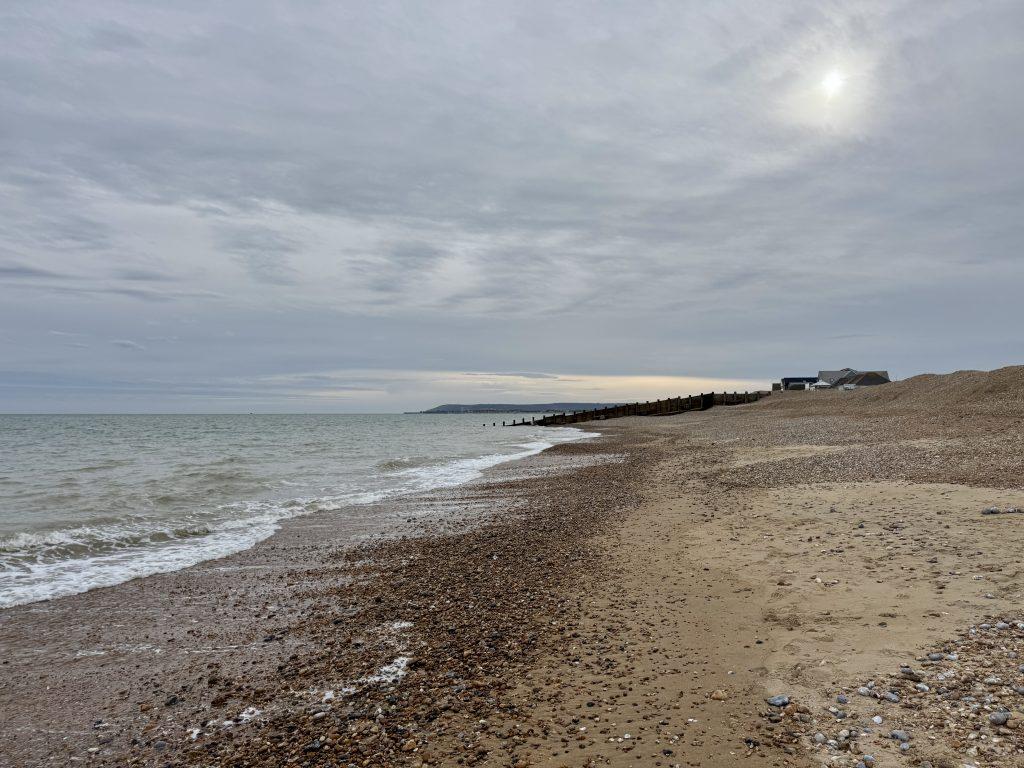
On arrival we were offered several different pitches based on our tent size and needs. Norman’s Bay is believed to be named after the Norman invasion in 1066. In the 1800s the area was part of the coastal defence system against Napoleon and the Martello towers, which were build as artillery forts, are still visible here. No.55 sits on Norman’s Bay and is now a private residence, there is a tower trail in Sussex where you can walk to them; five are close to the campsite. Today it is a popular place for long walks and swimming; the Pevensey Plungers meet nearby regularly.
Self-inflating tent
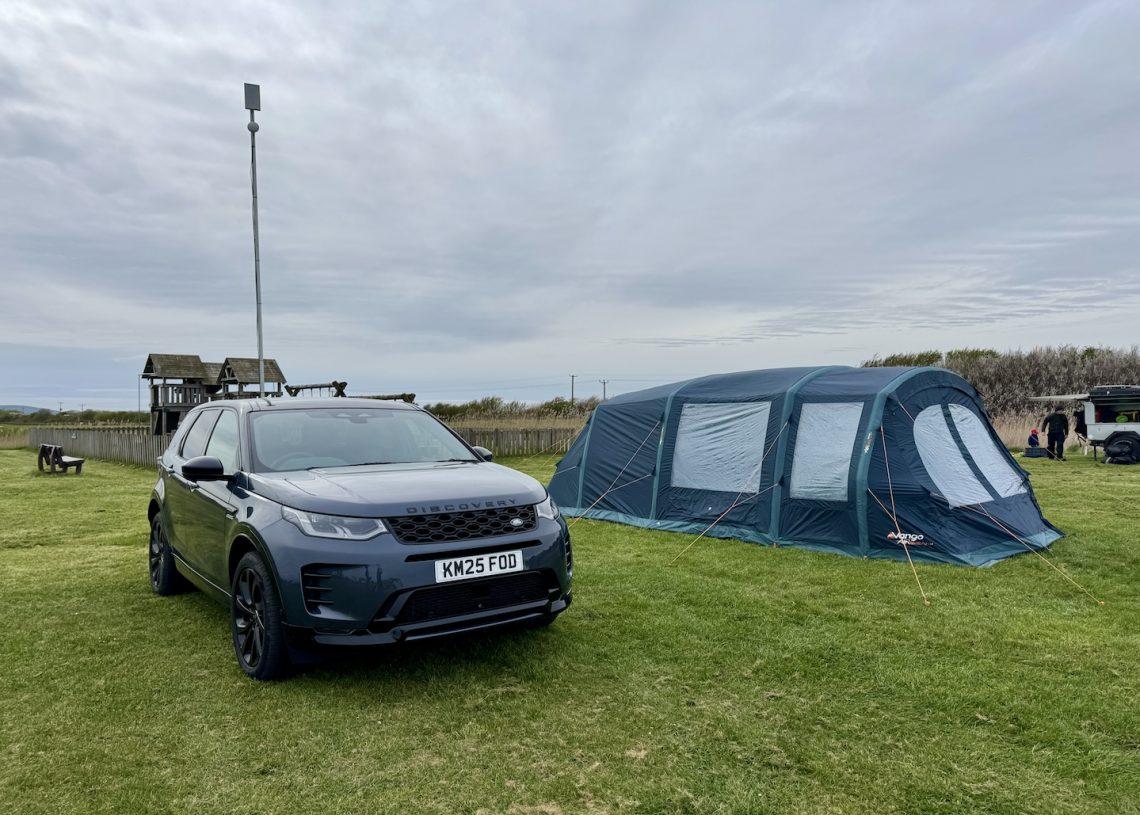
Shortly after arrival, it was time to set up the tent. We had a Savannah Air 400, which is a four-person tent, ideal for families, with Vango’s pioneering Airbeam® technology. This means instead of tent poles, there are inflatable beams that create the bones of the structure. The tent comes in a carry bag, with a pump and extra groundsheet. When deciding which way to face the tent, we foolishly thought about views over the wind forecast. We set up the groundsheet and proceeded to pitch the tent. It was a simple process. The carry bag has a stitched in printed guide to refer to, as well as a downloadable PDF from Vango. According to Vango, it takes 10 minutes to pitch it. For us, amateur campers, it took about 20 minutes, which we were still impressed with. The pump system along with guylines and pegging system was all simple to understand and easy to set up. Our first impressions were how big it was, but also how simple it was to pitch.
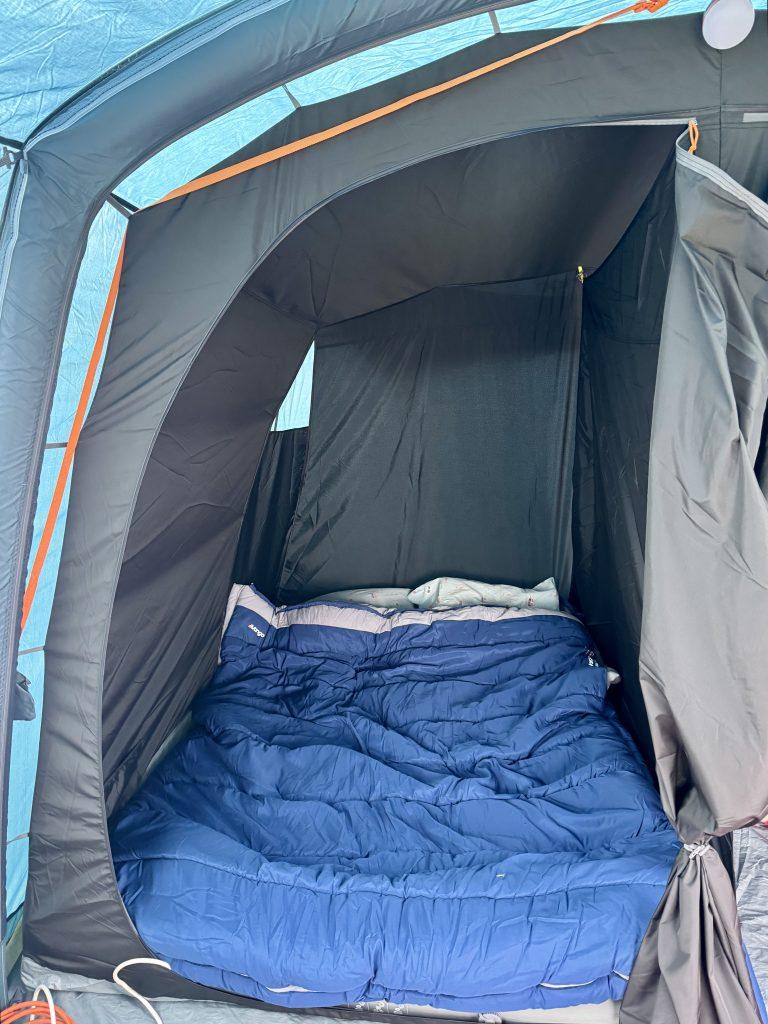
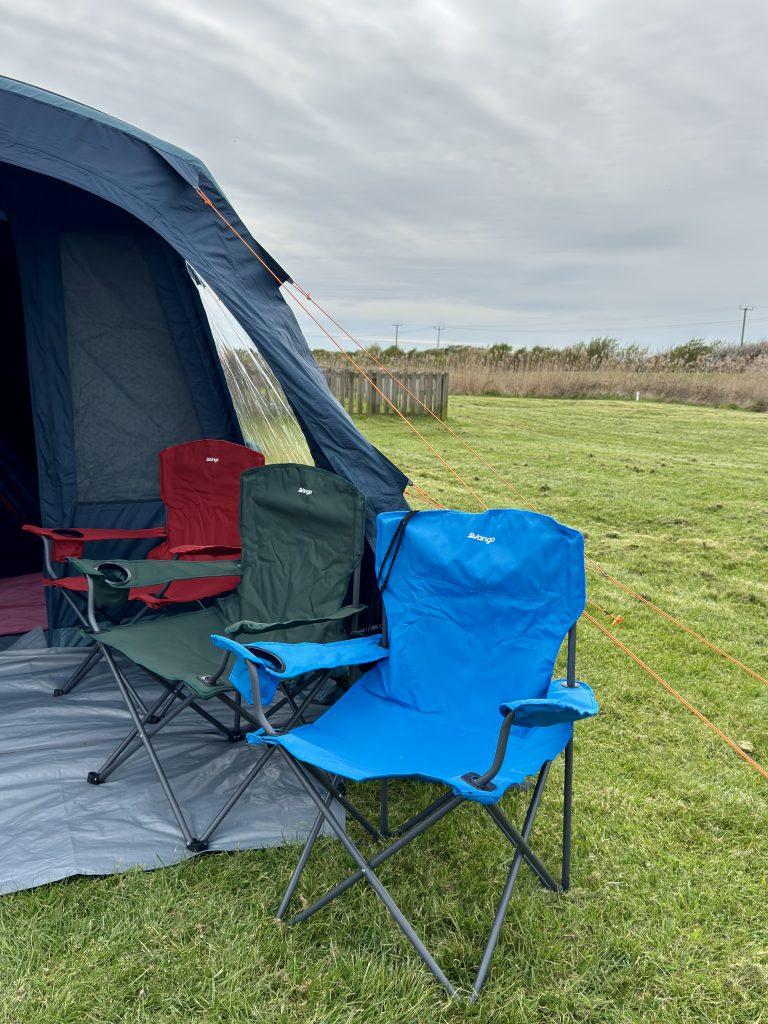
Inside the tent there are two midnight, king-size bedrooms, which gives 70cm of sleeping area per person. The darkened fabric creates the midnight effect, even when the birds were awake and singing. As well as plenty of space to sleep there is a large living area and a front awning space, which we set up as the kitchen with our camping stove and Fiesta chairs. As well as comfortable sleeping space, the living area was a great place to change and would warm in the sun, giving you a great place to be cosy when the wind picked up. Other great features we liked were little things like the bedroom pockets, for those bits and pieces you need at night, the toggled curtains and lantern hanging points. There was also a TBSII – Tension Band System – and we didn’t realise how important that would be until our second day, more on that later.
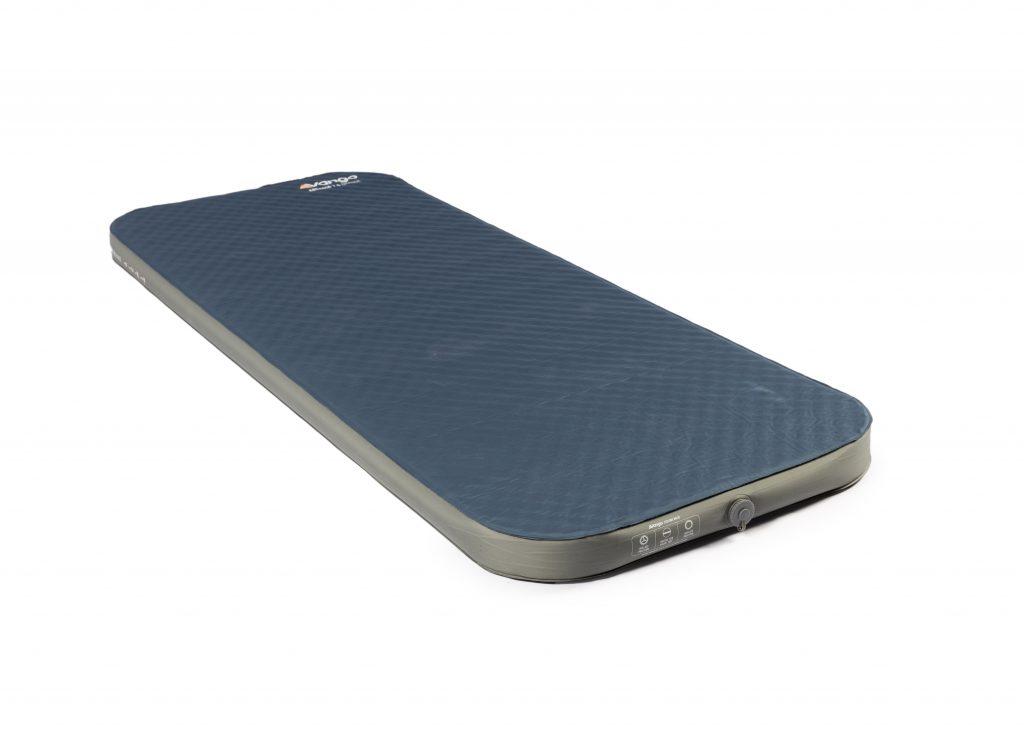
We set up two self-inflating Arcadia mattresses and our sleeping bags, one a king size Polaris, in the bedrooms. The mattresses are brilliant, with a flip valve that enables inflation and deflation with ease, as well as offering great comfort. I don’t think I have ever slept on an inflatable mattress that hasn’t deflated by the time I woke up; the Arcadia laid firm over two nights no matter how much we wriggled about on it.
Cosy night in
Our first night, despite air temperatures dropping to 4ºC, was toastie. Worried about being cold, we wore a lot of layers, but the Polaris sleeping bag was warm enough! So warm, we wore hardly anything the second night, despite it getting even colder and a lot windier! The Polaris king size was great for a fidget like me; it meant I could roll over without bothering my partner and still unzip my side if I needed to cool down. It is longer and wider than the usual double sleeping bags and I would highly recommend if you like to be cosy at bedtime. With the help of earbuds, we were able to sleep well into the morning, despite the early sunrise, with the midnight fabric bedrooms.
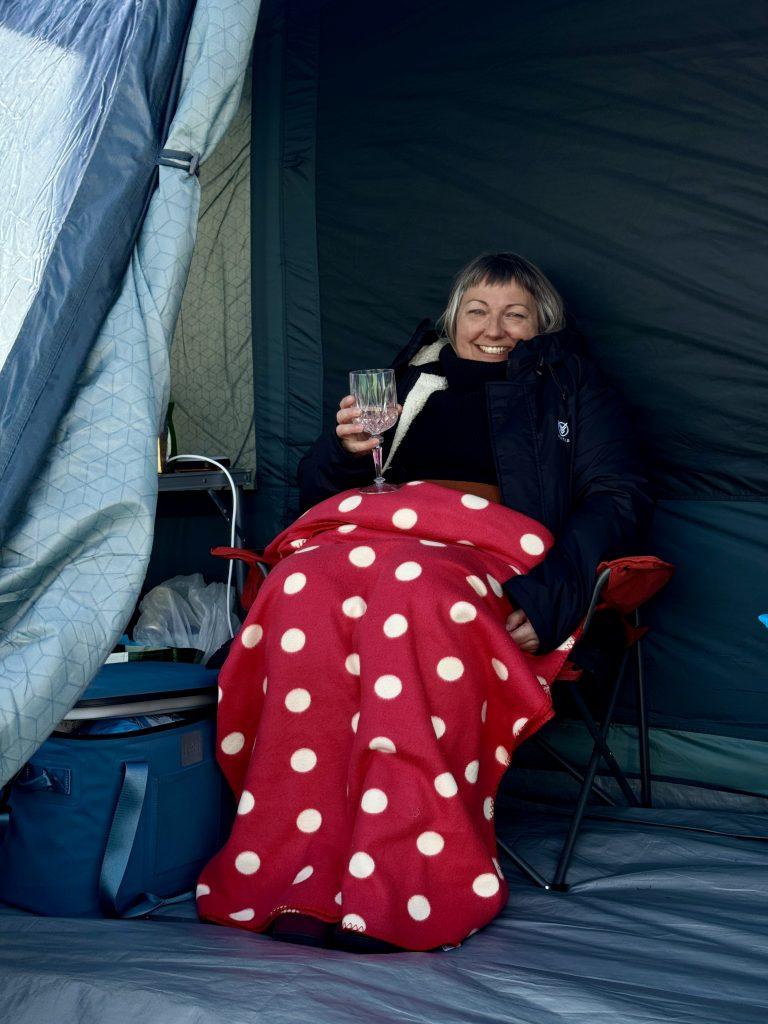
Day two brought strong winds and even cooler temperatures. There was a moment when we considered leaving early, but not wanting to cut the fun short, we simply tightened our guylines and prepared the tent for the persistent wind. This is when the Tension Band System became useful, it is designed to perform in adverse conditions. When tensioned, the bands brace the pole at three points and reduce sideways movement. While we had to hold our nerve as amateur campers, the tent held up regardless. We soon learnt how to keep the tent at its strongest and with a bit of extra air in the beams, the band system in place and a large glass of wine, we managed to make it through our second night. Not only did the tent stand up to the conditions, we felt safe, warm and dry inside, even with heavy rain in the early hours.
Over breakfast on day two we started to worry about how easy it would be to take down the tent, particularly with the wind gusts still strong. We didn’t need to worry, it was even easier that we could have imagined, even getting it back into its carry case – when does kit ever roll back into the bag it was designed to fit into?! The clipping and strapping systems for both the tent and mattresses enabled us to pack the kit as tight and clean as we unpacked it. It was a relief to be able to get it back into the car and get home, and just after we did, the sky turned black and it hammered down with hailstones! What a lucky escape, but we have no doubt, if we were still in our tent, we would have been just as dry and warm!
With thanks to The Camping and Caravan Club who hosted us at Norman’s Bay and Land Rover for loaning us a Discovery Sport vehicle which was ideal for the weekend.
Kit we tested
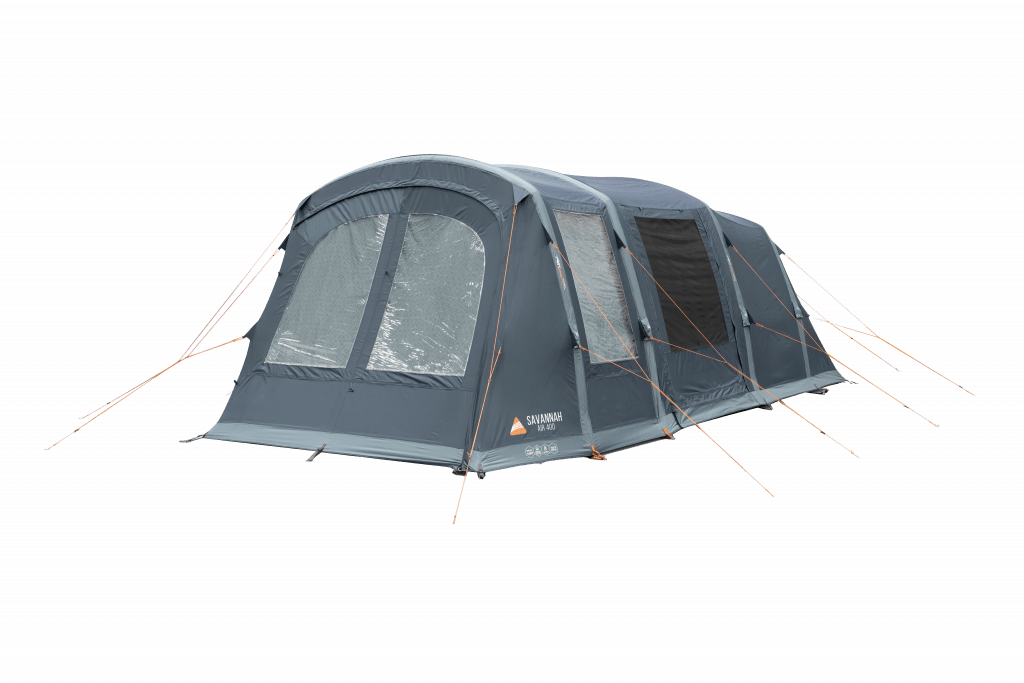
Savannah Air 400, £740
Vango are the pioneers of Airbeam® technology; they introduced the inflatable beam tent in 2010. This four-person tent is great for a family or friends, with two midnight bedrooms as well as large living area and attached front awning. It is designed to be quick to pitch and everything is provided, including an additional groundsheet and pump. It was ideal for us, loads of space for kit and to change for swims protected from wind and weather.
Arcadia Self-inflating sleeping mats, £120-£165
Both the double and grande (single) self-inflating mats are a great design, with a flip valve inflation and deflation allowing ease to set up and comfort for sleeping. The flocked top and non-slip base created warmth and a secure sleeping position. Being elevated off the ground kept the cool, damp air from bothering us at night. They were easy to set up and roll back up at the end of the weekend.
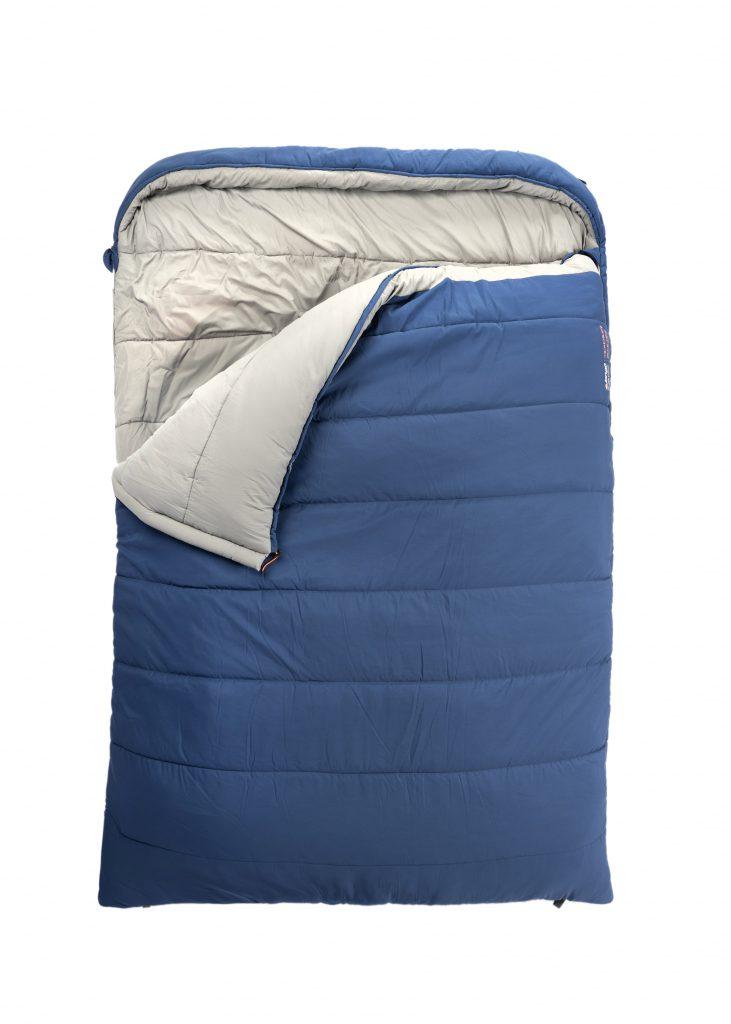
Polaris Kingsize Sleeping Bag, £100
Wider and longer than a standard double bag, this made sleeping so much easier when camping. We foolishly worried about being cold and wore way too many clothes the first night, this sleeping bag is toastie! It promised space, warmth and comfort and it delivered, ideal for cold nights in April.
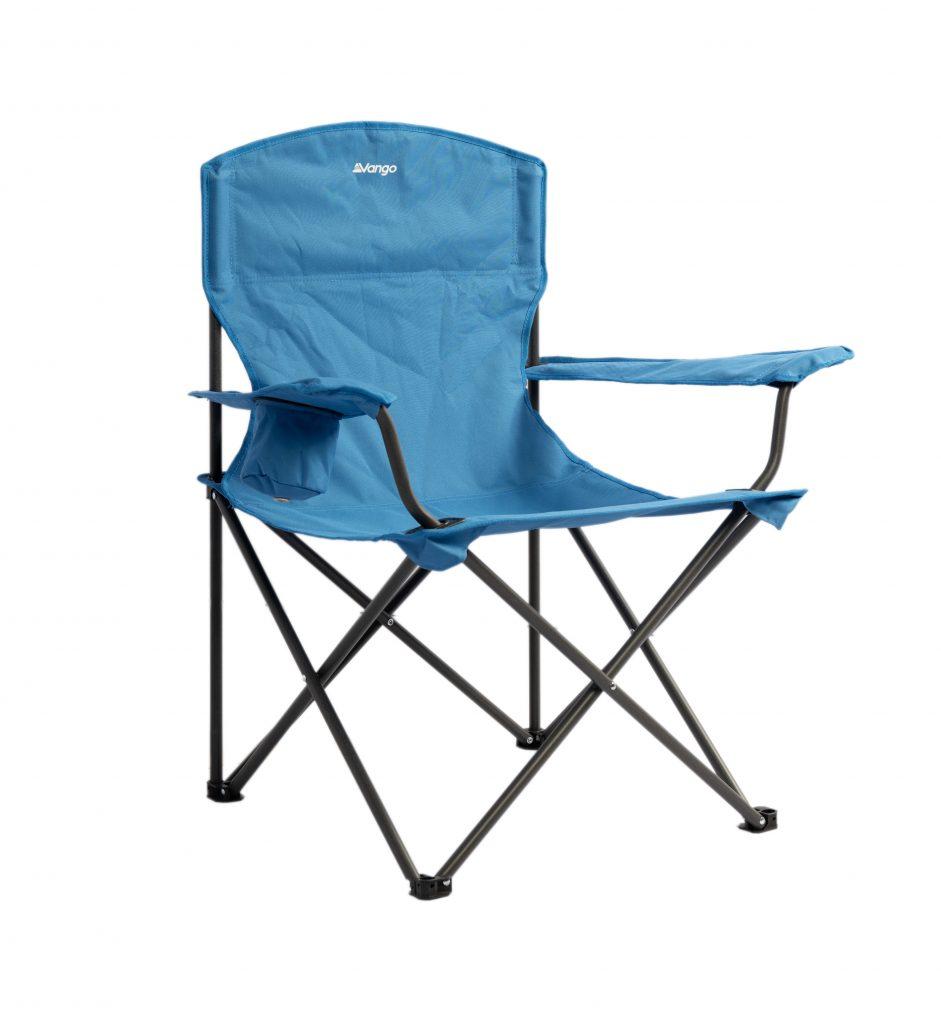
Fiesta Chair, £24
Simple and durable, these outdoor chairs are ideal for camping, picnics or extra seating for the garden. They are lightweight and simple to fold and pack away in a handled carry bag, which can then be slung over a shoulder. It has a cup holder, steel frame and soft arms which offers comfort and practicality.
Find out more at vango.co.uk
Post ID: 43375
Post type: post
Singular page: YES
ACF get_field available: YES
quiz_questions rows found: 0

Ella Foote
Ella is renowned outdoor swimmer and journalist. As well as leading the editorial, digital and experiential outputs for Outdoor Swimmer she is also Director of Dip Advisor, a swim guiding business helping people enjoy wild water. Ella also teaches swimming to children and adults, is an Open Water Coach and RLSS Open Water Lifeguard.