

Six of the best wild swimming spots in the South West
Sian Lewis shares some of her favourite swims from her new book, Swimming Wild in South West England
The South West is best – or so the locals like to say. And they don’t have to convince me. The wild, windswept West and the sun-warmed South of Britain have been my home and swimming stomping ground for more than a decade, and from hidden plunge pools on Dartmoor and secret skinny dips along the Devon coast to Dorset’s rocky coves and Cornwall’s tidal sea pools, I think the region offers some of the most varied and beautiful wild swimming in Britain.
My new book, Swimming Wild in South West England rounds up over 50 of the very best places for a wild dip, from remote moorland rivers to historic tidal pools carved into the cliffs. These six spots are some of my personal favourites after a year spent exploring the South West’s hidden waters, meeting local swimmers and chasing the perfect swim at every tide and season.
Go on – jump in. The water’s lovely.
Woody Bay, Devon

Is this ‘mermaid’s lido’ the best kept secret on the Devon coast? Make your way down to Woody Bay, a secluded, pebbled haven surrounded by rugged cliffs and lush woodland, and a gem of a tidal pool will be revealed at low tide. You’d be forgiven for thinking the pool was an accident of nature, but this Victorian bathing spot was actually carved into the rocky shore by one Colonel Benjamin Greene Lake, who had grand plans for a hotel and a pier at Woody Bay. Luckily, only the glass-green limpid pool remains at this sleepy shoreline spot today. Walk down the steep zig-zag access path under a thick canopy of sessile oaks and you’ll come to this sheltered rocky bay, backed by steep cliffs covered in woodland. At low tide, Woody Bay Beach is a large rock and pebble beach and is often pleasingly empty of people. Aim for a swim at low tide, when the pool is fully revealed. You’ll have to pick your way along the beach, which is rocky in places, to reach the pool.
Chapel Rock Pool, Perranporth, Cornwall
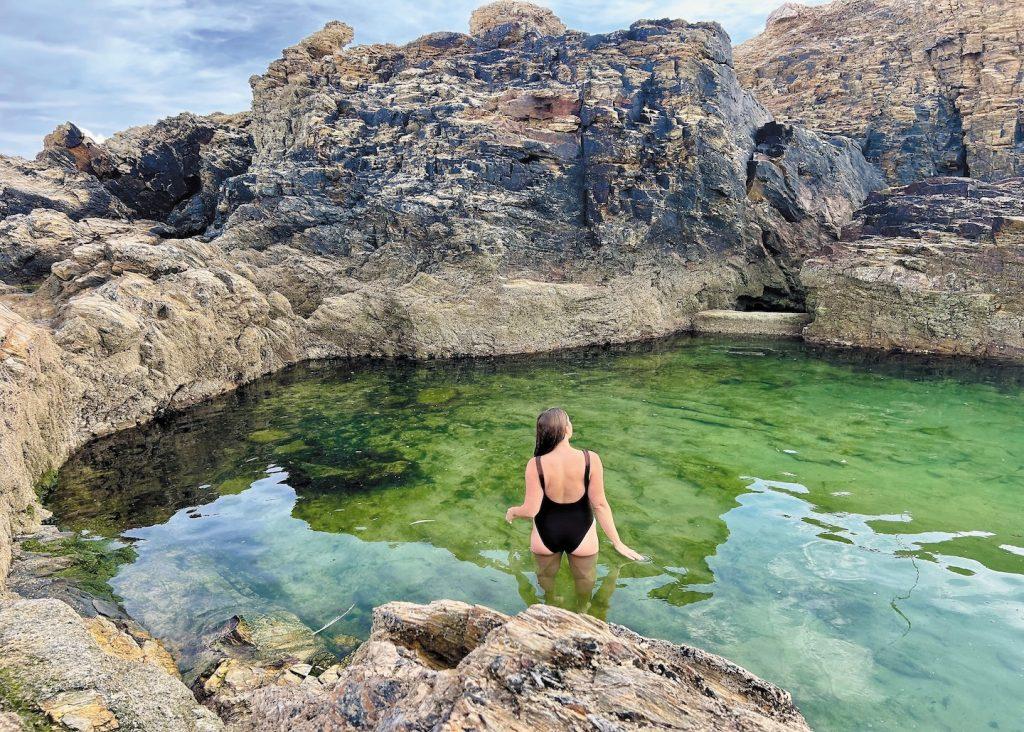
Calling all pirates. At low tide Chapel Rock stands like a mini castle on Perranporth beach, marooned on golden sands and flying the black and white St Piran’s flag of Cornwall from its highest outcrop. And at its heart is a wonderful green tidal pool. This sheltered – and very popular – swimming spot fills up with fresh and clear sea water twice a day and is deep and long enough for a few lazy laps, or you can join the locals by leaping off the rocks surrounding it. Chapel Rock Pool is here for a good time, but not a long time – it’s inaccessible for a few hours at either side of high tide. At low tide, Chapel Rock’s pool becomes a little saltwater lido, sheltered from the surf and ideal for a relaxed dip even when the sea right in front of it is rough. The pool is inaccessible at high tide and for a few hours each side of it, so check tide times before you make the pilgrimage across the beach in search of a swim.
Dancing Ledge, Dorset

Welcome to the Isle of Purbeck, a rather mystical peninsula (and not in fact an island at all) at Dorset’s southern tip that’s home to a secret swim spot revealed at every low tide. Dancing Ledge is a flat rock shelf at the base of limestone cliffs reachable only on foot and not far from the village of Langton Matravers. Once a quarry site, it now draws walkers, climbers, and wild swimmers. The ledge is said to ‘dance’ as waves crash rhythmically over it at high tide, giving it its lyrical name, and at low tide, a man-made tidal pool becomes visible as if by magic. In Victorian times, a rectangular sea pool was blasted out of the stone so that local schoolboys could dip here. It may be a manmade, but Dancing Ledge is now a wonderfully wild and rocky spot, perfect for cooling dip on a hot summer’s day and long enough at 15 metres for a few calm laps without worrying about sea currents or rough waves.
Farleigh Hungerford and District Swimming Club, Somerset
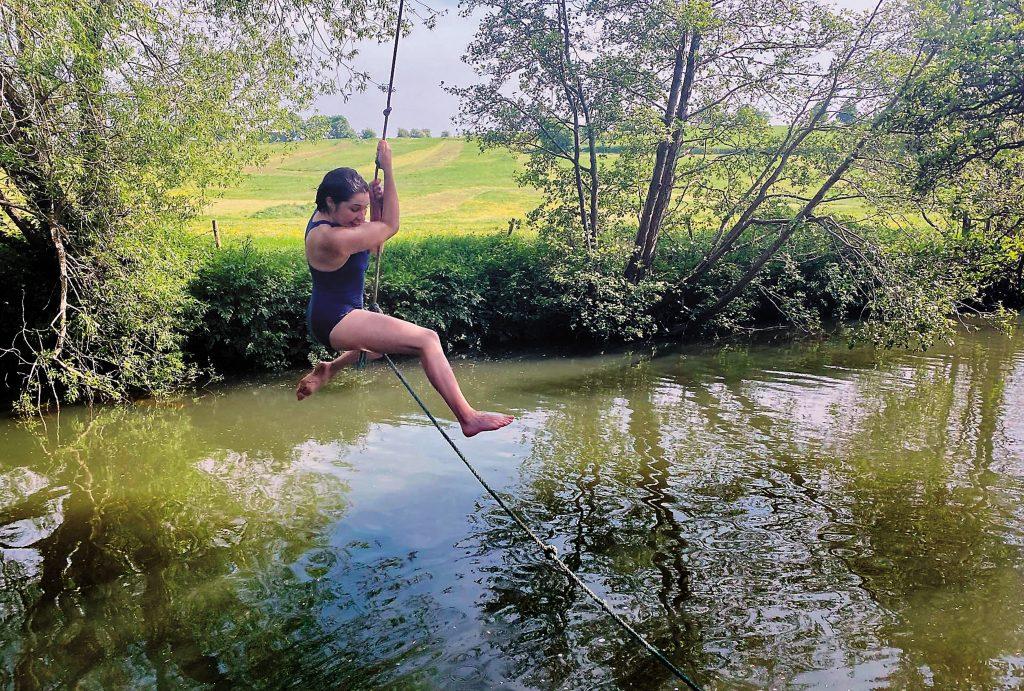
The UK’s oldest river swimming club was founded in 1933 by the local Greenhill brothers in the name of summer sunbathing and river frolicking, today Farleigh and District looks after a beautiful 70 metre stretch of Somerset river. For nearly a century visitors have enjoyed wild swimming above an historic weir, dipping off the riverbank and picnicking in a green meadow at this untouched spot. Things are still pleasingly simple – there are very basic loos and changing facilities on site, plus ladders and platforms for access to the shady, lily pad-strewn water, all looked after by a team of volunteers. You need to be a member to swim at Farleigh Hungerford – the good news is, it currently costs just £12 for the year, and you’ll be joining 5,000 other river dippers in helping to maintain the site. The river water is always cold, and if you do fancy jumping in, it’s a good idea to acclimatise first, then check the river for depth and for underwater obstructions.
St Anthony’s Well, Gloucestershire
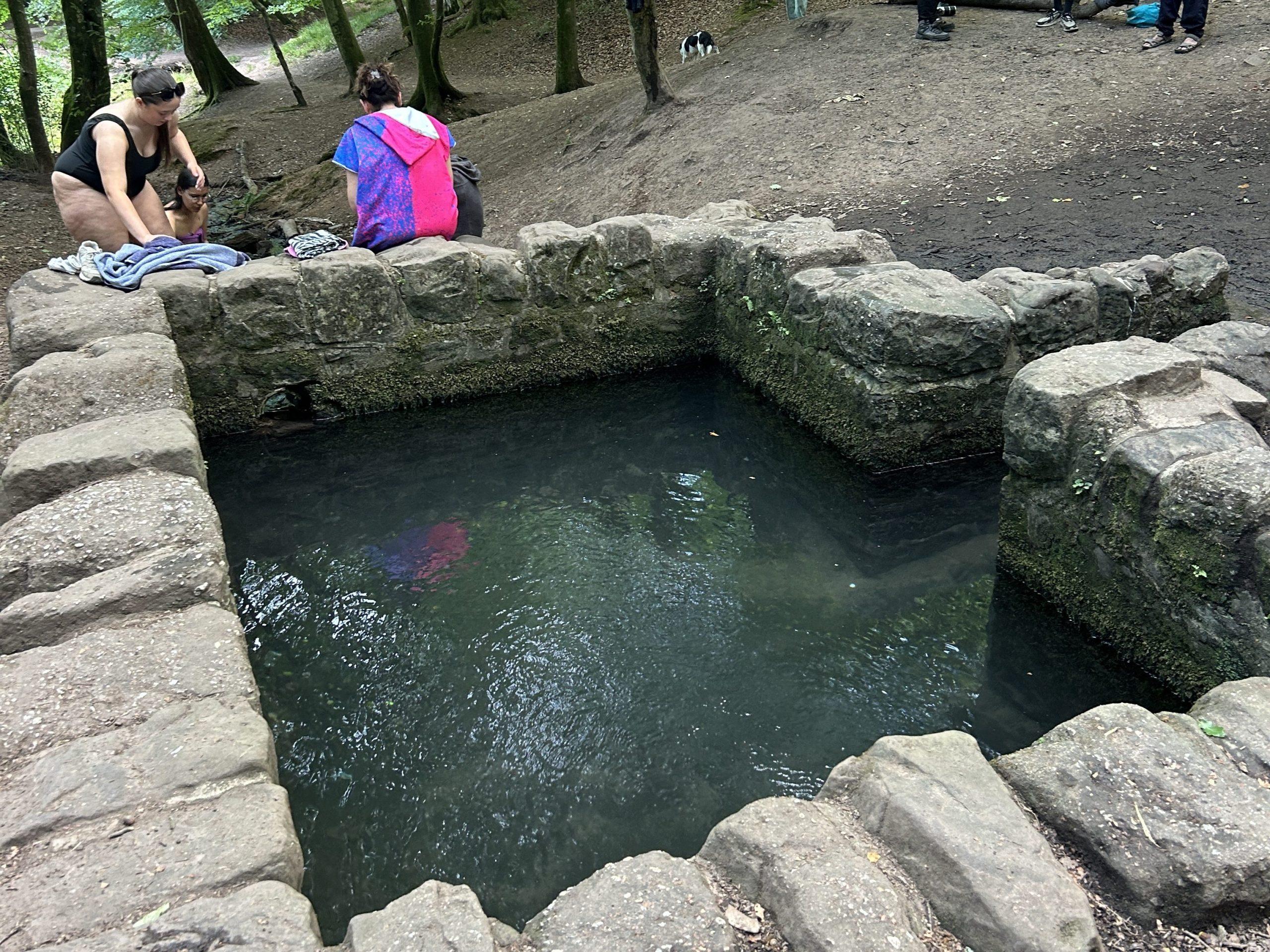
Hike deep in the thick canopy of the ancient Forest of Dean and you’ll come across one of England’s most mysterious sacred springs. St Anthony’s Well is believed to date back to medieval times, and is named for St Anthony the Great, a Christian hermit and healer. The well later became a site of pilgrimage and ritual healing, with people flocking here to dip into the cold, clear waters of this small pool to cure ailments or to seek spiritual cleansing. Archaeological finds nearby suggest long-standing sacred use. This is a dip in a plunge pool rather than a swim, but the well is a wonderful spot for a natural ice bath in the colder months, a place to work on breathing techniques or just somewhere to float in a serene, spiritual spot far from the madding crowds. Once you’ve walked through the trees to reach the well, climb over the wide stones that surround the square pool of water, which is Grade II listed. The water here apparently never tops 10 degrees – when I visited one warm August day it was a fresh 11 degrees, very welcome in a heatwave!
Sharrah Pool, Devon
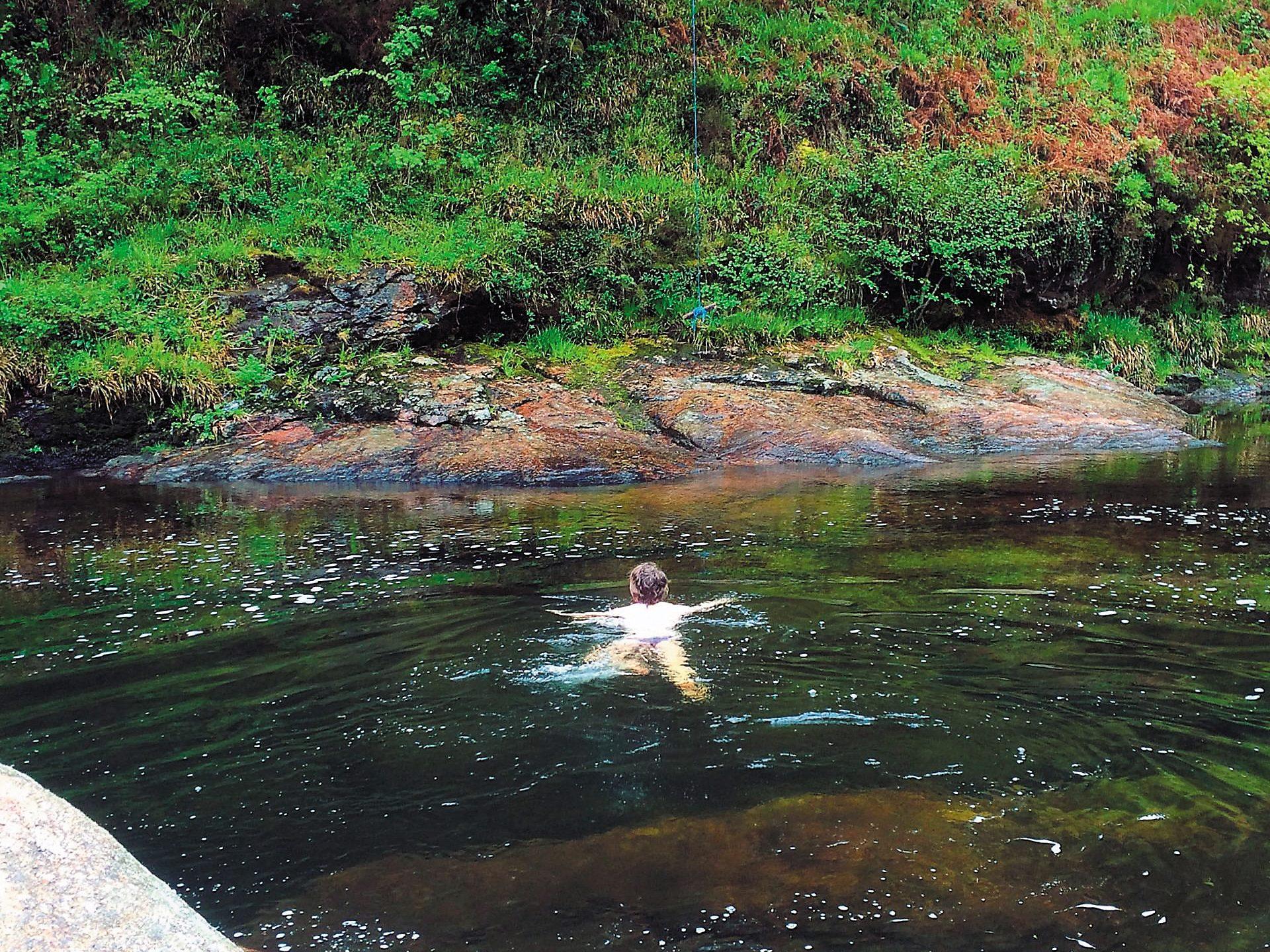
Follow the winding River Dart far enough and you’ll come to a deep, glassy pool of crystalline water. Sharrah Pool, in the shady Holne Woods of Dartmoor National Park, is an otherworldly spot – it looks like a place where water babies and pixies might congregate for a swim. You’ll have to walk here along a riverside path, but you’ll know you’ve found the pool when you come across a gap in the trees and a wider part of the river where the water is so clear you can peer down at the bottom. There are flat rocks edging the river for sunbathing or for clambering into the water, which is skin-tingingly cold all year round thanks to the fresh, flowing river. Climb in carefully over the wide smooth rocks or simply wade in where gravelly stones meet the shoreline, then dip. You can just about jump in from the rocks on the other side of the river if you’re careful. The water in Sharrah Pool is usually very clear, with an emerald green hue. A rock wall extends along half the pool, and there are small cascades to play in at one end. Avoid swimming in Sharrah Pool if the river is in spate, as the water could be dangerously fast-flowing.
For more hidden swim spots across the South West, see ‘Swimming Wild in South West England’ by Sian Anna Lewis, published by Vertebrate

Outdoor Swimmer
Outdoor Swimmer is the magazine for outdoor swimmers by outdoor swimmers. We write about fabulous wild swimming locations, amazing swim challenges, swim training advice and swimming gear reviews.