Seeing is believing
Register to get 3 free articles
Want unlimited access? View Plans
Already have an account? Sign in
Jharna Kumawat’s swimming was transformed after she saw a video of herself swimming, here she shares how swimming went from how it felt to what could be improved
The first time I saw myself swim underwater, I almost didn’t recognise the person on the screen. In my head I’d imagined myself looking like a smooth swimmer – long strokes, steady rhythm, streamlined. But there it was on the GoPro: a dropped elbow here, a slight crossover there, a kick that had ideas of its own. It was humbling in the way only video can be: honest, unfiltered and impossible to argue with. And strangely, that moment marked the beginning of me becoming a better swimmer.
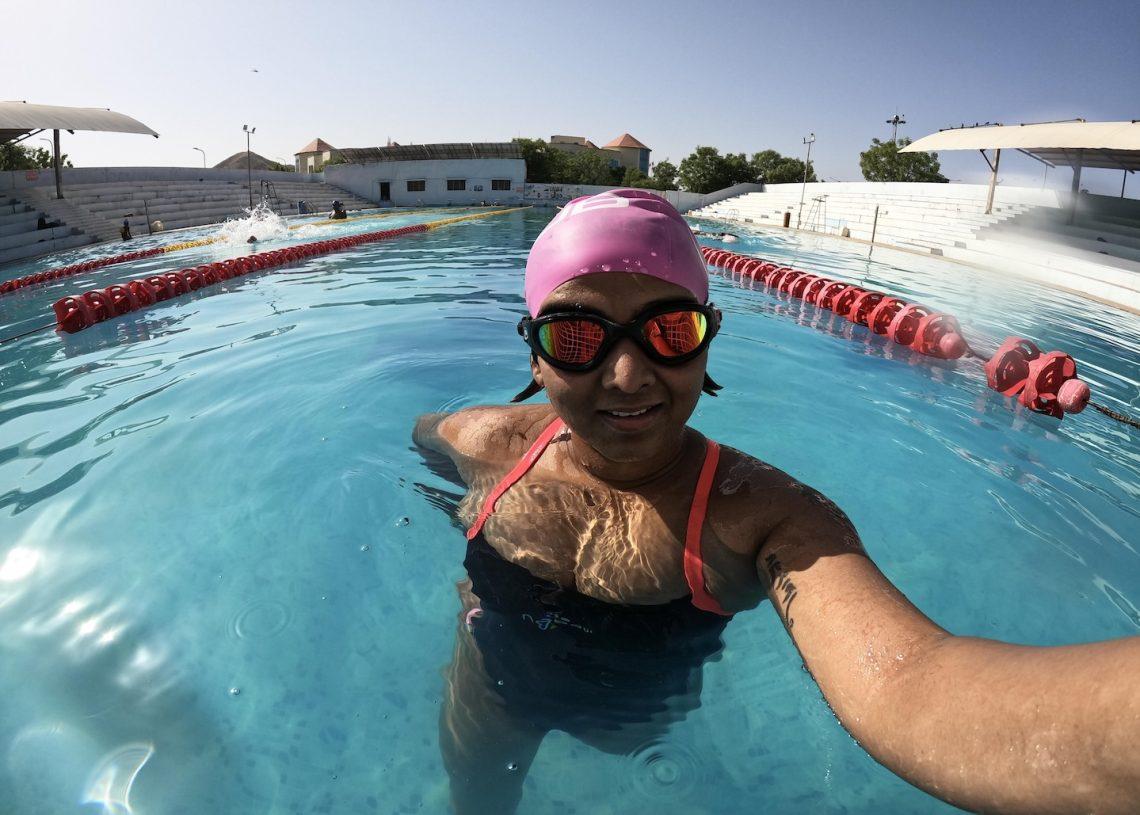
For years, my swimming lived in sensation. I swam by feel, what seemed right, what felt strong, what felt smooth. But feel, it turns out, can be misleading. Using underwater GoPro footage and front crawl analysis, I started to see my stroke properly for the first time. I remember one session in particular: I’d set up the camera at the end of the lane, swam past it repeatedly, then sat poolside afterwards, dripping and slightly cold, replaying every length in slow motion. That was the moment I noticed it – my hand crossing the centre line just slightly on entry and the other million things I could improve to look like a smooth swimmer. It is one thing when your coach tells you to tweak your stroke, but when you have evidence of it, you have no excuse but to listen and implement. Fixing it wasn’t immediate, but a work in progress. I’m still learning and every now and again I do a swim video analysis to see how much or not I have improved.

Then came the Garmin. At first, it was just about distance, how far I’d swum, how long I’d been in the water. But slowly, the metrics crept in – stroke count, pace per 100, SWOLF scores, heart rate trends… I remember one winter pool session where everything felt heavy. The water felt thick, my arms sluggish, my motivation low. If I’d been swimming purely on feel, I would have written it off as a bad day. However, when I checked the watch at the end, the numbers told a different story – my pace was faster than the previous week. My stroke count had dropped. That’s the gift of data, it doesn’t care how you feel, it shows you what’s happening. Through online swim platforms and remote feedback, I’ve had sessions analysed without a coach standing poolside. I’ve uploaded clips, received comments, adjusted drills. It’s not the same as someone shouting corrections from the edge – but it has its own rhythm. It’s made me more engaged in my own swimming – not just following instructions but understanding them.
The most important swims I’ve had? They don’t exist on any app. One morning last summer, I arrived at my usual sea swim spot earlier than usual. It was completely still, calm, no wind, barely a ripple on the surface. The kind of water you almost feel reluctant to disturb. I left my watch in my bag, intentionally, no distance target, no post-swim upload(s) waiting for me. I waded in, felt the water temperature take my breath for a second, then settle. I pushed off, not in the structured way of a pool wall, but gently, naturally, and started swimming. No counting strokes, checking pace or thinking about efficiency. Just the sensation of water moving past my arms. The quiet sound of each breath. The occasional lift of my head to sight buoy, beach walkers, sky and feeling like WOW. I don’t know how far I swam that morning. I don’t know how long I was in the water. But I remember exactly how it felt.
That’s the paradox of being a modern swimmer. Technology has made me sharper, more efficient, more aware of my technique than ever before. But it has also, at times, taken me slightly away from the simplicity that drew me to swimming in the first place. I’ve come to realise I don’t have to choose between the two versions of myself. There’s the swimmer who studies video, tracks sessions, and works patiently on technique. And there’s the swimmer who walks into open water and leaves everything – including technology – behind.