

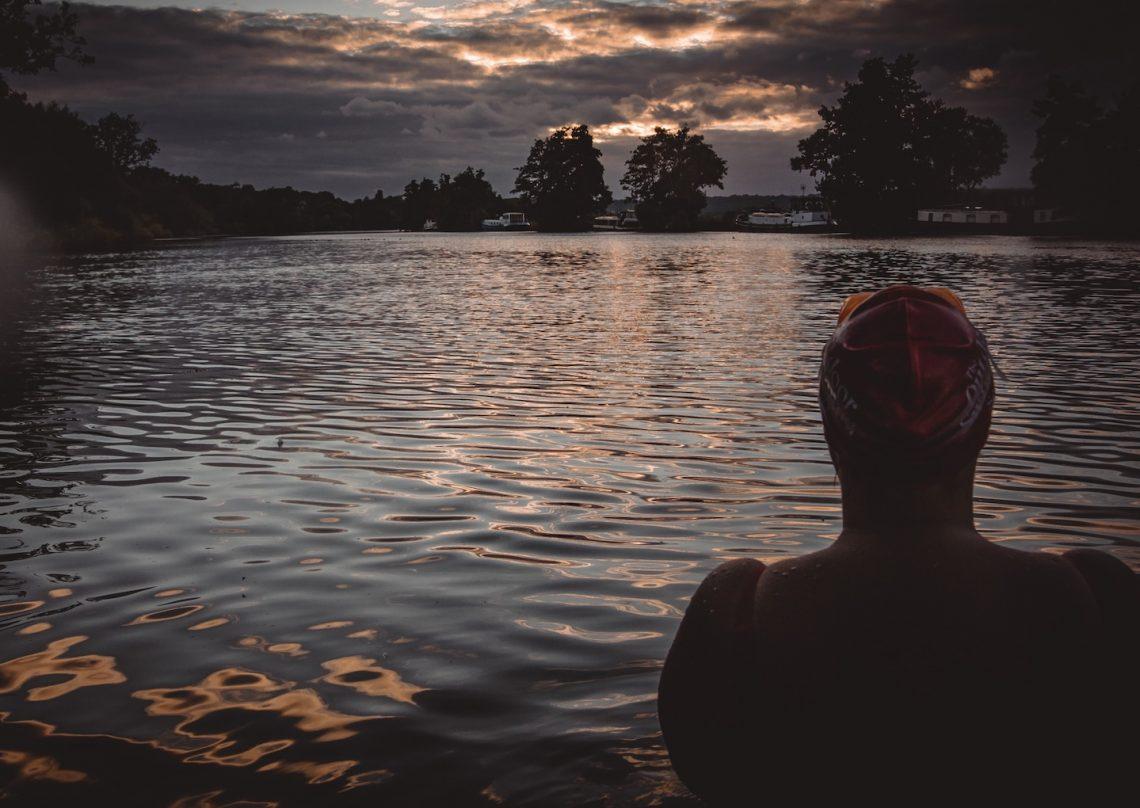
After dusk
In general, but not always, bodies of water are often calmer at night, so instead of having to swim at night out of need, this month editor Ella wants you to try to swim in the dark out of curiosity
The first time I swam at night, I swam out of necessity, training for a Channel relay swim. It was full of fear rather than joy, which isn’t how outdoor swimming should be. But since then, I have encountered some of the most intimate, powerful and transformational swims in the dark. It seems odd to encourage night swimming at a time in the year when the evenings are lighter, the day stretching out longer. But swimming in darker conditions when the weather is warmer is a great way to experiment. Your senses are already on high alert, so having to deal with cold water and challenging conditions isn’t ideal.
Night swimming isn’t just something that long-distance swimmers have to endure; it is a pleasure that asks something different of us as swimmers. It removes the horizon, erases detail and loses landmarks. Night swimming isn’t about speed, distance or technique, it is about trust. In the dark you can only focus on yourself, your rhythm, breath and your own senses. In general, but not always, bodies of water are often calmer at night, so instead of having to swim at night out of need, this month I want you to try to swim in the dark out of curiosity.
May practice
Prepare the stage
Night swimming begins long before you enter the water. Choose a familiar swimming spot that you visit in daylight, where you already know where to enter and exit. Check the forecast and pack accordingly. Bring tow floats with lights, bright caps and a head torch for shore. Swim with others and agree the route.
Start at twilight
Do not leap straight into full darkness. Begin as the light fades, notice how the colours drain from the landscape and pay attention to how your depth perception shifts. Swim a short, controlled route parallel to the shore where you can stand if needed. Let your nervous system learn that dark does not mean danger.
Shorten and steady
In low light, reduce your distance. Fatigue feels different at night and can be harder to read. This is about experience rather than time or distance. Focus on how it feels, keep your stroke neat and breathing calm. If swimming freestyle, sight towards a lit float or shoreline light. Pay attention to your body temperature, you will get colder quicker at night.
Dial up your other senses
Without clear visual cues, tune into texture. How does the surface feel? Is there a temperature change as you move away from the bank? Can you hear wildlife that you don’t normally hear in the daytime? The dark sharpens attention. Exiting into cool night air can feel cold – have kit and dry layers ready. A flask of something hot is essential. Night swimming can leave you quietly euphoric or unexpectedly thoughtful.

Ella Foote
Ella is renowned outdoor swimmer and journalist. As well as leading the editorial, digital and experiential outputs for Outdoor Swimmer she is also Director of Dip Advisor, a swim guiding business helping people enjoy wild water. Ella also teaches swimming to children and adults, is an Open Water Coach and RLSS Open Water Lifeguard.