

All in the family
Cross-Channel swims have a lengthly history, and one Folkestone family has had a front row seat since the 1920s. Words by Elaine K Howley
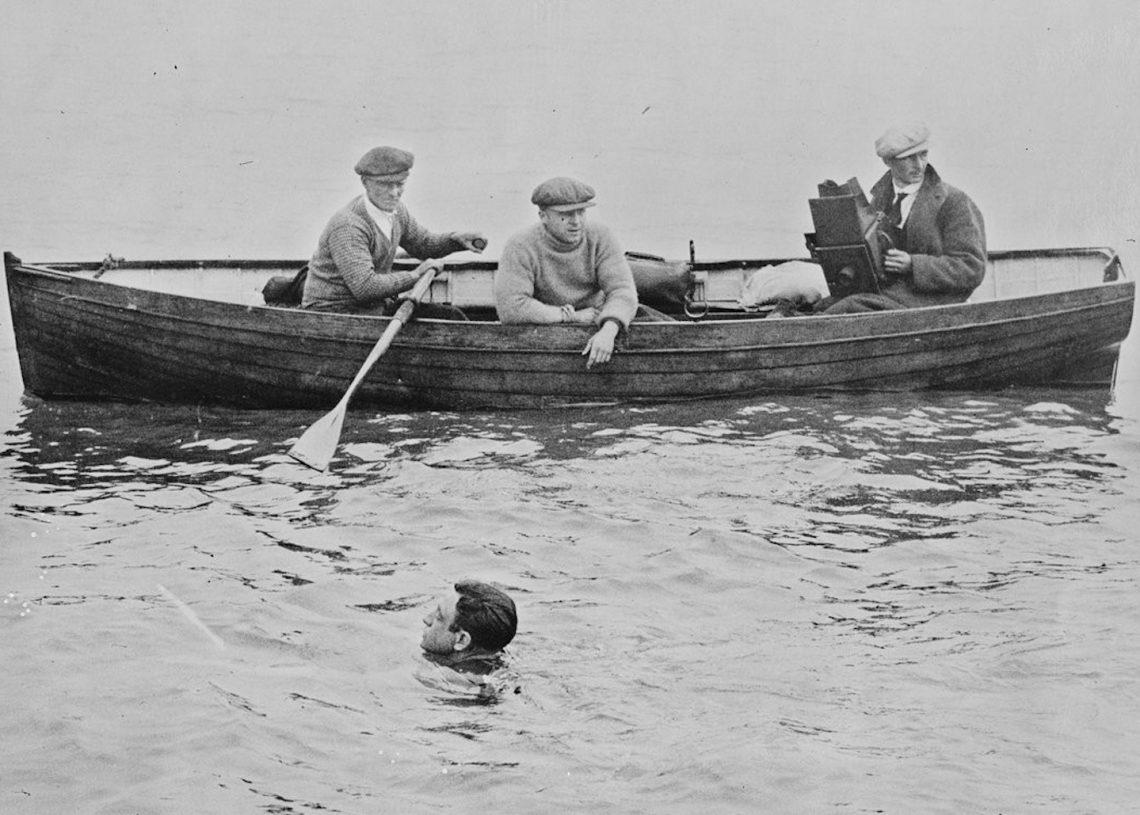
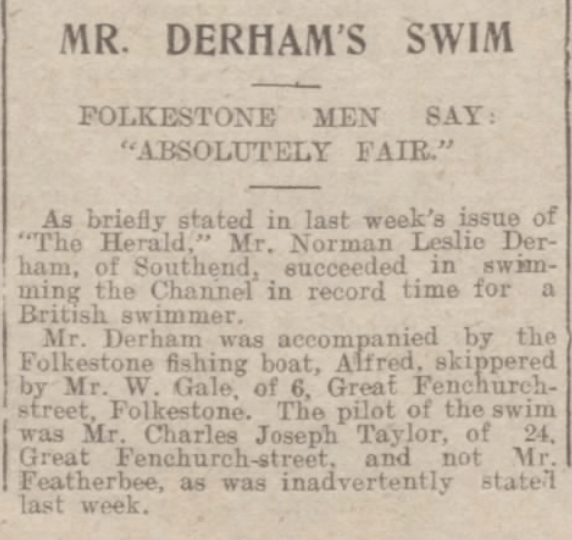
On 2 September 1926, Norman Leslie Derham of Southend, England, entered the water at Cap Gris Nez at 3.15pm and began swimming strongly toward Dover. Patiently trundling alongside him was a Folkestone fishing vessel called the FE.164, skippered by Mr. William Gale. The local fisherman at the helm had perhaps unexpectedly found himself supporting a would-be English Channel swimmer in his cross-strait quest and would soon find his way into the press as well.
The intrepid party made its way off the French shoreline, but soon thereafter, a thick fog descended over the Channel.
“Dereham swam in magnificent style,” Captain Gale reported in an interview with the Folkestone Herald, published 4 September 1926 (using an alternate spelling of the swimmer’s name). “And it appeared to me he had every prospect of success, but the fog thickened and practically everything around was blotted out,” he relayed.
“At one period, we picked out four or five destroyers coming down the Channel and they were quite near enough,” Gale recounted. “Later, just coming out of the fog was a man of war coming direct for us. We gave the recognized signals with our siren, which indicated that the approaching vessel should go astern. Happily, the warship kept in her proper place.”
Undeterred by the large craft, Derham kept on, and swam until 3.50am when, on the advice of his boat crew, he left the water a scant two miles from the shore.
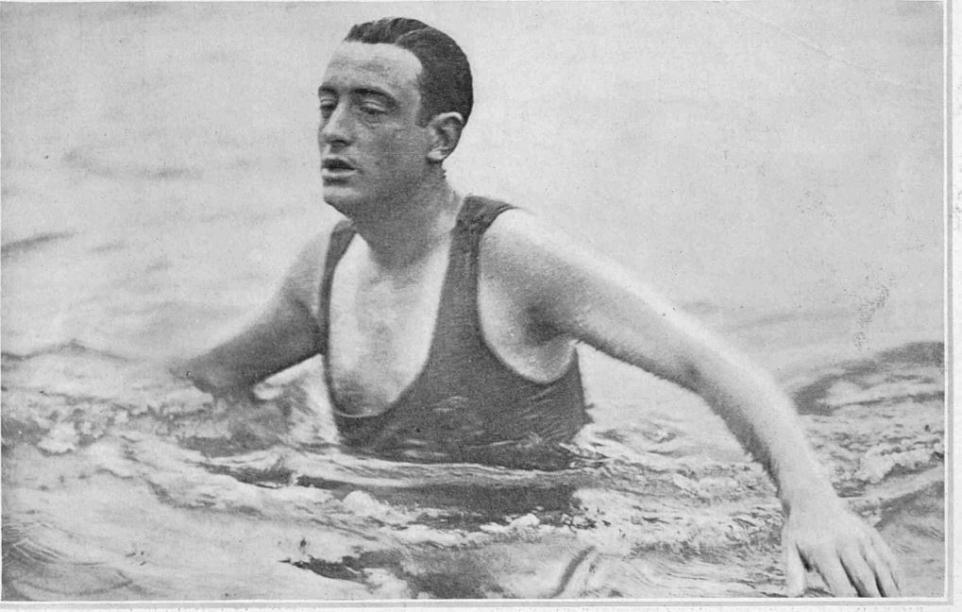
“He was fresh as a daisy,” Gale reported. “All together he had been in the water for 14 hours 8 minutes.”
But the ordeal didn’t end with the swimmer’s return to the boat; the thickening fog made the trip home treacherous. “We absolutely groped our way back to Folkestone Harbour,” Gale said. “The only light we could discern was Cap Gris Nez.”
This was unusual for the seasoned seaman and his mates. “My crew and I have had some experience of Channel fog, but that of last night and early this morning beats the lot. I am perfectly confident that Dereham would have accomplished his purpose, but for the fog.”
Derham tried again on 17 September and was successful in 13 hours, 57 minutes. News of the World paid him £1,000 for having broken Gertrude Ederle’s record, set earlier that summer. Derham, however, failed to surpass Georges Michel’s overall record of 11 hours, 5 minutes also set in summer 1926.
Passing the torch
When the swimming boom of 1926 (five swims, which doubled the sum total of crossings) subsided, Captain Gale returned to his primarily gig of fishing in the English Channel.
“It was different in those days, obviously,” says Stuart Gleeson, Gale’s great-grandson and a swimmer support pilot listed with the Channel Swimming Association, one of two organisations (alongside the Channel Swimming & Piloting Federation) that organise and certify cross-Channel swims.
Fishermen were an obvious choice to escort swims because of their vast experience in this particularly challenging waterway and deep knowledge of weather and tides.
But in the early days of Channel swimming – before radar, GPS, and other high-tech tools made plotting a perfect line across the shifting currents a more predictable affair – the fishing was more sustainable than supporting swimmers. “The price and what they were earning then, they’d take the fishing over the swimming,” Gleeson says. But his Folkestone family’s deep connection to the sea drew them back into the swimming world, time and again. In the 1950s, Gleeson’s grandfather, also named William Gale, piloted for some of the Butlin’s Races that attracted marathon swimming superstars from around the globe to race for cash across the English Channel.
Today, Gleeson carries on the family tradition as an escort pilot. He didn’t necessarily set out to support swimmers, but he always loved the sea and wanted to understand more about tides and weather.
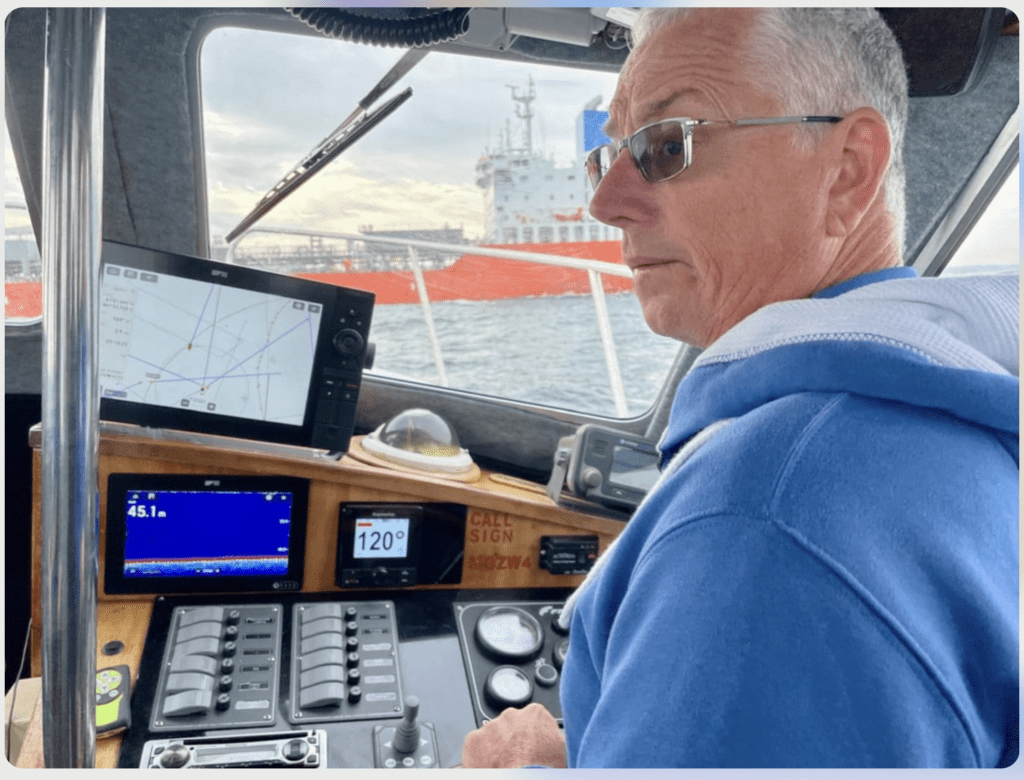
He followed his uncle into the fishing business, but about 15 years ago, Gleeson found himself working to support a family on a dwindling salary as the fishing industry cratered. He moved onto the shoreside of the business, but times had changed – Channel swimming was spiking in popularity as fishing profits vanished.
Gleeson knew one of the CSA’s long-time pilots was retiring from the business, so he sought to take his position as the seventh boat in the fleet.
In his first season, Gleeson piloted about 10 swimmers. More inquiries followed and it’s only grown from there. In summer 2025, he’s set to support more than three dozen swimmers from his vessel, Sea Leopard.
There’s as much art as science to escorting swimmers across the busiest shipping channel in the world that also just happens to be the world’s most famous marathon swimming location and home to highly variable weather patterns.
Each pilot has their own strategies and sensibilities for how best to accomplish the task. As a group, the seven teams under the CSA banner and the six under the CS&PF header are collegial and supportive of each other, Gleeson says.
“We’re all doing the same job and we’re all in it for getting swimmers across,” something that’s been the family business for generations.

Outdoor Swimmer
Outdoor Swimmer is the magazine for outdoor swimmers by outdoor swimmers. We write about fabulous wild swimming locations, amazing swim challenges, swim training advice and swimming gear reviews.