


Bold waters
Rowan Clarke talks to Melona Headley about empowering disadvantaged young people through swimming
Here’s a phrase you’ve probably heard: overcoming barriers. But how much have you thought about what it means? Specifically, what it means to swimming?
Understanding the far-reaching, lifechanging, lifesaving impact of overcoming barriers to swimming allows more people to experience the amazing benefits of immersing in water and nature that so many of us take for granted.
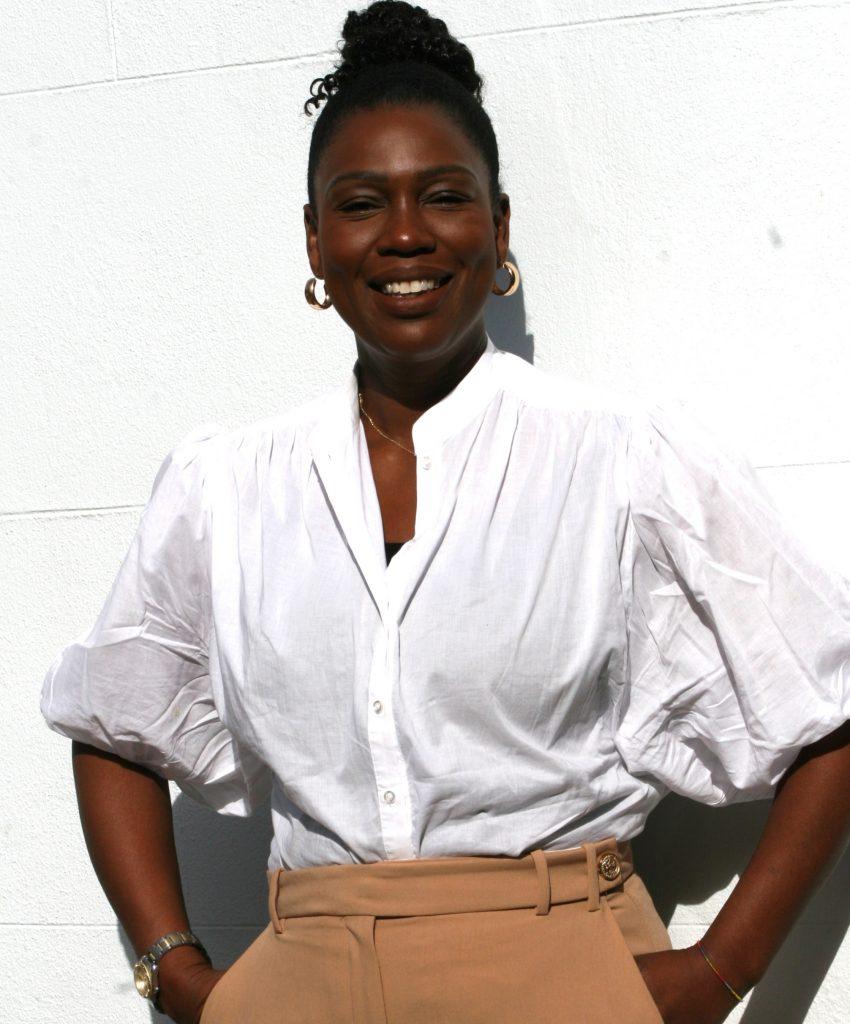
That’s what inspired Melona Headley (pictured below left) to set up Bold Waters. A social impact movement, Bold Waters challenges the inequities around access to swimming, safety and nature to build confidence, connection, and long-term change. For the people who take part, the benefits are incredible.
Water justice
At the core of overcoming barriers is what Melona refers to as ‘water justice’, which is centred around drowning prevention. “It’s about access to water being a human right,” says Melona. “There are elements of fun, sport and recreation, but it’s a right for lifesaving for lots of people around the world.”
Drowning stats show a stark indication of the inequality that exists around water. Of the 300,000 people who drown worldwide each year, more than 90% live in low- and middle-income countries, and it’s a leading cause of death for children and young people.
“We know that people of colour and people who are socially and economically deprived are more likely to drown,” she says. “The equity and the justice are wrapped up, but it’s also about having the same rights as everyone else – to have safe access to all of these spaces.”
Far reaching impact
Through her career in education, Melona witnessed the impact of students overcoming barriers to swimming and teaching swimming to others – and this would lay the foundations for Bold Waters. But her original inspiration was much closer to home.
“I’ve seen it directly with my son. He went through a period of feeling low, and I came across a swimming project and thought, we’re going to do this together,” she says. “He’s now a swim coach. He’s just featured as a swim coach and expert voice in the Changing the Narrative docuseries that was featured by the Black Swimming Association about access to swimming. I’ve seen his journey, and I’ve seen how he’s grown.”
There is something unique about swimming, says Melona, who also led similar projects around music and agriculture. It was swimming’s deep and wide-reaching impact that eventually encouraged her to leaving her work in formal education to focus on Bold Waters. “It’s about overcoming something really tangible. You can measure it and there’s a sense of empowerment that you get from that,” says Melona. “I see the young people who don’t want to do it absolutely loving it when they do. Seeing the difference in them is amazing.”
Beyond barriers
Perhaps the magnitude of Bold Waters’ impact is down to the scale of the challenge. Unlike Melona’s other projects, the barriers to starting that swimming journey often seem insurmountable.
“I’m passionate about Bold Waters on so many different fronts, but sometimes I do think, My gosh, this is so difficult. Trying to convince young people to do it is so much harder than anything else,” says Melona. “I’ve heard everything under the sun about why they can’t participate, and you’ve got to overcome that before you can even start. Culturally, there are so many barriers, but once you penetrate that, it’s so much more powerful.”
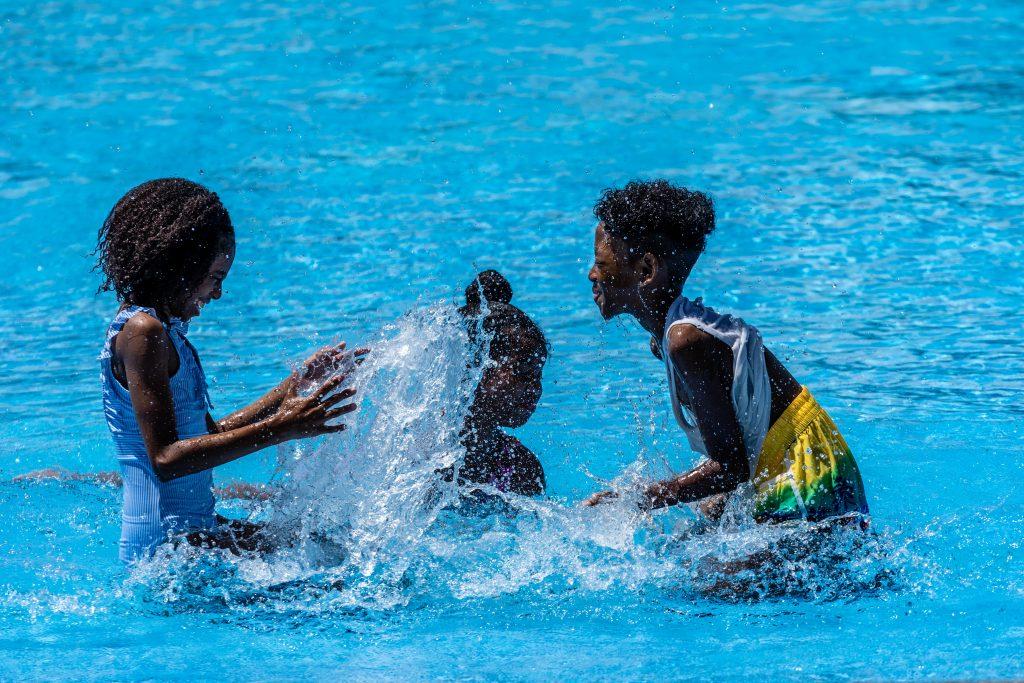
The barriers that Melona speaks of are based in racially prejudice pseudoscience, history, exclusion and discrimination, and socio-economic factors that prevent people of colour and those from poorer and urban communities accessing swimming and nature.
“I have so many conversations with people about these barriers,” says Melona, who is currently writing a book on the subject. “There’s the pseudoscience that based on your race, your bones are more dense, and that becomes pervasive, a part of the underlying culture.”
This is reflected in statistics. For example, a 2023 survey found that the risk of drowning was 3.5 times higher for children of Black or Black British ethnicity, and twice as high for children from more deprived areas. “There are a lot of myths to dispel around ethnicity and place in water,” says Melona.
“People truly believe the pseudoscience, but it’s just racist philosophy. I’m writing a book about the history of swimming and pseudoscience, and also the long aquatic histories with people of the Global South. I’m going to Senegal at the end of September to make some connections, because there’s a really strong legacy of swimming there.”
Bold impacts
For what is theoretically a very equitable activity, there’s a whole host of barriers to swimming – and many people face intersectionality where they’re affected by multiple challenges.
“There are barriers to gender,” explains Melona. “One of the youth members on our advisory board is a young Bangladeshi girl who’s Muslim. She brings a brilliant perspective in terms of needing female-only sessions, and finding full coverage swimsuits that aren’t too tight. There are also barriers with young people and bringing them out to nature. “There are real barriers around swimming for people with Afro hair, which is why I don’t like swimming in swimming pools, and this is how I transitioned into open water,” she says. “I love being outside. I prefer the nature element and it also doesn’t affect my hair.”
Living in urban spaces can be a barrier, too. A report by Swim England this June showed that 500 swimming pools have been lost since 2010, a vast proportion of which are in deprived, urban areas.
Melona grew up swimming in Hackney, which is thankfully rich in accessible water space. She’d go to her local pool every week, use the nearby boys’ grammar school pool for swimming and kayaking every summer, and swim in Hackney Marshes.
But, she says, going out to natural environments is vital. She explains how, as a Duke of Edinburgh Expedition Leader, she came across problematic views while out with young people. So, redressing that inequality is as important is the swimming itself.
“With the mental health crisis that we’re having with young people, they deserve to be able to engage with the benefits of being outside,” she says. “I want young people to get out of the city and be in nature because it’s not about just reclaiming open water, it’s about reclaiming nature in its entirety.”
Making waves
Bold Waters started with a programme called Wave Makers, an introduction to nature, learning about water safety and swimming for young people.
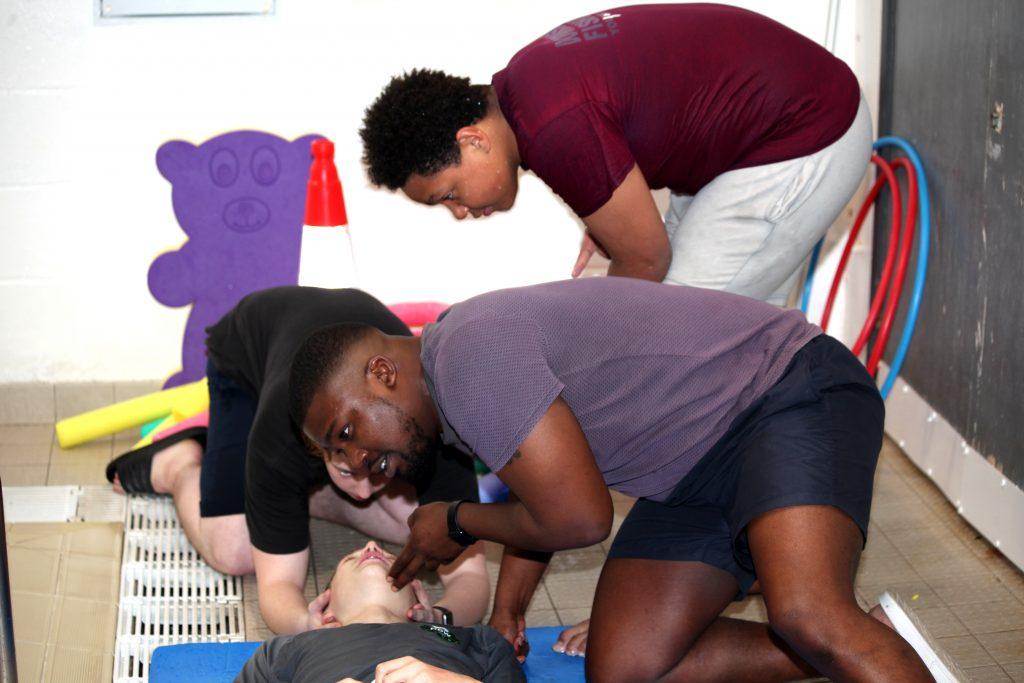
“I think it’s really important for young people to dispel the fear and learn to be safe,” says Melona. “A lot of things I’ve heard, especially in young people and adults of colour is how trauma has been passed on since the transatlantic slave trade. You’ll see parents at the side who want their kids to swim, but they’re just transferring this fear.”
That’s where Bold Waters’ Fear to Flow programme comes in. It builds comfort and confidence for those who are fearful around water, adding basic swim skills. The Global Flow programme enables participants to teach swimming around the world.
“That was the original project to develop swimming skills, get qualifications in swimming, and then going to a country with a high drowning rate to be a swim leader and advocate for water safety,” says Melona. “So, you can either have a career in swimming or you can use those skills in other aspects of your life, because they’re truly transferable – communication, mentorship and leadership.”
Adults can also participate in Ripple Effect Retreats to reconnect with nature. These two-day retreats are for especially for those who feel disconnected from nature or excluded from swimming spaces, and want rest, restoration, and increased confidence. Swimming and immersing in nature has the potential to be free and easy to access for everyone. But barriers still exist. Luckily, we have extraordinary people like Melona who work to identify those barriers, break them down and vastly improve people’s lives.
Find out more about Bold Waters at boldwaters.org


