Masters of winter
Is there a secret to mastering winter swimming? Rowan Clarke finds out
Cold water is powerful stuff. When we sink into it, it elicits an intense response, brings potent benefits, and making us feel epic. It’s accessible, too – from sea to stream to a cold pod in your garden, cold immersion is almost as achievable as walking in the park.
Little wonder it’s become so popular, its health and wellbeing benefits being lauded everywhere. But what’s the reality of getting into icy water? Is it really a walk in the park? The answer is nuanced. In many ways, cold water immersion is beautifully simple. But it’s not without risk, and you need knowledge, skills and a certain mindset to maximise the joy while minimising those risks.
Cold conquers all
There’s this language around feats of endurance in nature: “She conquered an ice mile”, “He mastered the cold”, “He tamed the tides”. In cold water swimming, this narrative centres around putting mind over matter, powering on, and pushing through pain and discomfort.
“Whenever we look at anything to do with nature and say ‘mastering’, we’re putting ourselves above it straight away, and instantly we’re going to put ourselves in a dangerous situation,” says breathwork and cold water coach Gus Hoyt. “You see people fighting the cold and thinking that grit, strength and willpower alone will get you through. That’s when people get in danger – or put other people in danger.”
Social media is the worst for this. It’s been brilliant for cold water swimming in so many ways, sharing the benefits and platforming movements that support people into the water. But it can also encourage this macho attitude. These ‘YouTubers’, as Gus called them during his Wim Hof instructor training, may have watched an online video, and then gone into cold water like they were going into battle.
Curiously, going into cold water with the wrong mindset seems to affect your ability to cope with it, as Gus found out on his training course. “We had to take on personalities to challenge the others instructors, and one of my instructors asked me to role play a YouTuber,” he says. “I had a lot of fun with that role, I can tell you. But interestingly, after that ice bath, even though I’d done longer ones than that previously, I had a massive after-drop.”
Softening to the cold
Cold water psychology is fascinating. As Gus’s example shows, pushing through discomfort, or even being distracted can make immersion and recovery harder.
“For me, the cold isn’t something to be mastered, owned, or dominated. With patience and listening, it is more like a companion,” says Gilly McArthur, cold-water swimming coach and author of The Beauty of Cold. “If we soften to the cold with acceptance, it can become a lifelong friend.”
Think about your own cold water shock response. If you regularly get into water cooler than 15°C, you will have acclimatised, attenuating that response, so it’s less intense than that of someone not habituated to those temperatures. “It’s a cold shock response, and that response word is key for me,” says Gilly.
“It’s a response we can lessen with intentional, regular swimming and familiarity; once the initial response softens, we can enjoy the water and still stay present in our senses. It’s worth noting that while habituation can reduce the response, we will still lose heat and get cold; habituation it doesn’t make us superhuman!”
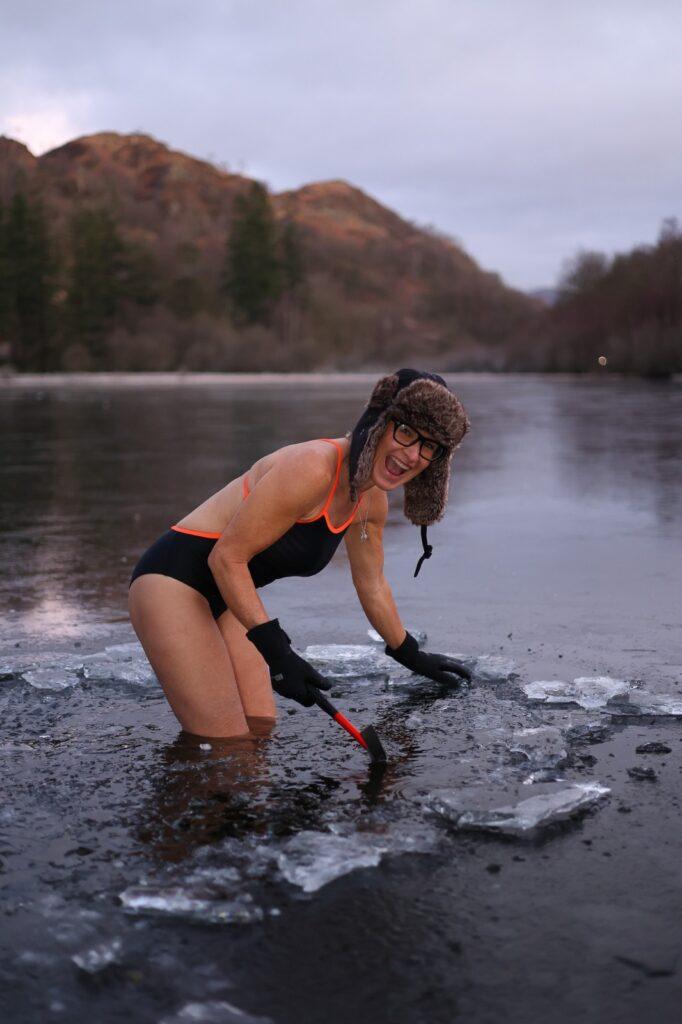
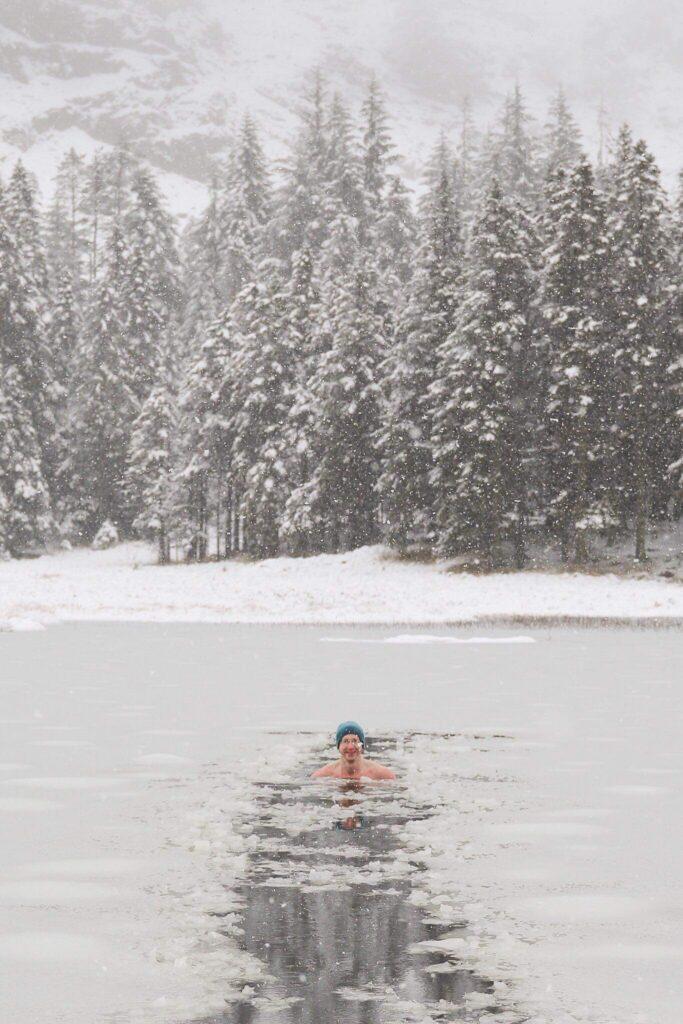
So, anaesthetising yourself is not cold water mastery either, but interpreting the clues your body sends you is. Dr Mark Harper, consultant anaesthetist, cold water swimmer, researcher and author of Chill: The Cold Water Swim Cure, calls this ‘reflective experience’.
“I think the most important thing to master is the feeling inside your own body, because everyone’s different every day, and when the water’s below 10 degrees, there’s not much room for manoeuvre,” he says. “It’s knowing when you need to get out, which is purely about experience, but experience where you’re open to feedback. It is a psychological game. But, at the same time, you can’t alter physics – cold water draws heat out of the body very effectively.”
Switching to winter mode
For experienced outdoor swimmers, the cold requires a change of mindset from the summer. At sub-10°C temperatures, even small changes in wind chill, currents and your own sleep, hydration and stress have a big impact on your swim and post-swim recovery.
“I think any kind of winter swimming needs to be approached as a completely new activity altogether,” says Gus. “So if you’ve been doing it all summer and you want to continue into the winter, fantastic. You’re going to get way more health benefits and probably a lot more of a growth mindset. But treat it as a completely separate activity. It’s not a continuation.”
It also requires a different kind of planning. Rather than thinking about distance, speed, and route, you need to carefully plan your exit point, your prep, your post-swim warm up and your purpose.
“If I’m training for an ice mile, my motivations, training, and kit will be different from dipping with my pals, bobble hatted heads up for mental health reasons,” says Gilly. “Be clear why you are at the shore and go from there. It’s all permissible.”
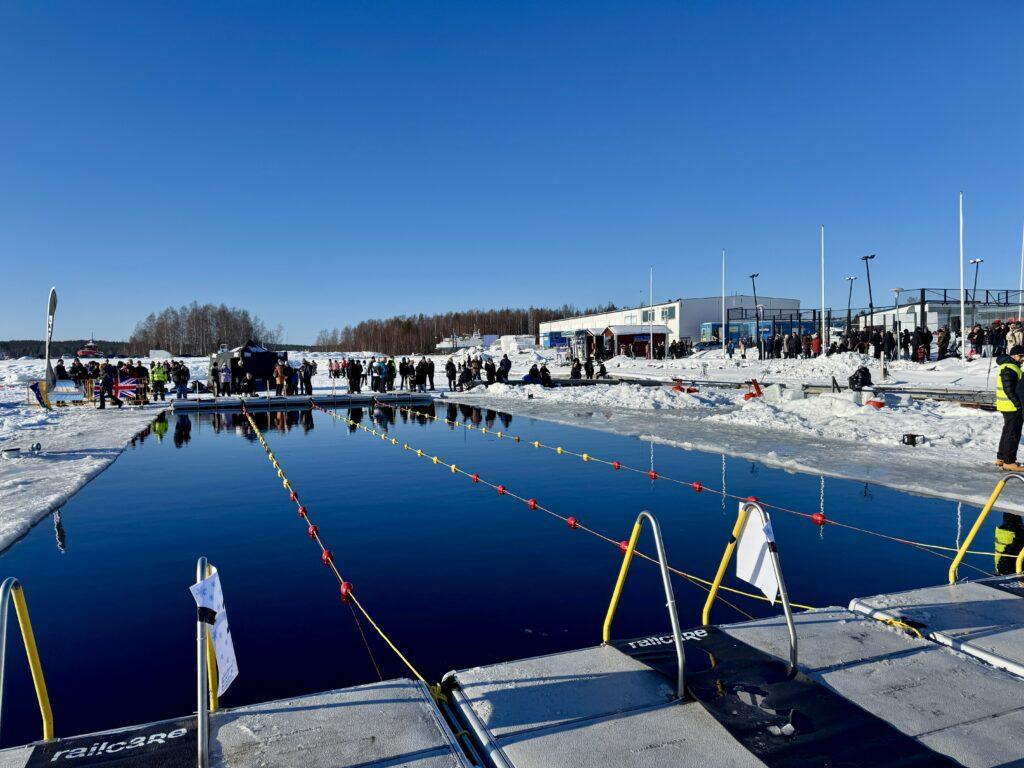
The ice mile – one mile in water at 5°C or below under recognised rules – is not a summer swim extended into winter. It requires progressive acclimatisation, experienced support, a careful rewarming plan, and a healthy dose of humility.
Training should be about reducing, not normalising, risk. You note your health, sleep, food intake and hydration before each session, then record temperature, conditions, duration, stroke quality, cognition on exit and recovery.
“If this is your first winter in cold water for goodness sake, go steady,” advises Gilly. “If you’d never run a 5k before, you’d not expect to run an ultra-marathon by January. Think of the cold the same. Too much too quickly is dangerous and may even make you want to throw in the towel. You don’t need to suffer. Too cold, too long, too frequent is not the rule, nor is it safe or healthy.”
Dips and baths
Most of us will not be training for ice miles. Anecdotally, most cold water swimmers are in it because it greatly enhances their physical and mental wellbeing during the darkest part of the year. The mastery here is about maximising benefits while minimising risks.
For example, there is absolutely no need to stay in for longer than a couple of minutes. In Mark’s words, “after that initial cold shock, you can focus on what’s around you – your focus widens. At that point, you’ve probably done as much as you need to do. You might get some more benefit, but the risks also go up. Longer is not better.”
Gus recommends spending those couple of minutes tuning into your body and thinking about your breath.
“Every step you take when you’re getting into very cold water, exhale,” he says. “It’s not trying to control the breath, but by allowing yourself to become aware of the breath, you’ll automatically become more in control of yourself.”
A guided ice bath is a beautiful way to practise cold water reflection, because it removes the distractions like deciding your exit point or coping with chop. Instead, you can focus entirely on sensation and breath.
Winter dipping
Of course, moving water and nature is part of winter swimming’s appeal. And outdoor swim spots are where the cold water communities convene. With less time in the water and more time warming up, these gloriously welcoming gatherings offer motivation, support, local knowledge, sociability and safety. In these groups, swimmers have been sharing received wisdom about winter swimming for many decades.
“Knowing how to properly warm up following a swim, e.g. getting out of the wet swimsuit and into dry clothes; drinking warm fluid; hopping in a warm car or sauna (if you’re so lucky),” says Gary Emich, a 30- year member of San Francisco’s South End Rowing Club. “The single most important piece of advice or knowledge that I’ve learned is to ‘listen to and know your body’ because what works for others doesn’t mean it will apply to you.”
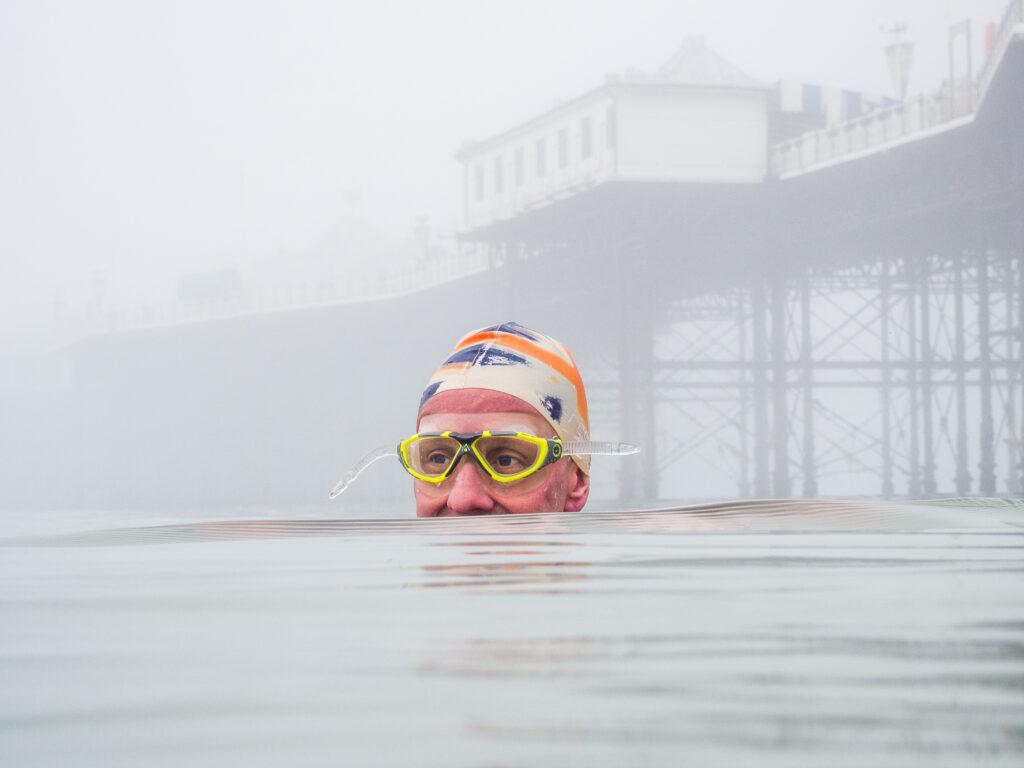
This echoes Mark’s points, and is important in the context of groups, especially as cold water swimming continues to grow. Mark lays out the advantages of groups in winter for checking in with each other, discussing the conditions, and looking out for each other, as opposed to adopting “a herd mentality.”
“One of the first times I dipped with people I didn’t know I got afterdrop and I was on the way home alone,” says newer winter swimmer Abby Glassberg, who quickly learned how the group buoys you up before, during and after a chilly swim. With the support of her monthly Chesapeake Bay group, she went to Vermont’s Memphremagog Winter Swim Festival with her daughter.
“It was a 12-hour drive, and the entire way she kept telling me she wasn’t going to swim,” says Abby. “But when we arrived, met everyone, and she saw every body type imaginable and how welcoming and inclusive the swimming community was, she changed her mind. What started as a silly idea to dip in the Chesapeake Bay once a month has turned into an experience that has taken me places I never expected – and given me some pretty special memories with my daughters.”
Mastering winter swimming
The difference between cold water mastery and mastering the cold is nuanced, and the key is finding the fine line, as Gilly puts it, “between ‘this cold swim and experience is beneficial for me’ and ‘I’m going to push through this even though it might be harmful for my mind and body’.” Her test is whether it remains, “on the right side of fun, risk and reward”.
Cold water mastery isn’t a power move. It’s careful planning, finding your purpose, entering steadily, noticing how you feel, responding without ego, and getting out while you can still care for yourself and your companions.
“Risk assess your mind and body before the swim,” says Gilly. “Scroll through the senses, feet on the shore, wind on the skin, sounds in the liminal space, sunlight on the water. In that stillness you can find a flow state to take to the swim, and in flow state enjoy the swim. Distance swimming can be a meditative practice – presence in the next stroke without judgement – that’s a beautiful thing.”
For more: read ‘The Beauty of Cold’ by Gilly McArthur and Chill by Dr Mark Harper.
Find Gus Hoyt at breathandice.co.uk