Static cooling: How to ice bath properly
Fenwick Ridley, aka Ice Viking, is Founder of Northumbrian Sauna, Team GB Ice Swimmer, Sauna Master, and open water trainer. He has built a life around water, heat and the benefits of contrast therapy. With years of hands-on experience, he shares how to ice bathe properly
Ice bathing has exploded in popularity. Scroll through social media and you could easily believe that the colder the water, the more ice floating around and the longer you can suffer, the better the experience – I think we need to change that conversation.
An ice bath shouldn’t be a toughness test. You don’t get extra points for suffering. For someone beginning their journey into cold water, I use the term ‘static cooling’: controlled, non-swimming exposure to cold water where the plan is to understand how your body responds. The aim isn’t to get good at suffering. It’s to get good at understanding your body’s response to cold.
What is static cooling?
Static cooling means entering cold water while remaining relatively still, with your head above water, for a controlled period. It’s different from winter swimming; you’re not generating heat through sustained swimming, you’re not dealing with wind, waves or an unpredictable environment, and you can get out immediately. For beginners, I favour water around 10–15°C – cold enough to provide a substantial cold stimulus without turning the experience into a competition to find the lowest number on the thermometer, which brings us to a few myths.
Myth #1: You need to dunk your head
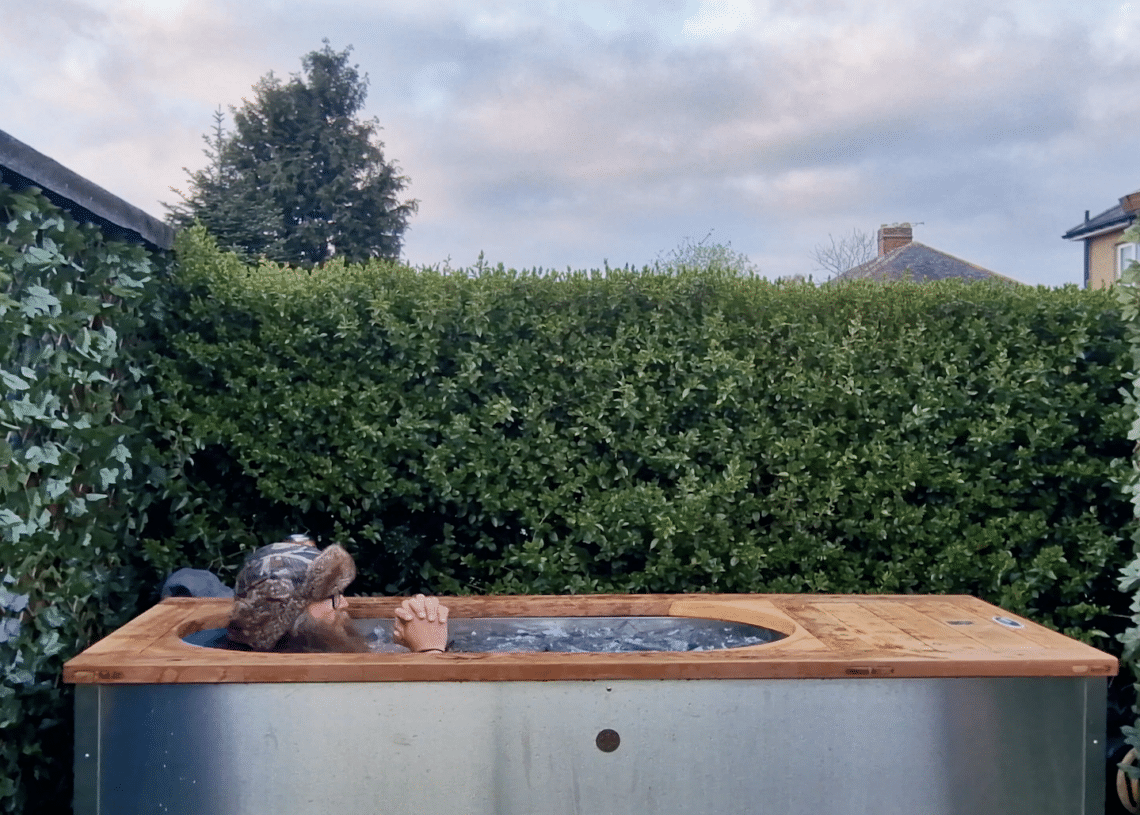
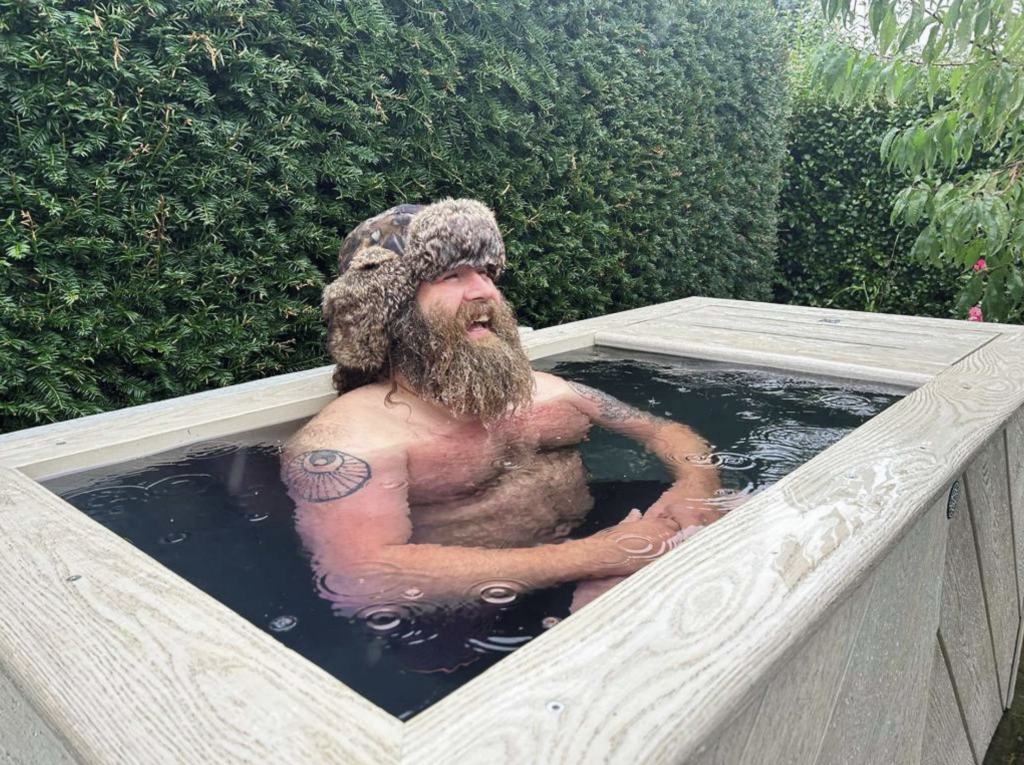
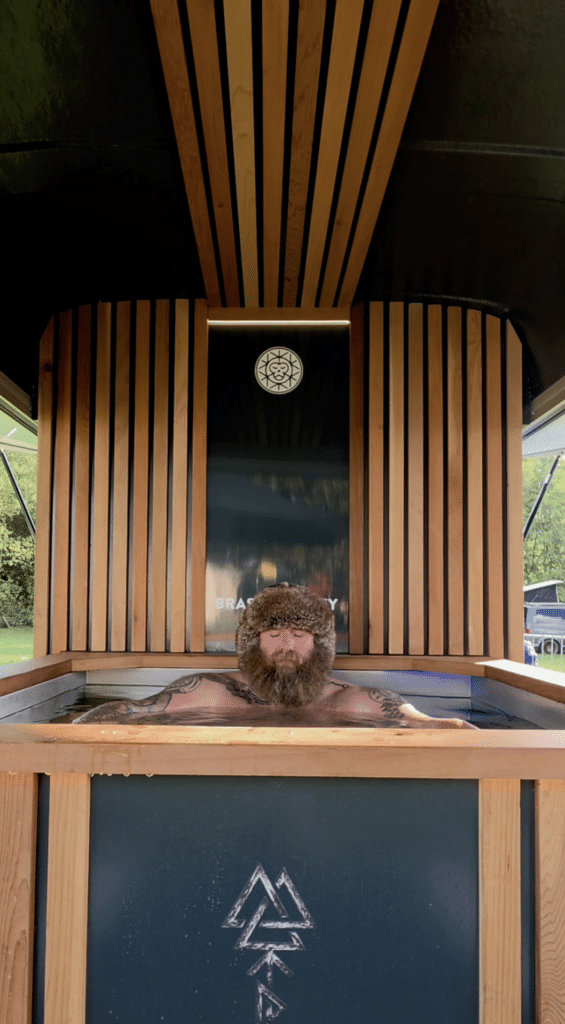
You don’t. I often see people finish an ice bath by plunging their head underwater, almost as though the experience doesn’t count until they’ve done it. Exposing the scalp to an intense cold stimulus commonly involves breath-holding while the rest of the body is already responding to the cold through vasoconstriction and changes in heart rate and blood pressure. For static cooling, there’s no need. Why deliberately add another physiological stressor? So, keep your head out. I love to wear my big hat. It isn’t cheating – you’re there to experience controlled cold, not prove something. Wearing a woolly hat helps maintain thermal comfort, slowing down unnecessary cooling and allowing a more controlled exposure.
Myth #2: Colder is better
If 10°C is good, surely 5°C must be better? Not necessarily. Lowering the temperature increases the thermal challenge and rate of heat loss, but we don’t have good evidence that progressively colder water produces proportionally greater health benefits. For beginners, 10–15°C is plenty. We’re looking for controlled exposure, not the coldest temperature you can tolerate.
Myth #3: You need ice cubes
We’ve all seen the photographs of people sitting in a tub surrounded by floating chunks of ice. A bag of ice won’t do much to lower the water temperature. If your water is already cold enough, adding ice doesn’t make the experience more legitimate.
Myth #4: Shivering means it’s working
This is where understanding your body’s response becomes important. I explain it using what I call the first and second responders. When you enter cold water, your body immediately attempts to conserve heat. Blood vessels near the skin constrict, reducing heat loss from the core. Your body can also increase heat production without shivering – known as non-shivering thermogenesis – with brown adipose tissue contributing to this process. Then comes an obvious response: shivering. Skeletal muscles contract involuntarily to generate additional heat. I think of this as the second responder. For an experienced ice swimmer, shivering can form part of the rewarming process, but that’s not our objective. Don’t wait for your teeth to chatter before deciding you’ve done enough. Get out while you’re still in control.
So, how long and how often?
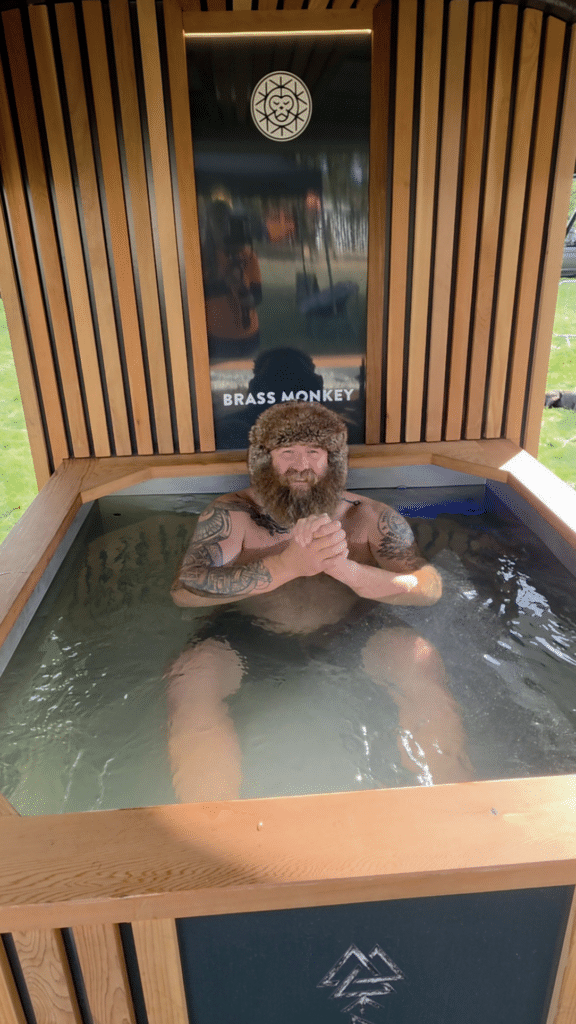
At 10–15°C, I favour around two minutes for a beginner. It’s not a magic number though; research hasn’t established one perfect temperature, duration or frequency for everyone. Instead, two minutes gives you a manageable opportunity to experience the initial cold response, settle your breathing and understand what your body is doing without deliberately driving yourself towards significant cooling. In terms of frequency, two or three sessions a week is a sensible starting point. Consistency and control are more important than chasing numbers.
You don’t approach the water with the same body
There’s something even more important about that friendship with the cold: it needs to be recalibrated every single time you approach the water. You never arrive as exactly the same person who got in last time: your energy, sleep, stress and mental state can all change how you approach an exposure. The water may be exactly the same temperature, but you aren’t the same body or mind entering it. That’s why yesterday’s tolerance shouldn’t dictate today’s exposure.
Prepare before you get cold
Treat the ice bath as an activity in its own right. Arrive hydrated and fuelled rather than exhausted, dehydrated, hungover or depleted after a hard training session. Have your towel and warm clothing ready before you get in. I’d also avoid putting an ice bath after every heavy resistance workout. Regular cold water immersion immediately after resistance exercise may interfere with some of the adaptations we’re trying to achieve from strength training.
Ice bath don’t make you a winter swimmer
This may be the most important message of all. Being comfortable in an ice bath doesn’t make you a winter swimmer. What it can give you is something valuable: a new relationship with the cold. You learn about the initial shock, how to control your breathing, how your mind reacts to discomfort. But winter swimming adds an entirely different set of challenges: swimming ability, cold water competence, changing weather, wind, water conditions, entry and exit points, equipment and the ability to recognise deterioration in yourself and others. If an ice bath makes you curious about winter swimming, it might be time to seek out an experienced coach or organised group.
And remember: don’t try to prove how tough you are. Listen to your body’s responses and learn to understand what the cold is telling you.
Discover our cold water coaching, workshops and online courses at h2otrails.co.uk

Outdoor Swimmer
Outdoor Swimmer is the magazine for outdoor swimmers by outdoor swimmers. We write about fabulous wild swimming locations, amazing swim challenges, swim training advice and swimming gear reviews.