

Diving for treasure: a history of pearl diving
Pearl diving is dangerous work that’s often been delegated to the marginalised and dispossessed. Elaine K Howley explores the history of pearl diving.
Quietly lying on the sea floor just offshore, a humble oyster – let’s call her Ruby – gets irritated. The tiniest speck of something, hard to say exactly what, has gotten caught within the fleshy folds of Ruby’s shell- contained body. She tries flushing the miniscule piece of detritus with a gulp of seawater, but is unsuccessful – it has taken up residence in her squishy mantle. So Ruby commences making the best of a bad situation; she coats the irritant in the first of many layers of nacre, a luminous material that also lines the inside her oblong, brownish shell. Using this timeless compound, Ruby commences making one of the world’s most tantalising gems: a natural pearl.
From the outside, Ruby appears unremarkable, like a bumpy beige rock. But inside, she glows with pastel rainbows that might have been stripped from a unicorn’s shimmering horn. The mother-of-pearl lining of the shell is smooth to the touch but hard, delicate but enduring. Primarily made of calcium carbonate, this pearlescent substance is difficult to fake, but easy to dissolve in vinegar. Like the sea, it’s both strong and fragile in equal measure.
It’s romantic to think that a wayward grain of sand typically gives rise to the development of a pearl, but that’s mostly a myth. More often, organic material such as a piece of food or a parasite that creeps into the oyster’s inner sanctum is the catalyst to kick off the nacre-laying, pearl-making process.
While oysters generally take centre stage when it comes to talk of pearls, the fact is, any mollusc that produces a shell can also produce a pearl, from abalone and mussels to marine snails and clams. Most commercially available pearls today are cultured – purposefully made in pearl farms controlled by people. That process was pioneered by Japanese entrepreneur Mikimoto Kōkichi in 1893 when he successfully seeded a tiny piece of mother-of-pearl into an oyster and grew the first deliberately made pearl.
Prior to Kōkichi’s innovation, pearl divers hunted their quarry at depth over millennia. The dangerous activity of retrieving these enchanting mermaid orbs has a lengthy and brutal history that features some extraordinary water folk who have plied the depths for treasure and survival.
Submerged riches
It’s hard to say exactly when humans first began pearling, but archeological records suggest we’ve been at it for at least 7,000 years. Pearl-producing molluscs live at depths ranging from a few feet – where a diver can gather several shells on a single breath – to much deeper.
Naturally, the shallowest-occurring shells were pulled first. But as humans’ ravenous appetite for these shiny nugget only grew, the harvesters plucked the shallows clean and were forced into ever deeper water to find their riches. As the depth increased, pearling became a specialised skill, practised by small groups of talented divers who sometimes used specialised diving equipment to breathe and endure the underwater pressure at many fathoms below the surface.
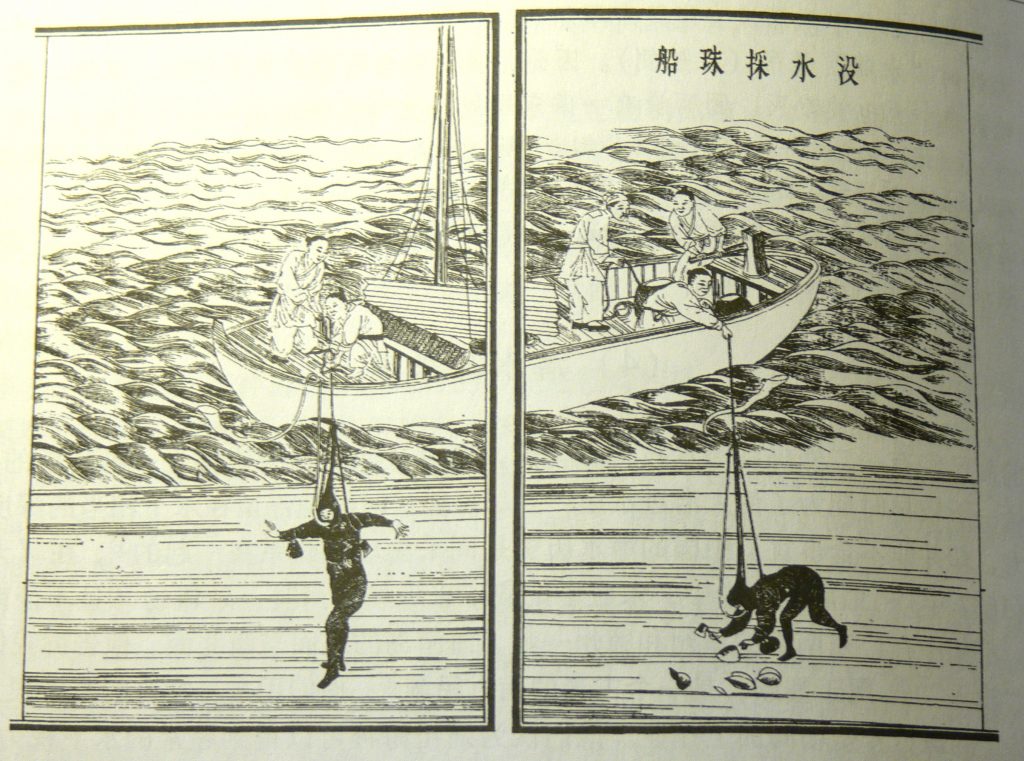
From the Persian Gulf and Japan to Sri Lanka and Australia, virtually every corner of the globe where molluscs flourish has seen some form of pearl harvesting industry develop to exploit that natural resource. And in many places, enslaved people were forced to engage in this physically demanding and potentially deadly occupation.
In his 2018 book, Undercurrents of Power: Aquatic Culture in the African Diaspora, historian Kevin Dawson reports that slavers who brought people from Africa to the Americas frequently identified those who could swim and dive specifically to help pearl fishing operations in the West Indies and other Atlantic coast areas.
Dawson quotes the Dutch merchant-adventurer Pieter de Marees, who was active in the trade in the 1590s, in noting that Africans hailing from the Gold Coast (a region on the Gulf of Guinea in West Africa that’s now known as Ghana) were fast swimmers “‘and can keep themselves underwater for a long time. They can dive amazingly far, no less deep, and can see underwater. Because they are so good at swimming and diving, they are specially kept for that purpose in many Countries and employed in this capacity where there is a need for them, such as the Island of St. Margaret in the West Indies, where Pearls are found and brought up from the bottom by Divers.’”
This work, going on all over the New World, required real skill and years of training. Dawson notes that “Africans began honing their minds and bodies during youth. Captives learned to descend to greater depths and cope with cooler waters. The appellation ‘diving negroes’ and ‘negro divers’ were regularly used in multiple languages to express the acumen of pearl and salvage divers.” He adds that “these titles articulate expertise and it is improbable that novices quickly gained this acumen.”
Women’s work
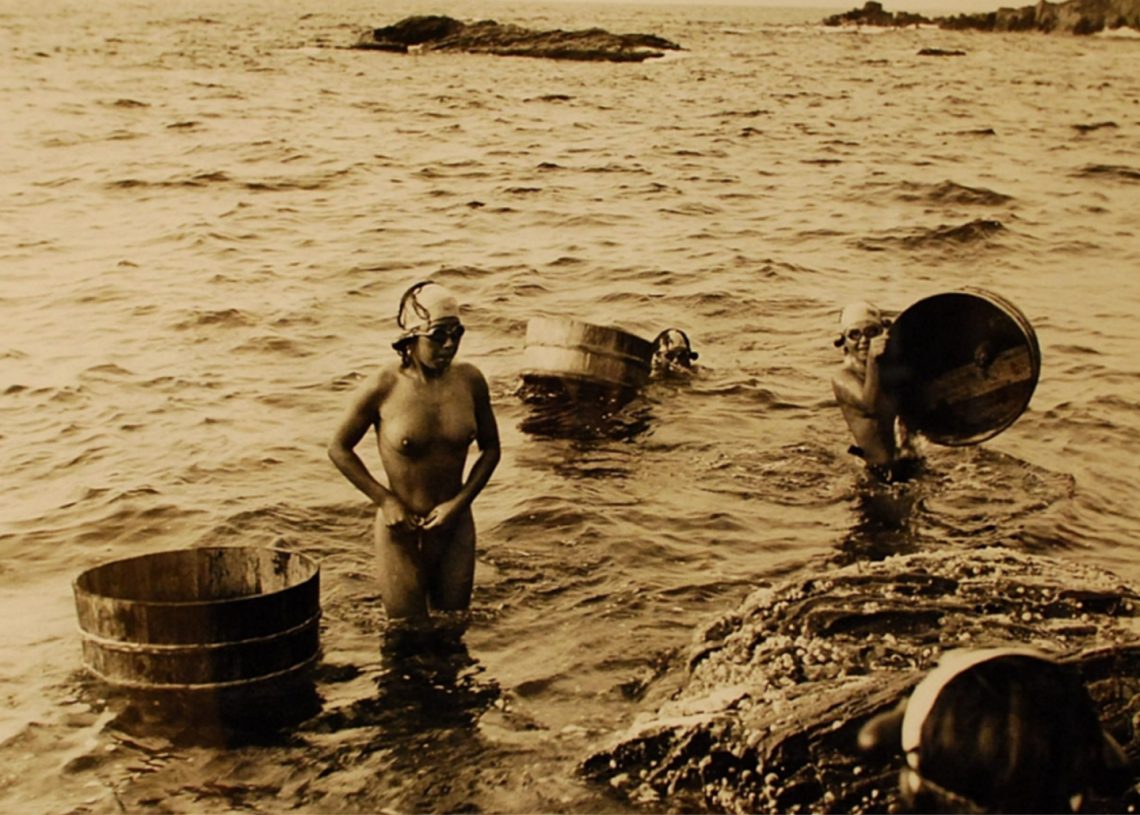
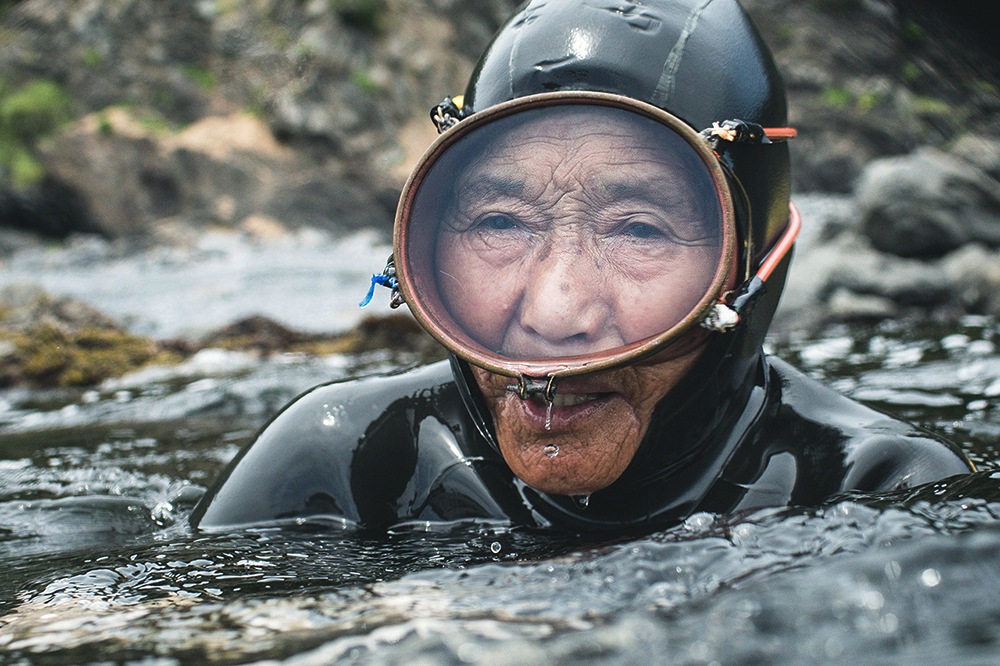
While highly skilled enslaved swimmers were the primary pearlers in some regions, in Japan, indigenous women shouldered the brunt of this hazardous work. Historian Karen Eva Carr notes in her 2022 book, Shifting Currents: A World History of Swimming, that “most of the pearl diving was passed off to women of the minority Ainu people.” The Ainu are an indigenous people from Hokkaido and surrounding northern Japanese islands who made their living by, in, and around the sea. The women, called Ama, dived while holding their breath, tethered by a single, slim rope to an accompanying boat on the surface.
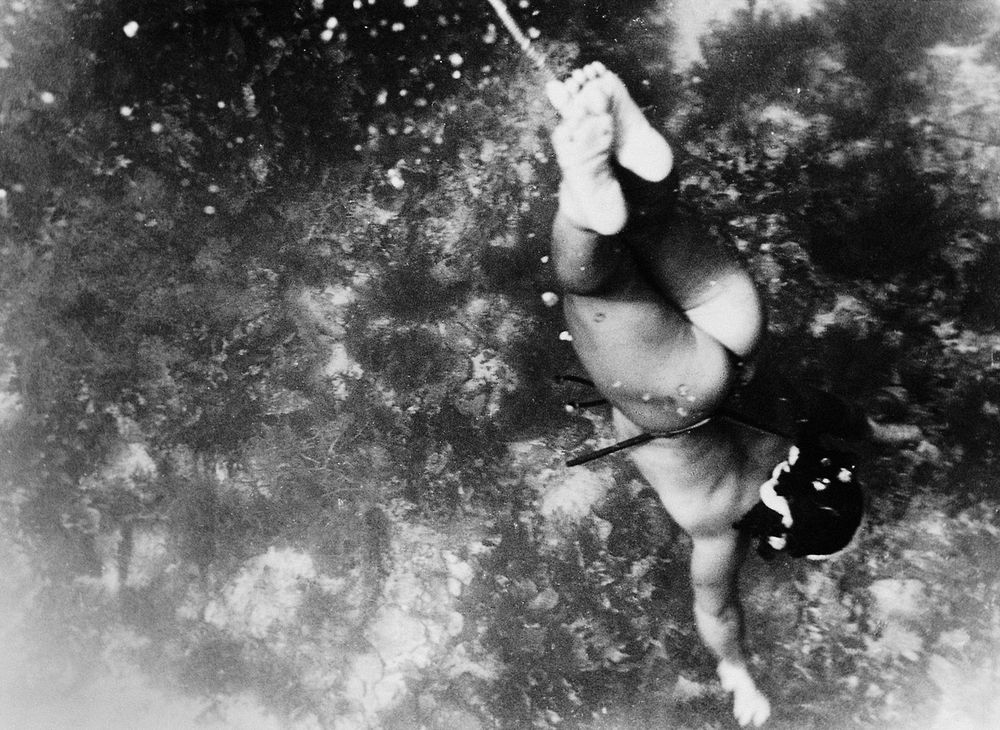
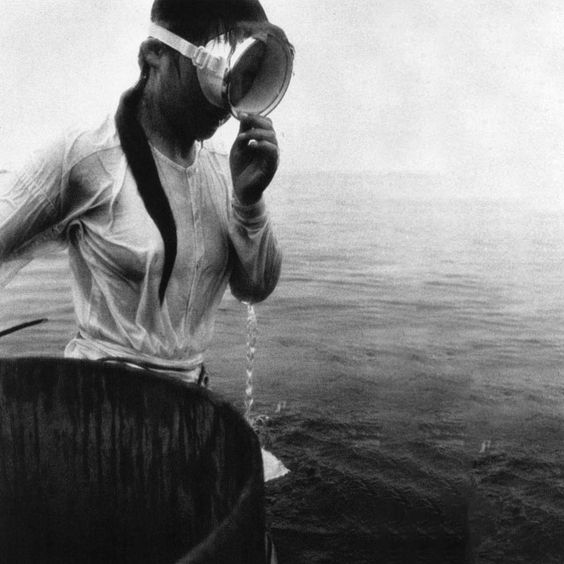
In about 1000CE, the poet Sei Shōnagon wrote about the women diving into danger for pearls while the men lounged safely at the surface: “Even an onlooker must weep salt tears to witness the gasp of the woman as she breaks surface and lays her hand on the edge of the boat – really, I find it utterly astonishing to see those men sending the poor women overboard while they float lazily about on the surface!”
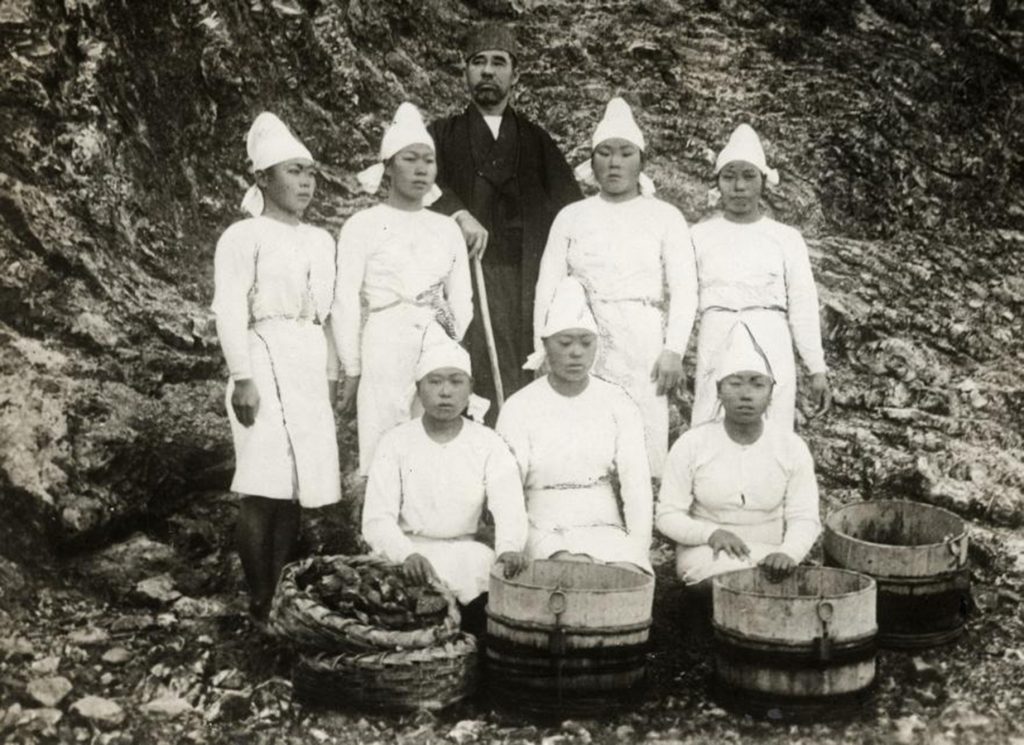
Across the next millennium, the women continued to submerge for treasure just as they always had – as many as 60 times an hour and mostly in the nude. But in the 20th century, the Ama began wearing sheer white dresses and hats while diving, which were meant to symbolise purity but also might have helped keep sharks from mistaking them as seals. By the 1960s, the Ama adopted neoprene wetsuits to help extend the pearl diving season beyond the most temperate months.
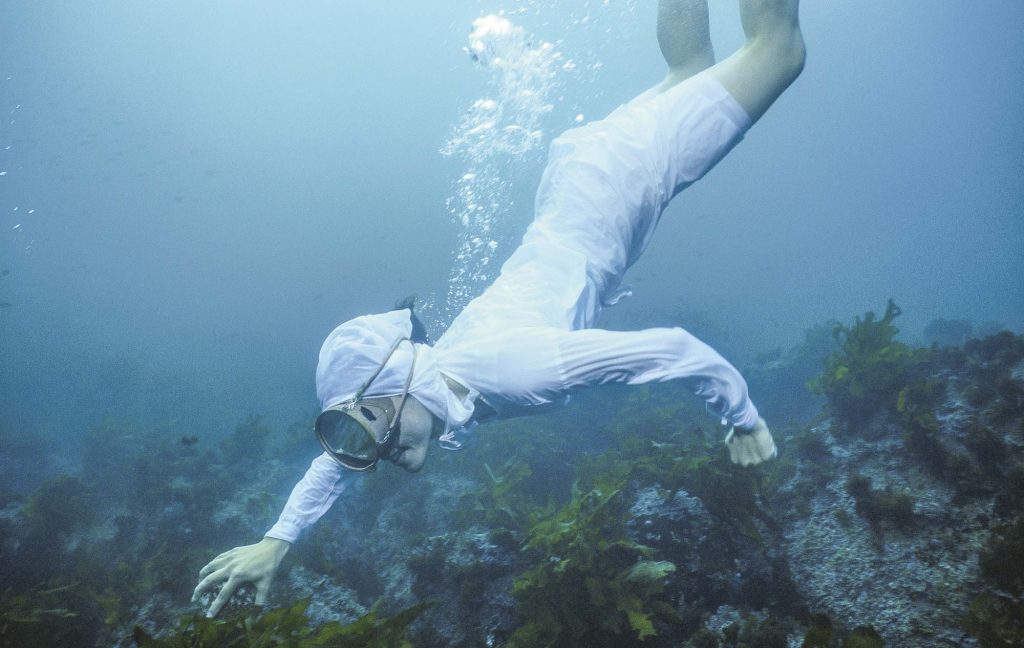
However, as the Mikimoto cultured pearl enterprise grew, the demand for Ama to harvest natural pearls fell. Today they’re considered mostly a tourist attraction. About 60 or 70 Ama still harvest pearls at Mikimoto Pearl Island, down from some 6,000 divers who worked all along the Japanese coast in the 1940s.
The last (and most famous) pearl diver
Though the Ainu had a strong tradition of women pearlers, not all Japanese divers were female. One of the most famous pearl divers was Tomitaro ‘Tommy’ Fujii, a Japanese man who arrived in Australia in 1925. He was just one of some 6,000 Japanese divers who came to the Torres Strait between 1880 and 1942 to harvest pearls, circumventing the racist White Australia Policy that had been enacted in 1901 and prohibited non-white immigrants to the continent because they were cheap labour. Most of them hailed from the poverty-stricken Wakayama prefecture in Japan and were dispatched to Australia on punishing, six-year contracts.
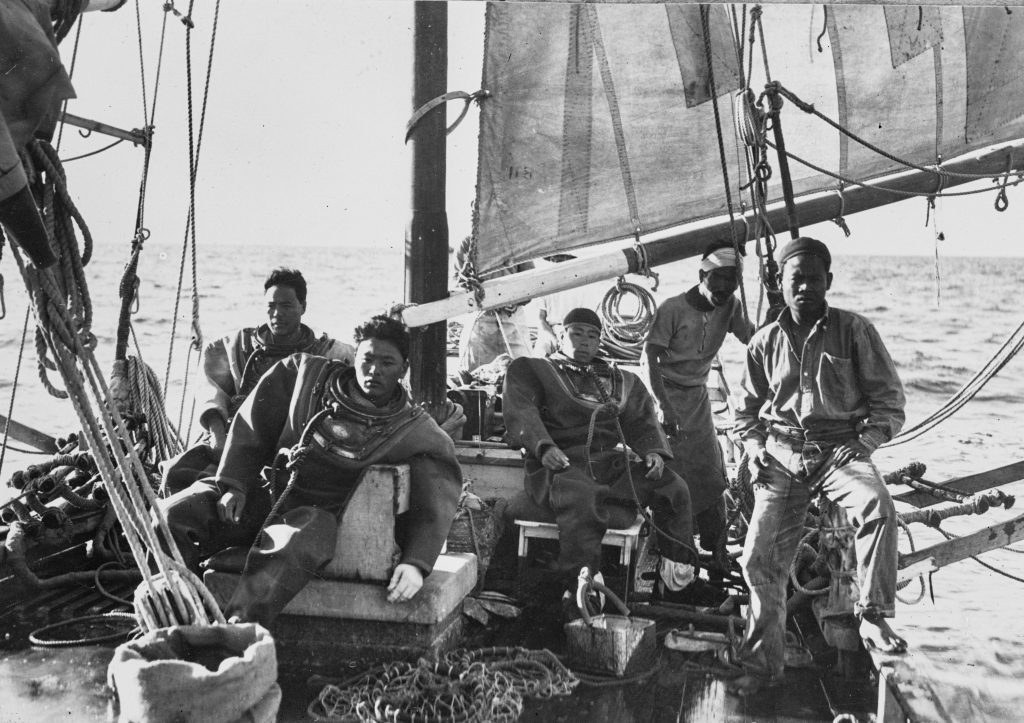
Because pearl shells at free-diving depths had been largely fished out by the mid to late 19th century, the Japanese divers who came to the Torres Strait wore cumbersome diving suits and submerged to depths greater than 50 fathoms (90 metres). They sipped air hand-pumped at the surface and delivered by hose. “Only the toughest and bravest men worked that deep, an hour on the bottom collecting up to half a ton of shell and then another two coming up,” Monument Australia, a non-profit that catalogues monuments across Australia, reports.
Because pearl shells at free-diving depths had been largely fished out by the mid to late 19th century, the Japanese divers who came to the Torres Strait wore cumbersome diving suits and submerged to depths greater than 50 fathoms (90 metres). They sipped air hand-pumped at the surface and delivered by hose.
Their dangerous work in the waters off Thursday Island, just north of the northernmost tip of mainland Australia, didn’t earn them much money, and each year, about one in ten of the divers perished during dives due to drowning, collapsed lungs and the bends. Sharks, hidden holes in the sea floor and tangled safety lines added to the workplace threats to these divers. Despite the risks, the small community of Japanese ex-pats grew as the divers brought family members over or started families of their own.
That all came to a halt in 1941 with the bombing of Pearl Harbour that drew America into more formal engagement with World War II. In Australia, soon after the bombing, the federal government ordered Japanese civilians be interred, and according to Australian news service SBS News, “Japanese people in the Torres Strait were seen as a particular risk over fears they could join the advancing enemy and aid them with specialist knowledge about navigating northern Australian waters. The Torres Strait was, and is, one of the world’s most strategically important shipping channels.” Australia interned 359 Japanese nationals in mainland camps. Most were deported back to Japan in 1946.
Fujii spent the war years in an internment camp at Hay in southwestern New South Wales. In 1945, he became one of just three of the Japanese internees who was allowed to return to the Torres Strait after the war because he had married a Torres Strait islander woman named Josephine in 1928. Fujii returned to diving, and in 1951 he joined a Japanese-Australian firm that cultured pearls. In 1961 he became an Australian citizen and acted as an ambassador for the Japanese community, for which he earned a medal from the emperor of Japan. Fujii also served as caretaker of a cemetery full of Japanese divers who had perished in pursuit of pearls. Fujii died in 1988 at the age of 81 and was buried on Thursday Island.
As the 20th century waned, cultured pearls displaced the much rarer natural pearls found at depth and the price of all but the most perfect natural specimens fell. The development of cultured pearl farms and the far less expensive but often just as beautiful jewels they produce led to the rapid demise of pearl diving as an occupation for many people. But in some corners of the globe, natural pearling still occurs, and the divers who retrieve these gorgeous gems still toil in the depths searching for that one perfect specimen that will outshine all the others.
This article is from the April 2023 issue of Outdoor Swimmer. Click here to subscribe to the magazine.

Outdoor Swimmer
Outdoor Swimmer is the magazine for outdoor swimmers by outdoor swimmers. We write about fabulous wild swimming locations, amazing swim challenges, swim training advice and swimming gear reviews.