
Floating without fear
Actress, author and filmmaker Cat White has launched her most recent project, Swim Sistas, her first documentary that explores of women in water, weaving their stories into a celebration of joy, heritage and the power of simply being. Ella Foote finds out more.
Creating and being inspired by the water is nothing new for Cat White, a writer, filmmaker, actress and storyteller. Her work often braids together identity, heritage and belonging.
Swimming has long been part of her personal narrative, offering both solace and space to think. “I’ve met so many amazing swimmers over the past few years,” she says. “Generations melt away. We’re all parts of something together.”
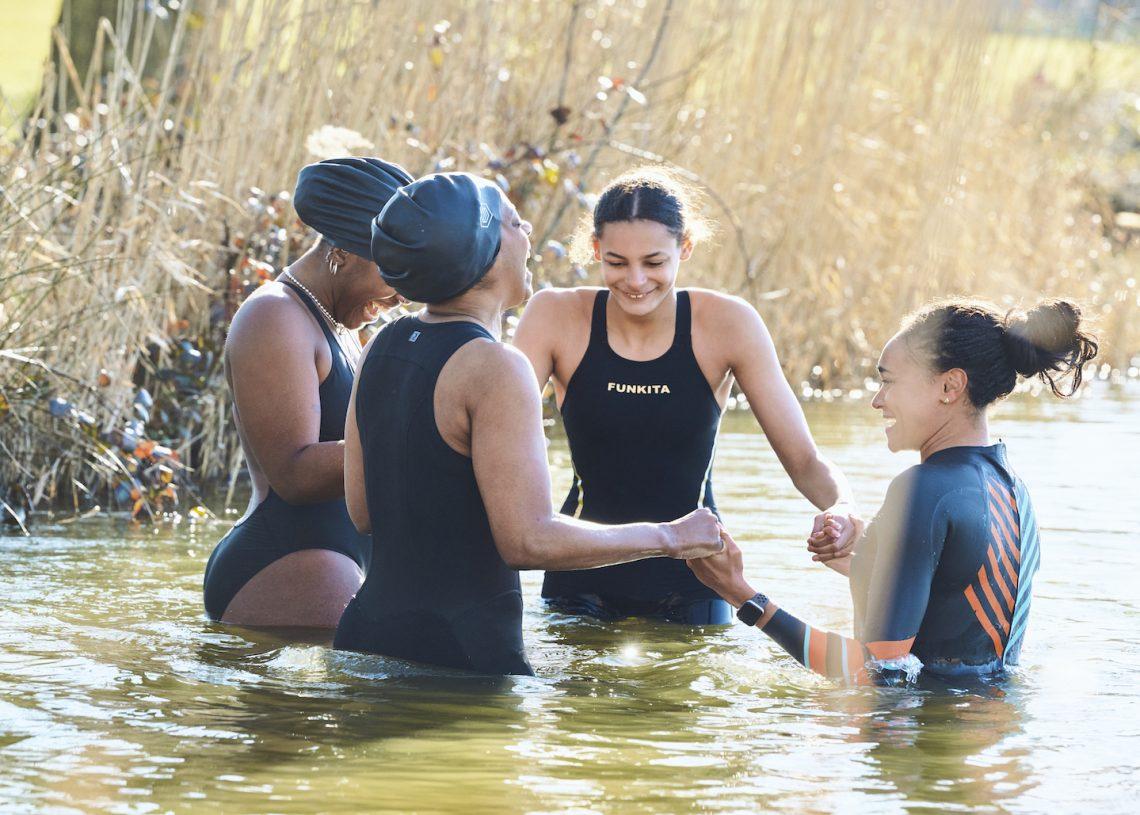
Her new work, Swim Sistas, is a documentary featuring Olympic swimmer Alice Dearing, rugby player Jasmine Boatswain, athlete Lexi Sandiford and Roni Bruno, who learned to swim at 54. It’s narrated by Oscar-nominated actor Naomie Harris. The film captures the connection between black women and swimming, and how it differs between the generations. Cat didn’t set out to make a statement; she wasn’t chasing a headline or forcing an agenda. Instead, she wanted to make something “solely dedicated to joy,” a work that could “flip the conversation about black swimmers on its head and celebrate”, rather than diagnose or debate.
The film was shown at the recent Swimmable Cities Summit in Rotterdam, where it was shared before its final edit. The premiere will screen as part of the Outdoor Swimming Session at Kendal Mountain Festival this November and Cat White will join me on stage for a live discussion.
The project began without a fixed shape but found its form through the stories shared by the women, and was produced on a shoestring budget, despite applications for support and funding. “It feels more authentic; made from us. We haven’t had to answer to anyone or stick to a message someone else wanted,” says Cat.
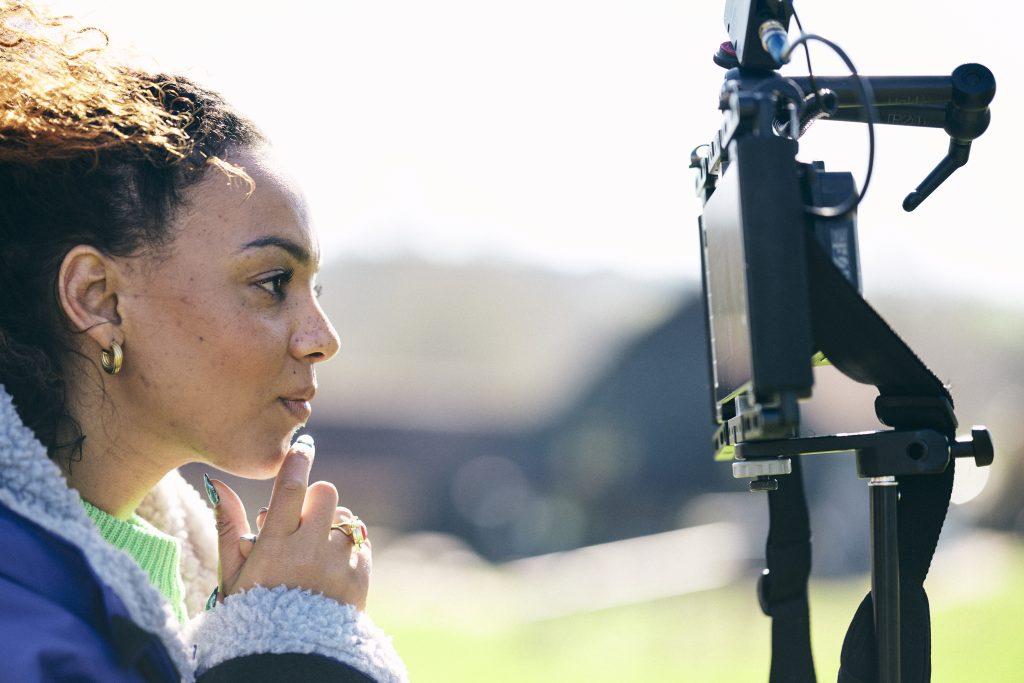
This was Cat’s first foray into documentary. Her approach was instinctive: meet the women, listen, and let them speak. She knew most of them already, except young swimmer, Lexi. “I knew she was a serious athlete, but I didn’t know that much more about her,” says Cat. “I wanted it to feel real, not scripted.” The results are moments of pure authenticity, like Lexi’s shyness in front of Alice Dearing, who she admires, or Alice’s tears on learning how much she had inspired Lexi.
As the four stories came together Cat started to notice patterns, like floating. “Once we learn we could float, it felt like you could do anything,” Cat says. “Jasmine spoke about floating as being the thing that makes her feel most free, suspending yourself in something. That became something I could use to weave the stories together.”
The final cut, however, was a test of discipline. “We could have had six different versions of the film,” says Cat. “Each swimmer’s story could have been a whole film on its own. But I wanted it to be about swimming, but also about something wider – about womanhood, connection, and the space we create for ourselves in water.” That space, Cat explains, has often been shaped by exclusion as well as belonging. She’s aware of the persistent stereotype that Black people don’t swim, a myth that erases histories and lived experience. “We’ve always been swimming,” she says. “Part of this is about recognising that, not feeling like you have to be a statement.”
Cat hopes the film will spark conversations. The heart of her message is simple and open: “Your body isn’t a barrier. Your skin colour isn’t a barrier. If you want to get in the water, you can do it. You don’t have to prove anything.”
For Cat, swimming is not a race, a record, or even a daily habit. It is a space to return to, to rest in, to float. And in her film, it is a place where generations meet, stories surface, and the water holds them all.
Tickets for Kendal Mountain Festival (KMF) are now on sale at kendalmountainfestival.com. Enter our competition to win a KMF ticket bundle.

Ella Foote
Ella is renowned outdoor swimmer and journalist. As well as leading the editorial, digital and experiential outputs for Outdoor Swimmer she is also Director of Dip Advisor, a swim guiding business helping people enjoy wild water. Ella also teaches swimming to children and adults, is an Open Water Coach and RLSS Open Water Lifeguard.