


Hot stuff: the other extreme
Ella Foote talks to experts and swimmers about why swimming in heat deserves the same respect as swimming in ice
When Olympic open water swimmer Hector Pardoe rang his mum after the 2022 World Championships in Budapest, he wasn’t making sense. He’d raced a 10k in 30°C water and 40°C air, spent three hours afterwards in an unventilated anti-doping cabin and come out the other side with heat stroke so severe he couldn’t string words into order. “I told her I was dying,” he says. “It was almost some form of dementia. I lost complete brain capacity and just started speaking gibberish.”
We talk endlessly about cold in this sport. Hypothermia, cold shock, the North Channel as the ultimate test of grit. But ask anyone who has raced or swum long distances in genuinely hot water, and a different picture emerges, one where heat is not the easier, gentler extreme, but a threat that can kill just as fast.
The physiology nobody warns you about
On land, we cool ourselves mainly by sweating. Sweat evaporates and evaporation pulls heat away from the skin. Submerge that same body in water and the mechanism collapses. “When you’re submerged, sweat cannot evaporate, so your most effective cooling mechanism is essentially removed,” says Associate Professor in Extreme Environments and Physiology Heather Massey. “As water temperature approaches skin temperature, the body loses its ability to transfer heat into the environment. If the water becomes warmer than the skin, the situation can actually reverse, and heat is transferred from the water into the body.”
Cold water fights you from the first moment you immerse, in a way you can feel. Warm water can feel comfortable right up until it isn’t. “Comfort does not always reflect physiological strain,” says Heather. “People can feel relatively comfortable while their core temperature is rising.” Research by Professor Mike Tipton and Dr Carl Bradford backs this up. Their review of open water swimming physiology notes that the body’s thermoneutral zone in water, the narrow range where you can rest without shivering or sweating, sits around 35°C, and that once water gets warmer than skin, cutaneous blood flow starts working against the swimmer instead of for them. It’s also part of why governing bodies introduced 31°C as an upper water temperature limit for competition, though as Heather points out, that figure is a blunt instrument. “A 31°C swim lasting 10 or 20 minutes presents a very different challenge from a 31°C swim lasting two hours in direct sunlight.”
At the 2025 World Aquatics Championships in Singapore, water sat at 30.8°C and multiple swimmers were hospitalised. Heather’s understanding of this is that it comes down to heat the body simply can’t shed: “Athletes swimming at race pace can produce enormous quantities of metabolic heat. In very warm water, combined with tropical air temperatures, humidity, solar radiation and lengthy race durations, core temperature may continue to rise.” It’s rarely one factor, but a pile-up of them.
A sport still learning its warning signs
Warning signs of heat illness are also harder to spot than the shivering and slurred speech we’ve trained ourselves to watch for in cold water. Heather lists them: rising perceived effort, a slowing stroke, loss of coordination, confusion, dizziness, disorientation and stopping unexpectedly. “Unlike hypothermia, heat illness in open water swimmers can be less obvious because the athlete is already surrounded by water and may not appear physically overheated. Changes in behaviour or performance may be some of the earliest clues.”
That gap in recognition causes fatalities. In 2010, American swimmer Fran Crippen died during a FINA 10k World Cup race in Fujairah, UAE, in water reported around 29°C. Race officials disputed later claims of a heart attack and the leading explanation has remained exertional heat stroke, compounded by inadequate safety cover on the day. It remains the sport’s starkest warning that heat is not a lesser danger than cold and Hector is clear about where he’d draw the line. “I think there is such a thing as too hot water to swim in,” he says. “I’d cap it at pretty much 28 degrees.”
Preparing like it’s cold
Hector now treats heat preparation the way most of us treat cold acclimatisation, its focused and with data behind it. Ahead of the Tokyo Olympics and again before Singapore, he spent three to four weeks building up to 45-minute baths at 40°C, swallowing a core temperature pill and weighing himself before and after each session to calculate sweat loss. During one 45-minute Singapore prep bath, not even exercising, he lost two litres of sweat. Racing for two hours in 31°C water, he estimates he lost closer to six.
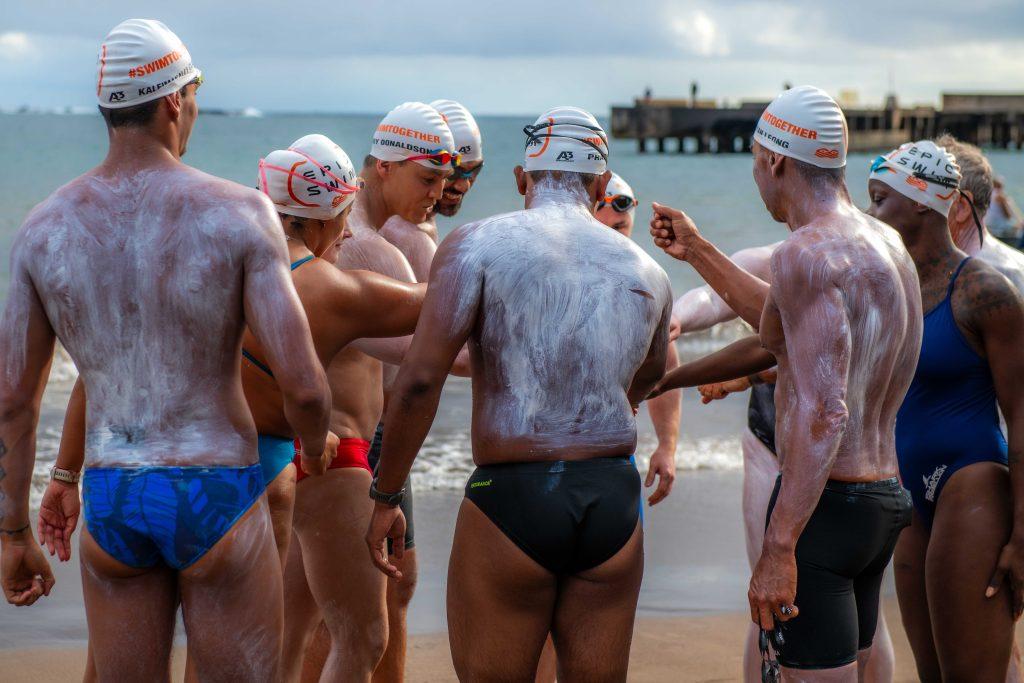
Marathon swimmer Andy Donadlson approaches it the same way, whatever the destination. “I want to try to replicate the environment and conditions I’ll actually be swimming in as closely as possible, so my body’s ready for what’s to come,” he says. He’s swum both extremes back-to-back: 28°C water and 35°C air off Bahrain and then 12–14°C water in the North Channel weeks later. The preparation and the physiology were opposites. In Bahrain, the whole feeding strategy shifted towards replacing electrolytes and taking fluids constantly. In the North Channel, feeds were warmed and frequent, mental fuel as much as physical.
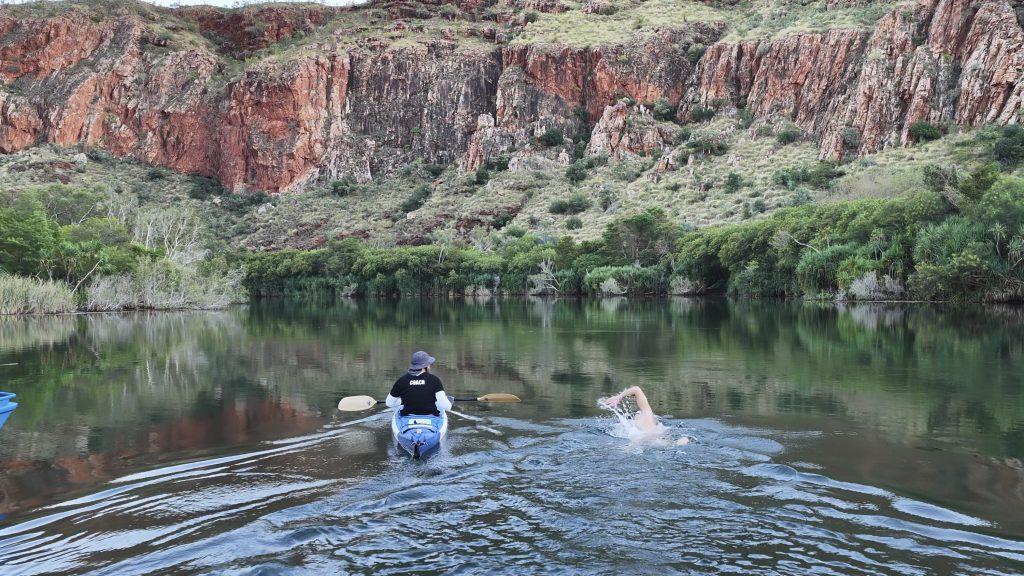
Heat still catches people out. On the 55km Dam to Dam swim on Western Australia’s Ord River this year, in 28°C water under a punishing 35°C sun, Andy started overheating and cramping. “We were admittedly not as prepared for this one,” he admits. His crew spotted it before he did, upped his electrolytes and tucked him closer to the boat for shade. “Even with solid preparation, you still need to adjust on the day, and sometimes you need trusted people around you to recognise when you need help.”
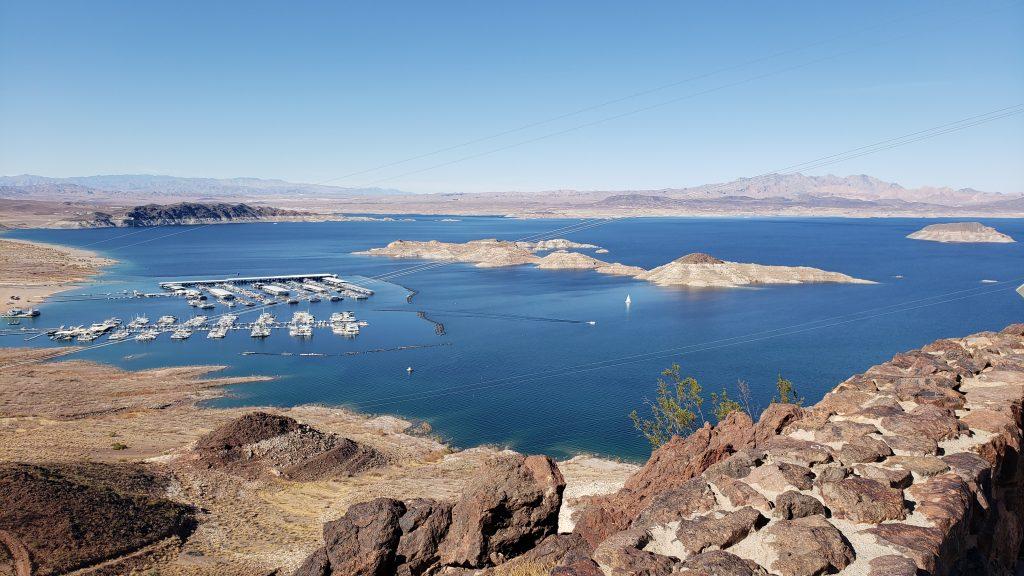
Marathon swimmer Sarah Thomas, best known as a cold-water swimmer, found warm water simply harder, not easier, when she swam 20 miles across Nevada’s Lake Mead. “Hotter water makes your joints ache a little sooner than in colder water,” she says. “There were moments where I wanted to go faster, but I really had to keep myself slowed down to not overheat.” She now plans hot swims overnight where she can, to dodge direct sun and would cap her own comfort zone around 25–26°C. “Extreme heat is just as dangerous as extreme cold, so treat the two situations with the same care and training.”
The climate context
None of this is going away. Heather points out that open water safety thinking has historically been built almost entirely around cold. “Increasing water temperatures, more extreme heat events and the growing popularity of swimming in warmer regions mean heat stress is becoming increasingly relevant.” Her bigger worry isn’t elite athletes with support teams and monitoring around them. It’s the rest of us. Sarah noticed the same shift practically: her Lake Mead route, chosen partly because falling water levels made its future uncertain, wouldn’t be swimmable in today’s conditions at all.
Heather’s advice for anyone planning a warm-water swim mirrors what we already preach for cold: build exposure gradually, start short, avoid maximal efforts early and learn your own warning signs rather than trusting how comfortable you feel. Andy frames it as two separate jobs. “Robustness is being prepared for what’s ahead. Resilience is responding well when things don’t go to plan. You need both.”
Heat has never had the mythology of cold in this sport, no version of the North Channel’s reputation, no badge of honour equivalent to an Ice Mile. Maybe it’s time that changed. The water doesn’t need to be cold to be extreme. It just needs to beat you.

Ella Foote
Ella is renowned outdoor swimmer and journalist. As well as leading the editorial, digital and experiential outputs for Outdoor Swimmer she is also Director of Dip Advisor, a swim guiding business helping people enjoy wild water. Ella also teaches swimming to children and adults, is an Open Water Coach and RLSS Open Water Lifeguard.