

Into the dark
For long-distance swimmer Sophie Etheridge, night swimming allows you to truly let go
I’m often asked the same questions about night swimming: Why on earth do you like it? Aren’t you scared? How do you cope with not knowing what’s beneath you? And how can anyone possibly swim through two nights during a Channel crossing?
The truth is far simpler than people expect – I LOVE night swimming. And during my English Channel swim, I enjoyed the darkness as much as, if not more than, the daylight hours.
Most people discover open water under blue skies, when the world feels open and legible. But anyone who has slipped into a river, lake, or sea after sunset knows that night swimming is an entirely different discipline. It isn’t just swimming at a different time of day; it’s a shift in atmosphere, in perception, in the way your brain and body negotiate the world. For me, it strips swimming back to instinct; a quiet trust in my body, my rhythm, and my ability to keep moving forward.
The first thing you notice is the quiet. Not the absence of people or boats, but a deeper stillness. At night, the world seems to exhale. The wind softens, the water settles, and the usual daytime distractions fade away. All that remains is the sound of your breath and the gentle splash of your hands breaking the surface. It feels intimate, almost private, as if the water has been waiting for you.
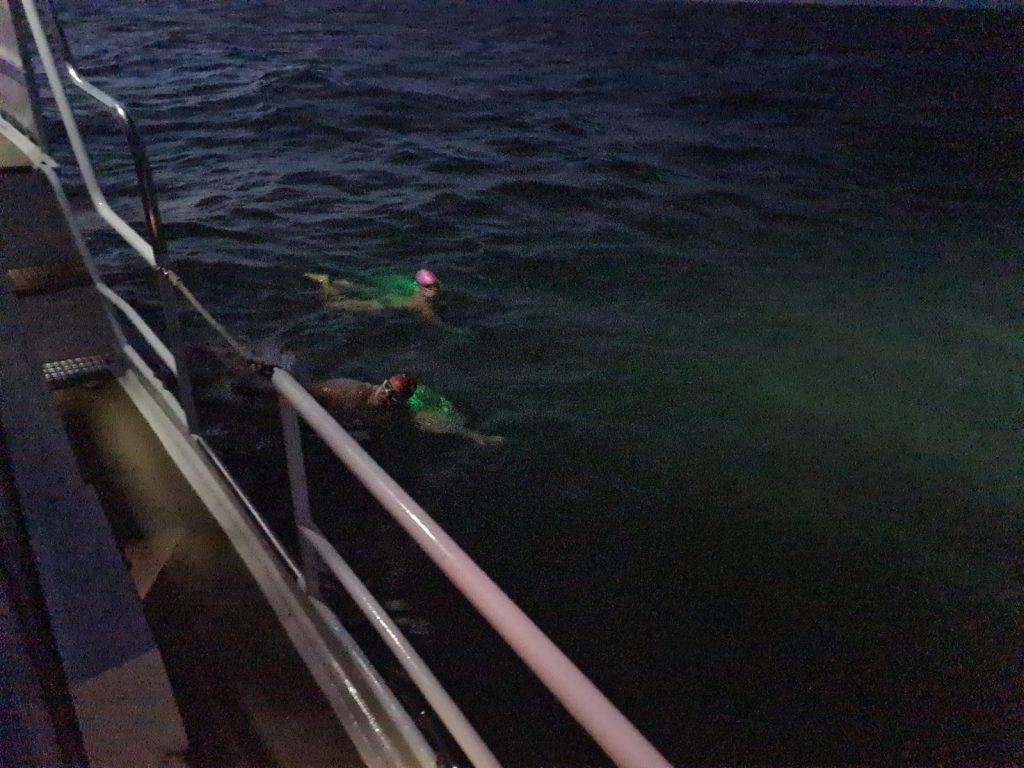
I didn’t know I would end up swimming through two nights during my Channel attempt, but I always knew I’d likely be starting in darkness. What surprised me was how many people treated that as a problem. For me, it was simply part of the adventure and something I was genuinely looking forward to.
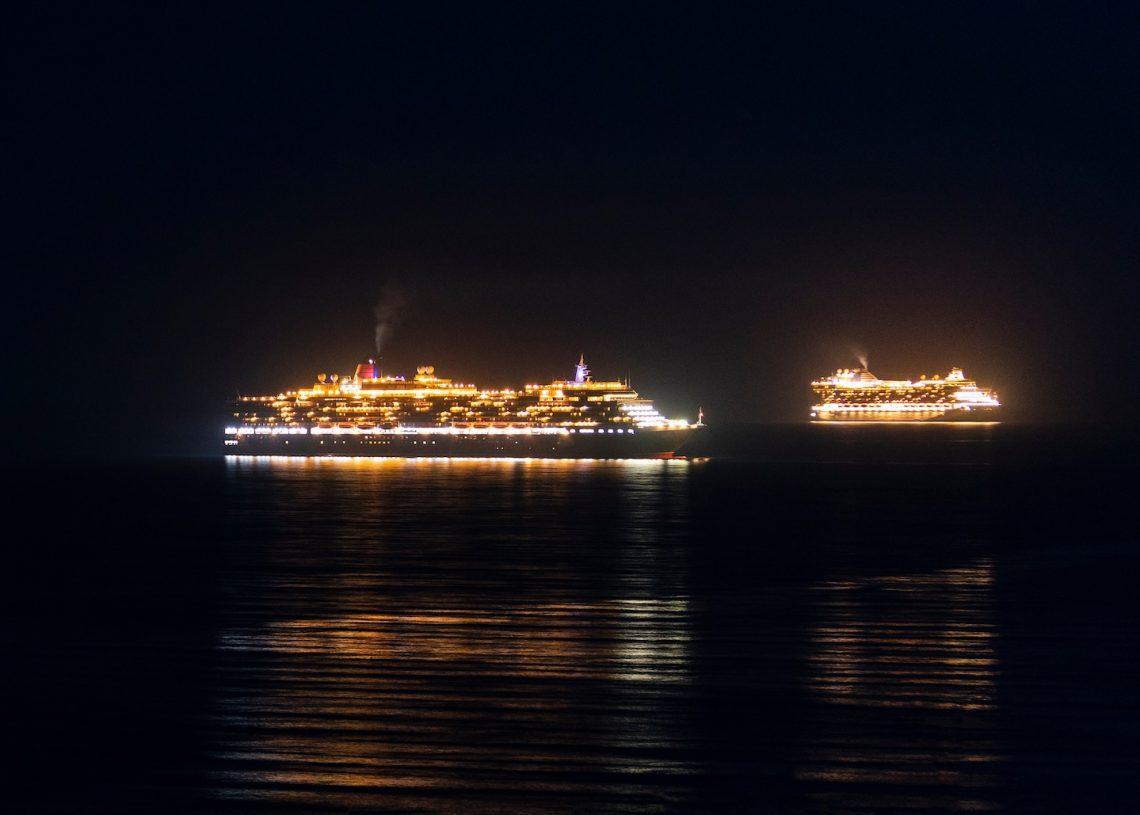
Daylight in the Channel is busy. You see your boat, other escort vessels, ferries, cargo ships, and the faces of your crew every time you breathe. But at night, the world shrinks to a small pool of moonlight and the steady glow of your support boat. It becomes personal. Almost tender. Apart from checking you’re still alongside your pilot, you are completely alone – wrapped in silver reflections, the outline of clouds drifting overhead, and the quiet certainty of your own movement.
Some swimmers say the darkness makes them feel out of control. For me, it’s the opposite. There’s no point fighting for control at night; the water teaches you to let go. You learn to trust your internal compass, your stroke rhythm, your crew, and the strange comfort of the unknown. There is something profoundly empowering about realising that the dark holds you just as safely as the light, that your body knows exactly what to do, even when your eyes can’t guide you.
To me, night swimming isn’t a test of fear. It’s a lesson in trust. And in the Channel, that trust becomes its own kind of freedom.

Outdoor Swimmer
Outdoor Swimmer is the magazine for outdoor swimmers by outdoor swimmers. We write about fabulous wild swimming locations, amazing swim challenges, swim training advice and swimming gear reviews.