


Power up: how to embrace technology for your swimming
A strictly analogue swimmer, Rowan Clarke discovers technology’s place in the water
Naked running is a thing. It’s not nude jogging but going out for a run without any technology – no headphones, no Strava, no heart rate monitor, nothing. It’s a thing because tech is so integrated with running that people need to make a conscious effort to leave it behind.
With swimming, the picture is very different. While many swimmers use smartwatches to track their training, most swims go digitally unmeasured. This is partly because swimming is often not about training, but it’s also because swimming technology is still relatively new.
Those of us who swim to escape the digital world might ask why we’d want more technology. But what if tech could make swimming even more meditative, even more of an escape?
Finding your flow
Swimming has huge wellbeing benefits. Key is finding a flow state where you swim undistracted by self-consciousness, boredom or worries. Swimmers who get ‘in the zone’ report feeling energised, positive, creative and productive.
“Swimming for me is a very happy and therapeutic place to be,” says Dan Wallace, Olympic medallist and founder of the learning platform, Swimmr. “It’s where I can be myself alone with my thoughts. I come up with some great things, answer questions and get a lot of clarity when I’m in the water.”
You might be thinking, surely tech would disrupt that meditative feeling. But, to get into a flow state, you need to feel completely comfortable as you swim. And that’s where technology can help.
“I feel very lucky that because of the hours that I’ve spent at the pool, when I go swimming it can be almost effortless,” says Dan. “So, my mission is to help everybody feel like that. I know that when swimming is hard, it’s hard, and when it’s easy, it’s great. And technique is the first barrier – if you can improve your technique, then it can become easier.”
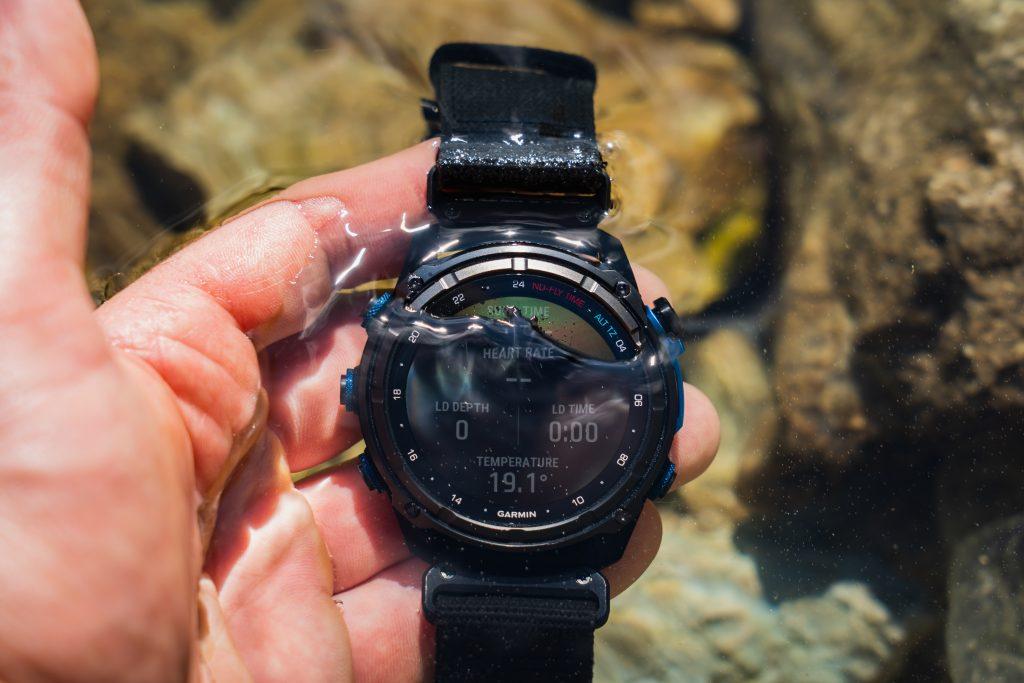
Dan’s venture, Swimmr, brings easy-tounderstand technique coaching to every swimmer. Helping you to improve your front crawl technique, he presents a series of accessible video coaching sessions that help you understand and visualise your stroke so that you can tweak it to make it smoother and more efficient – whatever your swimming experience, style or goal.
Video and online learning is something we all had to embrace during the pandemic, but it opens a world of opportunities. Getting swim coaching from an Olympian that you can take wherever you like, come back to time and again and link up with a supportive online community.
“Every module has been carefully thought about so that it’s very digestible and understandable,” says Dan, who put Swimmr together to overcome the challenges of location-based coaching. “You can go back and revisit it if you need to, whereas with a lesson, once it’s done, that’s it.”
Overcoming panic
In outdoor swimming, finding that flow state is contingent on several other factors, not least fear and panic, which can trouble even the most proficient swimmers.
Fear has an evolutionary prerogative – to get us out of danger. New environments, circumstances and conditions can trigger your body’s fear response, resulting in panic. So, when learning to swim outdoors, you need to arm yourself with techniques to overcome this response.
Being confident in your swimming ability is important, but it’s not always enough. Key open water skills like sighting are key, and so is developing ways to distract yourself from whatever’s triggering the fear.
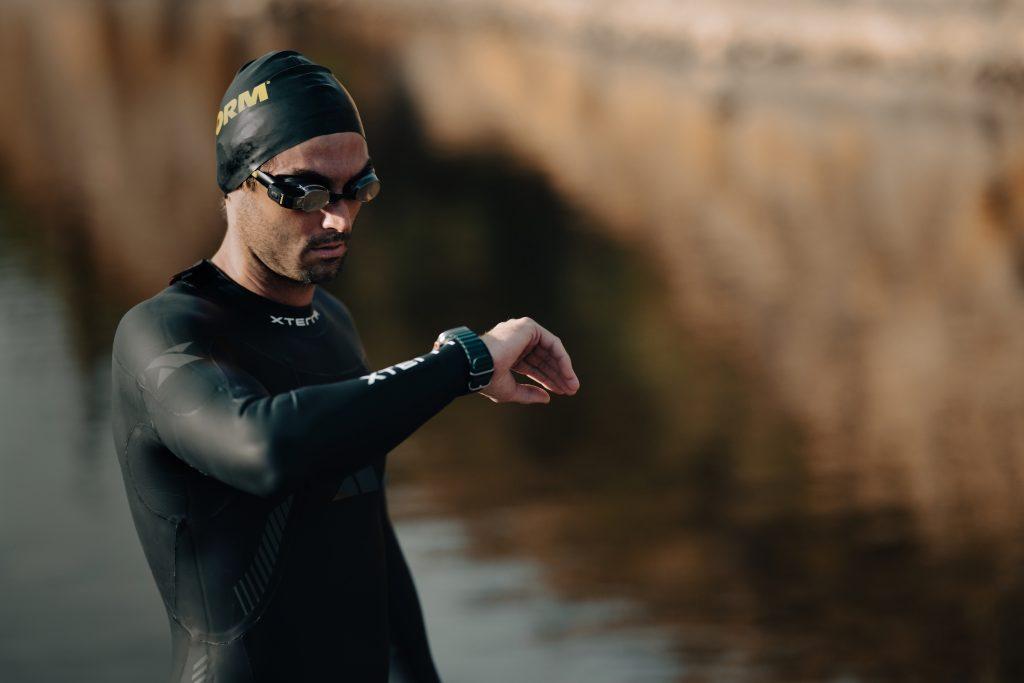
Again, tech can help here. FORM Smart Swim goggles that can not only help you swim in a straight line, but also shows realtime data. FORM’s user community says that focusing on something familiar distracts them from fears, while saving energy from zigzagging makes them feel in control and lowers anxiety.
“We’re our own worst enemy in water, and it’s usually the panic that makes you do stupid things,” says FORM’s founder, Dan Eisenhardt. “So, finally there’s something that can both keep you safer and also can take away some of that anxiety, especially for those people who don’t feel like they’re good swimmers even when they are.”
In the pool and open water, more and more swimming coaches are using increasingly sophisticated tech to communicate with their swimmers. Brands like Sonr, Swimtalk and MySwimEars use bone conduction technology to talk directly to their students as they swim, giving them directions and reassurance.
Empower on
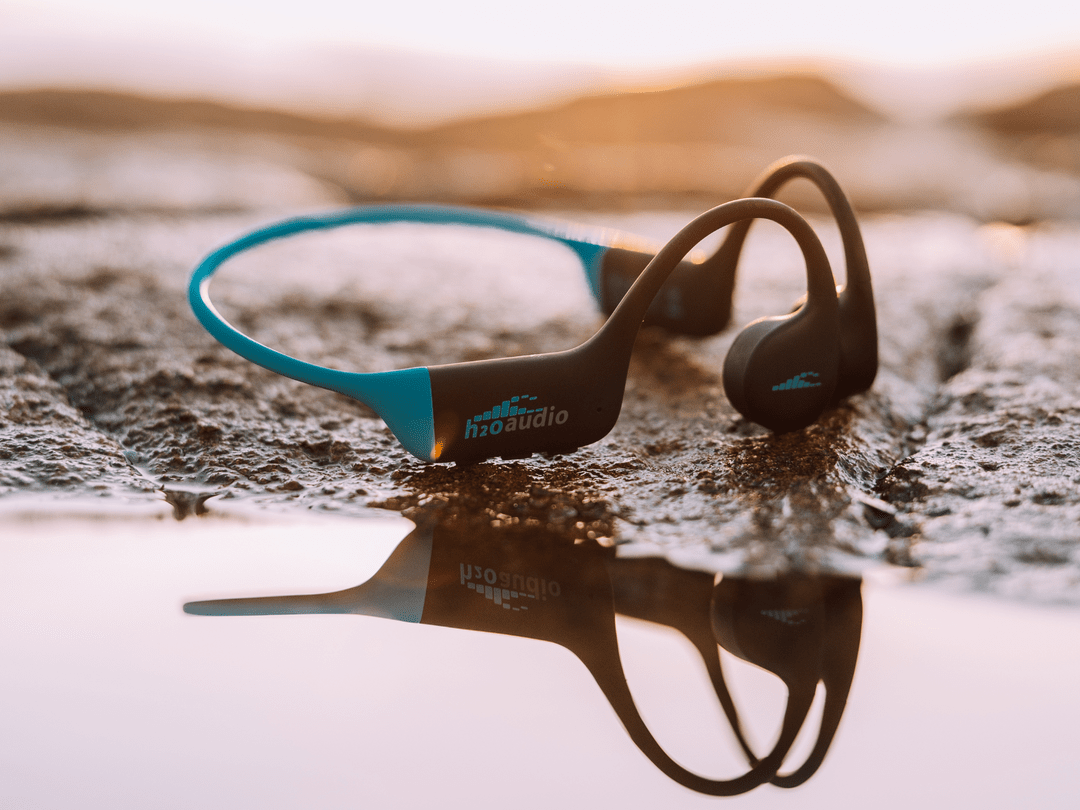
Bone conduction technology has been a revolution for swimmers. A sound processor converts sound into vibrations, which bypass your ear drum meaning that the sound isn’t muffled when you’re in water. These vibrations travel through the bones in your skull to your inner ear, moving the fluid in your cochlea, which stimulates hair cells in the inner ear creating an electrical impulse in the hearing nerve that your brain interprets as sound.
Because the vibrations travel through the bones in your skull, you can wear headphones under your swim hat where they won’t create drag. Preload them with MP3s and you can listen to your favourite podcast or playlist, eliminating boredom and helping you get into that flow state.
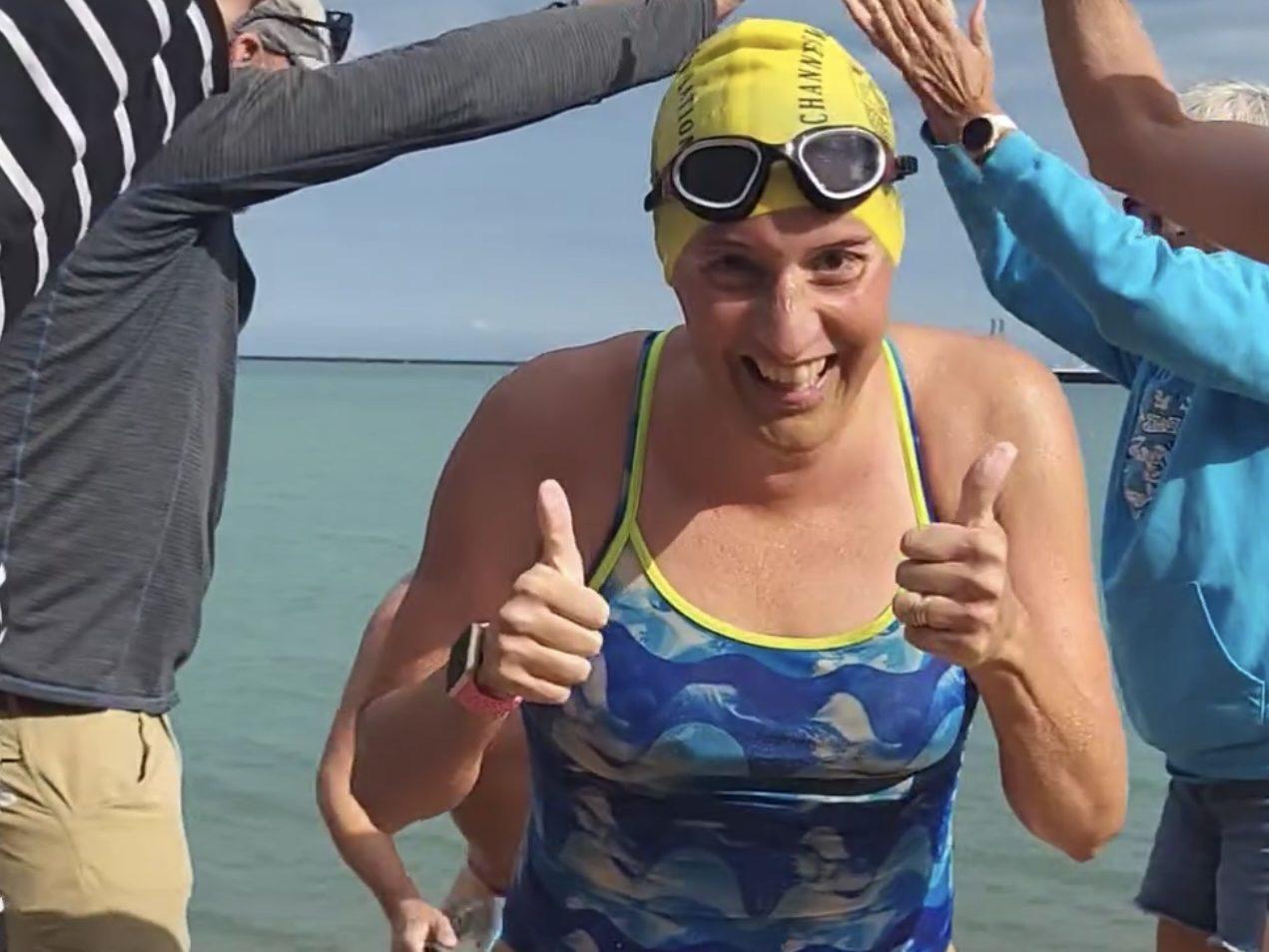
Bone conduction technology is also empowering swimmers to swim in ways that weren’t possible before. For example, Melanie Barratt’s (pictured above) ground-breaking Channel swim this summer was enabled by her Sonr device.
“A couple of years ago, I discovered a device where the coach could talk to swimmers in real time with a radio and bone conducting headset,” says Paralympian, Melanie. “It was a complete game changer for me because it meant that somebody could guide me from the bank or a boat and I could just swim, because I can’t see well enough to swim independently.”
Rather than being tethered to another swimmer, which has all kinds of drawbacks, visually impaired swimmers can swim beyond the parameters of their disability.
“The tech has really opened up my horizons and levelled the playing field,” says Melanie. “I don’t think anybody realised when they developed this technology, what a difference it would make for visually impaired swimmers.”
Before her Channel swim, Melanie worked with Stuart Hacker, coach and founder of The SwimCube in Northamptonshire. A self-confessed data nerd, Stuart’s ‘cube’ is a high-performance endless pool – an incredible piece of kit that allows you to swim on the spot at a pace that suits you. Stuart uses video to help swimmers visualise their stroke.
“The swimmer is able to look at what they’ve done and experiment, which I encourage, and then swim again and see what that change looks like,” he says. “I use systems to speak to the swimmer and recently, I’ve started to adopt use of the EO SwimBETTER system which I find really useful and because it enables me to track forces.”
Immersed in data
For most of us, swim tech starts and stops with waterproof headphones and smartwatches. So, whether we’re listening to a coach or uploading stats after our swim, what we learn and our swim metrics are two separate streams of information.
But what if you could use metrics to improve your technique? Rather than learning the best hand entry position, you could use real-time data or get a detailed analysis of your stroke.
The EO SwimBETTER system that Stuart uses is a device worn in the palm of the swimmer’s hand that gives metrics on the applied force of your hands in up to six directions. You can measure stroke rate, force per stroke, stroke path and hand velocity, consistency and more.
If you’re a true data nerd, you can get even more detailed metrics from MySwimEdge. Worn in a belt around your waist, this incredible bit of kit measures your stroke rate and speed, but it also analyses stroke consistency, speed variation and timing for each arm.
“Sometimes you don’t pay attention to the fact that the timing of your stroke between left and right is different and when the timing is different, you decelerate,” says MySwimEdge founder, Igor Shlyonsky. “Understanding these important bits of information allows you to think better and improve your swimming technique in a mindful way based on the data.”
If you’re struggling to improve your swim efficiency or speed, almost imperceptible adjustments to your technique could be invaluable. And that’s where tech outsmarts the naked eye.
“When people go with a coach or do video analysis, they concentrate on what they can see,” says Igor. “But every stroke is different and efficiency can be measured.”
Tech generation
Compared to other sports, swimming tech is sparsely used by swimmers, even swimming coaches. Certainly, tech that analyses technique to the depth of FORM goggles, EO SwimBETTER or MySwimEdge is yet to be widely adopted. But that’s surely going to change.
“I’m actually expecting to see a continued growth in swimming and the new generation expects technology,” says FORM’s Dan Eisenhardt. “They grew up with technology so, they’re going to demand it. And with AI and all the other advancements that have been made in technology recently, I do think there’s going to be a surge in tools that can help you become faster or enjoy your sport or get more motivated.”
For coaches like Stuart Hacker and Dan Wallace, tech has a place – but only when it helps your swimming.
“All of those systems that you use work brilliantly. If you use them sparingly, you need to make sure when using technology that it enhances the coaching experience, it doesn’t overtake it,” says Stuart. “We want to get our message across and utilise technology to try and help us do that, rather making it the focal point of what we do.”
It may be hard for an analogue generation, but we shouldn’t be afraid to embrace tech where it supports our swimming, improving safety and technique. However, there is still plenty of space to unplug.
“If there’s tech and support out there that can enhance your experience from a learning, data and understanding and performance point of view, that is obviously great,” says Dan Wallace. “I am a big advocate for more tech and the correct tech. But also, don’t be afraid to just go in and just enjoy being in the water.”

Outdoor Swimmer
Outdoor Swimmer is the magazine for outdoor swimmers by outdoor swimmers. We write about fabulous wild swimming locations, amazing swim challenges, swim training advice and swimming gear reviews.


