

Swimming in Time
Three Rivers author Robert Winder explains why river swimming is an immersion in the past
Swimming in rivers has been a deep human urge since Achilles was dipped into the Styx by his mother and Moses drifted down the Nile in his basket of reeds. It was an everyday event in ancient Egypt, Greece and Rome – an extension of the desire to flex muscles, gather fish or cross the water at a time of few bridges.
That is why, these days, to swim in a river is, in part, to take a dip in time. It isn’t just water that streams over your shoulders – it is the past.
That is not what attracted the Romantic poets: for them it was an opportunity to bask in a natural wilderness that was threatened by the world of coal and steam. When Byron swam in Lisbon’s Tagus, and Wordsworth and Coleridge splashed around in the Lake District, it was for semi-spiritual, pagan reasons. As such, it became popular with university professors: Byron’s Pool in Cambridge was chock-full of philosophers, while “Parson’s Pleasure” in Oxford was home to a distinctly Victorian idea of manliness (nude-only). It was an upper-class pastime, in other words.
Industrial pollution was already making it risky. When Coleridge visited Cologne in 1828 he wrote:
The River Rhine, it is well-known,
Doth wash your city of Cologne.
But tell me, Nymphs, what power divine
Shall henceforth wash the River Rhine?
There was more than human waste in this great waterway. Power stations, factories, diesel fuel, pharmaceuticals, rubbish – Europe’s greatest rivers had become drains. And modern life added a flourish of its own. Recent studies of Italy’s River Po have revealed that it is freighted not just with zinc, copper, lead, chrome and plastic, but with heaps of arsenic and cocaine as well.
None of this was enough to deter China’s Chairman Mao. To burnish his credentials as a national hero he made a point of swimming in his country’s mightiest rivers. It was brave: one of his 20 bodyguards on the Pearl swim was bitten by a snake; the water stank; and the Chairman was 63 at the time. But he famously floated downriver on his back for two hours. He did the same in the Yangtse more than a dozen times.
The surge of interest in recent years has been inspired in part by increased scientific sensitivity to the environment, but also by a back-to-nature shift in social attitudes. This was popularised by Roger Deakin, whose eye-catching swimathon in Britain’s rivers chimed with the mood of the times and sent thousands of people off in search of unexplored swimming holes.
That is what prompted Paris to spend £1.2 billion on a clean-up operation to make the Seine fit for Olympic triathletes in 2024. Sadly, the water remained borderline lethal until the very eve of the Games, and Mayor Anne Hidalgo was obliged to don a wetsuit and swim in it herself as a publicity stunt. It marked a new beginning, and earlier this year a body named Swimmable Cities met in Rotterdam to press for wider access to such waters. Following previous meetings in Berlin and Copenhagen, some 200 delegates from 20 countries dramatised their mission by taking a dip in the Rhine, home (until 2004, when it was overtaken by Singapore) the world’s biggest container port.
Wild swimming is not always about the flash of a kingfisher’s wing – sometimes it involves cranes, silos and oil tankers.
Some of the modern enthusiasm for rivers emphasises the benefits for mental health. In truth, this is only a modern phrasing of an ancient truth, which is that rivers have always been essential to human life – for water, food, shelter, security, transport and recreation. But it remains a dangerous pursuit: the size and speed of major rivers is a hazard in itself, and the water remains toxic – especially in cities. That is why a degree of organisation is required. In Basel, for instance, would-be swimmers are advised to buy a fish-shaped nylon bag for valuables which doubles as a float. The route is a scenic swirl through the ramparts where Erasmus translated the Bible, but a single misjudgement would be enough to propel unwary swimmers all the way down to the docks.
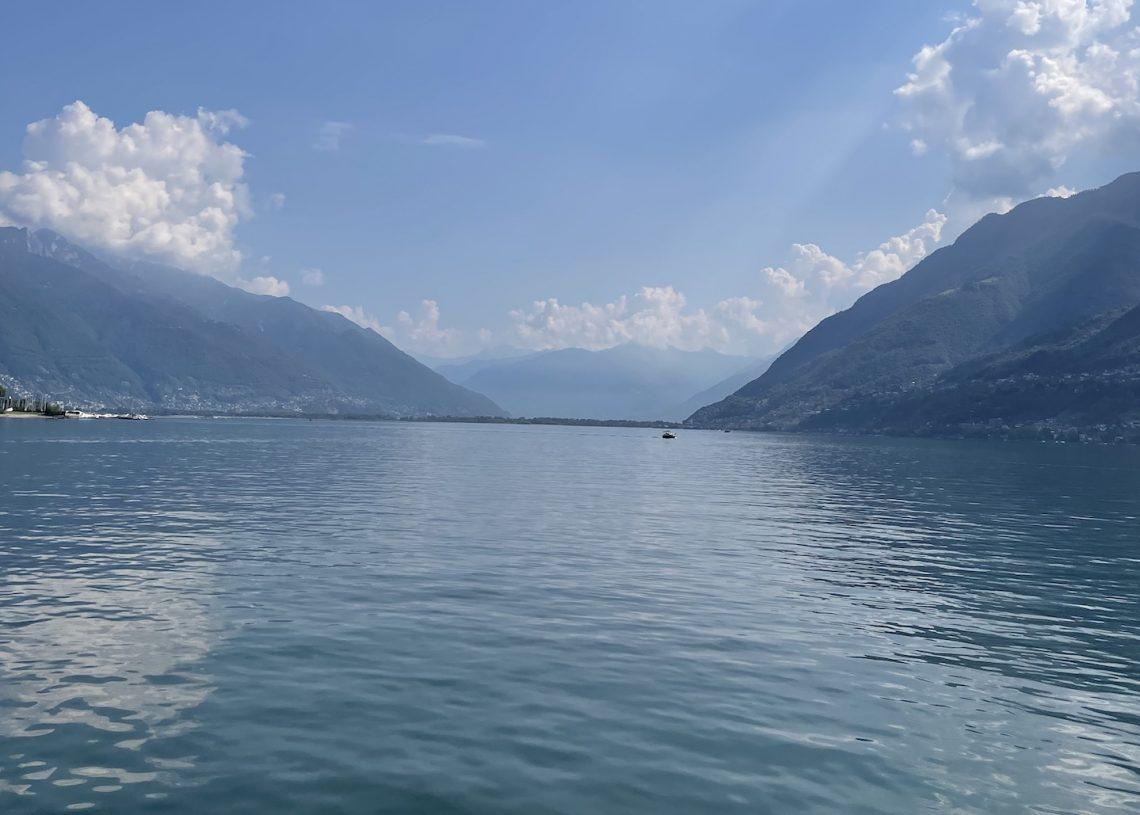
That’s why the best places to swim in Europe are in its lakes – though what is a lake but a bulge in a river? It is hard to imagine a more enticing setting for a morning dip than Lake Geneva, Lake Constance or Lake Maggiore, glaciated swellings in the Rhone, the Rhine and the Ticino. Their fresh soft water lies above the industrialised lower reaches and is clean enough to drink. Dive in at Vevey or Ascona and it is hard to see where lake ends and sky begins – it is one blue blur, with snow on the summits bringing a diamond glitter to the scene.
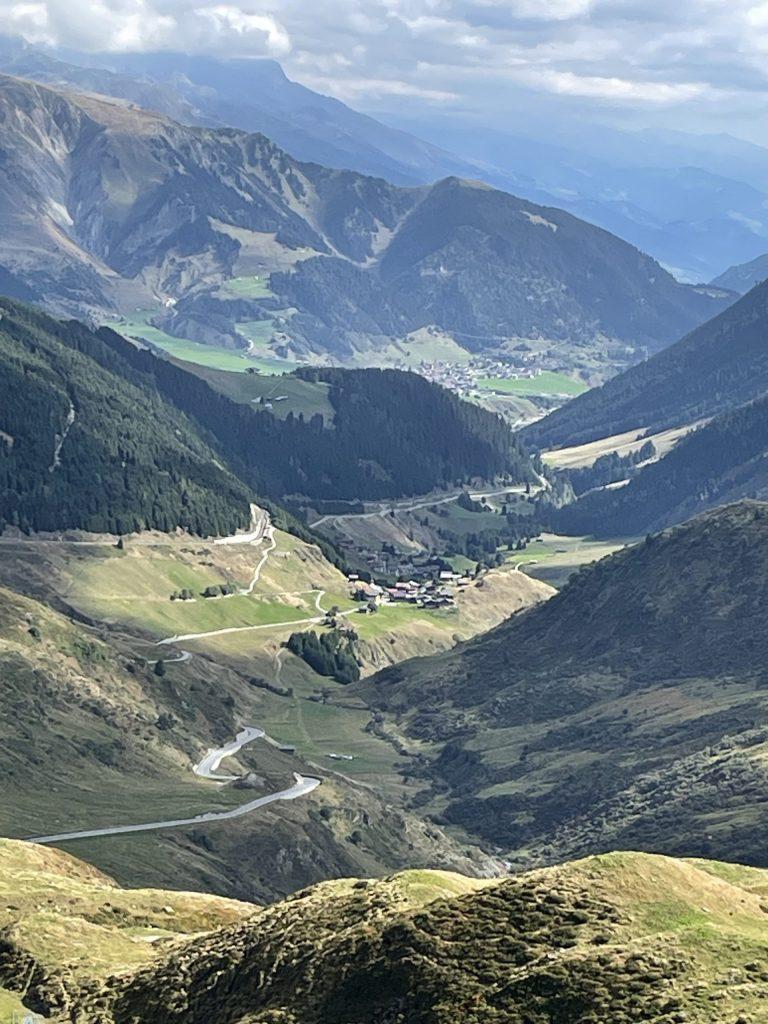
Rivers do wonders for cities; they go even better with mountains.
Robert Winder is the author of Three Rivers: The Extraordinary Waterways that Made Europe (Elliott and Thompson), out now in hardback and ebook, £20.

Outdoor Swimmer
Outdoor Swimmer is the magazine for outdoor swimmers by outdoor swimmers. We write about fabulous wild swimming locations, amazing swim challenges, swim training advice and swimming gear reviews.