
The gift of swimming
There’s something special about gifting swimming to those who can’t access it themselves. Rowan Clarke looks at different ways to share your love of swimming
In many ways, swimming is a deeply personal, solo activity. We swim because we want to find ourselves or lose ourselves, because we want to achieve a goal or improve our health. Even when we swim with others, as soon as our head is in the water, we enter our own little watery world.
Yet, community is one of the most valued benefits of outdoor swimming. And those feelings of community, warmth and camaraderie that swimming engenders leads to generous acts of giving – prompted by a feeling that the benefits we experience as individuals need to be shared.
This act of giving is life-affirming and often life-changing. And, because water connects us in time, space and experience, it can cross all kinds of boundaries. In difficult times, the positivity of this simple, shared experience is more needed than ever. So, how can we share the gift of swimming?
Sponsored swims
For many of us, our first experience of giving happens when we sign up to an outdoor swimming event. Setting up that JustGiving page often goes hand-in-hand with signing up to an event. But getting sponsorship or donating to somebody else’s fundraiser has become so every day that it can feel disconnected or shallow.
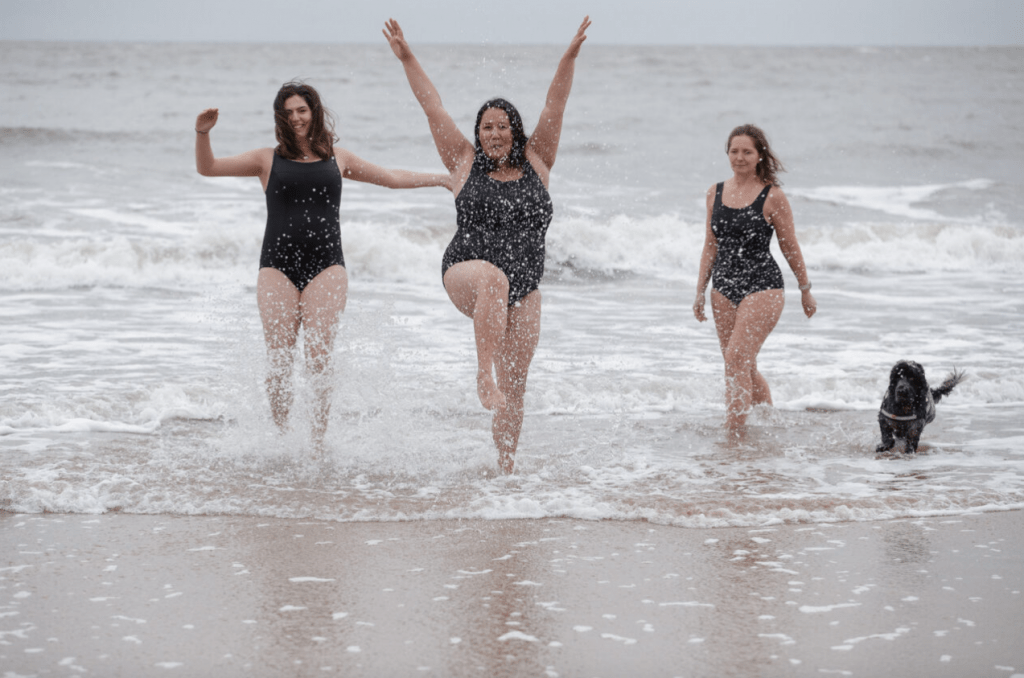
The key is how we engage with the cause that you’re raising money for. When you have parallels between what your own story and your cause, it can feel so much more meaningful. For this reason, many outdoor swimmers fundraise for water-based charities.
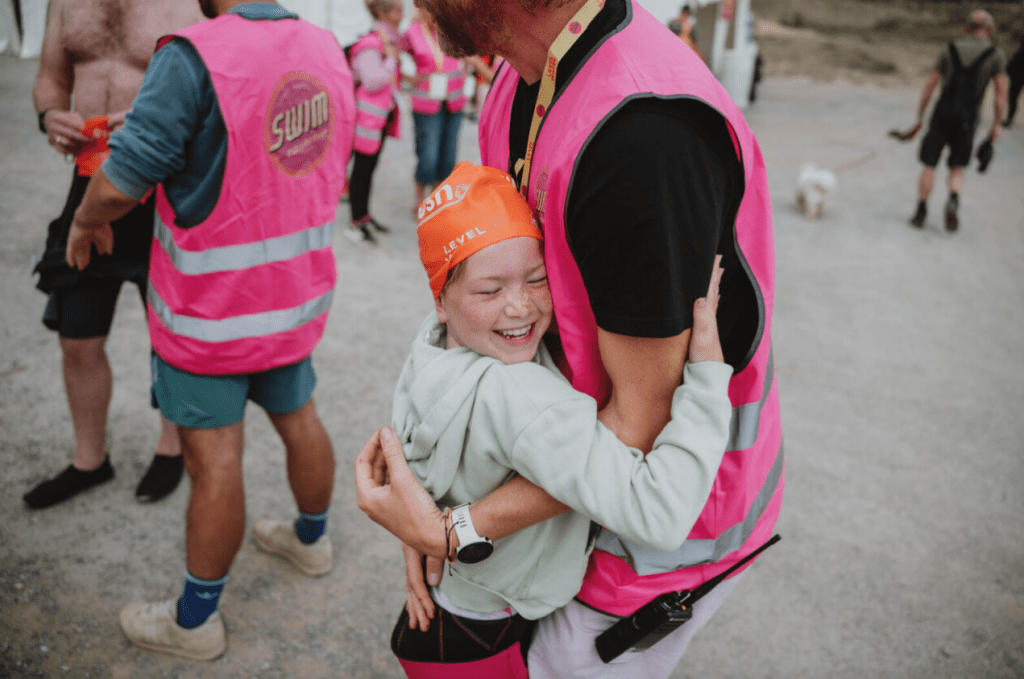
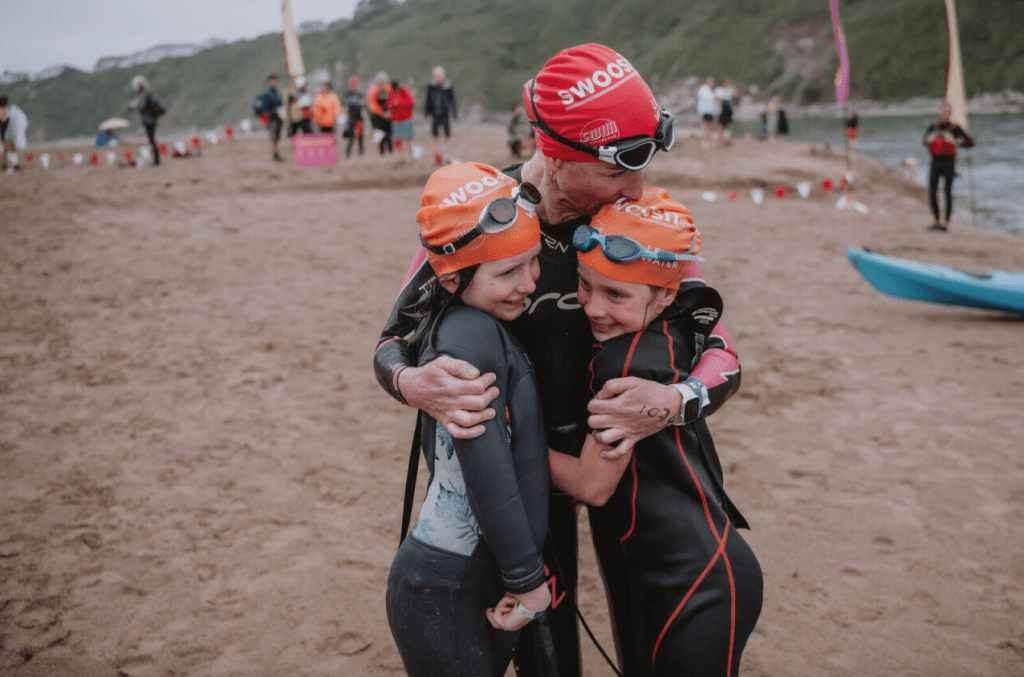
Take the Bantham Swoosh for example. For many years, the charity Level Water was fundraising partner for this iconic swim until it took over running the event in 2022. Apart from meaning that all the money raised by the Swoosh would benefit the charity’s work, Level Water was able to demonstrate its impact in the most beautiful, joyful and moving way. At the end of the 6km swim, some of the children with disabilities that Level Water had taught to swim got into the water and swam, bobbed and floated the Mini Swoosh.
“It joined up everything we’ve done over the last decade in those five minutes. It felt like the culmination of everything coming together,” says CEO Ian Thwaites, who is visibly moved talking about it. “The power of being able to say, you guys have swum six kilometres raising money so kids can learn to swim and here they are swimming down the same river as you, finishing on the same beach. It was dramatic.”
So, that connection between the event you’re doing and the cause for which you’re raising funds is key. For those of us taking part in Level Water’s Swim Collective events, which includes the Bantham Swoosh and Dart 10k, it’s important to know that the money we raise is spent on teaching children with disabilities to swim. But it’s the relatability of the cause that has the real power.
Creating connections
Sticking with the Level Water example, as fundraisers for the charity, we understand that we’re helping enable the next generation of swimmers. But it’s more than that. Within our outdoor swimming communities, we not only experience the many health and wellbeing benefits of swimming, but we also understand just how much water is a great leveller. Swimming allows everyone to reap benefits regardless of age or physical ability.
“It’s my view that children with disabilities should be overrepresented in swimming lessons because it’s not only uniquely accessible sport, but it’s also uniquely beneficial sport,” says Ian. “What we’re interested in is children being able to swim strongly enough to have access to fun in, on and around the water for the rest of their lives. Behind that, there’s this whole set of life skills that you learn – confidence, resilience and self-esteem, which is developed by setting yourself a goal that’s at the limit of your ability, working hard to achieve it, celebrating and then setting another goal. That’s what swimming lessons do every week.”
And that’s exactly what swimming outdoors does for our self-esteem – we set goals, we work hard to achieve them and then we celebrate. The elation we feel at accomplishing those goals is often what creates connections with one another, with communities and with our environment. And that, in turn, creates the impetus to give back.
For a lot of swimmers, this manifests in fundraising for social or environmental causes such as Level Water, Swim Tayka and WaterAid.
“As a charity that focuses on providing access to clean water, it made a lot of sense for us to go into the world of swimming,” says Lizzie Griffiths from WaterAid who helped set up the Swim Marathon a marathon swim challenge. “We use water every day for cleaning, washing, eating, drinking, all of that. In addition to that, swimmers use water for their fitness, for mental health or physical health. And I think when you’re in swimming in water it you notice even more how clean it is and how abundant it is here and how it isn’t for so many people around the world.”
As Lizzie describes how clean water brings joy to communities in Madagascar and Ethiopia, the way in which water connects people across the world is really striking. Similarly, Swim Tayka is raising money through Channel relays that helps provide swimming and water safety teacher training in Jamaica and Mozambique. For both charities, there’s this recognition that having access to clean water brings benefits that go way beyond meeting basic human needs.
Communities together
For many swimmers, that joy and connection through water drives a different kind of giving. Building communities that help people access swimming often comes from a compulsion to share with others the benefits that we enjoy ourselves. Through our own swimming, we may see individuals or groups who struggle to access the water and feel compelled to do something about it. And that action can have extraordinary results.
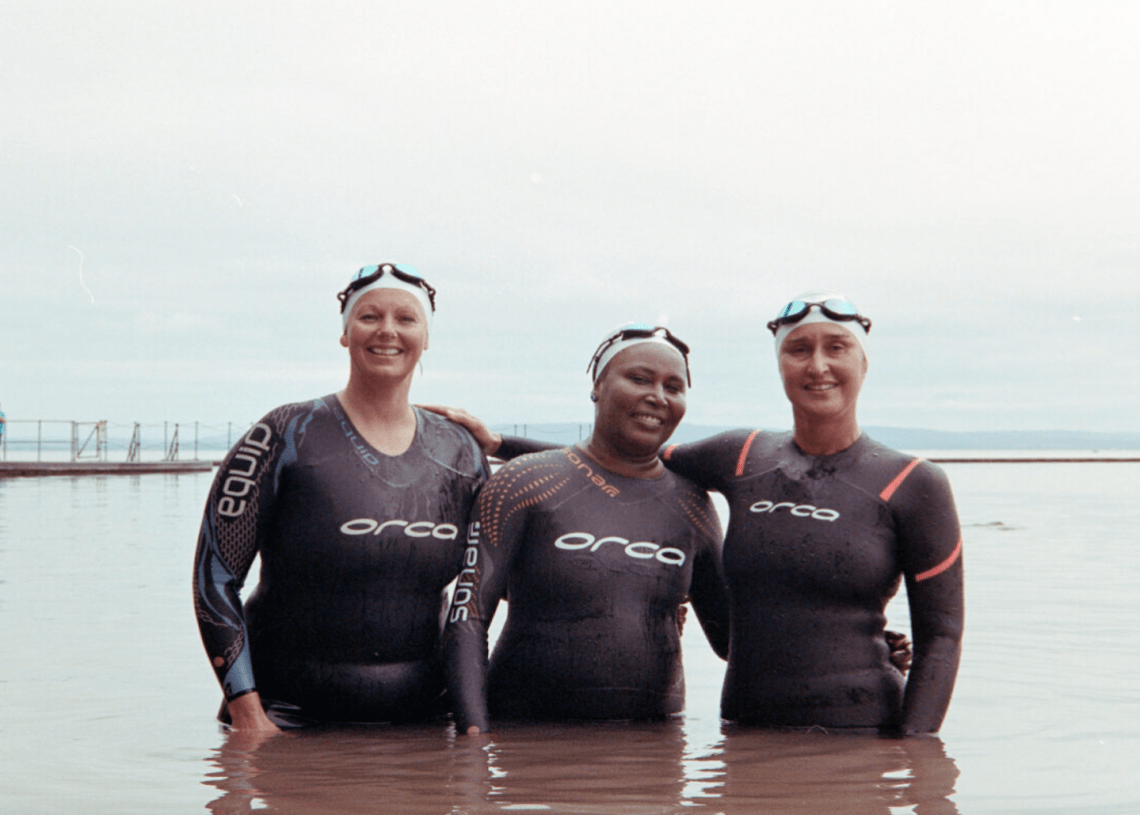
Take Open Minds Active. A social impact organisation based in Bristol, Open Minds helps people connect with nature and access the outdoors through social prescribing, groups and classes. One of its huge successes has been teaching women from minority groups, often refugees, to swim. The women who teach these classes are swimmers who are passionate about gifting swimming to those who struggle to access it. Women like Wafa Suliman who wanted to help families access outdoor swimming.
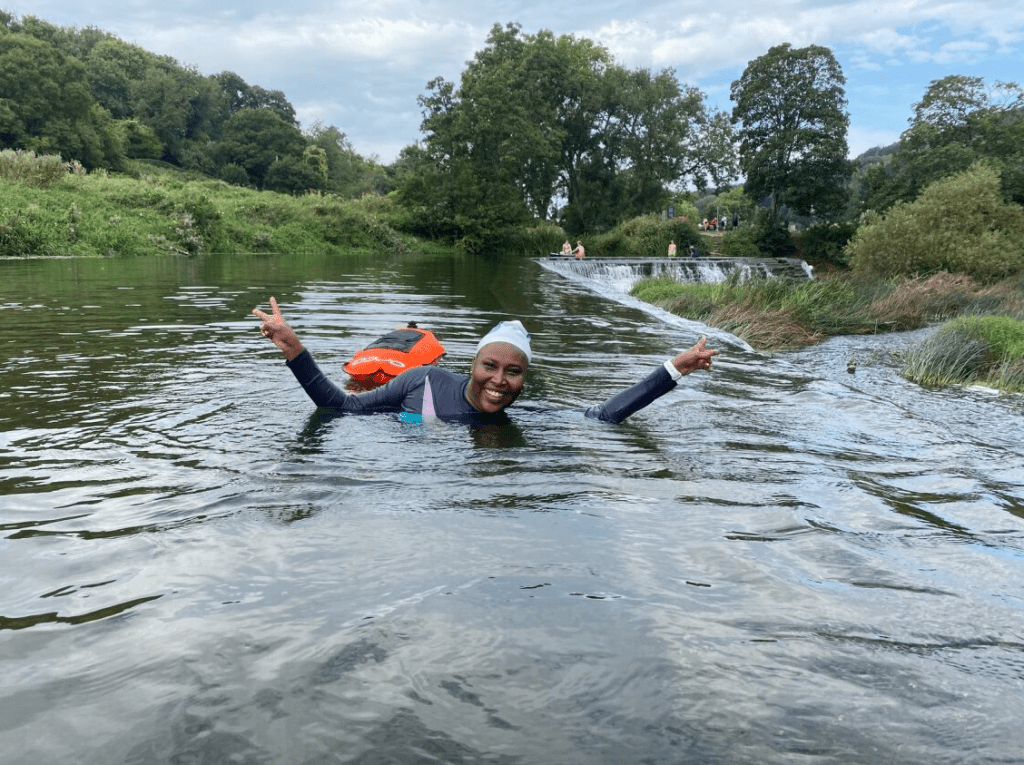
“Most black and minority ethnic women don’t even know how to swim so how could we get them outside? And here was our idea for learn to swim. You can imagine, we dreamt big,” says Wafa, who was a professional swimmer in her native country of Sudan before moving to the UK in 2019. “We had this vision; let’s teach them how to learn to swim.”
With Open Minds, Wafa applied to almost thirty pools before finding one in south Bristol that could accommodate a women-only session with the appropriate level of privacy. Since starting, they have taught more than two hundred women to swim. And the impact has been extraordinary.
“We had one lady who can’t have a baby. She was super stressed, she was depressed. And this was her thing to hold on to life,” says Wafa. “She’s amazing. She has an amazing front crawl and this was her thing, her thing to survive this life. No more pills. No more doctors.”
But that impact isn’t just about individual stories. By gifting people not only the ability to swim but also the courage to go and enjoy the great outdoors, the benefits spread out to their families and communities.
“My first group to experience open water swimming was about 15 ladies. As soon as they got in, they loved it. They never thought they could swim outside or experience any of this,” says Wafa. “They said, ‘I started from a point where I’m not trusted even to get in the pool with my kids. Now I can do that. Now I can go outside and I can bring all my family. I’m going to the ocean; I feel confident and good with my kids.’ In their lives, it had this very big impact, which is amazing.”
Sharing the benefits
Just like Wafa and Open Minds Active, communities grow from the shared joy of swimming outdoors in nature. That might be as simple as experiencing the benefits yourself and then recognising that a friend, colleague or family member could benefit too. Or it might extend to a group of people. But being able to recognise barriers to swimming outdoors – and work out how to overcome them takes outdoor swimming communities to a new level.
Another great example is Mental Health Swims. Founded by Rachel Ashe in 2019 after she discovered cold water therapy for her own mental illness, Mental Health Swims groups now operate at 150 locations across the UK and beyond. Its mission, to provide a safe, support experience for people of all skin colours, body shapes, ages, sexualities, genders, backgrounds and abilities is realised through training volunteers.
“Every community we have is unique, but there’s a step-by-step approach as well,” says Rachel. “It’s feeling not just part of your local community, but also something bigger. And I think by having the same training and the same opportunities and support, that’s one of the ways we can try and keep quality control.”
From her own experience, Rachel recognised that people with mental health issues have particular needs beyond simply feeling welcomed into a group. One of these needs is knowing exactly what to expect from a group session. While many spontaneous groups are open and welcoming, MHS recognises specific barriers, works out how to overcome them and then trains its hosts to offer specialised support.
“The thing is, there are loads of local communities and if you’re the kind of person who’s like, I want to join a community, you might just go along and be perfectly fine,” explains Rachel. “How we’re different is there’s a bit more in place, so that if you go to one group and then you go to a different one, it’s probably going to be pretty similar.”
Gifting swimming
Being able to swim outdoors is an honour. The water and nature bestow on us so many benefits for our physical and mental health – and being able to pass on that gift is one of them. If you’ve ever introduced someone to the joy of swimming, you’ll know how it feels. And many of us are part of social groups and communities that have grown organically because of the way we support each other into the water.
But there’s something extra special about gifting swimming to those who can’t access it themselves. The problem is that, like everything, funding for organisations like Open Minds Active and Mental Health Swims is hard to come by. Recently, Mental Health Swims had to run a Crowdfunding campaign to continue.
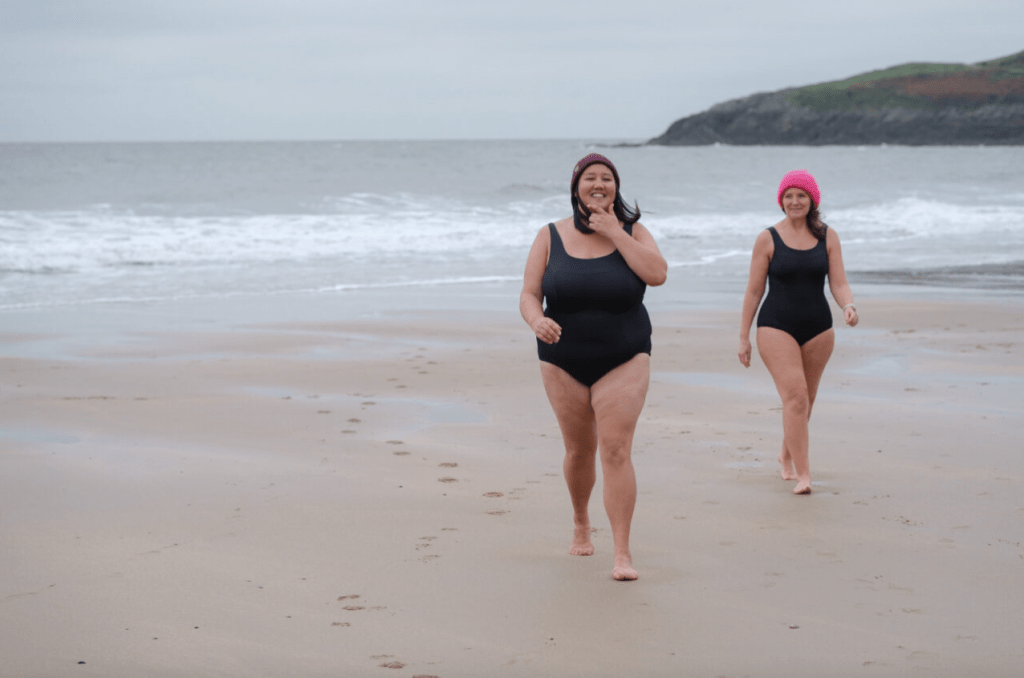
“Crowdfunding isn’t just about raising money, it’s also about raising awareness,” says Rachel. “The support was absolutely incredible and reading the comments was a really beautiful experience. What I felt really moved by was that so many people supported us and some participants gave just £1 because that was what they could afford. Also, groups coming together to do their own fundraising was incredibly touching.”
Raising awareness and offering support doesn’t always have to be financial, either.
“Volunteering is such a wonderful, generous thing to do. I also think it’s really enriching for volunteers’ lives – it’s a wonderfully positive thing, which brings joy to both the volunteer and also the people who benefit,” says Rachel. “Our volunteers are not just swim hosts, but working behind the scenes as well, like our board of directors, helping with social media – we’ve got such a wide range of people who come and offer kindness and support.”
Outdoor swimmers often feel moved to give back. We get so many benefits, so much joy from being in the water and immersing ourselves in nature, benefits that feel even better when they’re shared.
At this time of year, planning our 2024 swims while enjoying the buzz of the cold, you might be signing up for fundraising swim events or thinking about how you can share the swim love. You might choose to raise money through sponsorship that pays for swimming lessons for children with disabilities or water sanitation for villages. You might contribute to organisations like Mental Health Swims and Open Minds Active through crowdfunding or volunteering. Or you might be a supportive swim buddy to a friend in need. Whatever you choose, as gifts go, swimming is one of the very best to give and to receive.
Lead photo: Xander McMurray

Outdoor Swimmer
Outdoor Swimmer is the magazine for outdoor swimmers by outdoor swimmers. We write about fabulous wild swimming locations, amazing swim challenges, swim training advice and swimming gear reviews.