

The new extreme
Cold-water swimming may have gone mainstream, but it remains an extreme activity – one that reveals the limits of human adaptation and offers a unique perspective on our changing environment. Rowan Clarke explores what we can learn from pushing ourselves to the edge.
There was a time when cold water swimming was considered bonkers: an extreme activity for people who seemed, quite frankly, short of a marble or two. That was until its rise in popularity rebranded it as restorative and therapeutic; suddenly, you couldn’t move for images of beanie-clad dippers extolling the virtues of a bracing plunge.
We’re huge fans of making winter swimming more accessible to more people, but we’re also aware that its popularisation can hide the risks. At the same time, extraordinary swimmers are pushing the boundaries of human tolerance, while climate change means we’re all having to learn how to swim in more extreme environments.
An extreme sport
If you’re excitedly watching the autumnal downwards creep of your thermometer, then you’re like us: winter swimmers who enjoy the magic of chilly dips. But do you consider yourself an extreme sport athlete?
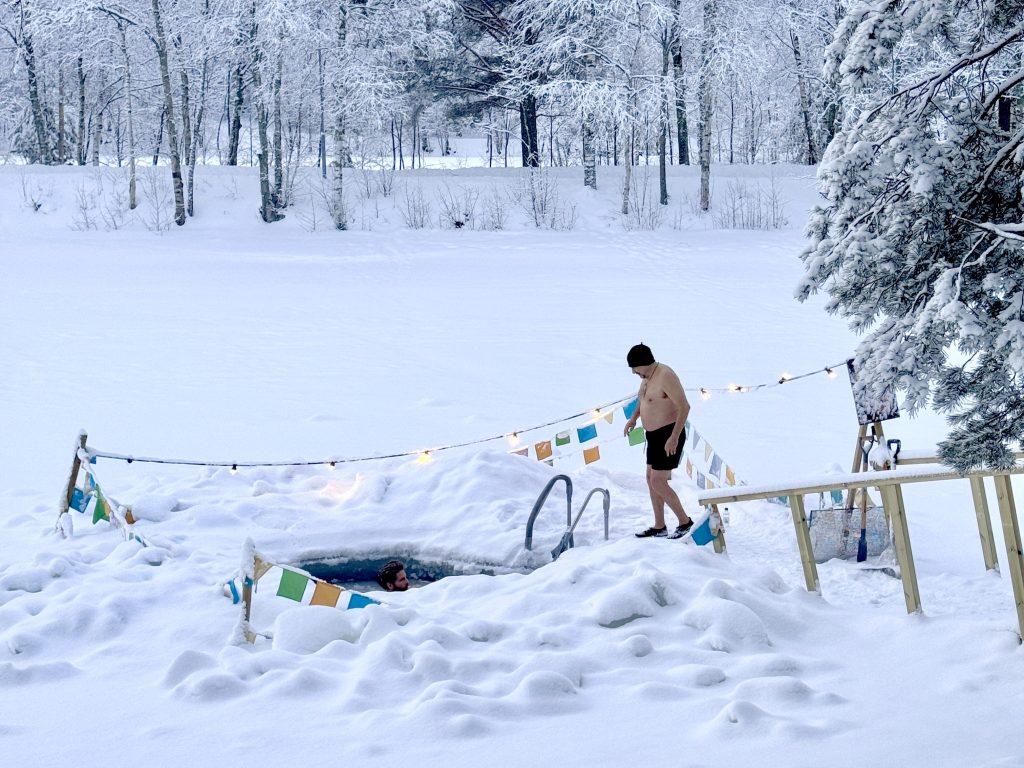
It’s easy to disregard winter swimming as extreme, partly because so many ordinary people do it, and partly because it’s so accessible: Just imagine a group of menopausal women getting together to do parkour, a retired couple highlining between skyscrapers every weekend, or earlymorning NHS workers base-jumping before their shift at the hospital.
Unlike other extreme sports, pretty much anyone of any age or ability can immerse themselves in icy water. But that doesn’t mean it’s not extreme. Not only are the dangers from cold water shock, afterdrop, swim failure, non-freezing cold injury and hypothermia very real, but, as we get used to the cold, our sense of how extreme it is greatly reduces.
“Repeated short immersions in cold water can reduce the cold shock response by about 50% in terms of our breathing frequency and tidal volume, and also our heart rate,” says Dr Heather Massey from the University of Portsmouth’s Laboratory of Extreme Environments. “Interestingly, if we’re looking at longer term adaptation in cold water, we can develop hypothermic and insulative adaptations which can help to keep us relatively comfortable in cold water despite the body cooling.”
For winter dippers, this is a useful adaptation. But by acclimatising to icy temperatures, we’re also overriding our innate instincts to get ourselves out of danger.
“There is a mindset you develop where you can switch off some of those pressures telling you to stop. You learn to understand what you’re experiencing and keep moving towards the goal,” explains ice swimmer, coach and captain of the GB ice swimming team, Fenwick Ridley.
Finding our advantage
It’s a technique we use every time we get into cold water: breathing through the cold water shock response and the discomfort until we can swim. Ice swimmers like Fenwick take it further, pushing through pain to achieve mind-boggling swims.
“A massive part of what drives me is exploring extreme environments and seeing what both the mind and body are capable of… It’s about experiencing pain and discomfort, understanding it and learning how to operate within it rather than immediately trying to escape it,” says Fenwick. “For me, it isn’t really about breaking records – it’s a personal exploration of my own ability, strength and resilience, alongside a genuine fascination with the physiological changes the human body can go through.”
It’s a subject that fascinates researchers, too. Scientists know that, physiologically speaking, humans have a low tolerance for extremes, so how are ice swimmers able to do what they do?
“As a subtropical animal that breathes air, we’re naturally suited to a relatively narrow range of environmental conditions,” explains Heather. “We can physiologically adapt to extremes such as heat, cold, and altitude, but these adaptations are limited, reversible, and really variable between people.”
As we’ve already seen, repeated cold water exposure can produce physiological adaptations that reduce cold water shock and make immersion feel more comfortable. But that’s only the beginning of the story, and to swim in extremely cold water, your understanding has to go a lot deeper.
“Preparation isn’t simply about getting into cold water as often as possible,” explains Fenwick. “Yes, repeated cold exposure and maintaining that habitual relationship with the cold are important, but so is staying healthy, staying strong, exercising, strength work and keeping on top of hydration. For me, it’s the pattern between land-based training, water training and controlled cooling that matters.”
There’s also a huge psychological element to preparing for an ice swim. “The mental side isn’t talked about much when it comes to building strength and resilience, especially for ice swimming,” says Fenwick. “The psychological side of choosing to do something like this is massive. I keep coming back to the word tough, because sometimes ‘extreme’ doesn’t quite describe it. It’s just fucking tough.”
Extreme knowledge
This preparation includes recognising the risks that come with being acclimated to icy water. Heather cites her colleague Professor Mike Tipton’s research paper Moving in Extreme Environments, which states that “due to factors such as acclimatisation, which disassociates thermal sensation and comfort from thermal state, individuals cannot be left to monitor their own physical condition during swims.”
“The swimmer feels better able to swim for longer and is more comfortable, and the swim stroke will be less affected,” says Heather. “But this comes with consequences. Our actual thermal state and our temperature sensation are dissociated, which basically means that as an experienced cold water swimmer, you can feel very comfortable despite being dangerously cold, so this is quite problematic.”
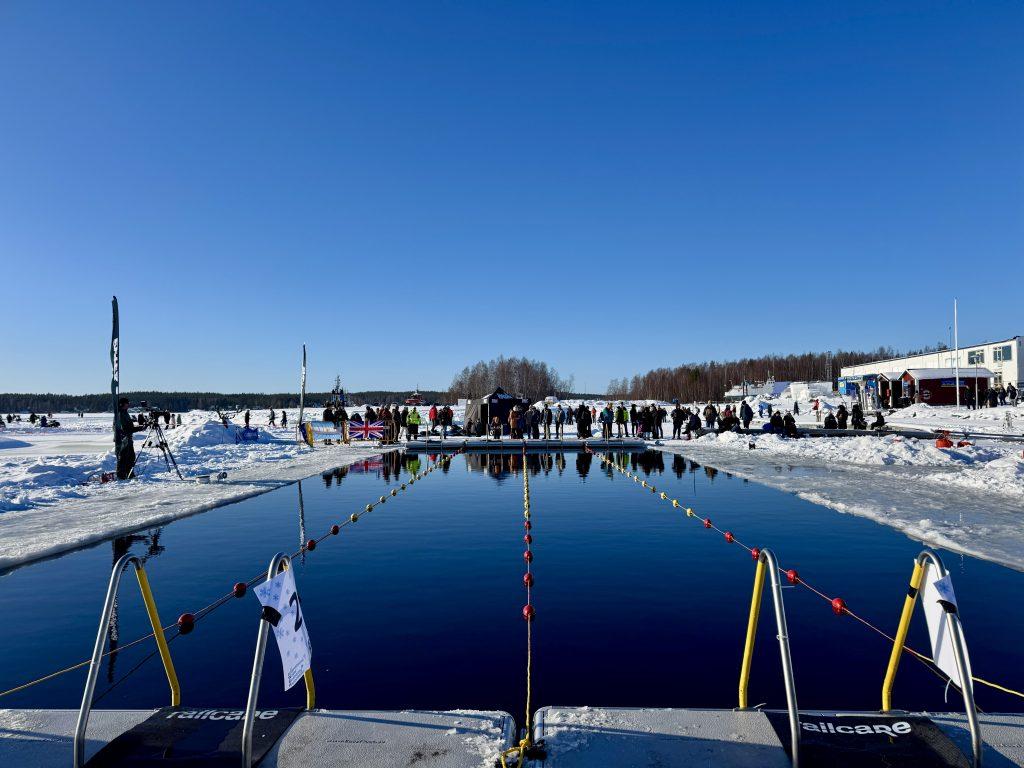
This means that in order to achieve extreme swims, ice swimmers have to entrust their safety entirely to a team of experts. Swim safety is possibly the most significant area transformed by research and understanding in recent years. Better knowledge of how to observe swimmers, warm them up and treat casualties has created an infrastructure for ice miles, ice galas and competitions.
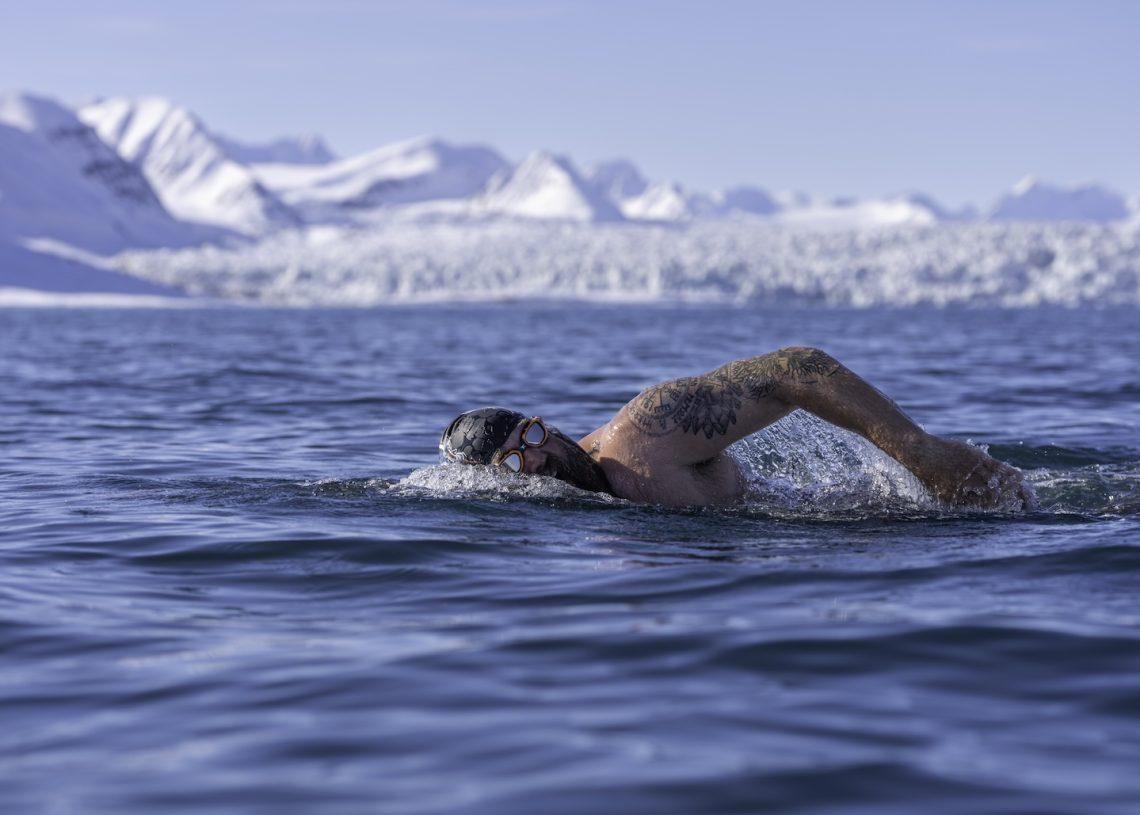
This year, Fenwick returned to his favourite ice swimming spot in the Arctic, where, with the support of his safety team from Swim Your Swim, he set a personal best with his fastest, coldest ice kilometre.
Extreme witness
Swimming in extreme environments isn’t just a fascinating exploration of human endurance, it’s also an important lens through which to look at the natural world. Ice swimmer Lewis Pugh has described his North Pole swim in -1.7°C water as one of the coldest swims on earth, and since 2015, through the Lewis Pugh Foundation, he has used his swims to raise awareness of the effects of climate change and pollution on the oceans.
“I think I’m normal… The world is mad,” Lewis said in an interview with The Royal Scottish Geographical Society. He had recently returned from West Greenland, where a glacier was moving at around 40 metres per day in summer. Hearing delegates at climate summits discuss the difference between 1.5°C and 2°C of warming, he was struck by how distant those numbers could feel from the scale of what he had witnessed.
One of his most extreme feats was a 10-minute, 17-second swim inside an unstable subglacial meltwater tunnel carved into the East Antarctic Ice Sheet in 2020.
“On the surface of the ice, you see all these supraglacial lakes; all these lakes appearing on top, meltwater because of the climate crisis, thousands and thousands of them, some of them go down little cracks, and then they drop all the way down to the bottom,” he told the interviewer. “We found one of these tunnels, and we could see that this tunnel went underneath this big mountain of ice and came out the other side. And how can I convey a message about the melting of the Antarctic in a better way than actually swimming down one of these tunnels?”
The new extremes
You don’t have to be an extraordinary ice swimmer to witness the effects of climate change from the water. Immersed in the natural world, we’re all becoming first-hand observers of rising global temperatures and climate instability. Heatwaves like those experienced this summer bring drought, low oxygen and algal blooms, changing where, when and how people can swim.
In Breda, a dry, warm summer has brought blue-green algae and swimming bans. In Bristol docks, swimming was cancelled because droughts make avian botulism more likely. Belgium has seen blooms affecting Bruges and Ghent. In Portland, campaigners have focused on a man-made lagoon where poor circulation helps harmful algal blooms form each August. In Metz, swimmers on the Moselle distinguish between a contaminated river and a shaded, plant-filtered canal.
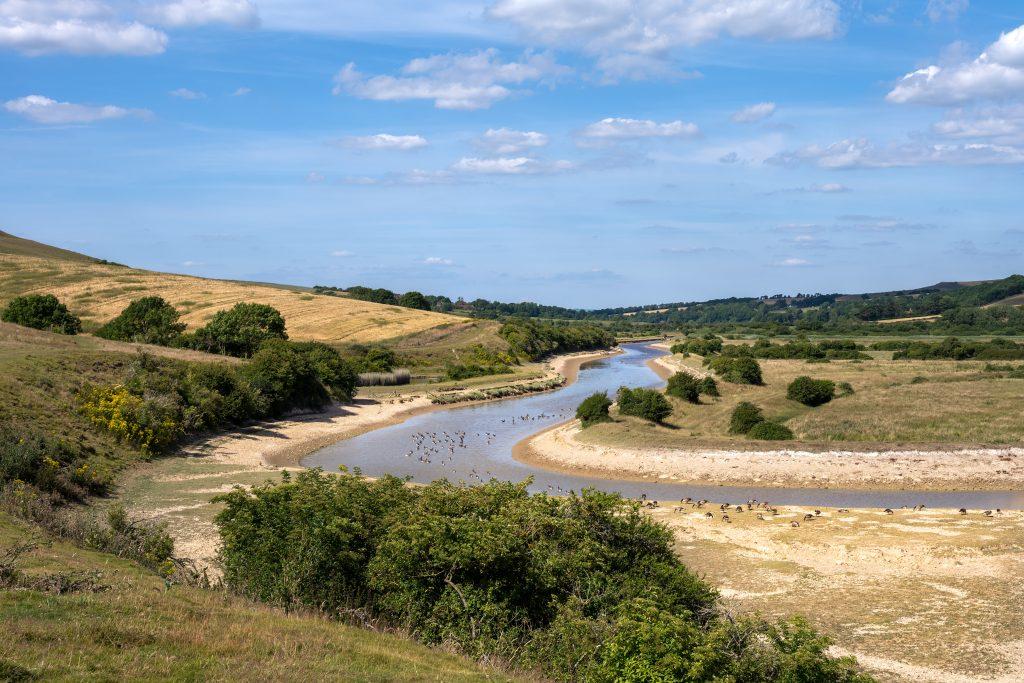
As well as learning how we can tolerate cold water, we’re also becoming amateur hydrologists, microbiologists and climate reporters. We notice changes that others experience as headlines: shorter rivers, warmer water, unusual algal blooms, fish kills, strange smells, altered flow, lower water levels, glacial melts, litter, storms and the disappearance of reliable swim windows.
In extreme environmental conditions, it seems that outdoor swimmers are at the edge of several frontiers: We’re learning, reporting and campaigning on how the changing climate affects water; we’re taking part in scientific and medical research on the effects of immersing in cold water; and we’re continuing to push the extremes.
But, in doing so, we are also exposing the challenges we face, both in terms of the environment and our limitations as swimmers, and the need for continued research.
“Perhaps the greatest challenge that remains is that we have a substantial variation in people’s response to environmental extremes, and research shows that some individuals heat faster, are more vulnerable to cardiac complications, and we still don’t fully understand that,” says Heather. “I don’t know whether it’s the right question, but maybe we should be asking, have we reached the limit of human swimming? It may well be that we’re still discovering where those limits are.”
These questions around our ability to cope with extreme temperatures are interesting in their own right, but they’re also becoming increasingly pertinent as we face global uncertainty and climate change.
“I teach and coach contrast therapy and help people understand how we can become better adapted to the cold and also heat, why we might want to become better in the cold, and what we can learn from putting ourselves into controlled uncomfortable environments,” explains Fenwick. “Obviously, we’re not sending everyone off to swim in the Arctic, but the underlying principles – learning about yourself, experiencing discomfort, understanding your response to cold and discovering that you’re capable of more than you thought – can apply to almost anybody.”
Whether we’re seeking ways to support our mental health, trying to find refuge in cold water during a heatwave, or finding new ways to connect with nature, we’re showing that swimming in extreme environments is far from bonkers. As winter approaches, it’s worth reminding ourselves that it remains an extreme activity – and that this is part of what makes it so valuable.
Find out more:
Fenwick Ridley coaches at H2OTrails: h2otrails.co.uk
Watch Lewis Pugh’s interview on the Royal Scottish Geographical Society’s YouTube Channel
Find out more about The Lewis Pugh Foundation: lewispughfoundation.org
Find the Extreme Environments & Occupational Performance Research Group at port.ac.uk