

Gym swim training: a beginner’s guide
When starting out, the goal is less about heavy lifting or complicated exercises and more about building a solid base of strength and stability that will improve your swimming, says personal trainer Vivienne Rickman
We all know swimming is a great form of exercise; to swim well, we need strength, mobility, endurance, and coordination. Training in the water is essential for improving our stroke and aerobic fitness. Training in the gym can enhance swim development by targeting the muscles and movement patterns used in the water.
The gym can be a daunting place for those who have never been before. Having a plan to follow once you walk through the door helps you get used to using the equipment and build your confidence quickly.
When starting out, the goal is less about heavy lifting or complicated exercises and more about building a solid base of strength and stability that will improve your swimming.
Aim to do this program 2-3 times a week with have a day off in between. Each session is full-body, with moves specifically chosen to target the lats, shoulders, core, glutes, and legs – key areas for effective swimming.
Warm-up (5–10 minutes)
Every session should begin with a warm-up to increase blood flow, loosen the joints, and prepare the muscles for work. You could hop on something like a cross trainer, rower or air bike for 5-10 mins, something that is going to work both your arms and legs.
Follow this with some dynamic stretches such as arm circles, hip rotations, leg swings and torso twists.
Gyms are normally laid out in sections, so if you plan your workout in these sections, you’ll feel more confident moving around the gym rather than hopping backwards and forwards from one area to another trying to find different bits of equipment.
When choosing a weight, pick one that allows you to do the movement with good form for the number of repetitions (reps), and gradually increase it as you get stronger.
Main workout
Do 2/3 sets of each exercise, resting for 60 seconds between sets.
The rest is really important, our muscles fatigue and experience micro tears during resistance training, so the rest allows them time to recover before the next set. It can seem like a waste of valuable time, but don’t skip it!
Lower body
Leg press – 8–10 reps
Develops lower body strength and power, essential for efficient body position and kicking. Start with a light load until you have perfected your form, watching your lower back lift doesn’t lift out of the seat.
Progression – Try single-leg presses to help with the unilateral leg kicks and improve balance strength.
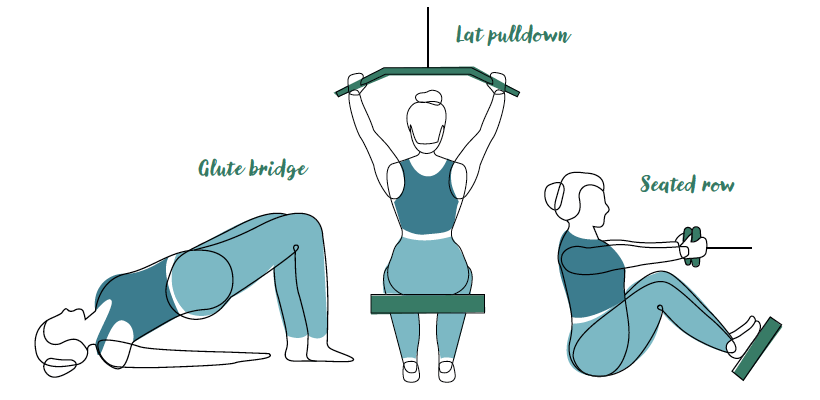
Glute bridge – 10–12 reps
This movement strengthens the hamstrings and glutes, which contribute to maintaining a streamlined position and having a strong leg kick. Hinge at the hips, keep the spine neutral, and move slowly to maintain control.
Progression – Add a weight plate to your hips or try single-leg bridges. Look for the hip thrust machine in the gym.
Upper body
Lat pulldown – 10–12 reps
The lats are the biggest muscle in the upper body, situated in the mid to lower back. They are responsible for the power in the pulling phase of swimming strokes. Focus on a controlled movement, pulling elbows and shoulder blades down rather than simply using the arms.
Progression – Pull-ups, starting with assisted pull-ups using a resistance band or assisted pull-up machine.
Seated row – 10–12 reps
Strengthens the mid back, lats and shoulders; these are used in the pulling phase of our stroke and also in maintaining our posture in the water. Keep the chest tall and squeeze the shoulder blades together at the end of each pull.
Progression – Gradually increase weight, try different grips.
Shoulder press – 10–12 reps
Building strong and stable shoulders can help prevent injuries from the repetitive overhead moves in swimming. Perform presses on a fixed shoulder press machine or using dumbbells from a seated or standing position.
Progression – Increase weight gradually.
Core
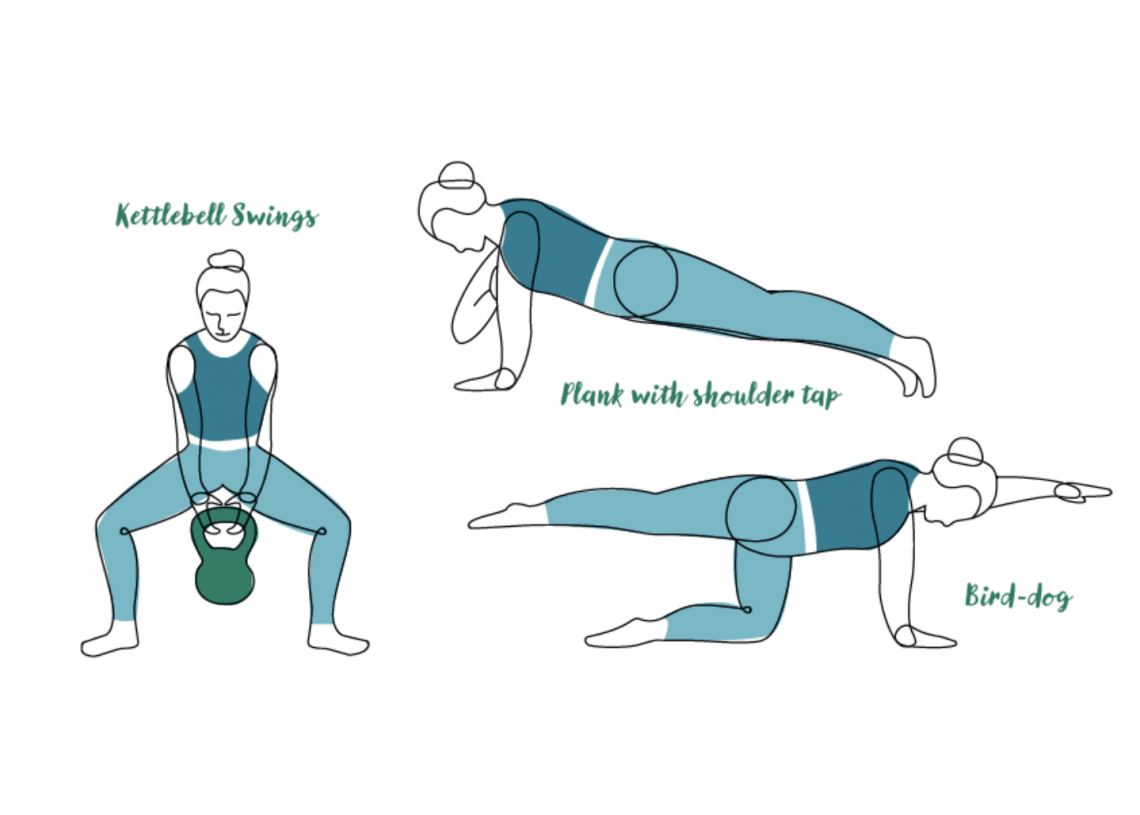
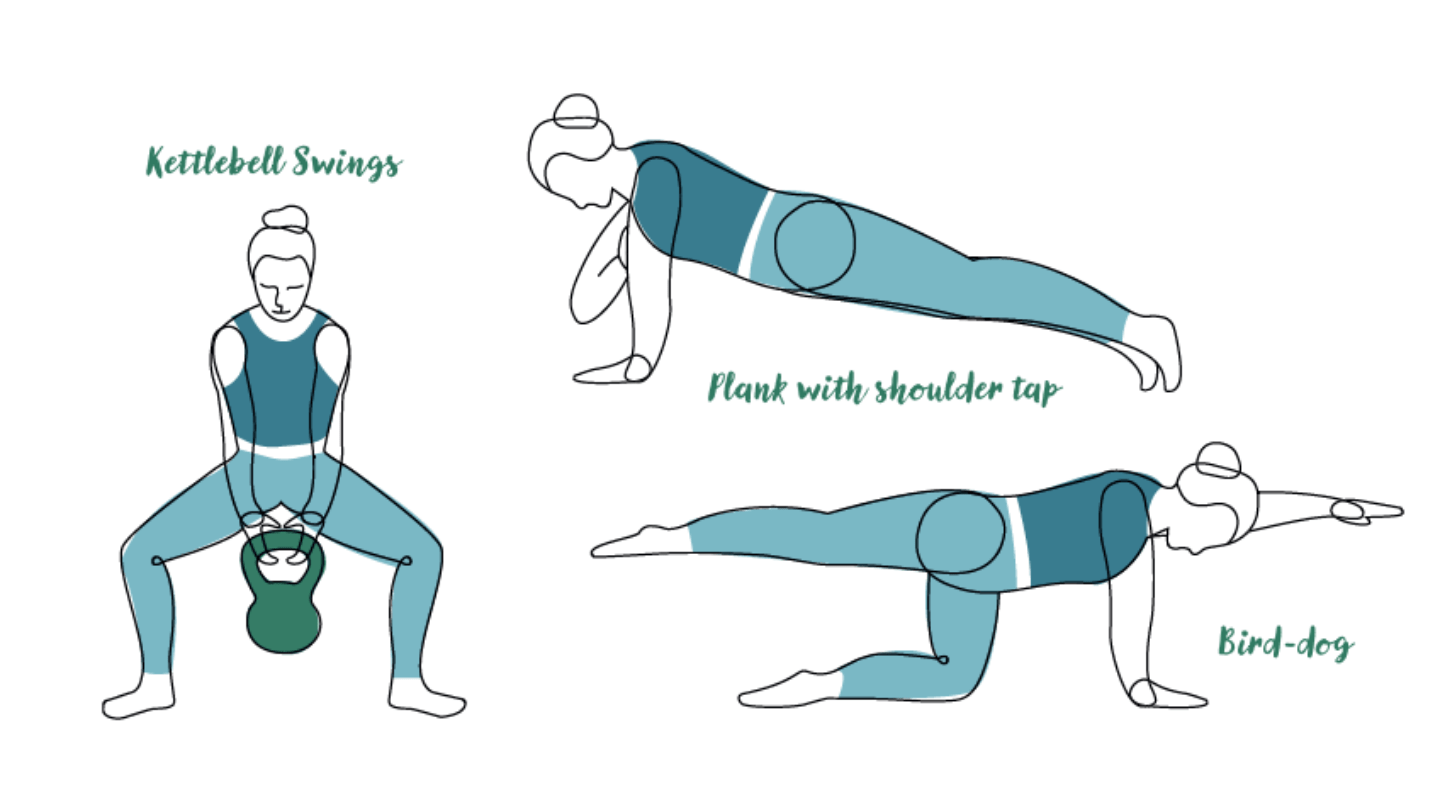
Plank with shoulder tap – 20–30 seconds
Core stability is crucial for swimmers, helping to maintain alignment and reduce drag in the water. In this variation, alternate tapping each shoulder while resisting rotation through the torso.
Progression – Renegade rows. Use light dumbbells while in the plank position, rather than tapping your shoulder row one dumbbell up to your chest and lower, switch to the other side.
Bird-dog – 10 each side
A gentle but effective exercise for core stability, which is vital for keeping a streamlined position in front crawl. Extend opposite arm and leg, hold briefly, then return with control.
Progression – Hold position for longer at extension or add ankle/wrist weights.
Finisher
Kettlebell swings – 10 reps
These build power and endurance in both the upper and lower body and develop hip strength, which is essential in all strokes. It also boosts cardiovascular health. Hinge at the hips, allow momentum to carry the kettlebell, not any strength in the arms.
Progression – Increase weight, and single arm swings.
Cool down – 5-10 mins
To help recovery and mobility, end each session with some light cardio and gentle stretches. Try 5 mins of easy cycling or a walk on the treadmill. Hold child’s pose for 30 seconds, walk arms out to the side to perform a lat stretch on each side, and from here alternate between cat and cow for spinal mobility. A seated forward fold releases the hamstrings and lower back, and a seated cross-body shoulder stretch will help with shoulder flexibility.

Outdoor Swimmer
Outdoor Swimmer is the magazine for outdoor swimmers by outdoor swimmers. We write about fabulous wild swimming locations, amazing swim challenges, swim training advice and swimming gear reviews.