
How personal goals transform your time in the pool
Training for your own challenge isn’t about racing the person in the next lane or hitting elite level times. It’s about designing a personal mission that excites you, stretches you and keeps you coming back for more, says swim coach Nicola Butler
In a world obsessed with comparison, the swimming pool offers something refreshingly different… a lane that belongs entirely to you! No noise, no pressure, no judgement. Just water, breath, rhythm and the quiet thrill of chasing a challenge you’ve set for yourself.
Swimming your own challenge isn’t about racing the person in the next lane or hitting elite level times. It’s about designing a personal mission that excites you, stretches you and keeps you coming back for more. Whether you’re a seasoned swimmer, or someone rediscovering the water, the pool is the perfect arena for self‑driven achievement within a DIY challenge.
Choosing the challenge that fits you
The beauty of swimming is that challenges can be as varied as the people who take them on. Choosing the type of challenge to conquer in the pool also opens a world of opportunities to try new skills, drills, equipment and meet new like-minded people. You also have the head start on making your sessions varied, avoiding any risk of just swimming monotonous blue line laps! Ultimately, the key is choosing something that feels exciting, not overwhelming.
Here are some pool swimmers favourite challenge styles:
- Distance challenges: Swim your first continuous 500m, build to 1km or 2k, or complete a ‘mile month.’ These challenges build stamina and mental resilience.
- Technique challenges: Use new equipment, master bilateral breathing, improve your catch or reduce your stroke count. Perfect for swimmers who love precision and efficiency.
- Speed challenges: Break your 100m PB, nail a faster 400m, improve your turn speed, or enter a masters swimming competition. Ideal for those who enjoy pushing the pace.
- Consistency challenges: Swim three times a week for a month, complete 20 sessions in 30 days. These build habits that last long after the challenge ends.
- Creative challenges: Swim every stroke each session, try a new drill every week, build your own pyramid set. Great for swimmers who thrive on variety.
How to structure your challenge for success
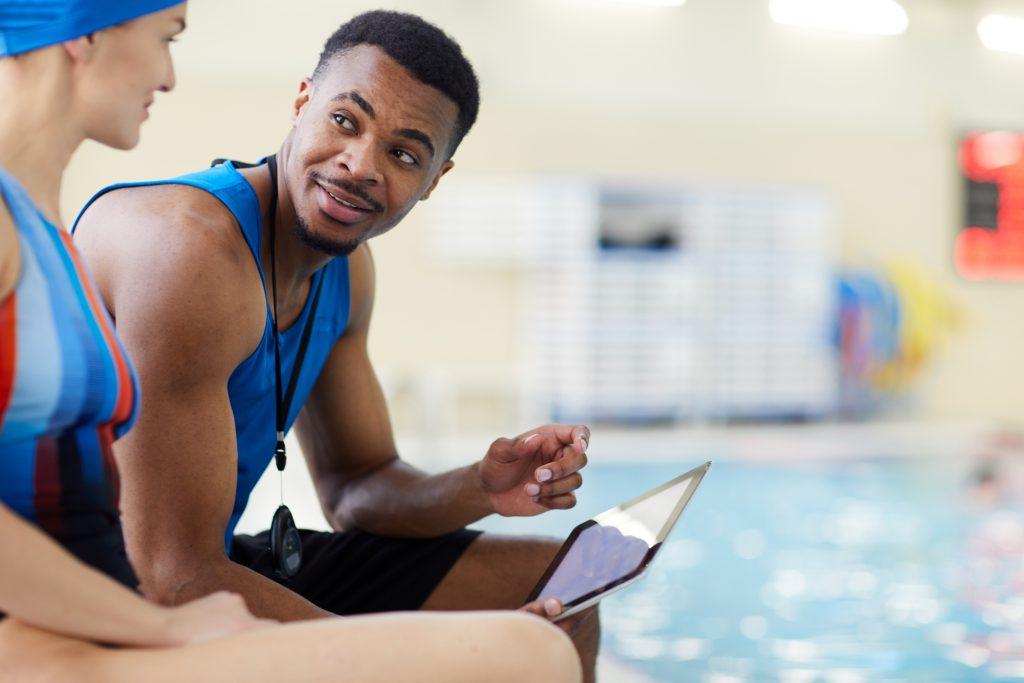
A challenge only works if it’s clear, realistic and motivating. It really is like planning your own mini training plan! Make it measurable. For example, “Get better at swimming” is too vague but “Swim 40 lengths without stopping” is powerful. Break it into milestones – weekly targets keep you on track and give you reasons to celebrate along the way. Track your progress – use a notebook, a swim app, or even the notes on your phone. Seeing improvement fuels motivation. Build in flexibility and don’t beat yourself up about missing one session – life happens! A good challenge bends without breaking. Celebrate the wins – every milestone matters so reward yourself because you earned it.
The mental side: Where the real challenge lives and why the pool is the perfect place for personal growth In the pool, you can learn how to stay calm when your breathing wobbles, how to keep going when your arms feel heavy, how to trust yourself when the goal feels far away. This is because the pool provides a controlled environment but the lessons you learn there spill into every part of life. Patience, resilience, discipline and progress.
Swimming your own challenge teaches you to stay in your lane, literally and metaphorically. It reminds you that the only comparison that matters is who you were yesterday.
Top tip: Improve your catch to improve your stroke through sculling
Drill = People-Paddle Scull
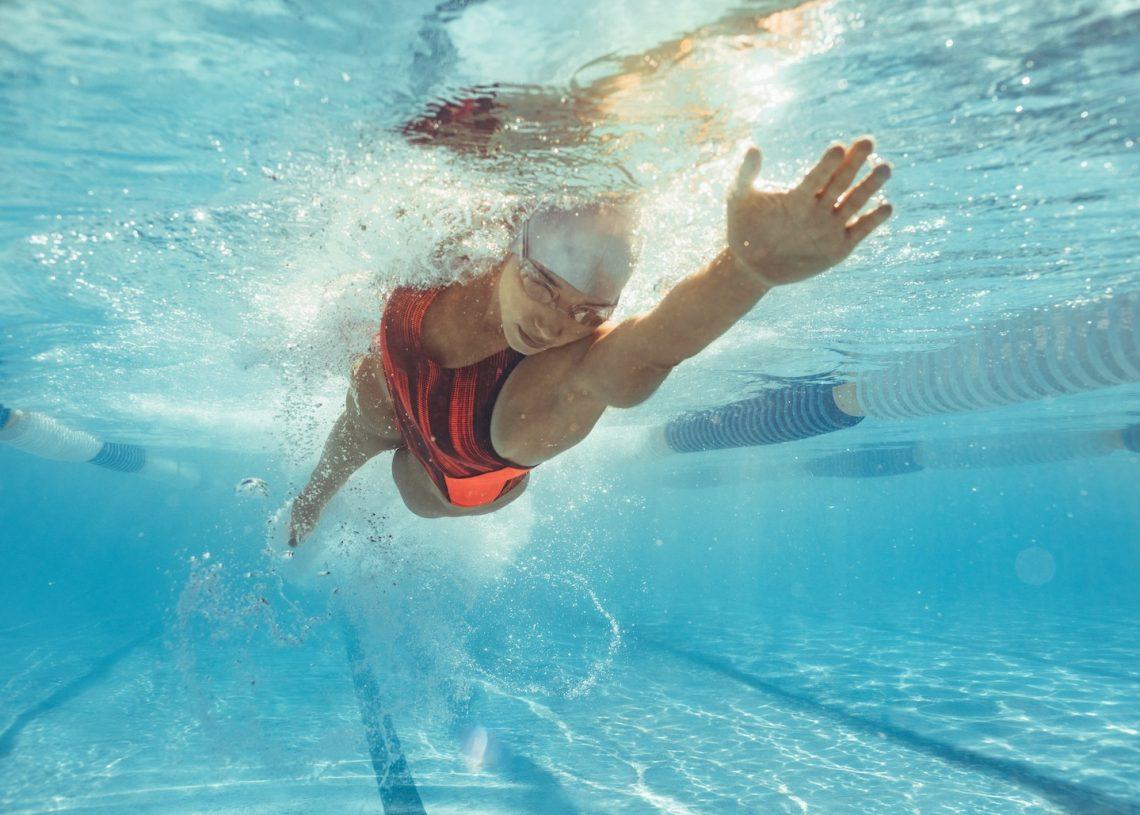
Sculling is a special type of drill in which you don’t perform a full stroke, rather, you keep your arms under water to focus your energies on a specific area of the stroke. The people-paddle scull helps you do this with an approach that’s like the doggy paddle.
To perform this scull, execute a stroke with a typical catch underwater, but rather than recovering your arms over the water, drive your hand back in front of you through the water like you do with doggie paddle. You should keep your face mostly submerged, though, more like you would when swimming regular freestyle rather than using the head-up position that’s favoured when doggie-paddling.
Kit corner: Dragsox

A powerful kick is essential for speed. To be competitive in swimming you need to have a strong whitewater kick. Whether you’re aiming to swim a fast 50, 200 or the mile, your kick needs to be your driving force. Using DragSox can help you develop the strength, power and endurance to drive you through your race of choice. These provide a source of power training through resistance. There are other ways to accomplish this, however, they all have their drawbacks. What we like about using DragSox is that they deliver a great power workout without any of the usual inconveniences or compromises in body position. They are not the most flattering bits of kit and remind us of school swimming days with baggy pyjamas and deep-water brick pick-ups! Currently retailing at around £35 a pair.

Outdoor Swimmer
Outdoor Swimmer is the magazine for outdoor swimmers by outdoor swimmers. We write about fabulous wild swimming locations, amazing swim challenges, swim training advice and swimming gear reviews.