

Use the outdoors for dryland training
Avoid busy, stuffy gyms and get outside for your dryland training, says fitness coach Vivienne Rickman
Outdoor swimmers are naturally drawn to being outside. We love the feeling of moving in the natural world, so not having access to a perfectly temperature-controlled gym isn’t necessarily a hardship for us; in fact, it can be an advantage. Hills, benches, beaches, forests, wind, and weather can all become tools for training, helping to build strength, endurance, and confidence for the water.
It’s very common to face barriers to exercise. I live in a rural area so for me it’s the time it takes to travel to the gym, but in a city it may be struggling to book busy fitness classes, or you may just be feeling unsure about how to set up complicated equipment. Using the outdoors instead can instantly remove these obstacles, making it as simple as stepping out of your front door. Perhaps more importantly, training outside exposes you to a real environment: uneven ground, temperature changes, and variable effort. But of course, these are conditions outdoor swimmers already know well.
Walking — for training, not just for movement
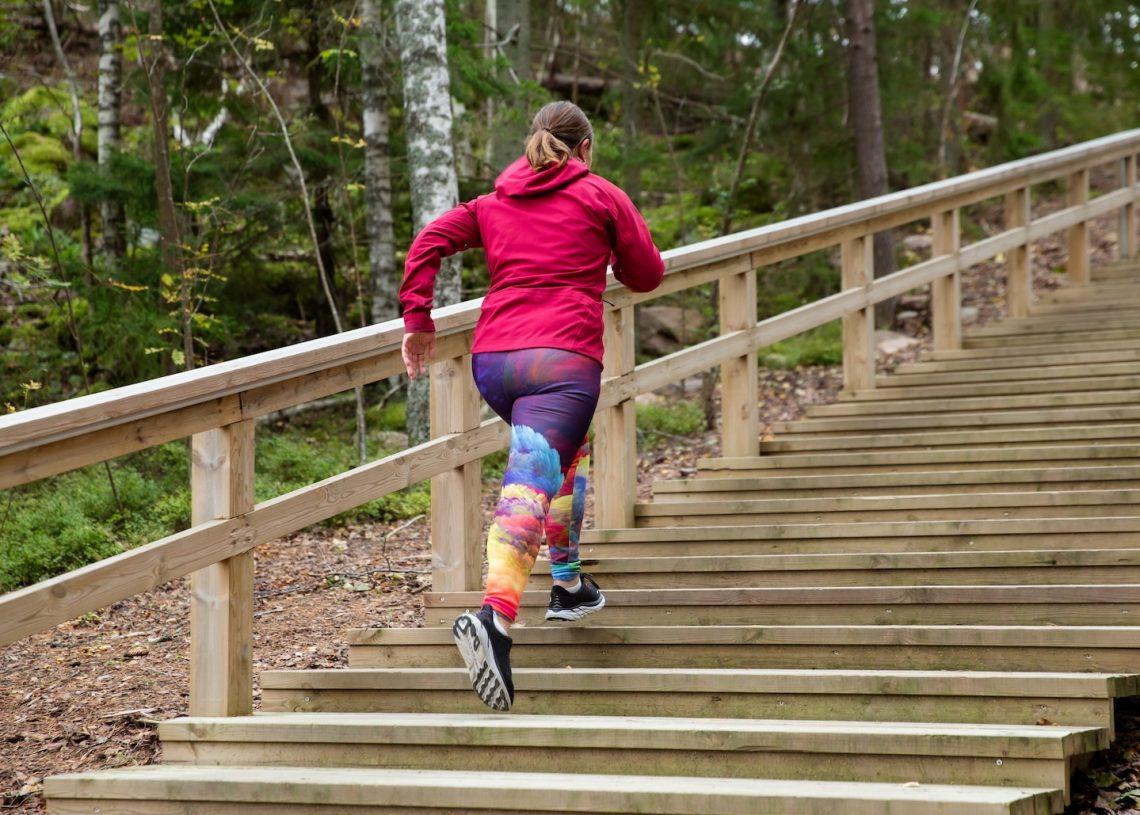
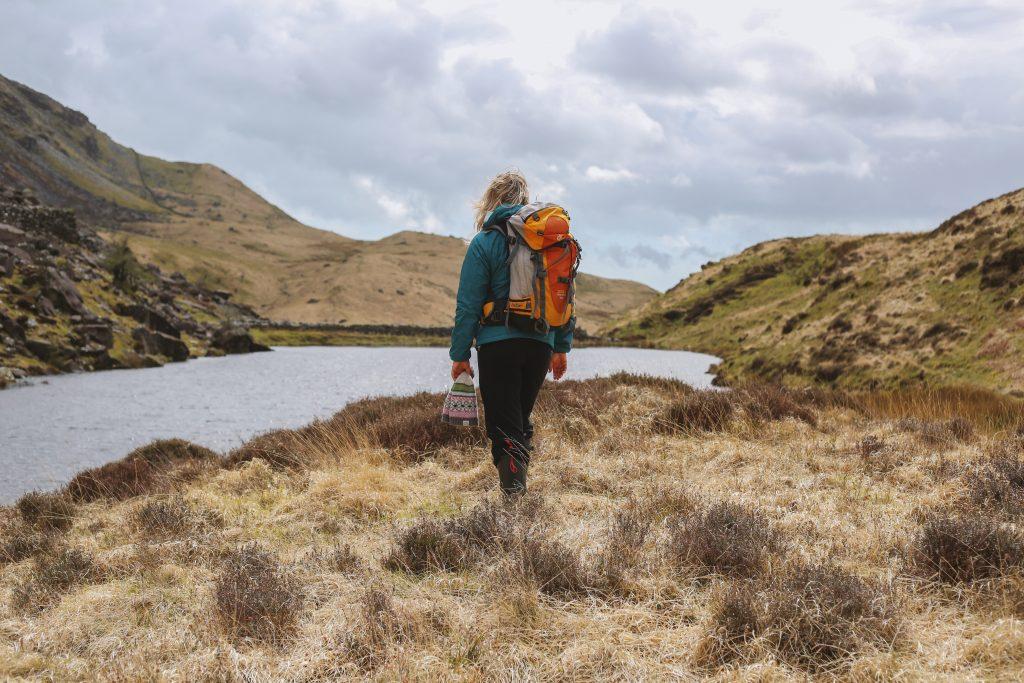
Walking is one of the simplest and most underrated forms of exercise. Walking uphill raises the heart rate, strengthens the glutes, calves, and hamstrings, and challenges posture and breathing. A steady walk up a hill, sand dunes, or undulating coastal paths can quietly build the aerobic fitness needed to support longer swims and improve recovery.
When does a walk become a workout?
A walk becomes a workout when you begin to challenge your body. This can be done by increasing pace, distance, incline, or resistance. The most effective way to know if you are challenging your body is to use Rate of Perceived Exertion (RPE) which means, how hard the effort feels to you. On a scale of 1–10:
- 1–2: very easy stroll
- 5–6: purposeful walking, breathing deeper
- 8–9: very hard effort, such as pushing up an incredibly steep hill
You can add structure to your walks by alternating effort levels. For example, speed up for five minutes, then slow down for two, or walk steadily uphill and recover on the descent.
Example session
- Warm up: 5 mins at RPE 2–3
- 1 min at RPE 7–8
- 3 mins at RPE 4–5
- 1 min at RPE 7–8
- 3 mins at RPE 5–6
- 1 min at RPE 8–9
- Cool down: 5 mins at RPE 2–3
If counting minutes is too complicated, use markers you can see, such as walking to the end of the road at RPE 7-8 and then to the end of the next road at RPE 4-5.
What about strength training?
There are plenty of strength exercises you can do outdoors using bodyweight, gravity, and everyday objects such as benches, rocks, steps, and walls.
Benches or low walls are ideal for stepups and sit-to-stands, which build leg strength and stability.
Split squats and lunges improve balance and hip control.
For upper-body strength, incline pushups using a wall, rock, or bench are excellent for swimmers and can be easily adapted to different ability levels.
Try 12 reps of each and 2/3 sets, remembering to rest between sets. Controlled movement is especially important when training outdoors. Uneven ground naturally challenges balance – grass, rocks, and wooden surfaces can be slippery when wet, while gravel and uneven trails require constant small adjustments. This improves joint stability and proprioception, both valuable for outdoor swimming.
Mental resilience
Walking and exercising outdoors in wind, light rain, or chilly weather helps develop calmness and persistence when things feel uncomfortable. It can be tempting to stop when conditions aren’t ideal, but learning to keep moving despite mild discomfort can really help manage anxiety in the water.
What are you waiting for? Head outside!
- Start with a walk
- Add some simple strength exercises using what’s around you
- Finish with gentle stretching
Aim to do this two to three times per week, building a dry land routine that supports and transfers directly to your swimming.

Outdoor Swimmer
Outdoor Swimmer is the magazine for outdoor swimmers by outdoor swimmers. We write about fabulous wild swimming locations, amazing swim challenges, swim training advice and swimming gear reviews.