

The art and science of tapering
Swim coach Paul Newsome explains the science of tapering – and how to arrive in peak condition for your next swim challenge
Tapering is a critical phase in a swimmer’s training cycle, involving a reduction in training volume and intensity to allow the body to recover and peak for competition. This strategic reduction aims to maximise performance by ensuring that the swimmer is physically and mentally fresh. With the use of some clever tracking tools, and ensuring you’re not reducing too much intensity in the lead up to an event (which can often make you feel sluggish), it’s becoming easier than ever to master this dark art.
What is tapering?
Tapering involves gradually reducing training intensity and volume before a significant competition. This period allows the body to repair itself, replenish energy stores, and improve muscle strength and endurance, striking a balance between maintaining fitness and ensuring full recovery to achieve peak performance.
Why should we taper?
The primary goal of tapering is to optimise performance. When done correctly, tapering can lead to significant improvements in race times. Benefits include enhanced recovery, improved performance due to reduced fatigue and increased energy levels, and mental freshness.
Who should taper?
Tapering benefits swimmers of all levels, from beginners preparing for their first 750m triathlon swim to elite athletes tackling long-distance events like the English Channel. The specifics of the taper vary depending on the swimmer’s experience, the race distance, and individual response to training. It never ceases to amaze me when national swimming teams who perform poorly at major swimming events like the Olympics often blame the “team’s” poor taper as a reason for everyone’s lacklustre performance, implying that everyone on the team followed the same taper. Irrespective of individuality, pool distances ranging from 50m to 1500m require very different strategies.
When should we taper?
The timing of a taper depends on the length and intensity of the competition. For shorter events, a taper might last one to two weeks, while longer distances might require three to four weeks. The taper period should be long enough for full recovery but not so long that fitness is lost. On the flip side, some swimmers prefer not to taper at all, claiming they lose their “feel for the water” if they do. Personally, I have found I respond better to a shorter taper period, despite the fact that I usually race long distances these days.
How to taper effectively
1. Gradual reduction in volume
– Reduce the total distance swum each week during the taper period.
– Focus on maintaining intensity but reduce the number of high-intensity sessions.
2. Maintain quality
– Ensure remaining sessions are high quality, focusing on race pace and technique.
– Include race-specific drills and sets to keep the swimmer sharp.
3. Monitor recovery
– Pay attention to signs of overtraining or fatigue.
– Incorporate rest days and lighter sessions as needed.
4. Nutrition and hydration
– Maintain a balanced diet rich in carbohydrates, proteins, and healthy fats.
– Stay hydrated to support recovery and performance.
5. Mental preparation
– Use visualisation techniques to mentally prepare for the race.
– Practice relaxation and stress-reduction techniques to ensure mental readiness.
Adding the science using Swim Smooth GURU’s Fitness Tracker
While you can achieve a good taper through judgement and experience, I find a data-driven approach improves results. For example, the Swim Smooth GURU’s fitness tracker is a tool for managing your taper by monitoring your swim Training Stress Score (sTSS). This helps you maintain a balance between fitness, fatigue, and form, which is crucial for an effective taper.
1. Swim Training Stress Score (sTSS)
– sTSS Calculation: Measures training load based on intensity and duration, quantifying stress imposed on the body from each session.
– Tracking Progress: Regularly monitoring sTSS provides insight into accumulated training stress, allowing precise adjustments during the taper period.
2. Fitness, fatigue and form curves
– Fitness (Chronic Training Load – CTL): Represents long-term training load and fitness level. A well-managed taper aims to maintain this while reducing fatigue.
– Fatigue (Acute Training Load – ATL): Reflects short-term training load and fatigue level. During the taper, the goal is to significantly reduce ATL for full recovery.
– Form: Calculated as the difference between fitness and fatigue (Form = CTL – ATL). Positive form indicates a state of peak readiness for competition.
3. Benefits of monitoring curves
– Individualised tapering: Understanding your fitness, fatigue, and form curves allows for a personalized taper plan, optimizing recovery without sacrificing fitness.
– Performance prediction: Analyzing these curves helps predict performance readiness, ensuring peak condition on race day.
– Avoiding overtraining: Tracking fatigue prevents overtraining during the taper period, a common pitfall that can hinder performance.
Practical application of tapering
In my experience, using the Swim Smooth GURU’s fitness tracker has transformed my approach to tapering. I monitor my sTSS and adjust my training accordingly. This meticulous tracking allows me to balance my fitness and fatigue, resulting in peak form and personal best performances. By leveraging sTSS and understanding the interplay between fitness, fatigue, and form, swimmers can ensure they arrive at their competition in peak condition, ready to achieve their best. Whether you are a novice preparing for your first 750m swim or an elite athlete tackling the Channel, a data-driven approach to tapering should improve your performance.
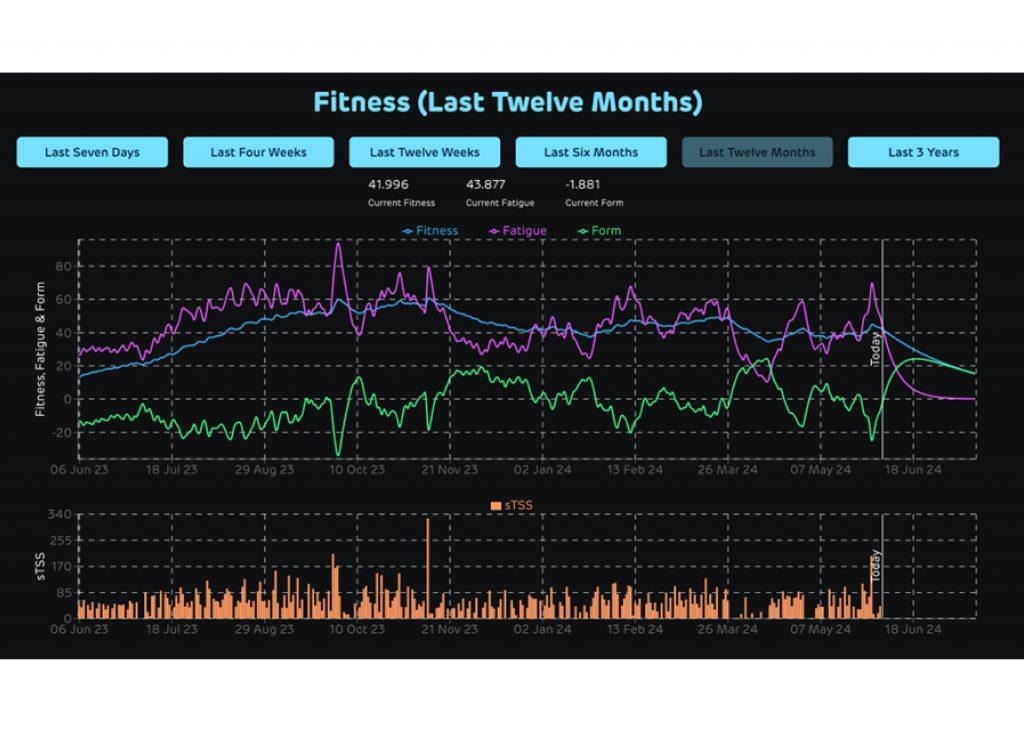
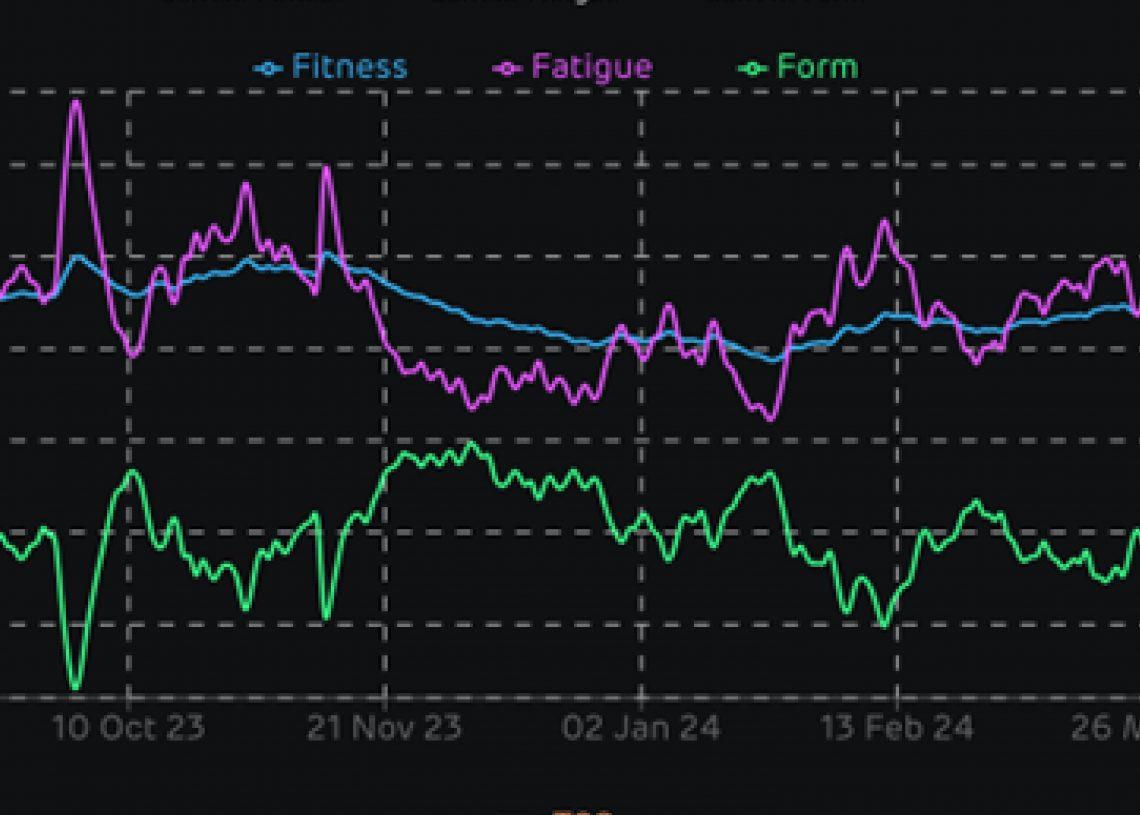
The image above shows my fitness curve over the last 12 months. You’ll see peaks in my fitness at the start of October 2023, the middle of November 2023, and the end of May 2024. These line up with 3 big events that I’ve done this year. You’ll notice a flattening of my fitness (blue line) right before each of those events and a rise in form (green line) as my fatigue (pink line) drops off. This is the taper. The curve also quantifies just how much fitter I was in October / November 2023 than in May 2024. Knowing this, I can set my expectations accordingly.

The build-up to the UltraSwim33.3 (which I won) in October 2023, demonstrates an almost perfect preparation phase with a linear rise in fitness (CTL), balanced with just the right amount of fatigue (ATL) to stimulate this. This training plan was programmatically added into the GURU for all members of the event to freely follow along with – the challenge is adherence and consistency to the program though with regards successful results across the board – those who were able to stick to the plan went very well indeed.
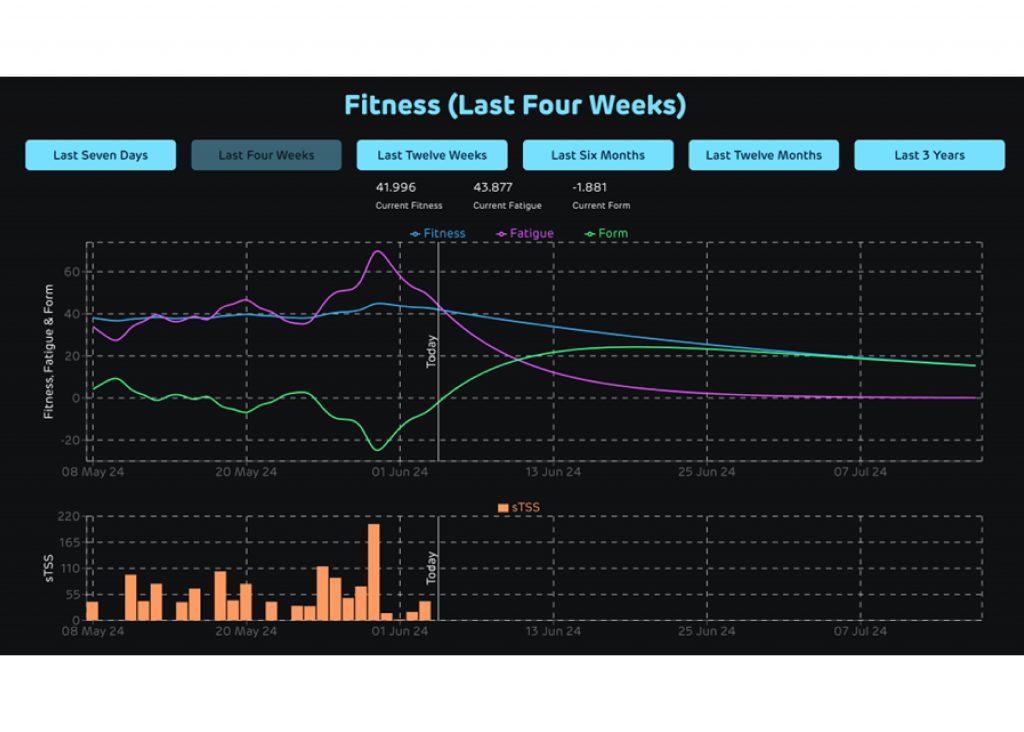
Whilst the numbers are somewhat arbitrary, my preparation for the 2024 BestFest in Mallorca, Spain was hampered with several bouts of illness which saw my CTL about ⅔ of what it was before the UltraSwim33.3. Consequently, I knew I wouldn’t be capable of pushing myself as hard, so I needed to be more strategic with my approach to the event. Doing so allowed me to still take out the non-elite series win with some close-to lifetime best performances – all by listening to my body, adjusting expectations and getting the taper right.

Outdoor Swimmer
Outdoor Swimmer is the magazine for outdoor swimmers by outdoor swimmers. We write about fabulous wild swimming locations, amazing swim challenges, swim training advice and swimming gear reviews.