


For our towel holders
There’s a beauty in finding alternative ways to enjoy water, says Rowan Clark. Why not show your towel holder some love and try something new?
It’s baffling, but some people go to the water and don’t swim. Not because they can’t, but because they don’t want to. They don’t scan riverbanks for a suitable access point. They have no compulsion to wade into the sea in their underwear because they’ve not packed a swimsuit. They don’t gaze at rocky outcrops beyond the shoreline and wonder if they could swim there.
Chances are, you know these people. They may be close to you; glorified towel holders who dutifully mind your kit, take photos and gently refuse when you try to tempt them in. Chances are, they do this because they love you and because they love the water – just not being in it.
Enjoying blue spaces with your people is a fun, bonding summertime treat. And besides swimming, there are plenty of other water-based activities. So, we took a look at some alternative ways to show our appreciation to the watery landscapes we love – and to our wonderful towel holders.
Symbiotic pleasures
“My wife outdoor swims, but I never go in the sea. I absolutely love being beside water, I just don’t like being in it,” says Lara Maiklem, author of Mudlarking: Lost and Found on the River Thames. “She goes swimming and I wander the shoreline looking for stuff. She hates doing that because she gets so bored. She likes going fast and I like going slowly, so it’s great that we have this understanding.”
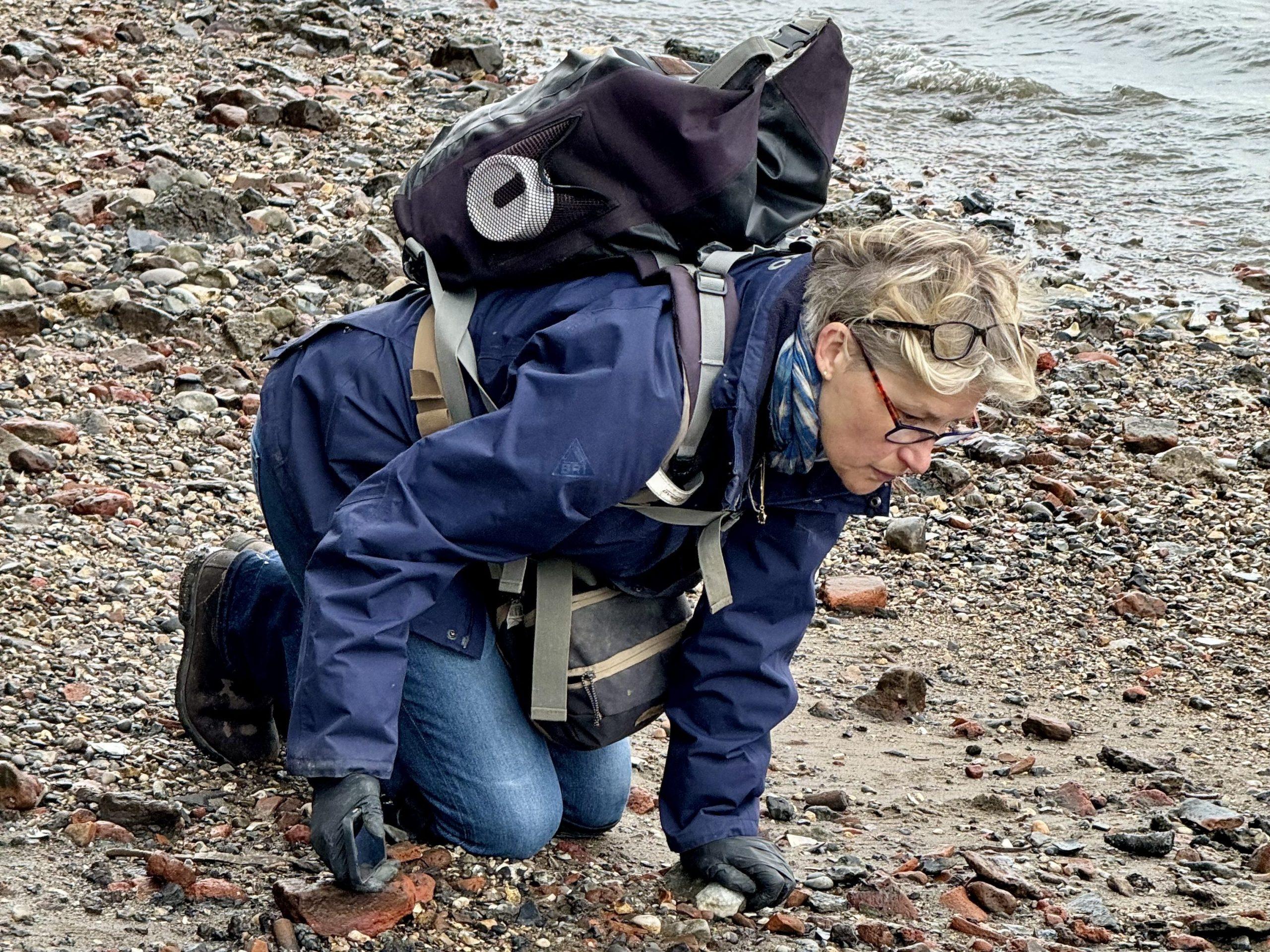
Much like beachcombing, mudlarking – searching riverbanks for curious objects – is peaceful and completely absorbing. For Lara, being by the water, deeply engrossed in what it has washed up is just as much of an escape as swimming is for her wife.
“It’s that incredible connection with history – it’s like time travelling,” says Lara. “But it’s more than that. It’s also my escape. It’s my escape from myself, sometimes, from what’s going on in my life, from the city or from my relationship and my kids. It’s my escape from everything.”
Having complementary passions allows us to get headspace while sharing a love for the same place. For romantic partners, this can be a key to a lasting relationship – therapists argue that sharing the same core values while enjoying different hobbies broadens life experiences and builds self-esteem while avoiding conflict and competitiveness.
There are practical advantages, too. For example, a keen paddler and open water swimmer can enjoy the water side-by-side, not only keeping each other company, but also offering safety support. “I felt guilty about all the time I was spending training until I realised it could be a family affair,” says endurance swimmer Lucy. “My husband and children love kayaking, so we packed snacks, planned a route and I swam while they paddled along beside me.”
A third thing
In relationships, having a shared passion is unifying. There’s a theory around having something beyond, bigger than you and your partner, being key to magnetising two individuals who are otherwise engaged in their own jobs and hobbies.
“I read this article called ‘The Third Thing’ by Donald Hall about how relationships need a third thing to gaze upon or do together,” says Rachel Ashe, founder of Mental Health Swims. “For me and my partner, Cory, it’s the sea. It’s the thing we gaze upon together, that we appreciate together. We love collecting cowrie shells together – it’s the most joyful thing.”
While two people may enjoy different water-based activities, having a shared passion can deepen connections. That’s by no means limited to romantic partners; strong social relationships of all kinds are linked to better mental and emotional well-being, and exploring interests with a partner, friends or family is fun, bonding and aids personal growth.
Before you use this argument to persuade your partner or land-loving best friend to come for a swim, think about that earlier point about conflict and competitiveness. While introducing someone to the joys of outdoor swimming is wonderful, if you’re an experienced and proficient outdoor swimmer, you won’t be on an equal footing with a newbie. It’s also worth considering that if someone has been holding your towel while you swim for the past five years, they probably mean it when they say that they don’t like outdoor swimming.
There are also huge advantages to trying new activities. The ‘novelty-centre’ of our brain is linked to the hippocampus and the amygdala, which play a big part in learning and memory. Clinical psychologists have found that when this system is triggered by doing something new it creates dopamine pathways. So, when you try a new activity, especially one that pushes you out of your comfort zone, the adrenaline, sense of pride and endorphins helps train your brain to create new, positive memories. Having people with whom to try a new activity not only makes it more fun, but also holds you accountable and allows you to share your highs and lows. And, when you push outside your comfort zone together, your bond deepens.
Connecting with the past
Humans have always been drawn to the water, so it’s little wonder that we have a vast array of water-based activities from which to choose. Many of those activities are rooted in practical human needs like travelling or finding food. For example, kayaks are roughly based on early skinboats, or umiaks, used for moving people to seasonal hunting grounds and for hunting.
“I was always really fascinated by the original skin kayaks from the Arctic regions of North America,” says Anton Willis, who developed the first foldable Oru kayak. “The first model looked the most like this, which was intentional; I was totally copying them because they’re incredible.”
“I think, in a way, our kayaks are halfway between swimming and more conventional boating. Of all boats, kayaks are the most like an extension of your body, especially the more traditional Arctic style.”
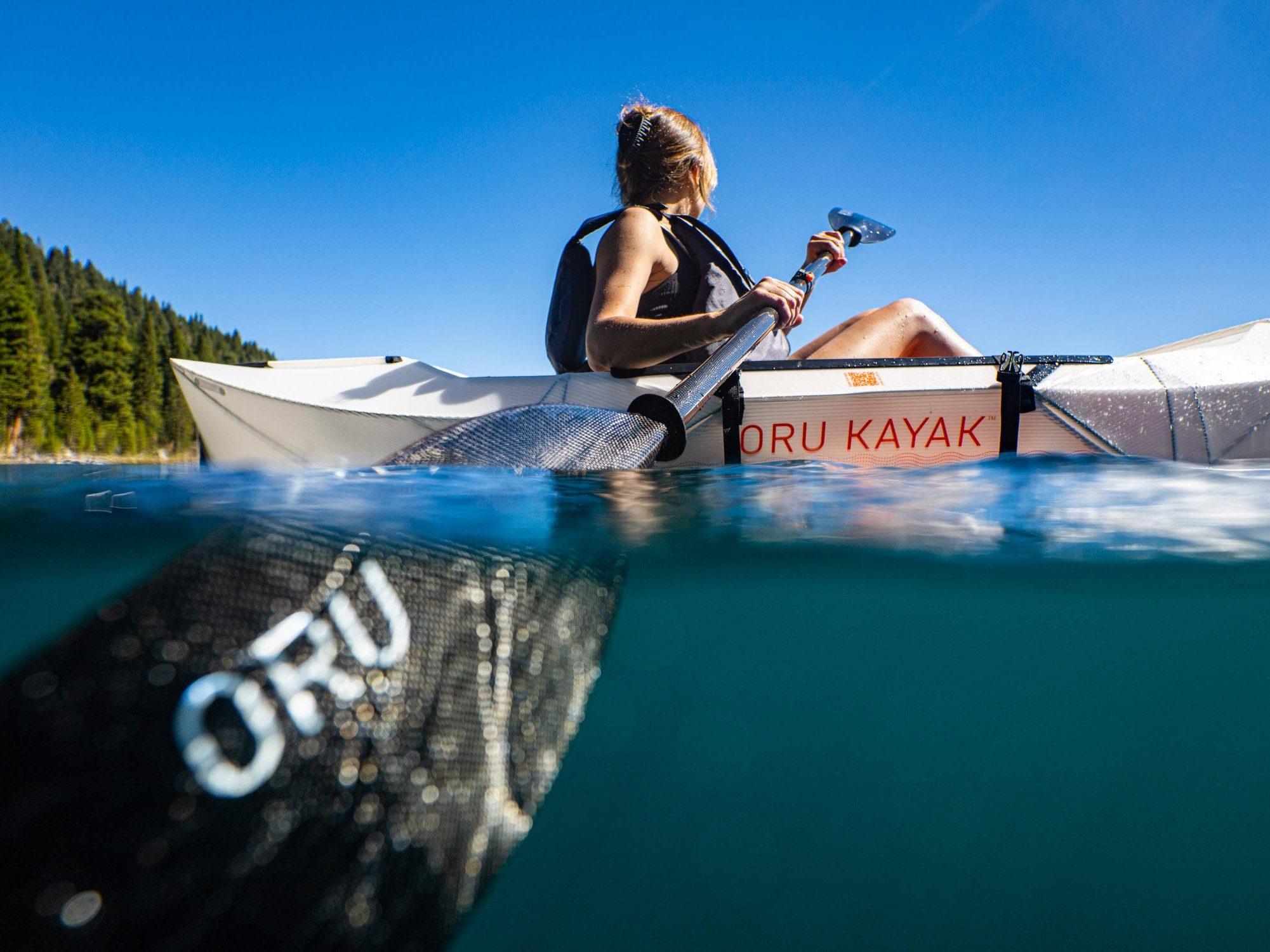
Anton explains how these skin boats were individually made based on the hunter’s body measurements so that they fitted almost like a pair of trousers. In much the same way as we wear wetsuits, Oru kayaks are designed to keep us as close to the water as possible, extending our bodies so that we can move through the water just like those hunters.
This brings us back to mudlarking and beachcombing. While fossils reach back into pre-history, the human-made treasures we can find on a beach or river’s foreshore tells stories of settlers from throughout the ages. That might be fragments of Victorian ceramics, clay pipes or Lego from the famous 1997 cargo spillage; evidence of how we lived, worked and played.
“The things I really love to find are shoes, just because they’re so personal. These very ordinary shoes belonged to people who have left nothing else behind,” says Lara. “The thing I most want to find next is a bone skate. From medieval to Victorian times, they’d take a shinbone, cut it down just long enough for a foot, smooth off the bottom and drill a hole so they could tie it onto their shoes to skate on the ice. It’s an amazing connection to those days of the frost fairs when the Thames froze over completely and London poured down onto the ice.”
Connecting with the environment
Cruising waterways and scouring beaches and riverbanks isn’t just about finding evidence of human activity. From fossils of ancient sea flora and extraordinary geological phenomena to spotting wildlife above and below the waterline, the pleasure we get from being in blue spaces is seemingly limitless.
Watching wildlife is not only enjoyable, but also helps us connect with the environment. While we might spot fish, birds and invertebrates while we swim, spending time looking for and observing wildlife in its natural habitats helps us learn about the creatures with which we swim.
In North Devon, the Wild Otter Trust promotes conservation by working with anglers and the general public. Advocating for these wonderful mammals, the trust shares our passion for improving river water quality. As apex predators, the health and breeding success of otters is a good indicator of water quality. But are they easy to spot?
“It’s easy to do, but it can take a long time before you actually find one,” says founder Dave Webb. “You need to spend a lot of time studying and learning about his behaviours, tracks, habitat and things like that. But when you see one, it’s the ultimate because you’ve put the work in. You tend to remember it more if you’ve put in that work to actually see one.”
While otter spotting is about learning the signs and behaviour of otters, watching underwater creatures is more about putting on a mask and snorkel and seeing what you can find.
For those who love the idea of snorkelling or exploring coves and bays, but don’t fancy swimming, you can now cycle in the water. The Seabike is this rather brilliant invention that uses a pedal-driven propellor to drive you through the water, allowing the average person to cover open water endurance distances at super-human speed.
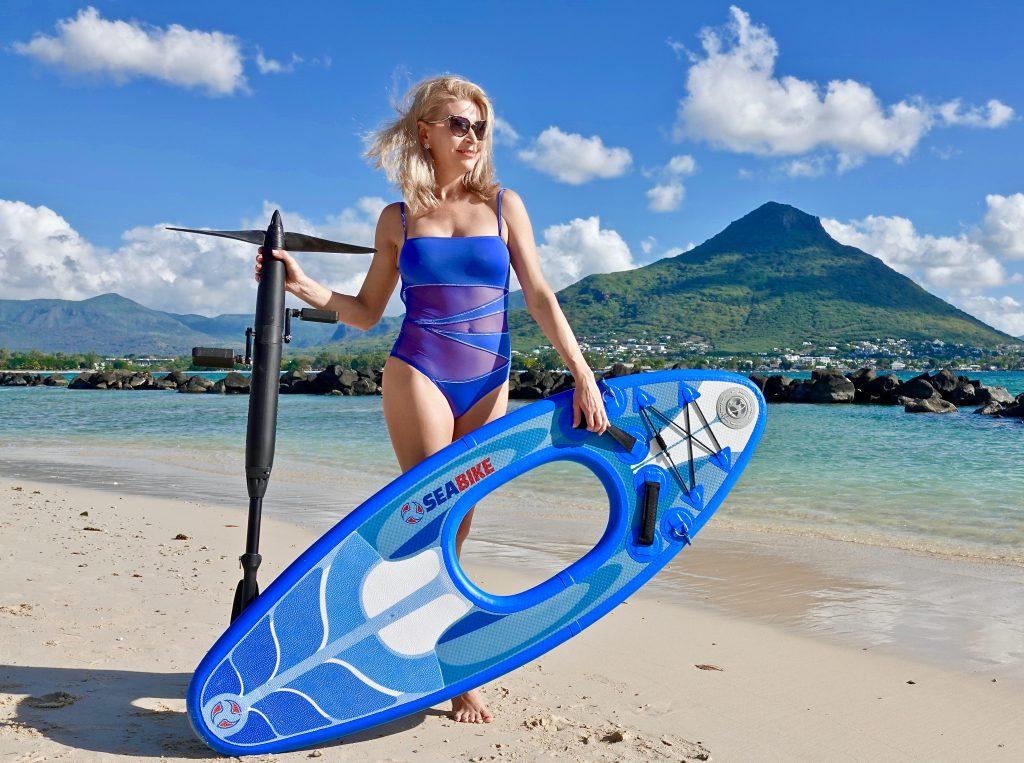
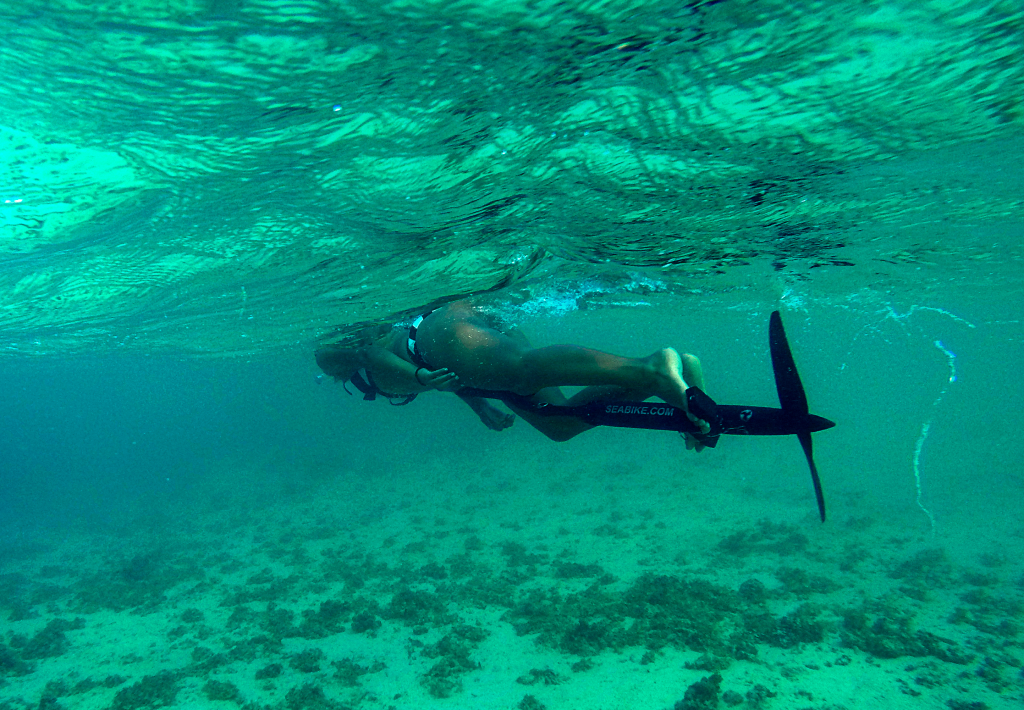
“You find this rhythm, which I can connect to yoga, where you breathe in, you have a certain flow of movements,” says Daria, the daughter of the Seabike’s inventor, Aleksey Lukyanov. “It feels like you’re flying because it becomes so effortless. And you go so fast. You can get into nooks and crannies between rocks, and then you can turn around and swim really fast to the other side of the lagoon, for example, and explore there. It opens a whole new map that you can explore.”
Learn something new
There’s a beauty in gaining new skills, exploring a new activity with friends or family and finding alternative ways to enjoy water.
“The original idea was not for a new sport to emerge, but for regular people to be able to swim like trained professionals and feel good,” says Daria. “Sometimes when we got tired, we’d make a train with my father behind pushing with his hands. He goes fast and I just rest.”
“One thing that I like about kayaking in general is that there’s a very gradual incline in the things you can do from quite simple, fun and relaxing to very extreme,” says Anton. “There’s not like a huge jump, you can keep on getting better and better and trying new things.”
From spotting wildlife on the riverbanks and under the water, to finding treasures washed up by the tide and exploring hidden coves by kayak, there are so many ways to enjoying blue spaces with your crew. Nothing beats swimming, we know, but why not show your wonderful towel holder the love and try something new?
Other water activites to enjoy
Mudlark
Read Lara’s book Mudlarking: Lost and Found on the River Thames. Depending on the location, you may need a permit (even for looking) and you must report all historical and valuable finds.
Oru Kayak
If you want to try kayaking before you buy, find guided sessions from your local outdoor activity provider. orukayak.com
Spot otters
Visit ukwildottertrust.org to learn how to spot otters responsibly.
Seabike
If you’re visiting the south of France, you can join Seabike tours. seabike.fr

Outdoor Swimmer
Outdoor Swimmer is the magazine for outdoor swimmers by outdoor swimmers. We write about fabulous wild swimming locations, amazing swim challenges, swim training advice and swimming gear reviews.