

Water wildlife: Great diving beetle
Susanne Masters introduces us to the Great diving beetle (Dytiscus marginalis), remarkable predators inhabiting slow-moving waterways, which carry a bubble of air under their wings to breathe from underwater.
By day, you can see these beetles in water. At night you are more likely to notice them by hearing humming followed by buzzing as they launch into flight. Great diving beetles are nocturnal home hunters, finding new bodies of water to inhabit by seeing light shining on its surface.
Unfortunately, the gleam of reflecting water at night resembles cars reflecting street lights. So now, flying at night to avoid predators brings the added risk of being attracted to things reflecting light that aren’t water.
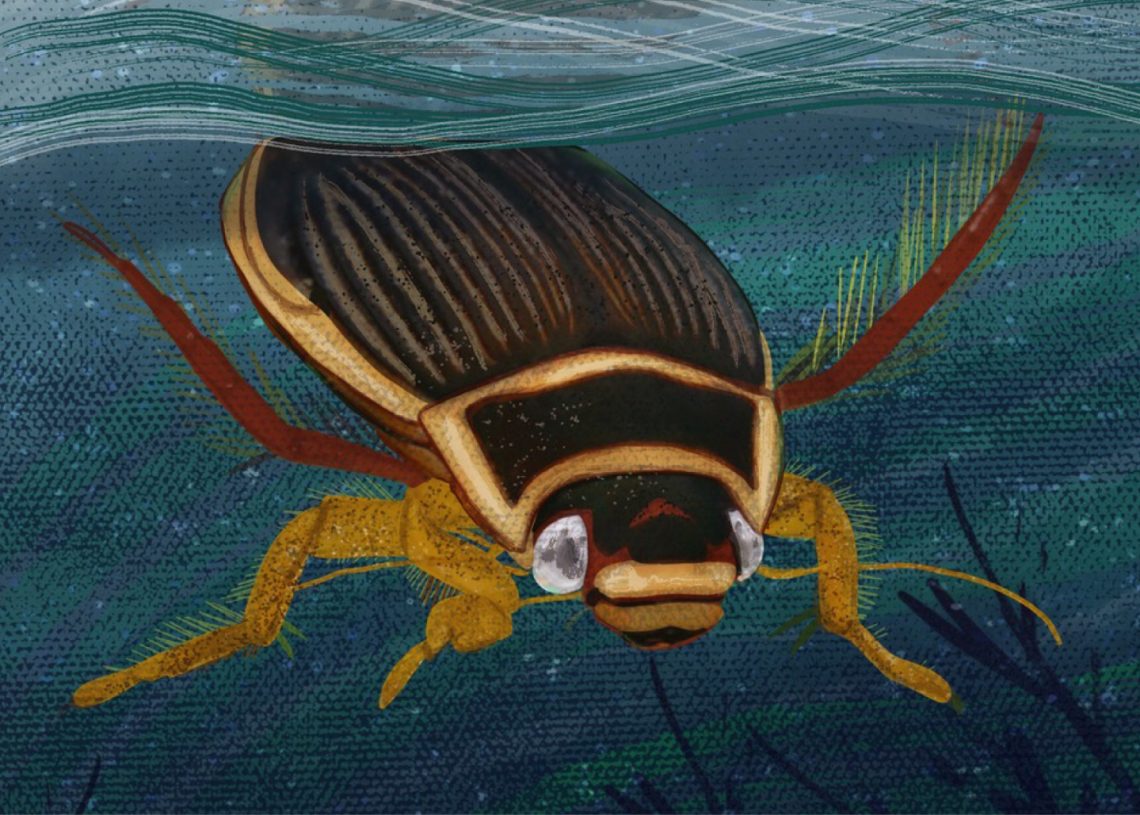
Great diving beetles don’t have gills. Underneath their wing case they carry a bubble of air, which they breathe from. If you see one underwater, a silver seam at the end of their wing case is a glimpse of the edge of their air bubble. They replenish their air supply at the surface, and then return to roaming underwater.
Where do Great diving beetles live?
Great diving beetles appear in cattle troughs or even buckets of water. However, their preferred habitat with resources for feeding and reproducing are still or slow-moving bodies of freshwater where there is vegetation; anything from garden ponds and lakes to fens and bogs.
In both larval and adult forms they eat what they can catch up to the size of tadpoles and small fish like three-spined sticklebacks. When reproducing, female great diving beetles cut holes in the stems of aquatic plants and lay a single egg in each hole.
After hatching, the small larva hang at the water’s surface with the tip of their tail just reaching into the air to allow them to breathe. They pounce on insects or tiny fish passing below to bite and inject them with venom that dissolves their insides. After sucking back in the digested flesh, the larva drop the now empty shell of their prey. Through a cycle of eating and moulting, the larva become fully grown and leave their aquatic home. They dig a hole in mud and go through a pupal stage before emerging as adult beetles to return to water.
Where to see them
- Ellingham Lake, Hampshire
- Loch Leven, Perth and Kinross
- Lough Ree, County Longford
- Norfolk Broads
- Gwent Levels
This article is from the April 2023 issue of Outdoor Swimmer. Click here to subscribe to the magazine. Ilustration: Alice Goodridge.

Outdoor Swimmer
Outdoor Swimmer is the magazine for outdoor swimmers by outdoor swimmers. We write about fabulous wild swimming locations, amazing swim challenges, swim training advice and swimming gear reviews.