Swimming the cenotes of the Yucatan Peninsula
Writer and swimmer Becky Horsbrugh thought Mexico would offer white sands and turquoise seas, but instead she found joy in caves and sinkholes. She shares why exploring Mexico’s cenotes is a great adventure for outdoor swimmers.
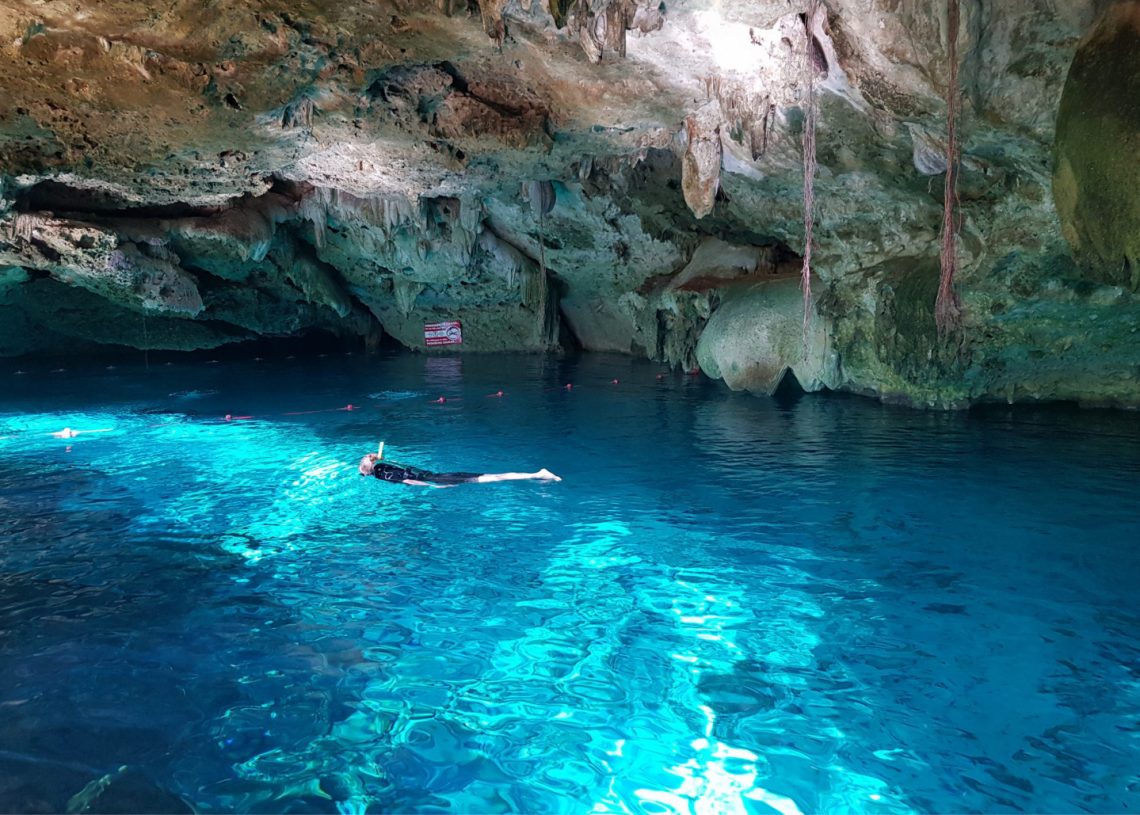
“Mind your head and your knees,” warned our guide, as we prepared to swim into the batcave. Above and below us stalactites and stalagmites narrowed our path through the water. Wearing masks and snorkels, one by one our group of eight swimmers slowly navigated the route through. The only sound was a slight ripple of water. It was also quite dark, but clear enough to see the outlines of my companions. We all carried a small torch as well, each of us searching the water below, looking for fish and checking out the incredible rock formations beneath us. I felt quite apprehensive, a slight thrill – and I sensed a similar feeling amongst our whole group.
After a minute or so, just as the gap seemed at its most narrow, we entered into the cave. Natural light streamed through from the very top – bright sunshine filtering its way down through to the surface of the water. I could clearly see the outline of my fellow swimmers. Then as I looked up and around, I spotted dozens and dozens of tiny little black bats, perched on the cave walls around us. It was a magical start to our exploration of the cenotes of the Yucatán Peninsula.
Cenote Dos Ojoes (Two Eyes)
When we first booked our much needed sunshine escape in Mexico, I was excited by the thought of swimming in glorious Caribbean waters. But on reading more about the area we were visiting, I found out it was also famous for its vast number of cenotes (pronounced ‘say-no-tays’). These are limestone sinkholes filled with fresh water, formed when bedrock collapses and exposes groundwater below.
There are around 6,000 cenotes on the Yucatán Peninsula, located on the eastern side of Mexico. Most are small, underground and inaccessible. However a significant number are large enough to swim in, dive into or snorkel. Some are open to the air, while others you need to enter through caverns and are connected to huge underground river systems.
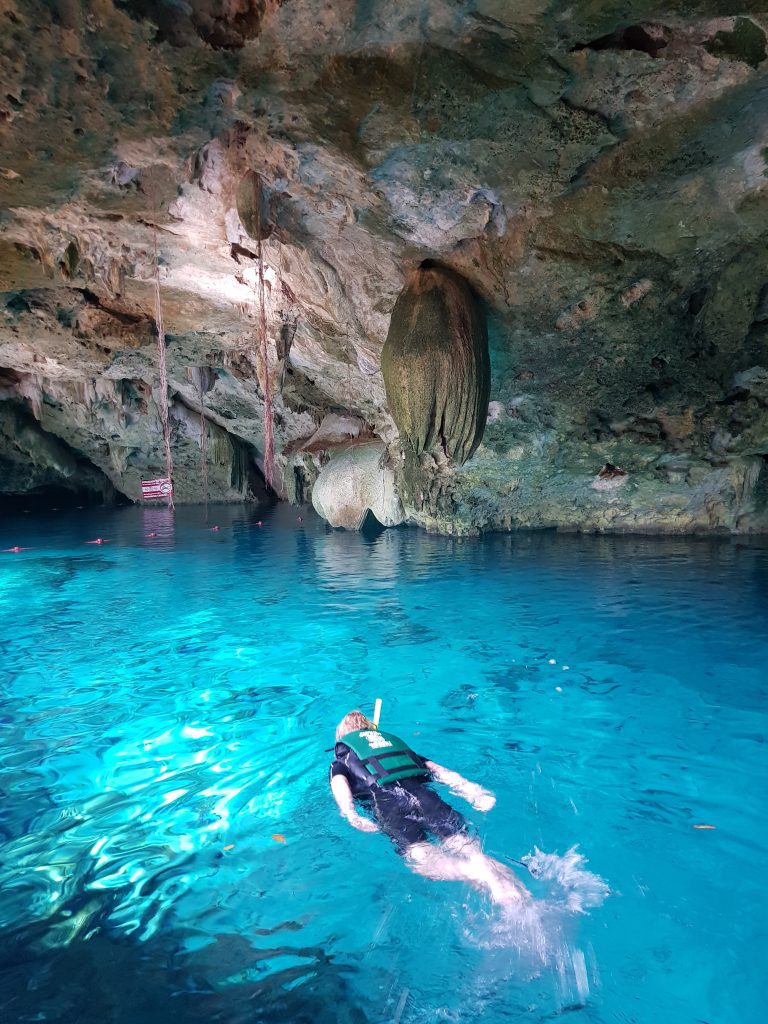
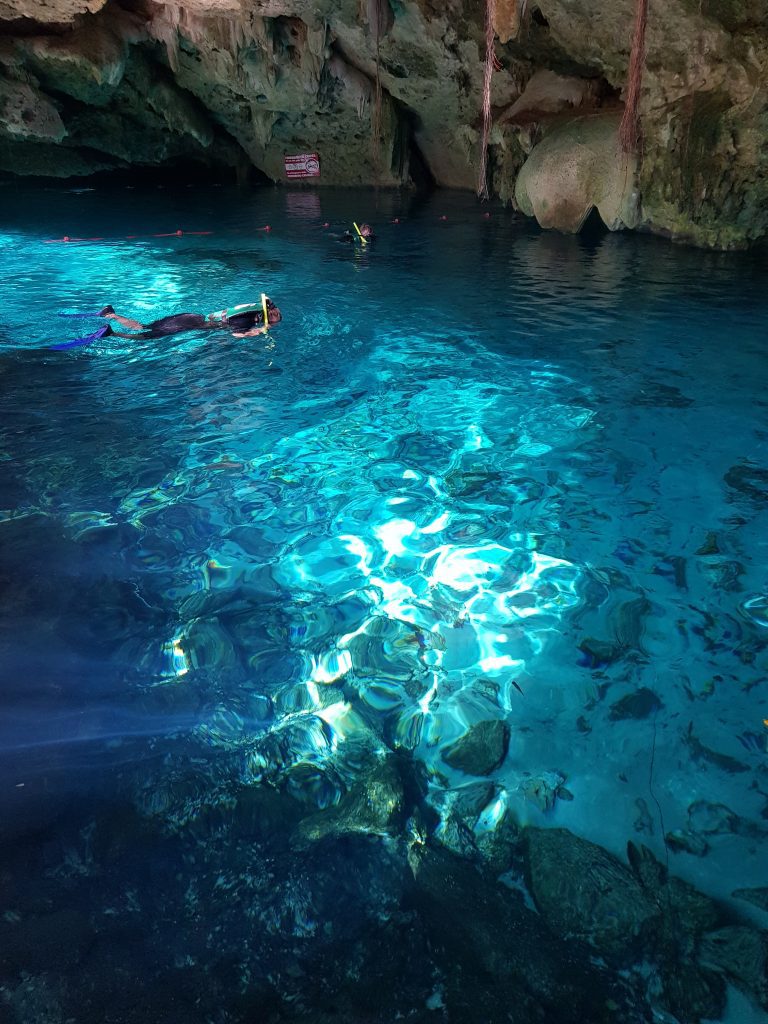
You do have to pay to enter most of them – varying in price from £5 to £10. But included in that price are lockers to store your things in, restrooms and places to eat or drink. You can also pay extra for a guide, which is what we did when we swam to the batcave, as it is one area in that particular cenote you weren’t allowed to enter without one.
That was at the Cenote Dos Ojoes (Two Eyes) which is probably the most famous on the whole peninsula – and said to be the longest underwater cave system in the world. It is made up of five cenotes in total, including its namesake cenotes the Blue Eye and the Black Eye, and is located close to the town of Tulum on the east coast. Included in the cost was the use of snorkelling gear and wetsuits (even though the outside temperature was a balmy 28 degrees, the water in the caves can get pretty cold!). There was also the possibility to scuba dive at this particular cenote.
Yai Ku Lagoon
Our next adventure was at the Yai Ku Lagoon and cenote located in the same area, and the experience could not have been more different, but still incredible in its own way. The location is open air and closer to the sea, and is an area where freshwater and saltwater gradually merge together. It was teeming with fish and rays, and you can be lucky enough to also see sea turtles and barracudas there.
As so many of the cenotes are in protected areas, it’s forbidden to wear normal sunscreen as the chemicals can damage the fragile ecosystems – one good reason to visit early in the day before the sun gets too strong. But we also found that most cenotes were pretty empty before around 11 in the morning. We went to Yai Ku around the time it opened at 9am when there was just us and a couple of other swimmers and it felt like we had the whole place pretty much to ourselves (and several hundred fish).
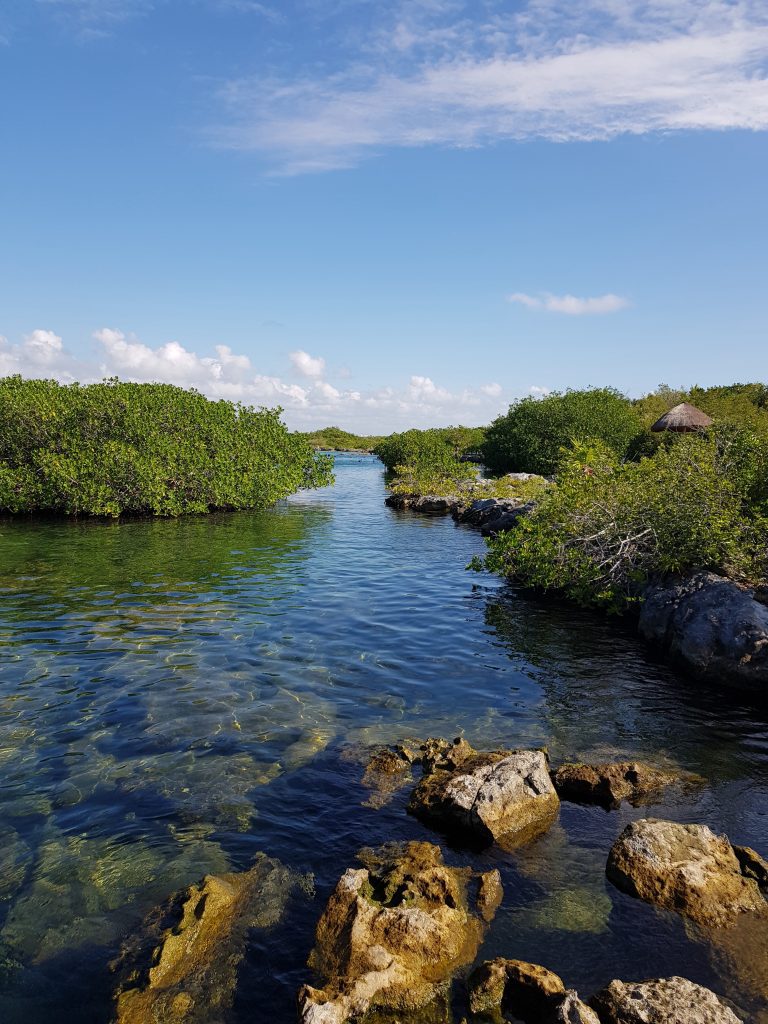
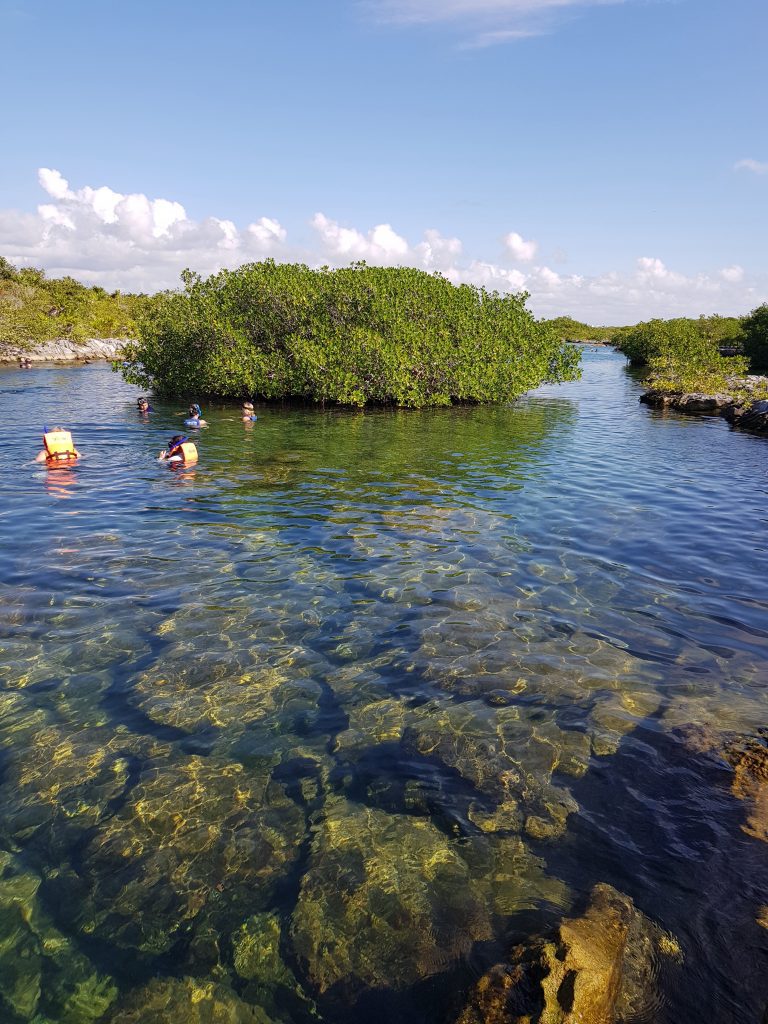
Those were just two of a dozen stand out cenotes around Tulum. Others were great for children and beginner swimmers – such as Kaan Luum Lagoon – where the water is less than 1.25 metres deep in most parts. Cenote Zacil Ha has a zip line over the water plus diving platforms for those less interested in swimming but instead wish to just enjoy the water. Further afield in this region are the three underground cenotes near the Coba ruins. Our biggest dilemma was deciding which ones to visit during our short four days in the region.
Lake Bacalar and ‘the Witch’s cenote’
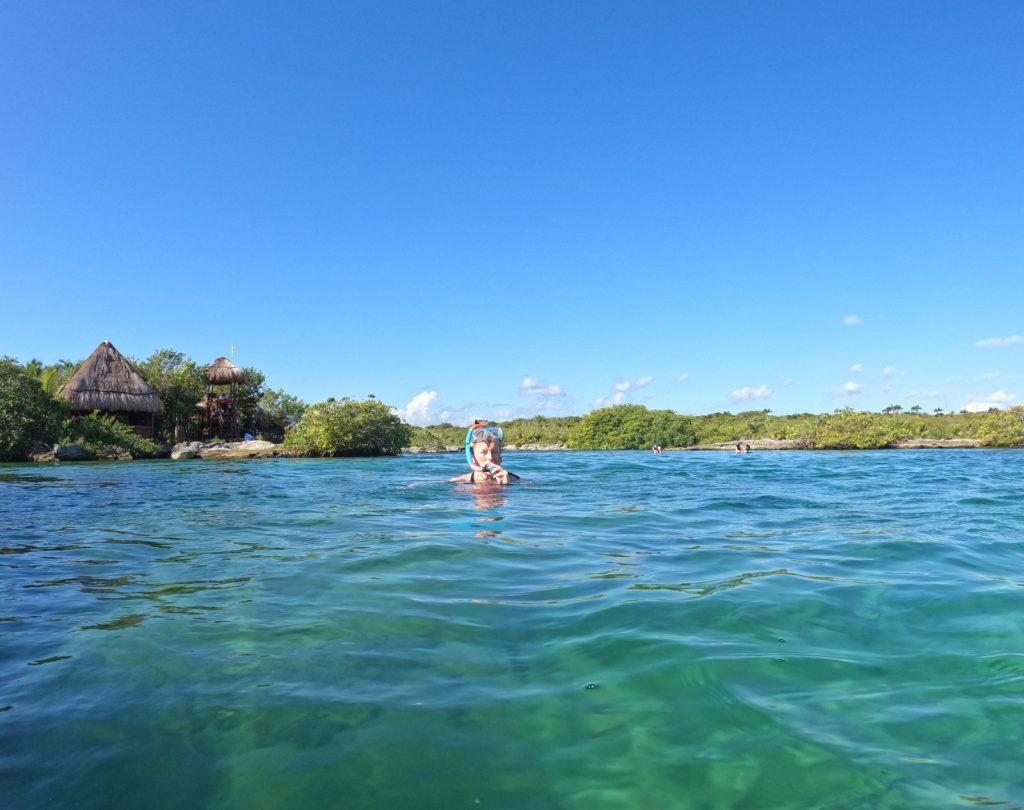
Though we then moved further down the coast towards the border with Belize, that wasn’t the end of our cenote adventure. Our next stop was the stunning Lake Bacalar near the border with Belize, also called the Lagoon of Seven Colours due to its blue and turquoise hues. The lake is over 40 kilometres long from north to south, but less than two kilometres at its widest.
There are four major cenotes here you can visit. Azul is one of the deepest at 90 metres, and resembles a small lake. Surrounded by jungle, it’s a magnificent spot to swim or kayak in. Cocalitos is also great for families, while the turquoise waters of Esmeralda are easily visible from the small harbour. From here, we took a boat trip to visit the most impressive, Cenote de la Bruja – ‘the Witch’s cenote.’

Legend has it that a resident Mayan witch once lived on its shores. It is also called Cenote Negro as the waters are so unbelievably dark here. Our boat sailed up to its edge – to where the depth suddenly changes from two to 90 metres. It was incredible to see how dark the water suddenly became. No swimming was allowed here, but the experience was still stunning.
A swim for every level of experience
Our journey through Mexico continued inland – towards the archaeological ruins at Uxmal, and of course Chichen Itza – and Merida, the capital of the region. Though far from the sea, we were never far away from the cooling waters of any number of cenotes. At X’batun blue-green waters are surrounded by lush forest – a welcome relief from the daytime heat.
We had a hire car, but left it at the tiny village of San Antonio Mulix where we paid for our admission and then rented bikes for the three-mile dirt track ride to the pools. Everywhere we went on our two week road trip through the peninsula there were incredible spots to stop and swim in – and plenty of information on the internet on their locations and type of experience. I’m a strong swimmer, my partner not so much, but that didn’t matter. We both appreciated each swim spot we went to.
I think one of the best things about organising a swimming tour through the cenotes is they cater for everyone. Some are great for children, others for those who love snorkelling. Those wanting more of a decent swim will enjoy the lush waters of the open air locations, while lifejackets are available for those nervous in the water. Each location was well organised and despite being tourist attractions, there was a real feeling of care from the organisers to ensure these natural swim spots are not spoiled by over use, or by chemicals or human disregard. Two weeks in Mexico was magical in itself, but as a swimmer to also experience so many glorious ways to enjoy the water made this a truly unforgettable trip.
This article is from the March 2023 issue of Outdoor Swimmer. Click here to subscribe to the magazine.
To see all the online content from the March 2023 issue of Outdoor Swimmer, visit the 'Hemispheres' issue page.
Outdoor Swimmer
Outdoor Swimmer is the magazine for outdoor swimmers by outdoor swimmers. We write about fabulous wild swimming locations, amazing swim challenges, swim training advice and swimming gear reviews.