


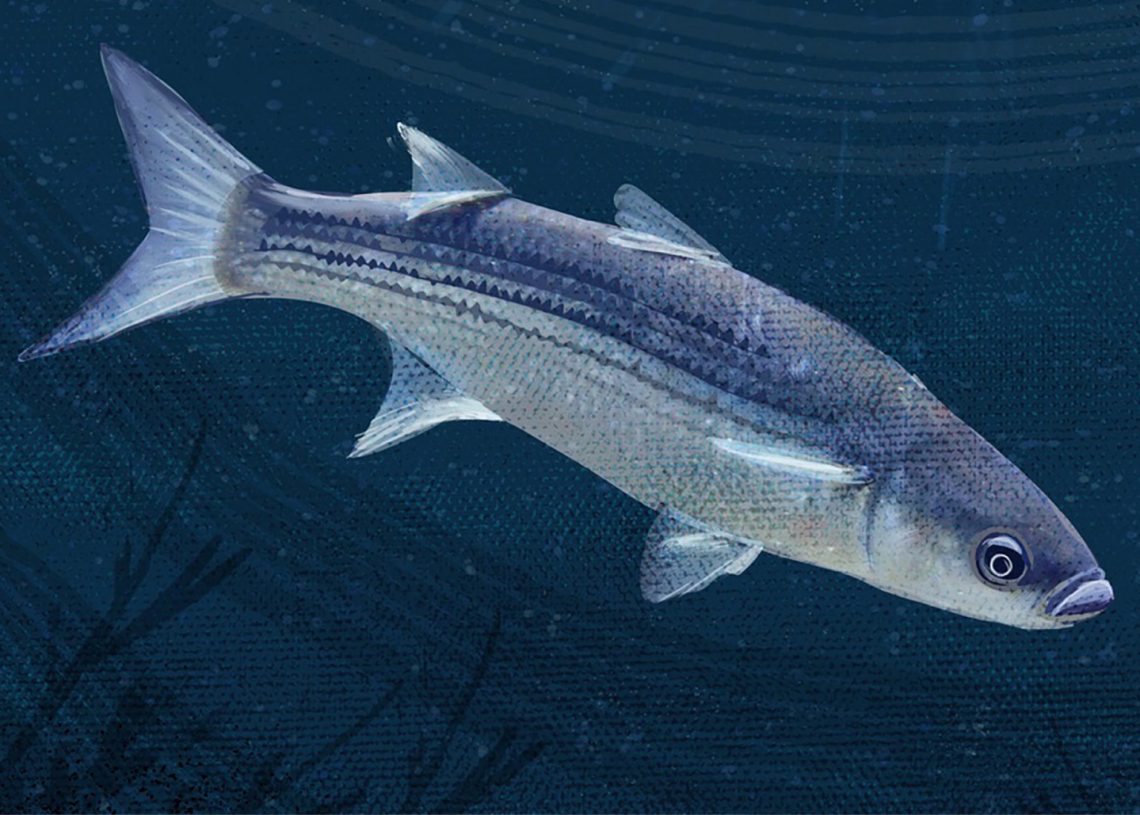
Water wildlife: thick-lipped grey mullet
What’s that flash of silver-grey in the water? Susanne Masters has your guide to the thick-lipped grey mullet (chelon labrosus), harmless companions to our open water swims.
Silver-grey, scaled, no complex markings and a simple streamlined shape, grey mullet are the visual archetype of a fish. Of the three species referred to as grey mullet around Britain and Ireland, thick-lipped grey mullet are the most common. Reaching about 70cm long when fully grown, they are big enough to spot when looking down into water from a harbour wall or other elevated viewpoint.
It can be a fright if you glimpse their large bodies swimming near you, but they are harmless companions. Grey mullet aren’t too bothered by people being present in the water and take advantage of swimmers stirring up sediment as this is where they find the small invertebrates that they eat, in addition to algae. They are considered hard to catch by recreational fishers, in part because silhouettes above and noise cause grey mullet to dash away. Quiet swimmers who don’t swim towards them can enjoy watching grey mullet mooch along the seabed.
Although difficult to capture with fishing line, grey mullet are vulnerable to being caught in nets. As fish that weren’t considered of commercial interest grey mullet have not been protected by catch limits, and are under increasing pressure as an alternative to other species of fish. A challenge to catch with fishing rod and line, grey mullet have allies in recreational fishers, in particular members of The National Mullet Club, who are keen to conserve their populations for catch and release fishing.
Where to see grey mullet
In winter, grey mullet move to warmer deeper seawater and are occupied with spawning in January and February. As inshore water warms up in spring they return to our shores. Tolerant of brackish and freshwater they aren’t restricted to the sea and you will also see them when swimming in estuaries and tidal stretches of rivers.
- River Frome, Dorset
- Portpatrick, Dumfries and Galloway
- Penarth, Vale of Glamorgan
- Youghal, Co. Cork
This article is from the January 2023 issue of Outdoor Swimmer. Click here to subscribe to the magazine.

Outdoor Swimmer
Outdoor Swimmer is the magazine for outdoor swimmers by outdoor swimmers. We write about fabulous wild swimming locations, amazing swim challenges, swim training advice and swimming gear reviews.