


Sea of tears
Rowan Clarke meets Emma Simpson to talk about her new book Breaking Waves
The sea evokes all emotions. In literature, it represents the entire gamut of human experience – life, death, uncertainty, stability and fear. In life, it brings us joy, trepidation, healing and deep connections with nature, each other and ourselves.
In her new book Breaking Waves: Discovery, Healing, and Inspiration in the Open Water, Emma Simpson beautifully weaves her own story with other women’s. It goes to the heart of outdoor swimming, exploring the multifaceted connections facilitated by water and how they helped her through grief, trauma and self-discovery.
Connecting through stories
Like so many of us, Emma discovered swimming outdoors during an especially difficult time of her life. As she connected with other women worldwide, she realised the profound power of connecting through cold water swimming and shared storytelling.
“At the lake, I found that so many people had fascinating stories about why they were there and how they found it, so I started writing about that,” she says. “The mechanism that has supported us is open water, but the key is connection – how we connect to ourselves, nature and each other, and the strength of the community around open water and how we find our way through those stories. Storytelling is my passion, holding and gathering people’s tales and then relaying those universal themes. This is how we know we are not alone.”
Emma describes those conversations we have in the water. You know them well – where you “go from something quite frivolous and having a laugh to something incredibly deep, right at the soul of your being within five minutes and then you’re back laughing again.”
The draw of the sea
Emma wasn’t always a swimmer. She beautifully describes her early chlorinated years of swimming lessons, but she wasn’t from a swimming family, let alone one that swam in the sea. As a young adult, she’d experienced a near-drowning in the waves. So, what drew her into the sea to cope with grief and trauma?
“When I did my first sea swim, I was terrified of the sea,” she says. “At that point, I was suffering from depression although I didn’t realise it. I think it was grief-driven, and my brain was functioning at an almost survivalist level with this absence of joy. I felt this primal pull [to the sea] that I couldn’t explain; when I told my family, ‘I’m going to do a sea swim’, they were horrified.”
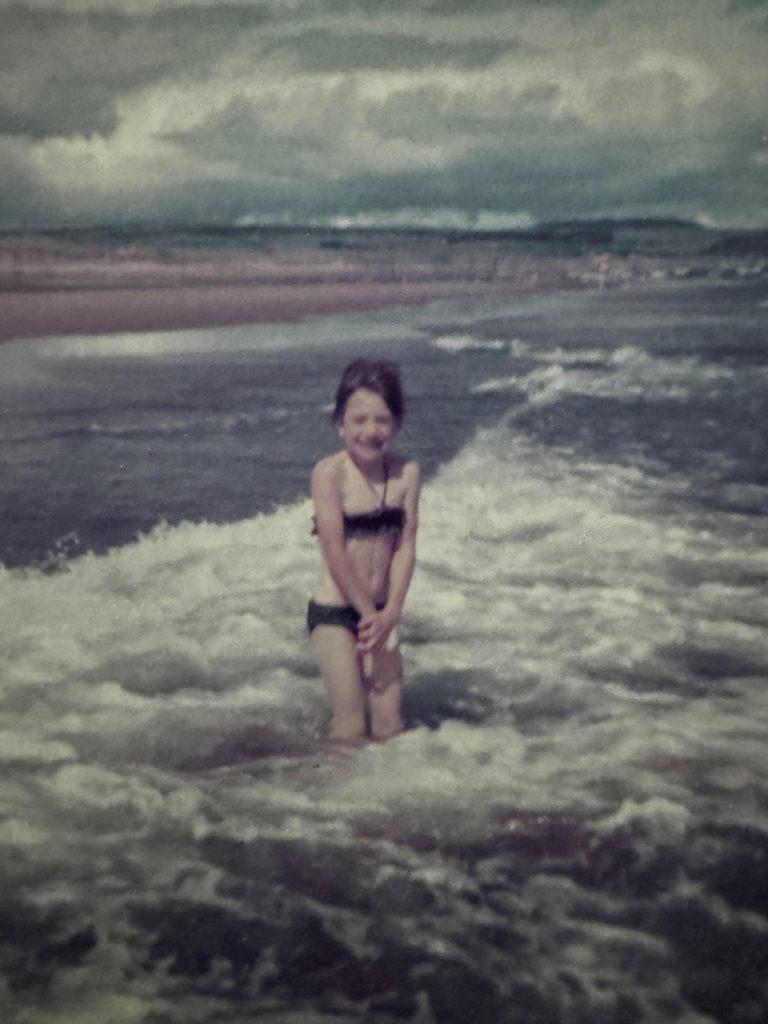
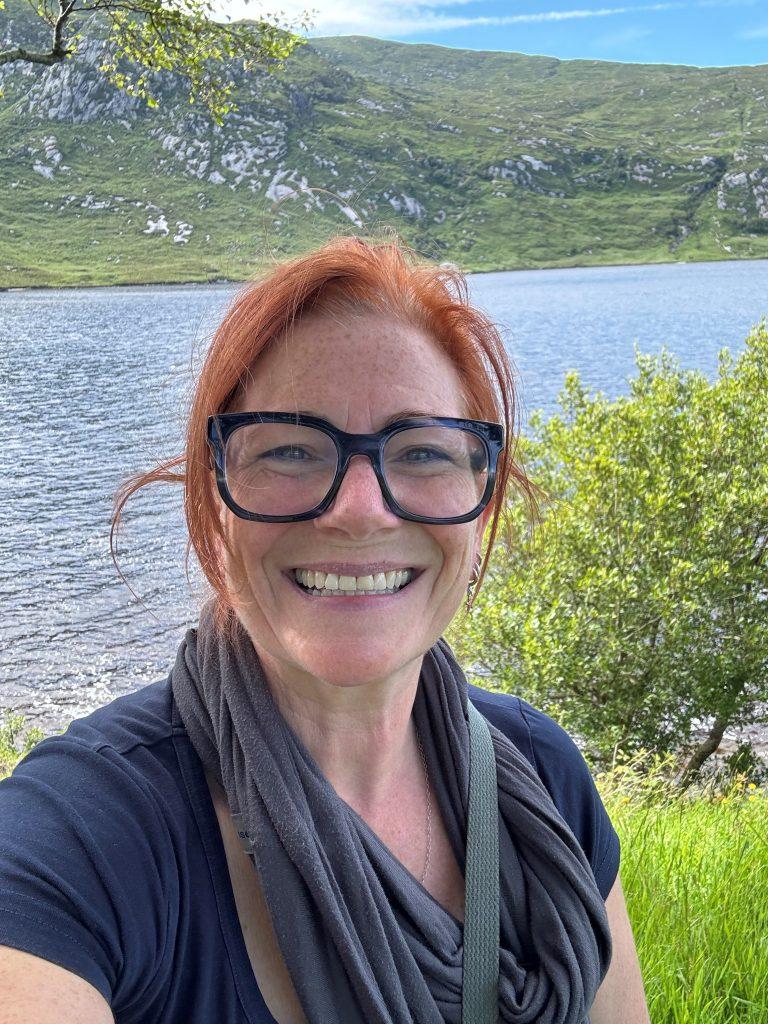
Turning up to that sea swimming event in her Marks & Spencer swimming costume and flip-flops, Emma felt literally and figuratively out of her depth. And yet, her yearning to connect to and be part of something bigger urged her on.
“I thought, what do I do with all that grief and hurt that’s sitting inside me with nowhere to go?” she says. “That’s where the tears came back in. I thought, I can scream and cry in the water. No one can hear me. No one’s judging me and no one can tell because I’m crying salt into salt, and that was incredibly liberating.”
Mind and body
The events that split Emma’s life into a before and after were concentrated into a space of ten weeks. The traumatic birth and subsequent illness of her first baby coincided with her brother’s death.
For a long time, Emma felt that it was just life, and many had it harder. With a high-pressure job and two young daughters, she describes herself as ‘hair on fire’ busy with a whirring mind. But the lasting effect of those intense weeks started to take a toll on her health.
Over time, Emma began to recognise her physical symptoms as a warning system that her mind was struggling.
“I’ve become acutely aware of my body and how it feels as a result of developing chronic health conditions,” she says. “You’ve got the parallels of your physicality and the mental side, and cold water was the one thing that stilled my mind. All I could think about was breathing, the senses, the receptors, the sharp focus in that moment. It’s slightly painful, but it’s this extraordinary awakening and awareness of the body.”
Nature and community
Emma also became more aware of the world around her, which gave her space for reflection and creativity. In one part of her book, she describes in minute detail how she rescued a drowning bee – a tiny moment but so significant in that it, in her words, connected her with the world in a fundamental way.
As well as finding wonder in the natural world, she also connected with a playful side to herself, and she talks about the lightness of spirit. There’s vulnerability, too, from the immense peace she feels when she star-floats in the water to skinny-dipping in a moonlit lake with other women.
But Emma’s story is also one of grit and courage. And, in that sense, it really does explore the full gamut of experience and the many complicated, wonderful and multifaceted connections we find in the water.
“That first 500m swim I did in Swanage, one of the drivers was simply ‘fuck it’, I’m going to do it,” she says. “That was very much my brother’s spirit… a sense of mischief alongside serenity. But you’ve also got ferocity and rage in the waves. There’s something about the expression of ourselves in the water and that’s why we have a particular kinship with the sea.”

Outdoor Swimmer
Outdoor Swimmer is the magazine for outdoor swimmers by outdoor swimmers. We write about fabulous wild swimming locations, amazing swim challenges, swim training advice and swimming gear reviews.