

Trans swimmer Lev Goldberg conquers second North America’s give Great Lakes in historic quest
The five North American Great Lakes – Superior, Huron, Michigan, Erie and Ontario – comprise the largest group of freshwater lakes on Earth and Lev Goldberg is determined to swim each one, Margaret Hetherman reports
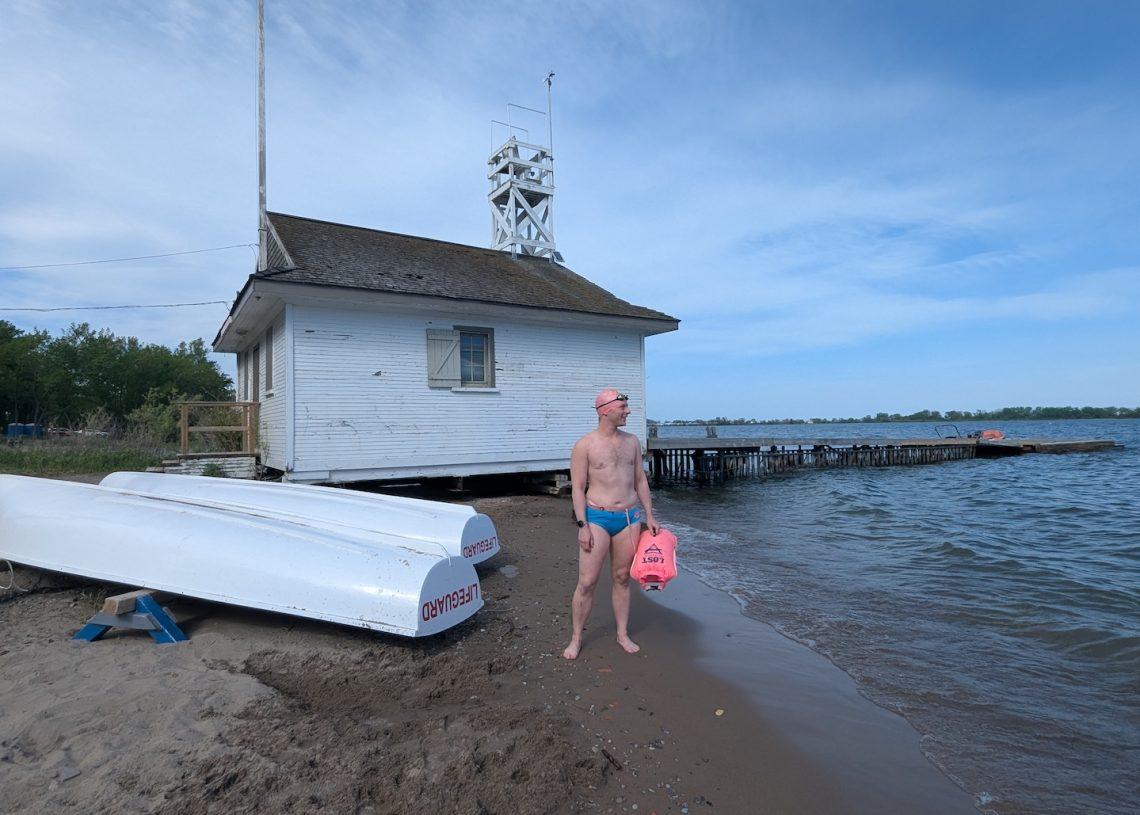
One year after becoming the first openly transgender person to swim across Lake Ontario, Lev Goldberg stepped off the coast of Port Sanilac, Michigan on Wednesday, 5 Aug to take on the currents of Lake Huron for an anticipated 30-hour crossing that would land him at Lambton County, Ontario. It was the second leg of his quest swim all five Great Lakes – and to become the first trans person and only the fourth person ever to pull off the feat.
Despite an unexpected storm with distant lightning that had crew gathering his bags with intent to haul him out, Goldberg pushed on as the worst weather broke, making it to Ipperwash Beach at 12.13pm on Thursday in 29 hours, 43 minutes and 5 seconds. The trek was 55km (about 34 miles).
“The conditions were really serious,” he said. “I knew Lake Huron had more variable and intense conditions typically than Lake Ontario, and that’s why I picked it.” Goldberg was up for the challenge and got it – minus the cold water he favors, given Lake Huron’s offering of a mere 22°C (71.6°F) water temp.
“I never swam in so much wind, so much wave, and so much current.” But white caps were just an opportunity for fun. The swimmer exuded the same ebullience over Huron’s conditions as he did
after completing Lake Ontario: “I really enjoyed myself. I came out afterwards, and said, ‘I feel amazing.’ It was the best day of my life.”
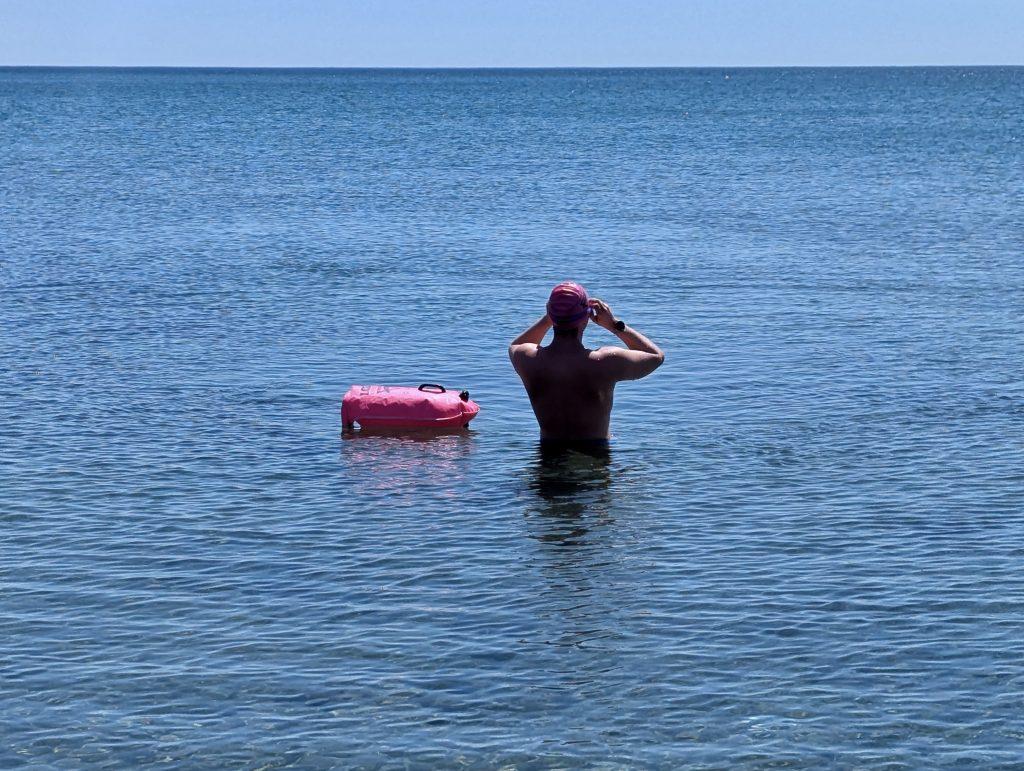
He is also using the challenge to raise money for LGBT Youth Line, a peer support organisation for queer and trans youth in Ontario.
Remarkably, Goldberg, 30, has been swimming open water for only three years. The Philadelphia native and therapist who lives in Toronto self-describes as “a late-onset athlete.” As a child, he swam on a team for several years, but struggled with feeling uncomfortable in his body. He stopped swimming at age 10, and was rarely in the water until taking up long-distance running at age 22.
“I did that for a few years before I got more serious about it. Then by the time I started training for running in an organised way, working towards a marathon, I was back in the pool cross-training for running.” Goldberg has also publicly shared that it was gender-affirming care, in the form of top surgery and hormone replacement therapy, that gave him “the confidence to navigate the changing room and get myself back into the pool.”
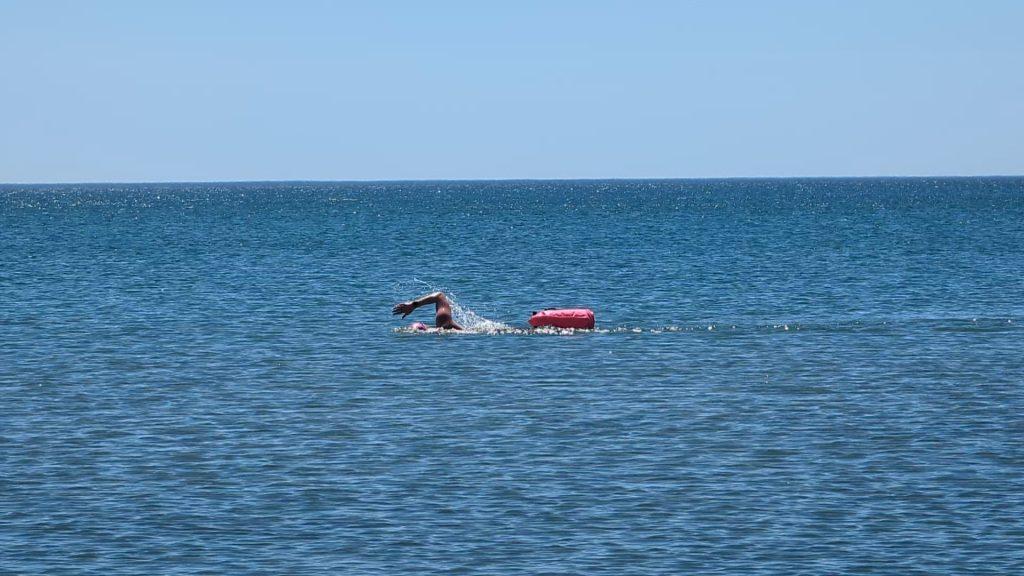
“As a kid, I was never an athlete,” he said. “I didn’t really feel very comfortable in my body.” Goldberg said he had a lot of gender dysphoria that manifested in different ways – sometimes ways that he doesn’t hear people talk about. “I just felt I had to have a lot of control over what I looked like. So doing exercise and becoming sweaty, or not being able to wear my comfort clothes… I just couldn’t handle that. So I really didn’t do any exercise until after I had transitioned and I started running. I was a lot more comfortable in my body after that point.”
“It’s really huge to be that representation [now], because I looked for it and I couldn’t find it. I think my story is not that unique among trans people – not feeling comfortable to be in sports for most of your life, or coming to it later in life. To be an example of coming to sports later in life and still achieving something great, I think that is very important.”
With newfound confidence, he returned to the pool in 2023, but had to relearn the basics of each stroke.
“I just kind of remembered how to swim, and what I didn’t remember. I taught myself out of the book, Total Immersion, which teaches freestyle techniques.” No sooner had he started swimming than he took to the open water. Living in Toronto, Lake Ontario was “pretty swimmable and accessible” and it happened to be winter.
The late-bloomer’s preference for long, slow-distance running seeped into his swims, and he soon found an OWS community with others who shared a love of the long haul.
“I’m non-exceptional over short distances, and might not make the cut-off time for some 10K races,” he said. “I have other strengths that really lend themselves to marathon and ultramarathon swimming. I’m really good in the cold water. I lock into, like, a forever pace, and I just am completely consistent.”
Lake Ontario
Goldberg’s swim was ratified by Solo Swims of Ontario (SSO), which sanctions swims across Lake Ontario, as well as across all the Great Lakes – ensuring that swims are conducted safely. It formed in 1975 inresponse to the death of an unprepared teenager attempting to swim across Lake Ontario.
To qualify for his first Great Lake attempt, Goldberg had to complete a 16km-swim within six hours, which he passed in July 2025.
“I was really chasing the cutoff on that,” he said.
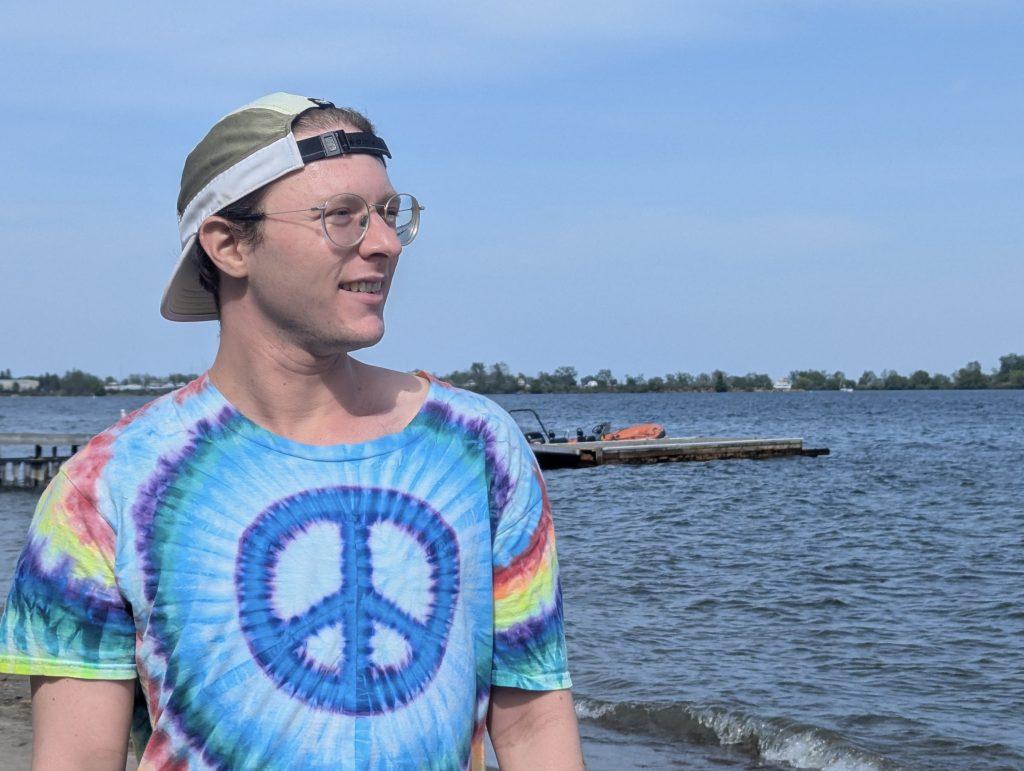
Then on 2 Sep 2025, at 2am, with one lead boat, two Zodiac inflatables and a crew of 10 that included a swim master, coach, RN and three pacers, Goldberg departed Niagara-on-the-Lake, Ontario for Marilyn Bell Park in Toronto. He completed the 51km (31.7 mile) crossing in 24 hours, 25 minutes and 25 seconds.
The biggest surprise was how good he felt in his body.
“I did two different 10-hour swims in training, and in both of them, I hurt so bad after… I was really worried that when I passed the 10-hour mark, that I was going to be hurting for more than half the swim… But the biggest surprise was I didn’t have any pain.” He credits strength training.
He was aware of Lake Ontario’s swim challenges in advance. With the Niagara River pushing, the first bit was very fast. But 20 hours into the swim, he encountered a “bad current” through the Humber River.
“They told me, ‘You’re not moving, so now you have to start to push’… I pushed really hard for the last four hours. I liked that. That was what I was looking forward to, and that’s what I trained for.”
While he didn’t have hallucinations in Lake Ontario (he was aware that other marathon swimmers have reported such occurrences), when he was finally on dry land, he happened to notice a few geometric patterns in the night sky that were non-existent. Later, at home, he thought he saw his glasses and reached for them, only to find that they weren’t actually there.
Lake Huron
As for that storm on Lake Huron, the lightning luckily stayed on shore.
“But I learned afterwards they were almost going to pull me at hour 19 because of risk from lightning. It was a close call, but they made the call not to do that. But we had huge amounts of wind, just a torrential downpour on my crew for hours and hours. I barely noticed the rain.”
Like Ontario, there were waves, but this time, four-footers, and there was a lot of current – particularly strong at the end. “I moved at a very steady sort of effort, but the pace was not always steady because the conditions were really variable,” he said. “At some points, I had such intense waves that my support boats had to stay a bit back from me because they would have knocked into me. It was chaotic.”
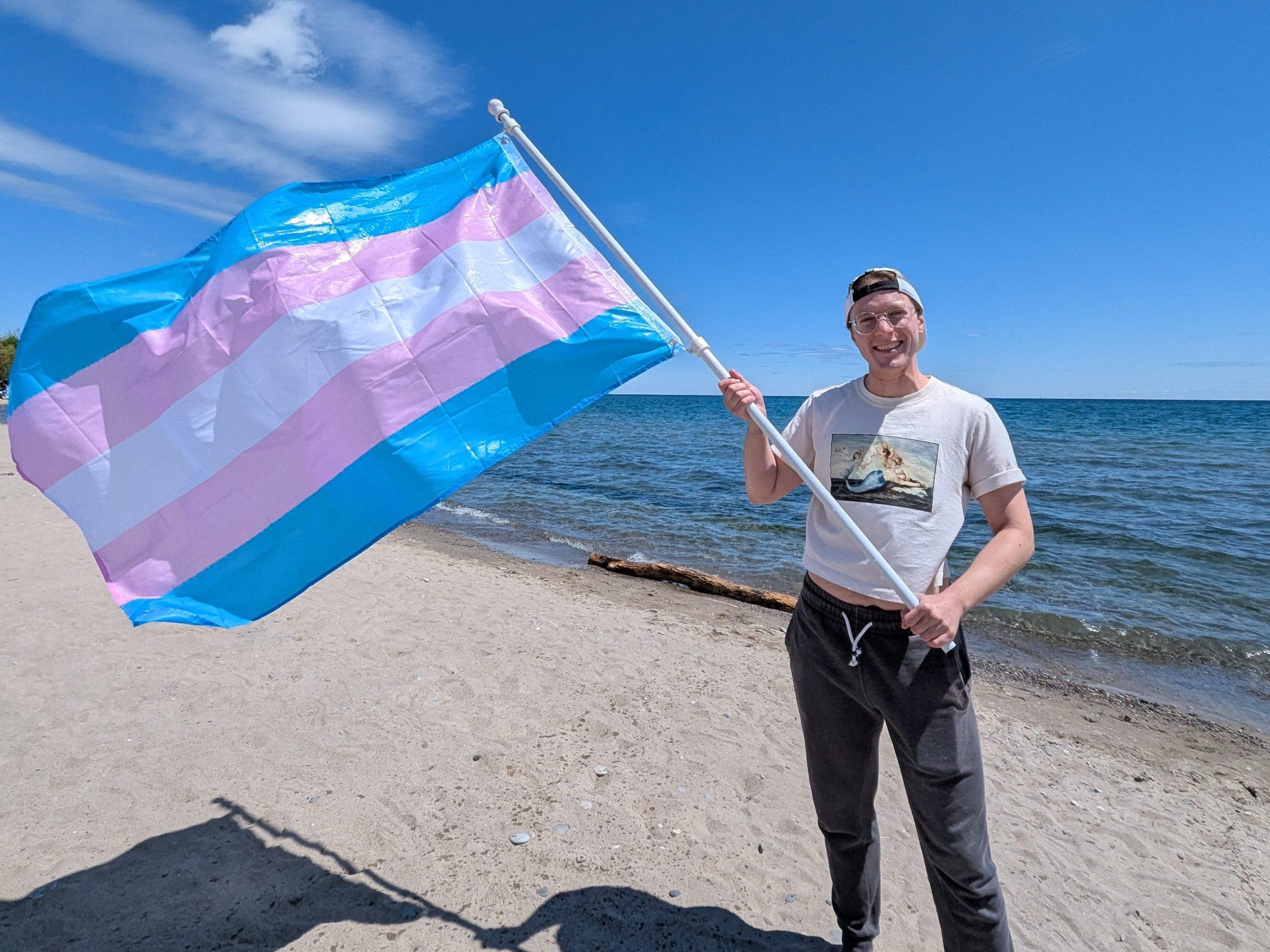
As for hallucinations, yeah, this time around he thought he saw a ferry boat on the lake at night. There was no ferry boat. He saw a Toronto skyline. There was no city.
He also had the sensation of sleeping a little, describing movement and a pace that didn’t change, but a brain that seemed to be going into something like REM sleep, as if he were having thoughts that were vivid like dreams.
“The night was like kind of psychedelic and strange because I’ve never been through a whole night before.”
The finish was also challenging because he saw land for four hours, which played with his perception.
“It just felt like it wasn’t getting closer, and it felt like I wasn’t really moving because I was moving through a lot of current just at the end to break through onto the shore. So my perception of time was pretty weird,” he said.
“Like when I finished the swim, I thought it must be 5pm. but it was actually noon. I thought I had been out there for 35 hours. I was totally wrong.”
Goldberg was accompanied on the Huron adventure by a crew of nine, plus boat captains and his dad crewed on land – “the most wonderful, supportive, and helpful people.” It’s the crews that make swims like this happen, he says. “I really am so grateful. It’s not a solo endeavor at all.”
He also thought of Marilyn Bell, the first person to swim across Lake Ontario on 9 Sep, 1954.
“People literally thought it was impossible,” he said, “and she’s just a national treasure.” Bell, now 88, has been cheering him on, and he took inspiration from her historic swim while tackling Huron.
“I imagined being a 16-year-old girl in the middle of the night, in the middle of Lake Ontario, doing something that no one’s ever done before: if she can do that, I can do it.”
He also held close the words of Vicki Keith-Munro, one of only three people, along with Paula Stephanson and Elizabeth Fry, to have tackled all five Great Lakes: “Persistence truly is the key of all achievements. Don’t think of people as more talented or luckier or better suited than you. Put your head down and push through. Persistence is more valuable than all of these.”

Outdoor Swimmer
Outdoor Swimmer is the magazine for outdoor swimmers by outdoor swimmers. We write about fabulous wild swimming locations, amazing swim challenges, swim training advice and swimming gear reviews.