

Beyond the horizon
Rowan Clarke meets the modern day adventurers who are conquering the waves
Adventure is one of the most enduringly genres for storytelling. Stories of adventure, quests and voyages are not only thrilling, nail-biting and action packed, but also great allegories for the human condition and life’s journey. As adventure stories go, tales of endurance swims pack all the ingredients: drama, pathos, pain, exhilaration, battles and triumphs. And their protagonists? Swimmers like us, but with some unseen driving force that pushes them to take on epic challenges.
So, without a princess to save, or a war to win, what drives these adventurers? And what makes their stories so relatable?
Why we swim
Historically, adventurers chartered courses across oceans for practical reasons such as developing navigational tools and colonising new lands. Ancient accounts show that people did swim long distances in the sea, but not without good reason. The earliest reported open water swim, for example, was where Skyllias and Hydna reportedly swam 14.5km to warn the Greek naval forces about an approaching Persian fleet in 480BC.
It wasn’t until modern open water swimming emerged in the 19th century that the focus shifted to human endurance. Captain Webb swam the Channel in 1875, with Gertrude Ederle proving that women weren’t too weak to complete this swim in 1926.
A century later, we’re pushing the limits of human endurance further than ever. Swims seem to be getting longer, faster and more challenging. “There does seem to be this switch,” says ultra-marathon swimmer, Amy Ennion. “If you’re not doing a minimum of marathon, then you’re really not cool. People are pushing towards longer and longer distances. Is it competitive? Or is it people in society trying to outdo each other?”
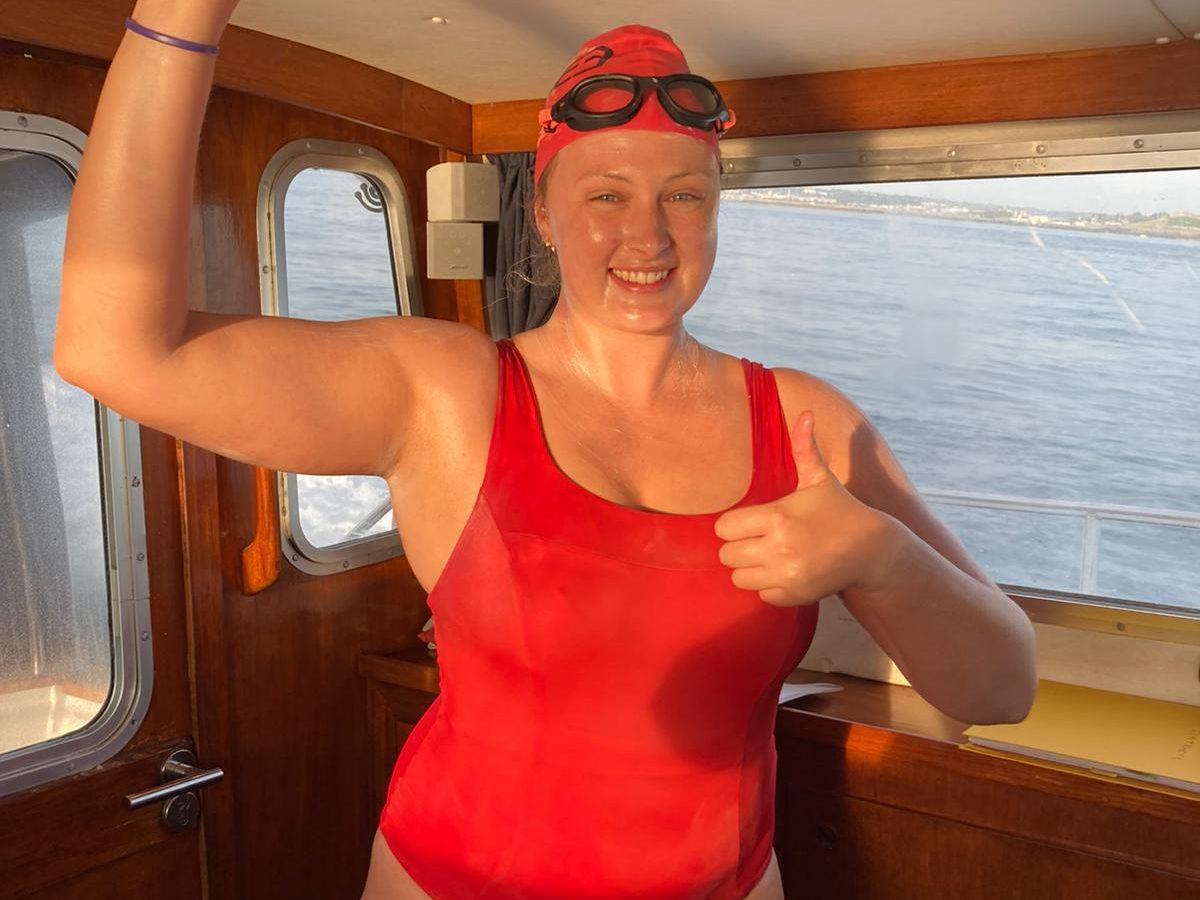
It’s an interesting question – why do we try to constantly outswim each other and break new records? Over the summers of 2024 and 2025, Helen Betley became the first person to circumnavigate Jersey swimming butterfly; Sam Farrow broke the women’s world record for the fastest crossing of Lake Geneva; Neil Agius broke the world record for the longest, unassisted, current-neutral ocean swim, and, most recently, Oscar Black, aged 15, became the youngest person to swim the North Channel from Ireland to Scotland.
From contemplation
Epic swims start with an idea. Inspired by a body of water or a particular swim, it seems that ultra marathon swimmers wonder if they could swim faster/in a new way/at all.
In July, Mark Ransom and his team, The Odessey Squad, swam the longest, continuous open water relay (yet to be ratified as a world record) – an incredible 36 hours from Alderney, the northernmost Channel Island, towards England’s south coast.
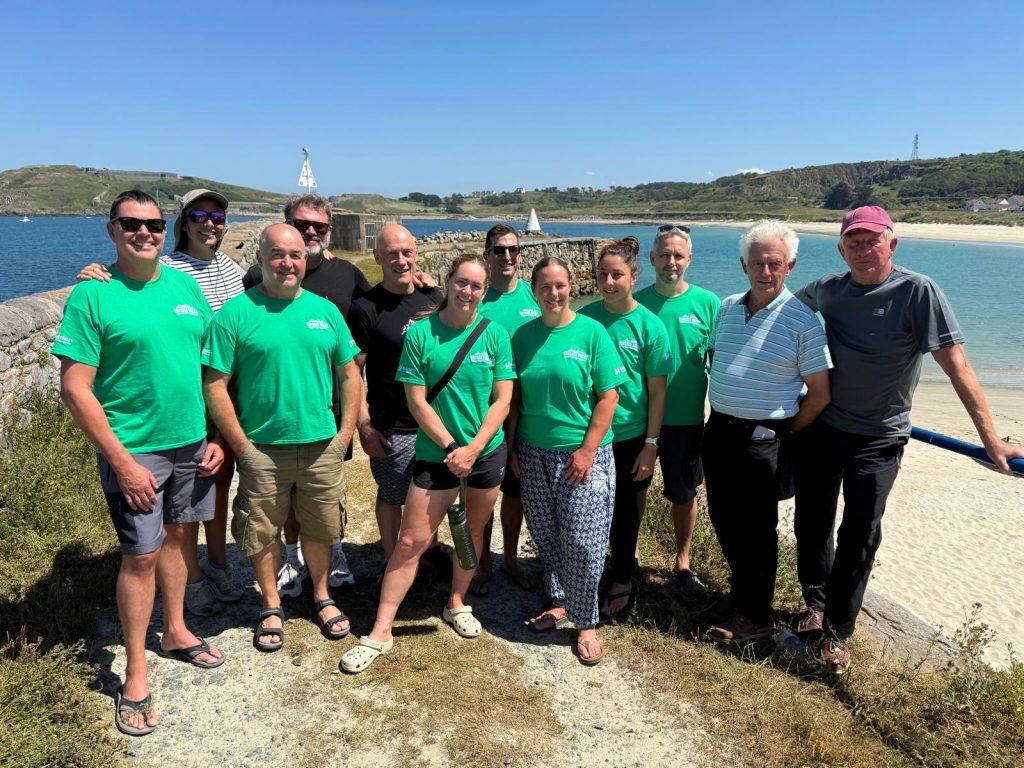
It all started when he contacted one of the most accomplished ultra-marathon swimmers Chloë McCardel for advice on another swim he was planning. During the conversation that followed, Chloë would rekindle the spark of an idea for a seemingly ‘impossible’ swim.
“She said, have you ever thought about swimming from Alderney back to the mainland?” says Mark. “I had thought of it a few years ago, but after going on Google Maps, and measuring the distance I put the idea aside. But she said, ‘I’ve been looking and I think it can be done’. Once that challenge was in my head, I couldn’t let it go.”
If you’ve ever sat on a beach and wondered if you could swim around that little island on the horizon, you might relate. But the space between contemplation and completion is oceans wide, and Mark’s words hint at the mindset needed to even get to the start line. So, where does that mindset come from?
“My goals generally come from a deep desire to push myself physically, mentally and sometimes spiritually,” says outdoor adventurer Ross Greenwood, giving insight into what motivated his swim around 46 islands in New Zealand’s Bay of Islands. “From a young age, I have always pushed myself – sometimes to the limit, it’s just part of who I am and it’s been a big part of my life… Patience and curiosity are also key, I feel.”
Towards completion
Like all the best adventure stories, tales of endurance swims are packed with battles and drama. It can months, years even, to gather the right support crew, a willing pilot, tidal and weather patterns. Even then, training stalls, injuries happen, relay team members pull out, storms roll in, currents turn too early, and jellyfish swarms appear from nowhere.
Having eventually found a pilot, Mark, Chloë and ‘The Odessey Squad’, planned a way to conquer the brutal tides and cold, jellyfish-filled waters to swim out of Alderney, which other local pilots and swimmers deemed ‘impossible’. But, by sending their fastest three swimmers first, they made it.
Thirty-six hours later, with the English coastline in their sights, they hit strong gales.
“Seven miles out, we got into gale force conditions,” says Mark. “As I was trying to discuss it with Chloë and Ed the pilot, I was literally thrown down. I looked up at them, and I was just like, it’s time, isn’t it?”
It’s challenges like these that make endurance swimming so thrilling. It’s also one of the reasons ultra-marathon swimmers put such a emphasis on their mental preparation.
Team challenges
Spending hours working on technique, stamina, strength and fuelling, an endurance swimmer’s training is as much about preparing themselves mentally.
“I do everything I can do in training to give me the confidence,” says Amy, who has just swum the length of Loch Ness. “I know that if I have done up to about 60 per cent of the distance in back to backs, no matter how hard it gets on the day, I can do it.”

Equally, practical challenges such as waiting for a weather window to start a challenge, or enduring the cold can take its toll mentally.
“When you’re on a long swim, your brain tries to get you to stop,” explains ultra-marathon swimmer, Jason Betley. “Your body sends signals to the brain saying, Really? This kind of hurts. Why are you doing this?”
When we spoke to him, Jason was waiting for a window to start an epic swim across the Irish Channel. He talked about his support team, highlighting how everything from how well rested they are to what they wear can affect his mindset in the water.
“Less information is better from your crew, because your brain will use it as a reason to justify a decision to get out,” he says. “You also want your crew to look relaxed and warm. If you look up on deck and your crew is bundled up in big down jackets and woolly hats, then you know it’s cold and your brain’s going, Oh, shit, it’s cold. Does that mean I’m getting cold? Better get out then.”
Ross Greenwood echoes this; his team of family and friends, was integral to his challenge from planning to execution.
“Fortunately my wife and daughters were keen to get involved, especially my wife who filmed parts of almost every swim,” he says. “My daughters were involved in the filming and contributed some great video including all the underwater footage. I think creating a good team spirit is critical – otherwise they would have become bored to death watching dad doing another swim.”
Safety support
As a swimmer, you have to entirely hand over your safety to your crew. This requires a huge amount of trust and faith, including in the boat’s captain and pilot who navigate the route, read the currents and weather, and keep the boat steady alongside the swimmer.
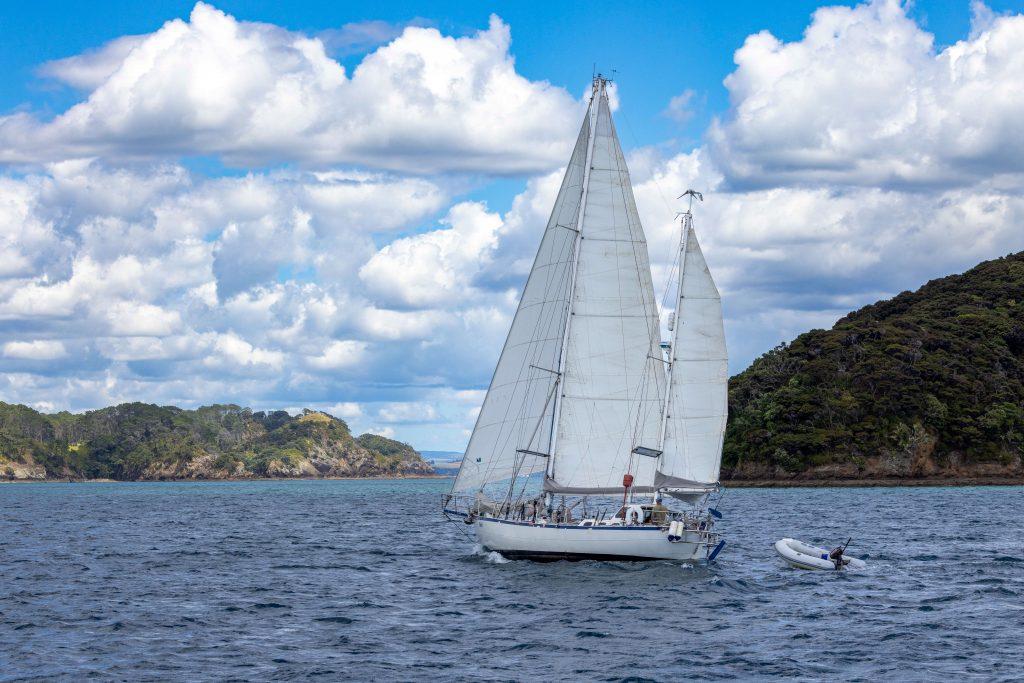
When swimming a new, unchartered crossing, finding a boat can be challenging. But, even on well-traversed routes, the captain and pilot can make or break a swim.
This is exactly what’s happened with English Channel hopeful, Dean Goodwin. Having completed his qualifying swims and passing his medical, Dean’s weight proved an issue for the pilots.
“It’s caused uproar. They advertise that [the Channel relay] is inclusive of everybody. Now, the captain of the boat says I’m too big for a rescue scenario, but they’re refusing to give me a weight that I need to be,” says Dean. “It’s all become really upsetting.”
While many endurance swimmers battle to gain weight during their training to withstand the cold, not least because it burns so many calories, Dean has lost an incredible 27kg. At the same time, he has gained so much from achieving long-distance swims with a supportive team – better health, fitness and confidence.
“Even though I’m big, I’m fit, doing gym training, circuits and weight lifting. I’ve been working with my coach, Tom Bainbridge, to lose the weight, and also eat correctly for the big swims,” says Dean. “You need a lot of energy, but trying to lose weight, you need to be in calorie deficit. So he’s been helping me get that balance right, train the right muscles and fuel my big swims properly.”
Personal quests
Each endurance swim follows a similar process from imagining the swim, planning it, training, recruiting a support team, waiting for the go-ahead, and then swimming through whatever conditions come their way.
And yet, the reasons swimmers take on these incredible, long-distance endurance swims are as varied and nuanced as the conditions and circumstance that make each attempt so compelling.
From Amy’s brilliant Loch Ness swim, Mark’s team’s amazing relay attempt, and Ross’s beautiful film of his Island Bay swim, to gunning for Dean and Jason to realise their channel hopes, we will continue to be enthralled, thrilled and moved by open water endurance stories.
Perhaps one day, we’ll even be inspired to create a long distance swim story of our own.