


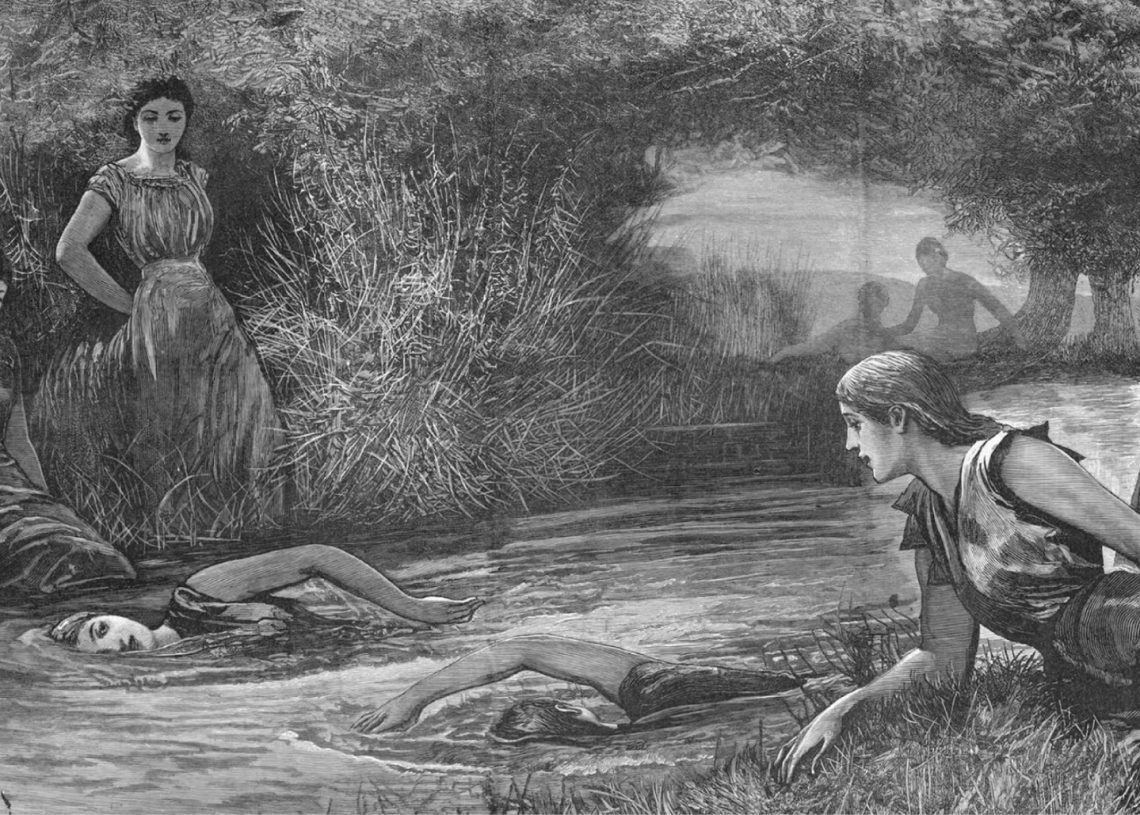
Changing seasons, changing climate, changing strokes: the long history of swimming
Have you ever wondered about the origins of swimming? How about how we came to swim outdoors in the cooler northern hemisphere compared to warmer water in the south? In her book, Shifting Currents: A World History of Swimming, Karen Eva Carr gives a comprehensive history of swimming and examines the tension that arose when non-swimming northerners met African and Southeast Asian swimmers. When looking at trends in swimming, it is fascinating to learn about the global enthusiasm for the water – here she gives us an extract of her work.
You always swim in the same river, but as the seasons change, so does the river. As the winter ice melts, the spring snowmelt pushes the current along. In summer, the river flows slow and shallow; in autumn, the water rises again. When it’s cold winter in England and Canada, you like to remember that in Australia and South Africa it’s summer, and the water’s warm.
It’s always summer somewhere. As you swim through the seasons every year, the gestures seem simply eternal, unchanging, the arms moving the water, the legs pushing off, the heads bobbing along, the same now as it was 1,000, 10,000, or even 100,000 years ago.
And yet change is at the very heart of swimming. The climate changes, and people change, and even the strokes people use in swimming change with the centuries. During the last Ice Age, many people across Europe and northern Asia forgot how to swim. Ten thousand years later, in the 1800s, the end of the Little Ice Age encouraged the construction of beach resorts and swimming pools. And now the hotter summers of man-made climate change encourage more people to cool off in the water.
Swimming through the centuries
But climate change isn’t the only kind of change that affects swimming. Just as swimmers move in and out of the water, groups of people move in and out of swimming. Long ago, most of the earliest humans were probably good swimmers. These early swimmers took swimming with them as they slowly spread out all over the world. From swimming in the Indian Ocean and the Nile, they moved north to swim in the Mediterranean, east to swim in the Bay of Bengal and the Pacific, and finally followed long rivers – the Columbia, the Missouri, the Mississippi, the Amazon – across the Americas to swim in the warm breakers of the South Atlantic.
In the southern hemisphere, people kept right on swimming like that through the centuries. Swimming was just an ordinary part of everyone’s life, like walking. In South America, South Africa, Indonesia and Australia, pretty much everyone used to regularly go swimming, every day or even several times a day. The beach, or the river or pond, was the social centre where children splashed, where teenagers flirted, where young parents watched their babies, and where grandparents soaked aging muscles.
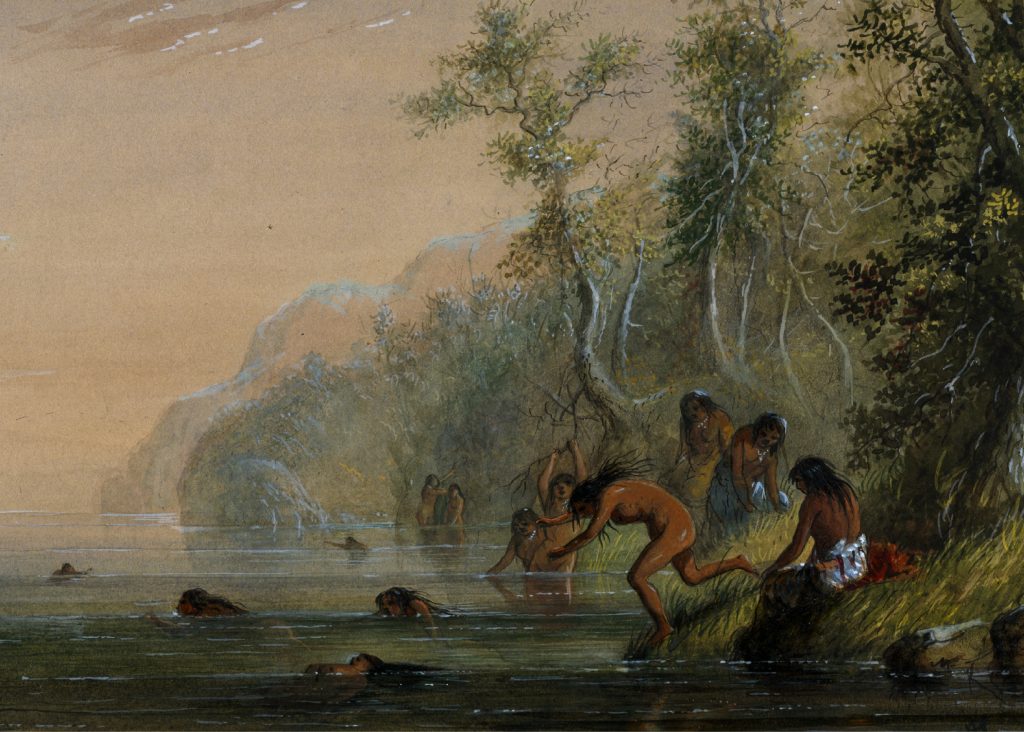
In the northern hemisphere, though, many people had forgotten how to swim in the Ice Age. After the Ice Age, migrations brought those northern non-swimmers into contact with southern swimmers in Africa and Southeast Asia, where they were shocked to see people diving and splashing happily. Swimming became, for the northerners, a matter of identity: swimming divided Africans and Southeast Asians, who swam regularly, from Europeans and North Asians, who didn’t.
The non-swimmers, from Europe across Central Asia to China and Korea, thought swimming was immodest and dangerous, something other people did. They were especially horrified at splashing, which disturbed the water, and seemed to be disrespecting the water gods. But thinking of swimming as an identifier soon led Europeans and North Asians to a new thought: swimming is very hard to learn, and impossible to fake, so it’s a great way to discern whether someone is really part of your group, or an imposter.

Hursid, an imaginary Chinese ruler, watches his vizier’s son swim in a pool, miniature from an Ottoman manuscript (Hamse-i Atayt), 1721, painted by Heyrullah Heyri Cavuszade.
Swimming to set yourself apart
Greek and Roman and Assyrian aristocrats, wanting to be more like their wealthier, more powerful Egyptian neighbours, began to learn to swim. They used swimming to set themselves apart from their poorer compatriots who were still afraid of the water. Thus Odysseus, for example, swims to save himself from a shipwreck, but the rest of his crew drowns. Plato laughs at non-swimmers: he says these slobs can “neither read nor swim,” because they’re not from a rich family the way he is. All the best people learned to swim: Cato taught his son. Augustus taught his grandsons. Nero’s mother Agrippina, Augustus’s great-grand-daughter, knew how to swim too. Rich people swam through the Middle Ages: Charlemagne was an enthusiastic swimmer, and so was the (fictional) Beowulf.
And yet these Europeans were still reluctant to splash, or to put their faces in the water. Early swimmers, and indigenous swimmers all over the world, used an overhand stroke with a flutter or scissors kick, and swam with their faces in the water. But images and descriptions from antiquity suggest that when those rich Europeans learned to swim, most of them kept their faces safely out of the water. By the late Middle Ages, European swimmers even developed a new stroke that reduced splashing and made it easier to keep your head clear of the water: the breaststroke with a frog kick.
As Europe grew richer, and Egypt poorer, in the late Middle Ages, Europeans forgot that two thousand years earlier, Africans had taught them to swim. So when Renaissance Europeans explored the world on their new sailing ships, they were startled to find that most people in the southern hemisphere swam better than the most elite Europeans. Like their ancestors, southerners still swam with a fast overhand stroke, a flutter kick and their faces in the water.

Arawak or Carib swimmers near Trinidad, miniature from Histoire naturelle des Indes, known as the Drake Manuscript, c. I586.
Europeans, already used to thinking of swimming as a way of defining identity, now used swimming to divide themselves from the Caribbean and African people they were enslaving. Civilized, free people, Europeans said, swam the decorous breaststroke, while only savages splashed water by swimming overhand with a flutter kick. Europeans also began to prefer tile-lined swimming pools to the beaches, ponds and rivers they associated with native swimming. European slave-dealers used these differences in swimming as justifications for their terrible work.
Battles over swimming strokes
By the late 1800s, however, angry fights broke out over these swimming strokes. Many Europeans preferred to show their sophisticated affinity for swimming by watching professional swimmers rather than by getting in the water themselves. Swim races like the Olympics became popular. Soon the top European racers abandoned the slower breaststroke and started to use the faster southern overhand strokes with flutter kicks. Meanwhile, slavery was being abolished and black and brown people in European colonies, who had always used the overhand stroke, were working to gain equal rights.
Would everyone now swim with an overhand stroke? Would everyone swim together? No, as it turned out. Rich, powerful Europeans preserved sport swimming as both a racial marker and a class marker. Starting in the southern hemisphere, in South Africa, white colonisers segregated beaches and pools by race. Segregation spread to the northern hemisphere in the early 1900s. Slowly black and brown people lost access to the water, and today most people of colour – the very people whose ancestors were the best swimmers – do not know how to swim. Meanwhile, most Europeans kept on swimming the slower, calmer breaststroke, as they still do today.
Today’s wild swimming – returning swimming to the lakes, rivers and oceans where it began – may be moving us in the right direction. Wild swimmers coming from the white swimming world could learn techniques and approaches from indigenous swimmers, and perhaps swimming could return to its ancient function as a fun, daily social centre for people of all ages and abilities.
Shifting Currents: A World History of Swimming, Karen Eva Carr is out now. This article is from the March 2023 issue of Outdoor Swimmer. Click here to subscribe to the magazine.

Outdoor Swimmer
Outdoor Swimmer is the magazine for outdoor swimmers by outdoor swimmers. We write about fabulous wild swimming locations, amazing swim challenges, swim training advice and swimming gear reviews.