



Is all neoprene harmful?
Rowan Clarke explores how toxic neoprene is responsible for a health crisis, and why the appetite for truly sustainable wetsuits is growing
Award-winning documentary The Big Sea is full of the cinematic shots you’d expect from a film with this title – beautiful waves crashing on white shores under a blue sky. You can almost smell the sea air and feel the cold water on your skin. However, it’s not here to tell the usual tales about how healing the ocean is for our mental and physical wellbeing; it tells a dark story about our wetsuits.
The issue with neoprene
Those beautiful oceanic shots cut to scenes of smoking factories, chain-link fences and people weighed down by grief, worry and malaise. Their stories are shocking. Living in the shadows of petrochemical factories in an area of Louisiana nicknamed ‘Cancer Alley’, families are stricken with illness. Suffering from cancer and autoimmune conditions, they describe the choking fumes from the nearby chloroprene factory.
“My family were heavily involved in community activism,” Louisiana funeral director Courtney Baloney tells the filmmakers. “We didn’t mind voicing our opinions from the political level, from the community level and definitely from the health standpoint. And that is where I can say roughly between 60% and 75% of our clients that we bury will die from a cancerrelated illness.”
Elsewhere, most people have never heard of chloroprene. It’s a toxic, carcinogenic chemical from which all chloroprene rubber is made – and chloroprene rubber’s commercial name is neoprene.
The Environmental Protection Agency has linked emissions from chloroprene rubber’s biggest manufacturer to a shockingly elevated cancer risk. In 2015, it reported that the cancer risk in the neighbourhood around the factory was the highest in America at nearly 50 times the national average.
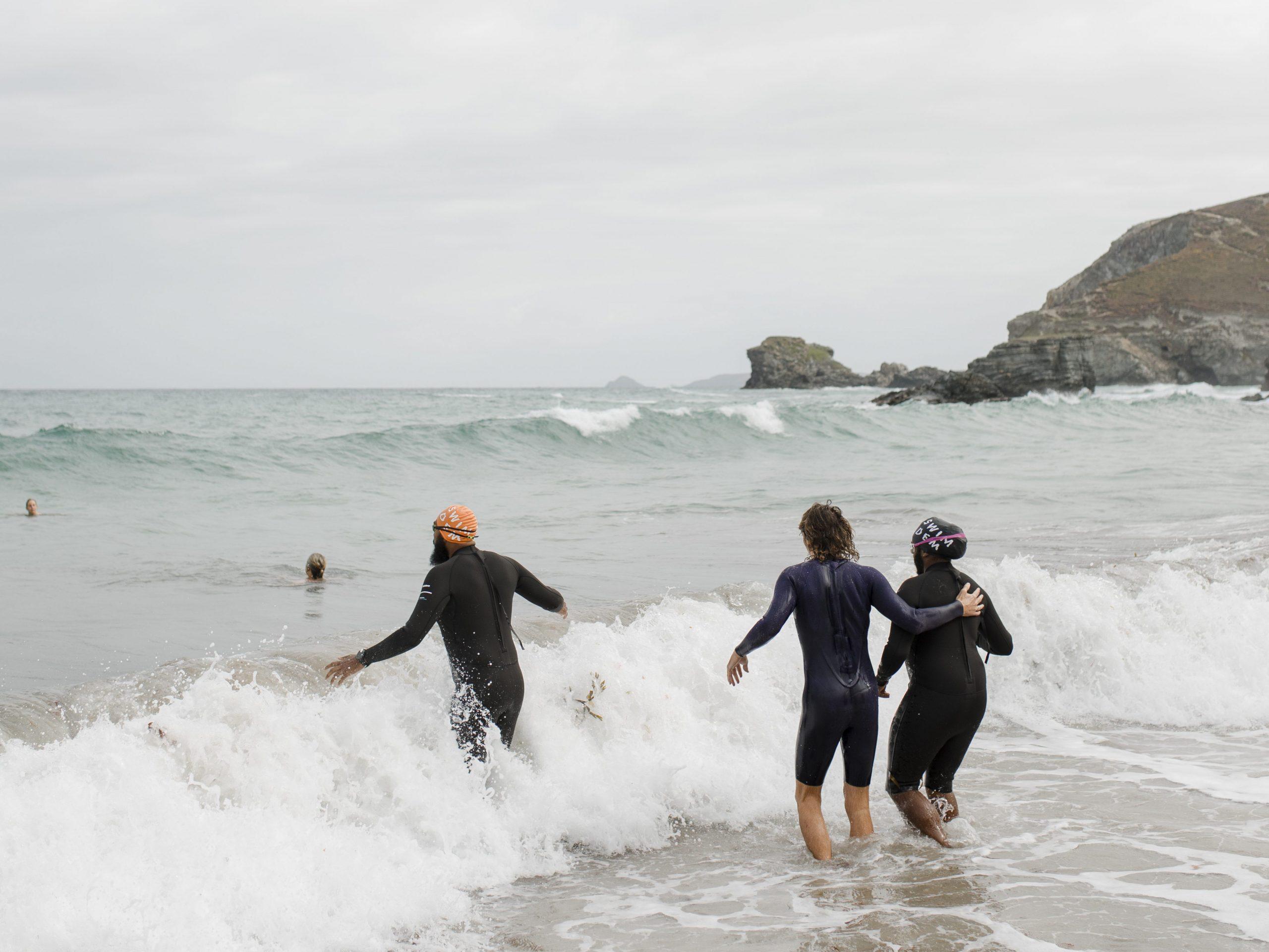
While neoprene has lots of applications, this stretchy, durable, insulating fabric is synonymous with wetsuits. Here lies a striking juxtaposition between the health giving activities we do in wetsuits and the dark story behind their production.
“Wetsuits are one product that uses neoprene, but they really are the poster child for it,” says surfer and the film’s producer, Demi Taylor. “That notion of knowing that what I was using for my enjoyment was contributing towards the annihilation of a community was really shocking. That’s why in the film we take the chemical and really link it to the product you’re buying.”
Toxic neoprene
For the last 75 years, we’ve worn wetsuits to explore the sea further, for longer, and more safely. But how many of us know how they’re made?
“The idea that something that gives enjoyment and facilitates our surfing experience is toxic and carcinogenic is a terrible thought,” says writer and surfer, Jamie Brisick in the film. “I think the majority of surfers put on the wetsuit with no sense of where it came from.”
Jamie describes the petrol-chemical smell of wetsuits, which we’re all familiar with. Many of us know or suspect that they’re not exactly green. But few of us understand just how much of an environmental and health risk they pose. So, is all neoprene harmful? If you’re thinking of limestone neoprene, a purported green alternative, then the answer is yes. It’s not only that mining and processing limestone is environmentally damaging, but also that whether its source is limestone or oil, it’s still chloroprene rubber.
The change to natural rubber
The Big Sea is a confronting watch, but it does share a message of hope. The issue comes from one chemical, which makes change possible. And, in a $10 billion global industry, the appetite for truly sustainable wetsuits is growing.

In 2008, outdoor brand Patagonia started working with Yulex to research and develop a natural rubber alternative, launching the first Yulex wetsuit in 2013. Patagonia shared its research with the hope that the wider wetsuit industry would adopt a cleaner supply chain. By 2024, 24 surf brands had committed to using natural rubber.
“With the right R&D, there’s no reason brands can’t move away from neoprene,” says Finisterre’s CMO, Bronwen Foster Butler. “Yulex has shown us that high-performance wetsuits and swim gear can be made from natural rubber without compromising on warmth, flexibility, or durability. Traditional neoprene – whether petroleum- or limestone-based – has a heavy environmental footprint, but Yulex proves that sustainable alternatives work.”
The Big Sea focuses on surf brands where wetsuits are sewn into the ideology. But swimming brands are starting to research and develop neoprene alternatives, too. Zone3, for example, offers an excellent Yulex range.
“As a surfer, there is an emotional connection with neoprene, whereas I don’t feel it’s the same for the swimming community,” says Demi. “I think for you, it’s just a material, and it could be any material. There’s no neoprene lust with you guys.”
With less connection to neoprene, we may be less questioning about its origins. But it also means that we might be more open to switching to natural rubber. Demi urges swimming brands to follow surf brands and make the move.
“We’re standing in the future right now, so I’d implore swimming to jump in,” says Demi. “You’re doing this thing, which connects you to the natural world, and when you know that it’s at someone else’s cost, it leaves a bad taste in your mouth.”
Find out more at thebigsea.org