

Holding water
Rowan Clarke finds out how swim venues have become key to outdoor swimming
The rise of open water swimming venues in England tells a revealing story. It doesn’t just demonstrate how popular outdoor swimming is becoming, it shows a shift in how we swim, and how much demand there is for better access to swimming spots.
But what kind of solution is private venues to the complex issues around access and water quality? We hear you; we should all be able to swim wild and free – it is our strapline, after all. But before you throw this magazine into the sea, hear how open water venues are opening up previously inaccessible swim spots, offering safety, support, community, inclusion and rewilding.
Reclaiming water
Unlike our neighbours in Scotland, England and Wales exemplify the problems that come with privatising land and water. Despite being part of a small island surrounded by beautiful coastline and full of lakes and rivers, we have surprisingly limited access to wild swimming.
The law around public access to inland water is as muddy as its privately-owned river banks, and many swimmers report conflicts with landowners and anglers, accusations of trespassing, threats of fines, fences, barriers, or Public Space Protection Orders (PSPOs) that ban swimming, often classing it as antisocial behaviour.
One solution is creating venues for outdoor swimming. In 1933, the first such club opened at Stowford Manor Farm on the River Frome in Farleigh Hungerford, Wiltshire. Using a small stretch of river bank, this members-only river club is still home to a strong community of river swimmers.
“It’s only in this country that we call it river swimming. In other countries it’s not eccentric, it’s just swimming,” former club chairman, Rob Fryer told the Wiltshire Times. “People have been indoctrinated to fear swimming outdoors and conditioned to use only indoor, chlorinated swimming pools.”
Safe swimming
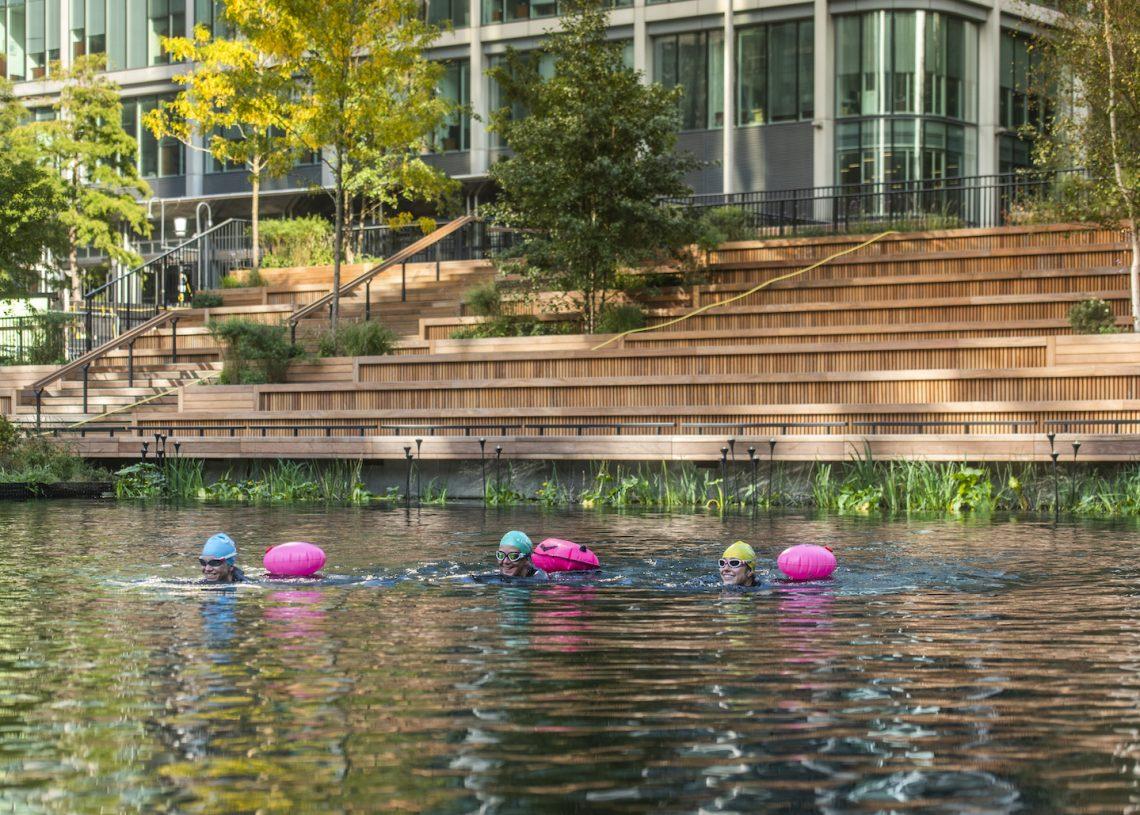
This fear around outdoor swimming is a big driver behind the growth in open water venues. Private landowners and local councils see managed open water swimming as a way of addressing safety concerns and avoiding litigation if things go wrong.
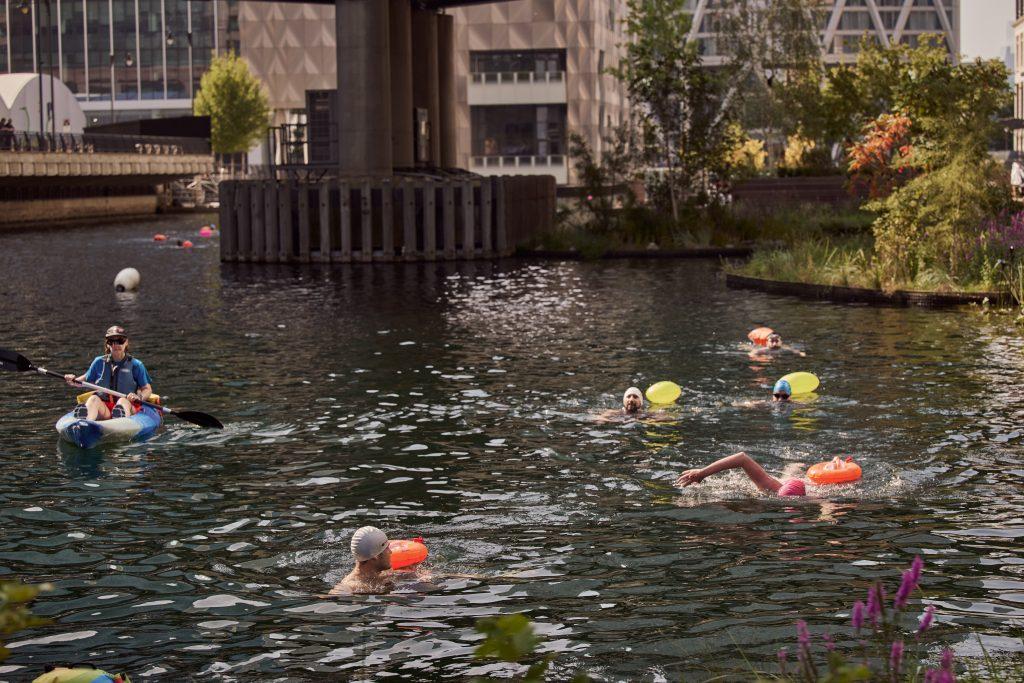
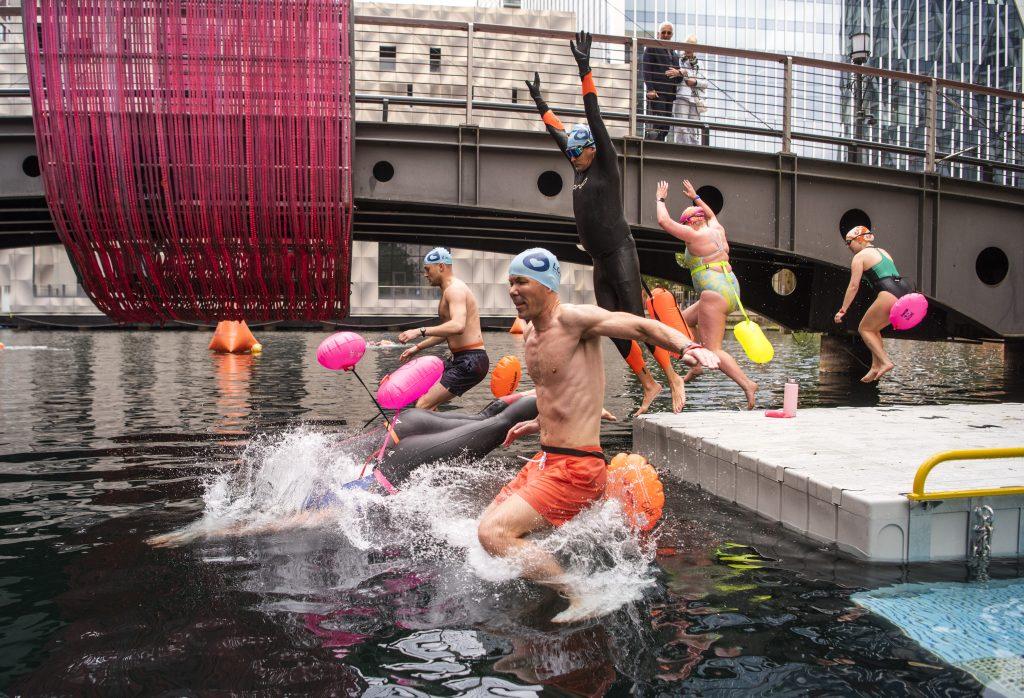
“There are many landowners who wouldn’t do open water swimming without us being there helping,” says Paul from NOWCA, the organisation behind the safety systems at many open water venues. “We’ve got a venue at Canary Wharf because the council decided that it was better to bring us in to manage sessions of open water swimming rather than having it completely illegal and people just swimming there anyway.”
Of course, as soon as you start talking about safety systems, lifeguards, water quality testing, and infrastructure like buoys and changing rooms, there are costs and, inevitably, that means charging swimmers to use the venue.
This rather detracts from the wild and free element of outdoor swimming. Plenty of outdoor swimmers are more than happy to pay for the reassurance of lifeguards, the guarantee of excellent water quality, and a warm changing room and coffee after your swim. But alongside those who resent paying are those who can’t afford to.
A great example is the campaign for Designated Bathing Water Status in a section of the Bristol Avon. It was rejected when the city’s mayor declined to overturn the local no swimming by-law. Instead, he permitted a private operator to pilot and then run open water sessions in the city dock, a couple of miles downriver – charging £7 per swim.
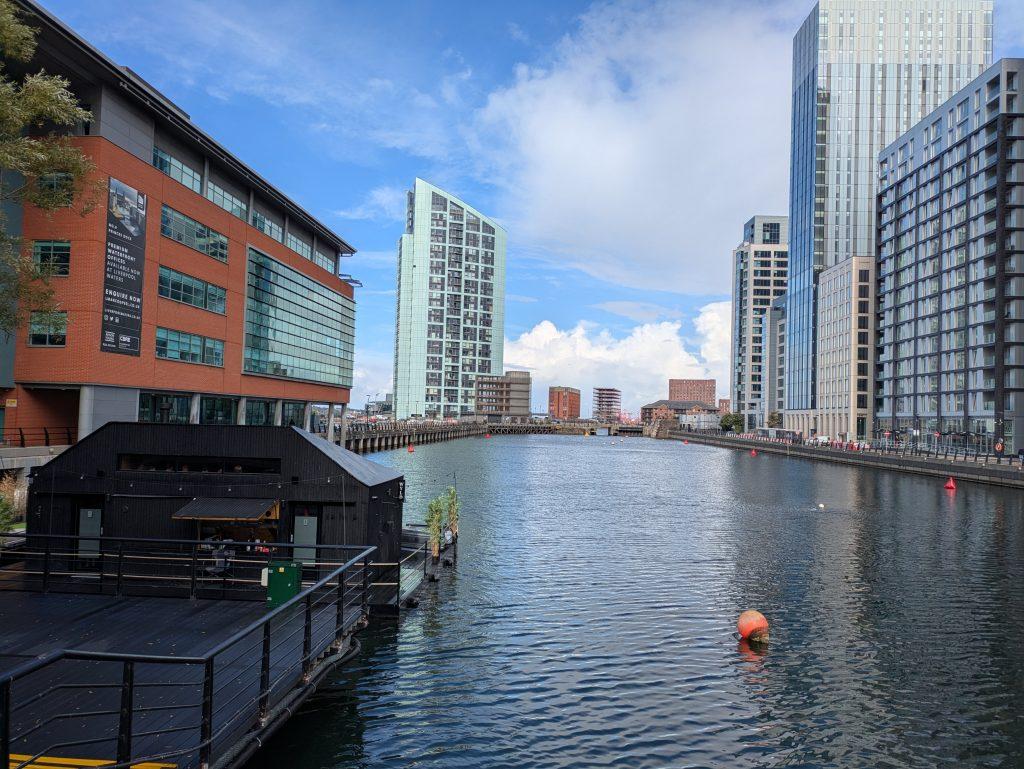
This cost is understandable when you consider the safety infrastructure it pays for. But it still excludes people. However, swimming in places like Bristol docks and London’s Docklands wouldn’t exist at all without this safety infrastructure.
“I guess, being a private company we have to make a profit,” says Paul. “But we are always true to our mission – more water, more people, more safely. The way that I look at it is, people cut corners when they’re not making profit or when they’re losing money, so we ensure they do things right the first time, help them save money, and make sure they have a robust safety system. We’re reaching out to more and more to groups regarding inclusivity.”
“I love Mike and the guys who run it, the community, the sauna – everything,” says Romola, a regular swimmer at Princes Dock Open Water Swim in Liverpool. “Most of all, I’m grateful to be able to swim here – the buzz of swimming in Princes Dock never goes!”
This emphasis on community tells a important story not only about how outdoor swimming has grown in popularity, but also the huge shift in emphasis from training, wetsuits and races to wellbeing, nature and experience.
“Before Covid, as a percentage, triathletes made up a significant part of the swimming numbers, but now they are a much smaller percentage,” says Amy Stanton, who runs Vobster Quay near Frome in Somerset. “There has definitely been a big increase in swimmers using the site to improve their mental health and well-being, which accounts for the majority of the swimmers now – so, more breast stroking and less front crawl on the whole!”
Adam ‘Ocean’ Walker, who’s probably best known for developing and coaching his own ultra-distance swimming technique, also emphasises the focus on wellbeing at his lake.
“It’s very difficult to get the feel of this place on paper, to find the words that demonstrate that it’s not just another lake,” he says. “We have a sauna, and so we do winter retreats involving dips and sauna at the edge of the lake. We do fire ceremonies, crystal healing, sound baths and yoga. People find it beautiful, and we’ve had people in tears for how it’s helped them.”
Re-wilding swimming
Conservation is also central for open water venues. Adam and Gemma worked with Natural England and the Forestry Commission to ensure that their project was ecologically sound, ultimately transforming disused agricultural land.
Disused quarries, former fisheries, farms and estates have become thriving outdoor swimming venues. Even urban venues like those in London, Bristol and Liverpool contribute to better environmental outcomes by both monitoring water quality and proving the demand for and value of outdoor swimming.
Many venues go further to not only demonstrate environmental stewardship, but also curate the ‘wildness’ of swimming outdoors.
“Something we’re working to navigate is that we don’t want it to be too busy,” said Nix Barnaville, co-owner of Court Farm Lakes near Chepstow, in an interview with us last year. “This sounds odd as a business owner, but we want for people to come and find headspace and feel that can they swim on their own.”
The new pools
Outdoor swimming has risks, and that’s part of what makes it exhilarating. But access is limited. With swimming pools closing at an alarming rate, many communities facing higher social deprivation have fewer local leisure facilities and blue spaces.
Private swimming venues address the issues of safety by testing water quality, marking swim routes, providing lifeguard cover and expertise. For many people, this predictability can make the difference between a scary experience and a positive one.
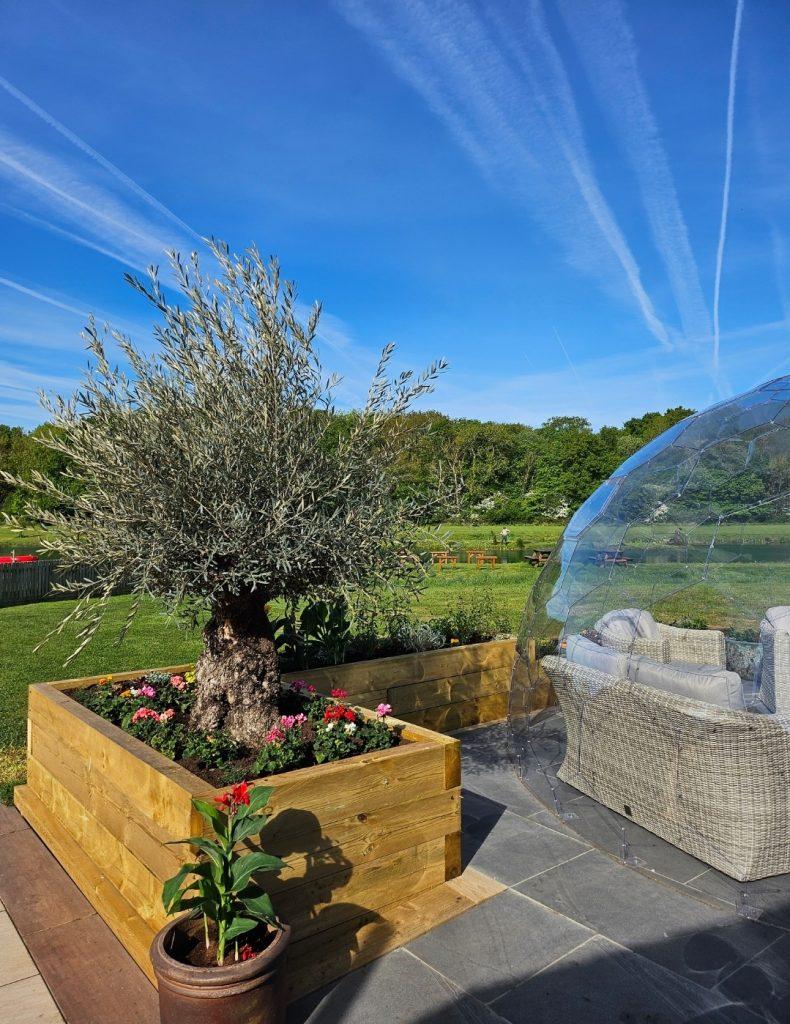
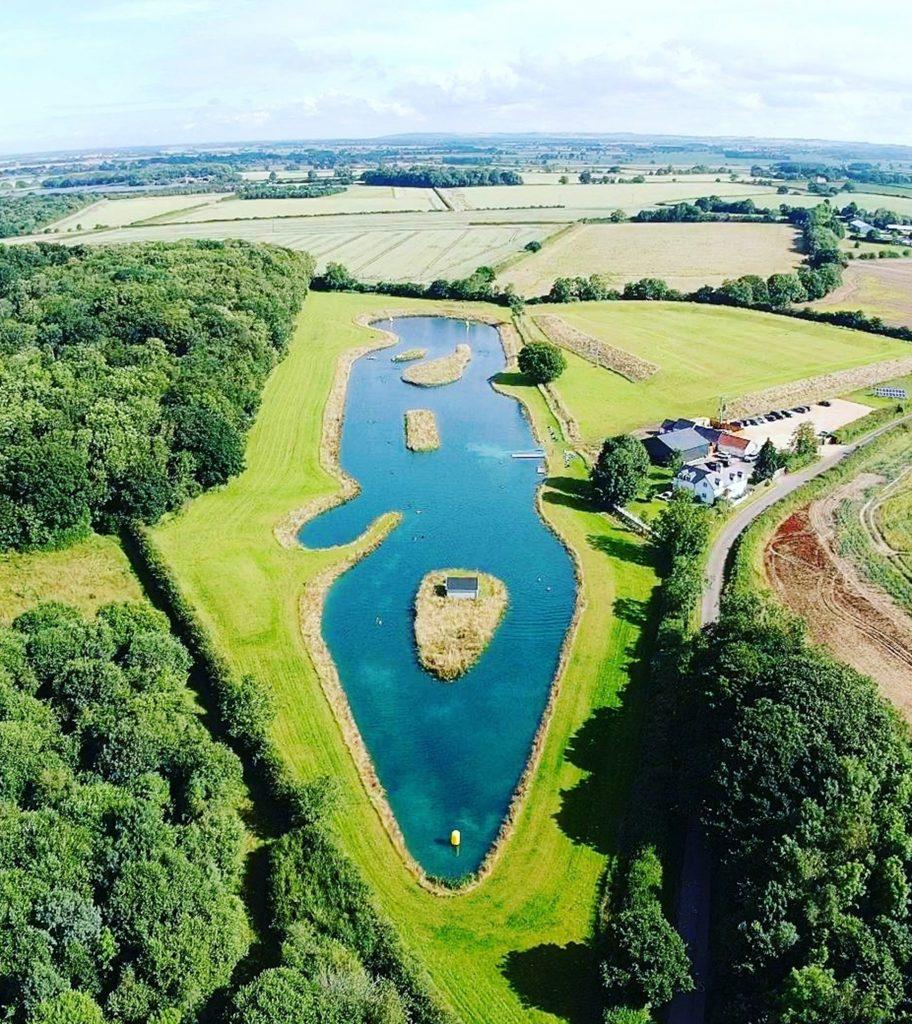
The cost of entry fees and memberships remain an issue. However, as awareness of inclusion grows, venues and operators are finding creative ways to break down financial barriers. They’re realising that swimming isn’t just about exercise; it’s about community, identity and belonging. When spaces are welcoming, safe and inclusive, they can empower people who might never have considered outdoor swimming before.
In a way, we should perhaps think of these venues as the new swimming pools. They’re helping more people learn to swim outdoors, keeping communities active and connected, and redefining what access to blue spaces looks like.
If the last few years have shown us anything, it’s that people need water. The mental health kick of cold water immersion, the joy of swimming under open skies, the friendships formed over coffee after a dip – all the wild swimming benefits can be found at managed venues.
That doesn’t mean wild swimming in rivers, tarns, lakes or lochs should be off-limits – quite the opposite. But, while we continue to campaign for rivers, lakes, lochs, tarns and seas fit to swim in, we should also celebrate the venues, organisers, and volunteers who are making open water swimming possible right now.