
EXTRA,  FEATURES,  Premium,  September 2025

How and why women are surpassing men in ultra-endurance swimming

New book, Ultra Women, explores how women are outperforming men in endurance sport, author Lily Canter tells us more.

It’s a familiar refrain in sports: men are faster, stronger, and better. But in the murky, icy world of open water endurance swimming, that assumption is increasingly under question.

Research from new book Ultra Women: The Trailblazers Defying Sexism in Sport – which includes interviews with more than 70 elite athletes and sports scientists – reveals the physiological, psychological and historical reasons why women are not just holding their own against men in ultra-endurance sport, but in many cases, outperforming them.

The book covers a broad spectrum of endurance sport including cycling, running, adventure racing and trekking but found that women’s greatest advantage was most pronounced in cold water marathon swimming. And the reason for this? Women have more fat.

But they don’t just have more fat than men they’re also better at using it – which is a big advantage in the water. And this matters. When it comes to ultra-distance events – swims over 10km – the ability to burn fat efficiently, stay warm, remain buoyant and withstand long durations of physical stress becomes crucial.

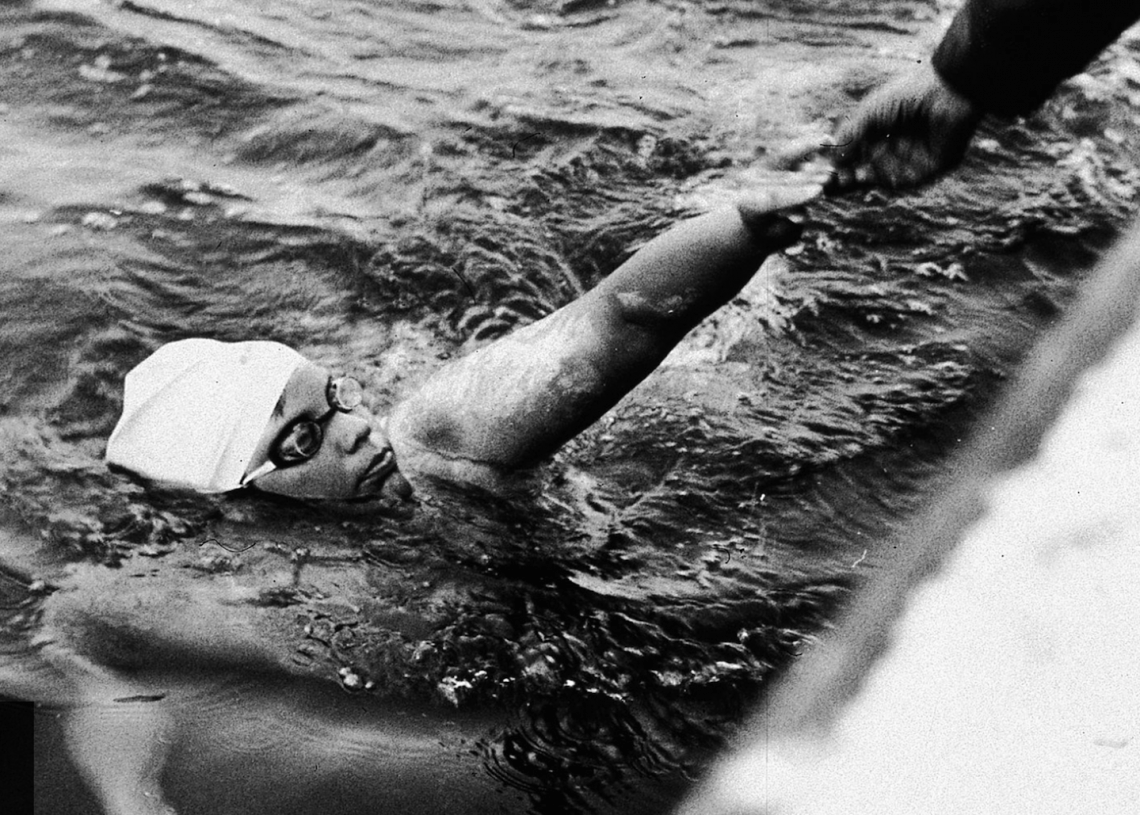
At the heart of the story is Lynne Cox, the American swimmer who set more than 50 world records and firsts in ultra-distance and cold water swims. In 1972 at just 15 years old, she shattered the men’s and women’s English Channel records with a time of nine hours and 57 minutes navigating by radar rather than GPS. “People said I was lucky because I had really good conditions,” Cox recalled. Undermined because of her sex, she returned to the Channel and swam three miles further in worse conditions – 21 minutes faster than before – to reclaim the overall record from a male swimmer who had beaten her initial attempt.

Ultra woman Lynne Cox

Cox’s career was a lesson in resilience, adaptation and physiological prowess. She was the first person to swim the Skagerrak Strait between Norway and Sweden, the Strait of Magellan in Chile, and the shark-infested waters around the Cape of Good Hope. In 1987, she completed her most iconic swim – the 2.7-mile Bering Strait crossing between the USA and the Soviet Union in water as cold as 3°C. It was, in her words, “really challenging, and we were really in the unknown.” But she did not stop. “I just needed to swim otherwise I would cool down too much, lose heat and never get it back.”

So how did she do it? And why are women like her thriving in extreme environments where men often falter?

The answer begins with fat. Women have between five and ten per cent more body fat than men. In open water, where wetsuits are prohibited under marathon swim rules, women have a significant advantage. Fat acts as insulation, reducing the cooling effect of water temperatures as low as 10°C. It also provides buoyancy, improving body position and reducing drag. Perhaps most critically, fat is a more energy-dense fuel than carbohydrate, making it ideal for the slow-burn requirements of ultra-endurance sport.

Triple Crown research – a reference to the trio of iconic marathon swims that include the English Channel, Catalina Channel, and Manhattan Island Marathon – found that female swimmers had 30.7 to 31.3 per cent body fat compared to 18.8 to 20.2 per cent in men. This higher fat mass made women “more ergogenic in the water,” meaning more efficient. Since fat is distributed mostly in the buttocks and thighs in women, compared to the abdomen in men, it enhances buoyancy while reducing frontal drag.

And there’s more. Women also oxidise fat at a higher rate than men during prolonged exercise, thanks to higher levels of the hormone adiponectin and the effects of oestrogen. When exercising at a slower pace – like a marathon swim – the body burns more energy dense fat, unlike a sprint which is more carbohydrate reliant.

“If women are better at burning fat than men at a given relative intensity, which they are, this could potentially be one advantage for them in ultra endurance events,” says Nick Tiller, an exercise scientist at Harbor UCLA.

This substrate efficiency means women can go longer without needing food, a key benefit in cold water swims where fuelling is difficult. “The extra body fat means if you can’t stop to eat you have stores to give you energy,” Cox explains. “It’s not optimal but it’s enough to keep you going.” And while men may lead in shorter distances, several large studies have shown that women close the gap—and even surpass men – as the miles stretch on.

Ultra Women authors Emma Wilkinson and Lily Canter

A 2011 study from the University of Zurich found that over a century of English Channel swims, women’s best times were often faster than men’s. The World Open Water Swimming Association later reported that average female completion times were 33 minutes quicker than men’s. In the 28.5-mile Manhattan Island Marathon Swim, women outperformed men by 12 to 14 per cent over a 30-year period. And in the Catalina Channel, the fastest woman was 22 minutes faster than the fastest man, with annual averages showing a 53-minute female advantage.

Even amateur data from the UK backs this up. Analysis of 117,000 swimmers in the Great North Swim between 2008 and 2023 shows men are slightly faster over short distances, but once the event exceeds two miles, women begin to pull ahead. At the 2022 Great North Swim 10k, the majority of entrants were male, yet the women recorded marginally faster average times.

Fat – so often demonised in aesthetic terms – is the women’s secret weapon. It provides the triple crown of warmth, buoyancy and energy metabolism.

As Cox herself says, “We are so fragile yet so strong.” In marathon swimming, strength lies not in muscle, but in what lies beneath.

Ultra Women: The Trailblazers Defying Sexism in Sport’ by Lily Canter and Emma Wilkinson is published by Canbury Press and is available in paperback priced £16.99 now.

Stay up to date with The Dip, our free weekly outdoor swimming newsletter.

Outdoor Swimmer is the magazine for outdoor swimmers by outdoor swimmers. We write about fabulous wild swimming locations, amazing swim challenges, swim training advice and swimming gear reviews.