

Law, access and our relationship with water
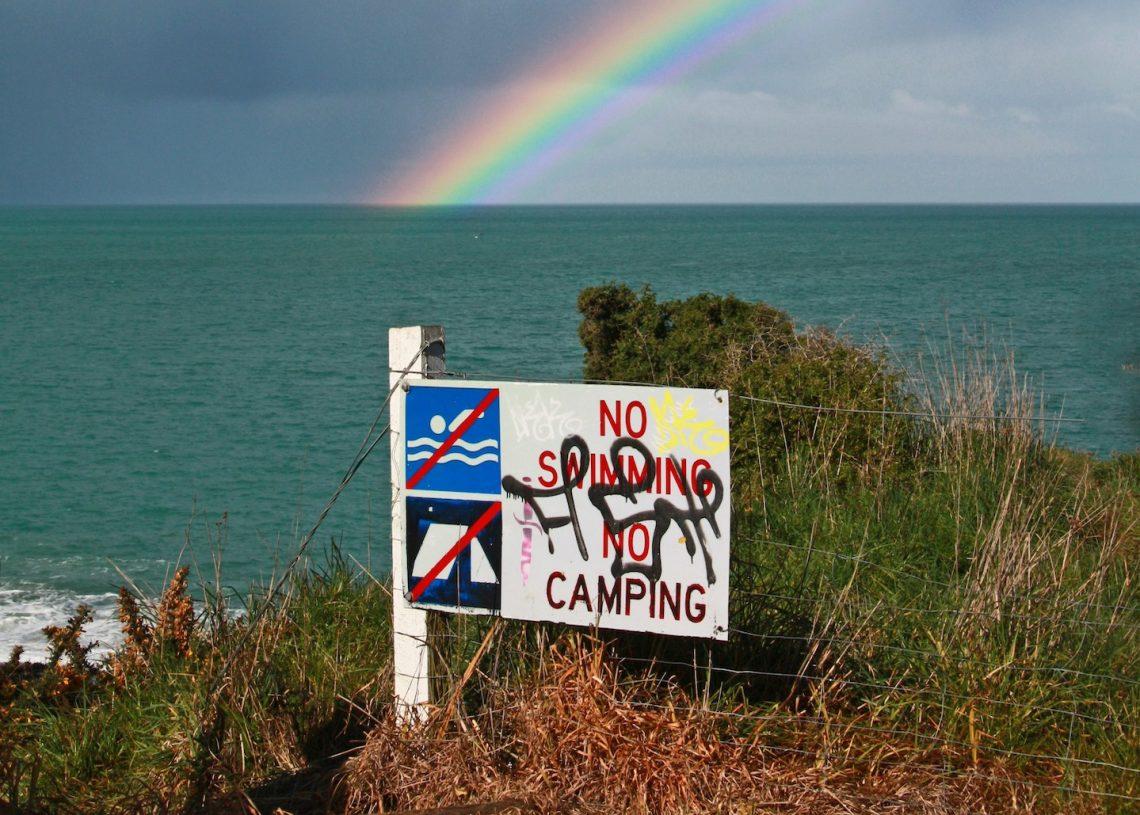
In England and Wales, swimming outdoors is rarely just swimming. A quiet entry into a river can feel charged, edged with uncertainty, permission and risk. Not the physical risks we assess instinctively as swimmers, but the legal ones, inherited from centuries of enclosure, ownership and an uneasy relationship between people and land. Ella Foote talks with academic Cristy Clark about her new book, Legal Geographies of Water, and why our relationship with water is shaped by law as much as by feeling
For many of us, the water itself feels uncomplicated; it flows, it connects places and it carries us. Yet our access to it is anything but simple. To understand why, and to glimpse how things might change, I spoke with Cristy Clark, an Australian legal academic whose work traces the deep currents linking law, land, water and social justice. We met at the Swimmable Cities Summit in Rotterdam last summer and I was introduced to her new book, Legal Geographies of Water, which fuelled this conversation on a hot day in July.
Cristy now lives in Oxford, though she works remotely for University of Canberra. Her route here is as layered as her thinking. She and her husband met in high school, reunited years later, and have moved continents for work in climate adaptation and environmental policy. Oxford, with its green edges and walkable city, offered something rare: proximity to London, space for children and dogs, and a landscape that invites movement through it. But Cristy did not always imagine a life shaped by law.
From stage to scholar
When she finished school, Cristy intended to become an actor. Theatre was her world. Her first university applications were all drama courses. Law appeared almost as an afterthought, a sixth preference added because she needed to fill the form. Then, on the morning of her first audition, something changed. “I woke up and realised I didn’t want to go,” she says. “I didn’t know if it was going to give me the capacity to contribute to the world in the way that I wanted to.” In classic teenage fashion, she did nothing about the decision. She skipped her auditions, worked through the summer, and waited for university offers, which back then was printed in the newspaper.
On New Year’s Day, nursing a hangover, there in black and white, an arts law offer. The first law lecture changed everything. “I was absolutely hooked,” she says. “I realised law governs how everything works and that we are supposed to follow it, but I didn’t really understand it. Secondly, if you wanted to make things different in the world, it was a lever that you could actually use to change the world.”
Water as a human right
Cristy’s early career took her into environmental and planning law, initially within a corporate firm. Unsatisfied, she returned to university to study international social development, where her focus narrowed sharply onto water, not as landscape or leisure, but as a survival. Her PhD examined the human right to water: access to clean, affordable water for drinking, washing and living, particularly for urban poor communities. From there, her work began to widen again. She became interested not only in people’s rights to water, but in water’s own status within legal systems. Environmental law, the right to a healthy environment and the emerging idea of rivers as living entities with rights of their own.
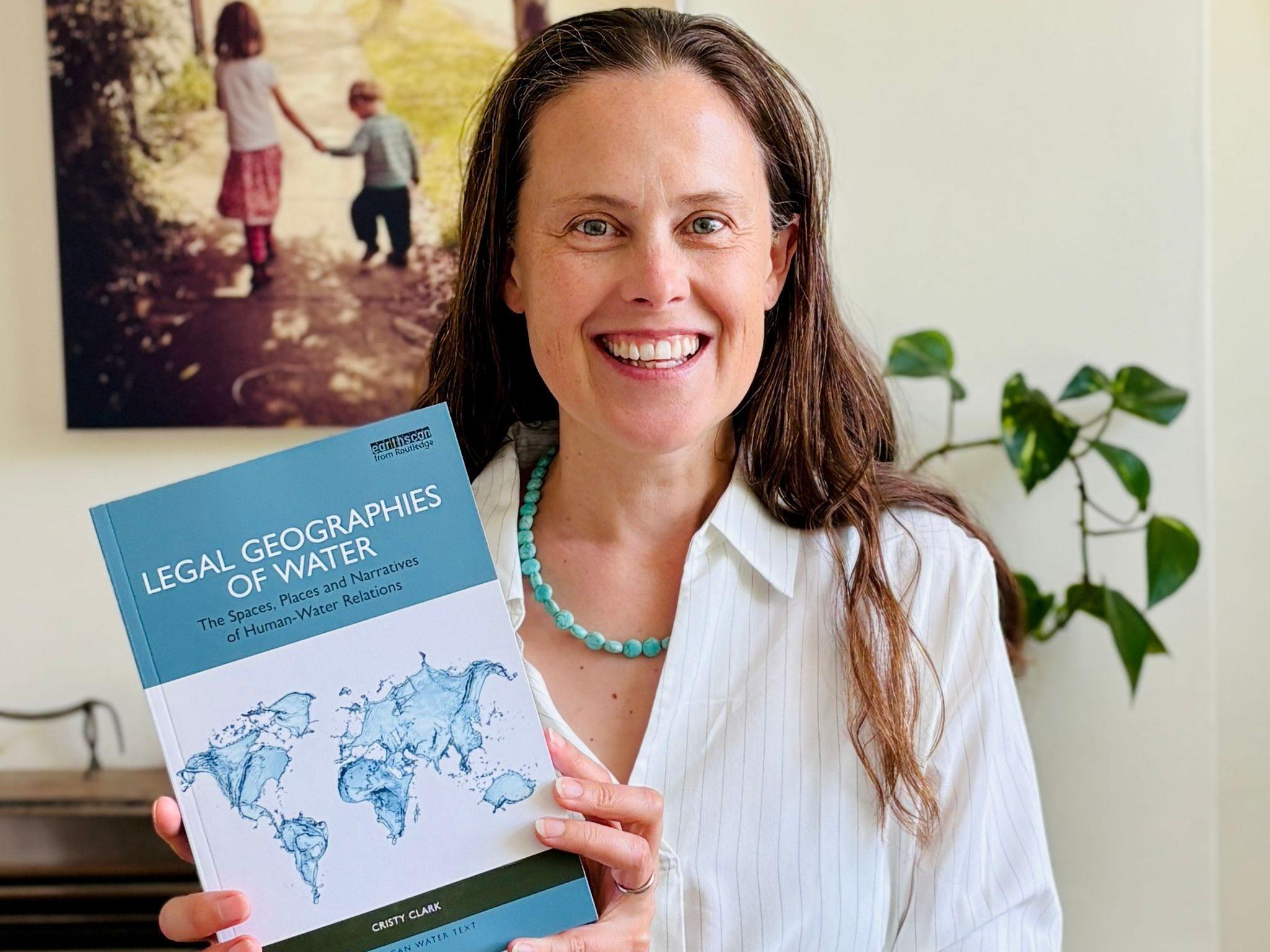
“Everything circled around water,” she says. “But from different angles. How regulation shapes our relationship with it, and how that relationship might be less extractive, less damaging, more reciprocal.” Although her work sits squarely within environmental law, Cristy resists the label. “I come from a human rights background. I’m interested in relationships, not separating people over here and nature over there, but recognising that we’re entangled.” Swimmers know this instinctively.
Land law and swimming
Cristy’s first book, The Lawful Forest, examines land, forests and the history of private property in the UK. But for swimmers, its relevance is immediate. The book traces how enclosure transformed England. How common land, once shared and carefully managed, was gradually privatised. How access narrowed, not through inevitability, but through legal choice. Today, only around eight percent of land in England is freely accessible. Even rivers that are technically public are often bordered by private land, making entry fraught or contested. Cristy’s fascination with this history was sparked unexpectedly, through an Australian High Court case involving forest protests in Tasmania. Judges justified the protesters’ rights by referencing something called the “public forest estate”.
Curious, Cristy and her co-author traced the idea back through law and legislation, eventually arriving in medieval England, at the Forest Charter of 1217. Often published alongside Magna Carta, the Forest Charter protected the rights of commoners: access to land for grazing, foraging, gathering firewood and living. It was, Cristy says, the opposite of enclosure. “That history is still there,” she says. “It hasn’t vanished. It’s just been buried.” For swimmers, this matters. Rivers were never simply private corridors. They were routes, resources and meeting places.
Swimming as predicted politics
Cristy’s current research has brought her directly into the world of outdoor swimming. Two years ago, her co-author for The Lawful Forest suggested writing about the UK’s right to swim movement. “I was confused,” Cristy admits. “I thought, don’t people already have the right to swim?” She began interviewing swimmers, campaigners and organisers, including those involved in reservoir protests and The Outdoor Swimming Society. What emerged was something more than recreation. “There’s a form of prefigurative politics in swimming,” Cristy explains. “People act out the future they want to see. By swimming, they assert a relationship with water that the law hasn’t yet fully recognised.” This isn’t about recklessness or confrontation it’s about legitimacy. Law, Cristy reminds me, is not static. “Behaviour shapes what is considered lawful,” she says. “People create rights by using them.” Every normalised swim shifts expectations. What once seemed daring begins to look ordinary.
Risk, responsibility and the myth of liability
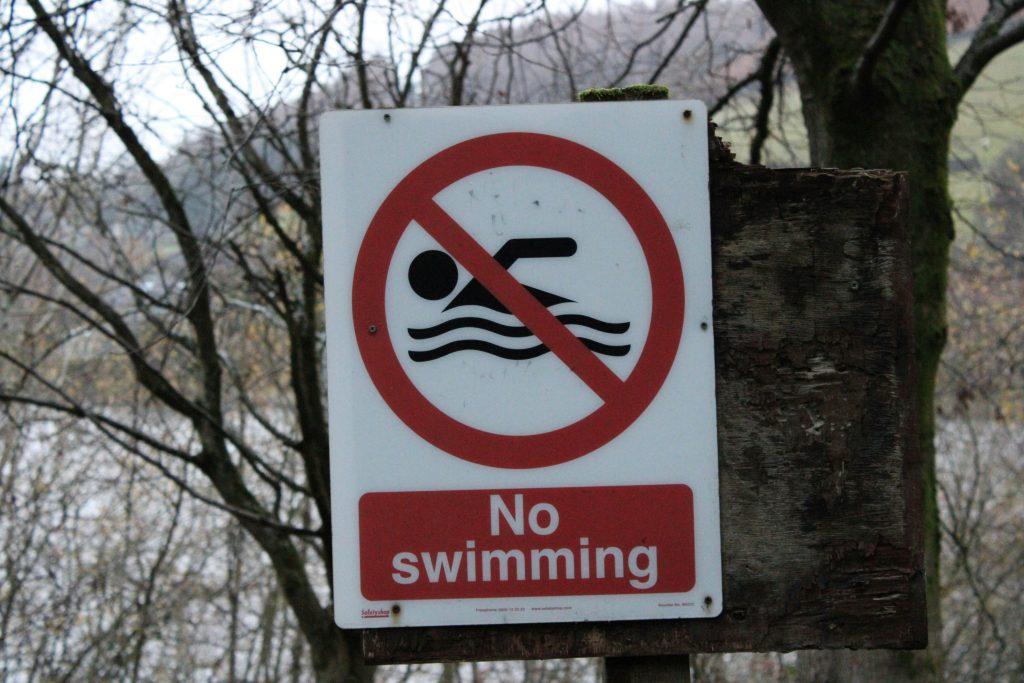
One of the most persistent barriers to access is fear of liability. Landowners worry they’ll be responsible if someone gets hurt, councils ban swimming after accidents and signs multiply. Cristy calls much of this a misconception. “Trespass is a civil matter, not a criminal one,” she explains. “And if someone is on land without permission, the landowner has quite limited liability for their safety.” She points to cases where authorities responded to accidents by banning access entirely, when clearer information or signage would have sufficed. “We’ve wrapped ourselves in cotton wool at the expense of connection.” Responsibility, she argues, sits with swimmers too. Reading water, assessing risk and looking out for each other – this is not new, it’s how people have always lived with rivers.
Globally, Cristy sees hopeful signs. Rivers recognised as legal persons or single living entitles in Aotearoa New Zealand, Colombia and Australia. Free-flowing river legislation emerging in Patagonia, driven by kayakers and Indigenous communities and governance models that emphasise care over control. “These approaches aren’t perfect,” she says. “But they deepen democracy. They invite people into relationship.”
Even in places where water has been aggressively privatised, like Chile, community governance persists beneath the surface. Water, people insist, belongs to place. There is no single model, context matters, culture matters, but the principle holds: access fosters care. “If you can’t reach a place, why would you protect it?” Cristy asks.
The summit
Cristy attended the Swimmable Cities Summit as a researcher. She was struck by its ambition and diversity, but also by what was missing. “It was very top-down,” she says. “Cities committing to policy change, that has real power, but grassroots swimmers need space too. Space to imagine futures that aren’t fully regulated, lifeguarded and fenced.”
Some swimming, she suggests, needs to remain a little wild – not everything that matters can be engineered.
Cristy’s work increasingly focuses on climate inequality: how climate change and climate responses affect people differently. Swimming, she believes, sits quietly at the heart of this. “Swimmable cities are climateresilient cities,” she says. “But they’re also climate-equal cities.” Free access to water cools bodies, builds social connection, anchors people in place. It’s not just about surviving heatwaves, it’s about belonging.
Her hope for her academic work is modest and ambitious, “to contribute to the conversation and to shift expectations.”
Once, the idea of a river as a legal person sounded absurd. Now it appears in legislation. Change, she reminds me, often begins as a thought experiment. For swimmers, the implications are both grounding and empowering. Know the risks, respect the water, understand the law and don’t underestimate the quiet force of showing up, again and again, at the river’s edge. Swimming, after all, is not just immersion in cold water. It is immersion in history, culture and possibility. Every entry carries with it a memory of how we once lived, and a hint of how we might live again.

Ella Foote
Ella is renowned outdoor swimmer and journalist. As well as leading the editorial, digital and experiential outputs for Outdoor Swimmer she is also Director of Dip Advisor, a swim guiding business helping people enjoy wild water. Ella also teaches swimming to children and adults, is an Open Water Coach and RLSS Open Water Lifeguard.