


Child’s play
Watch out for the new generation of outdoor swimming stars, says Rowan Clarke
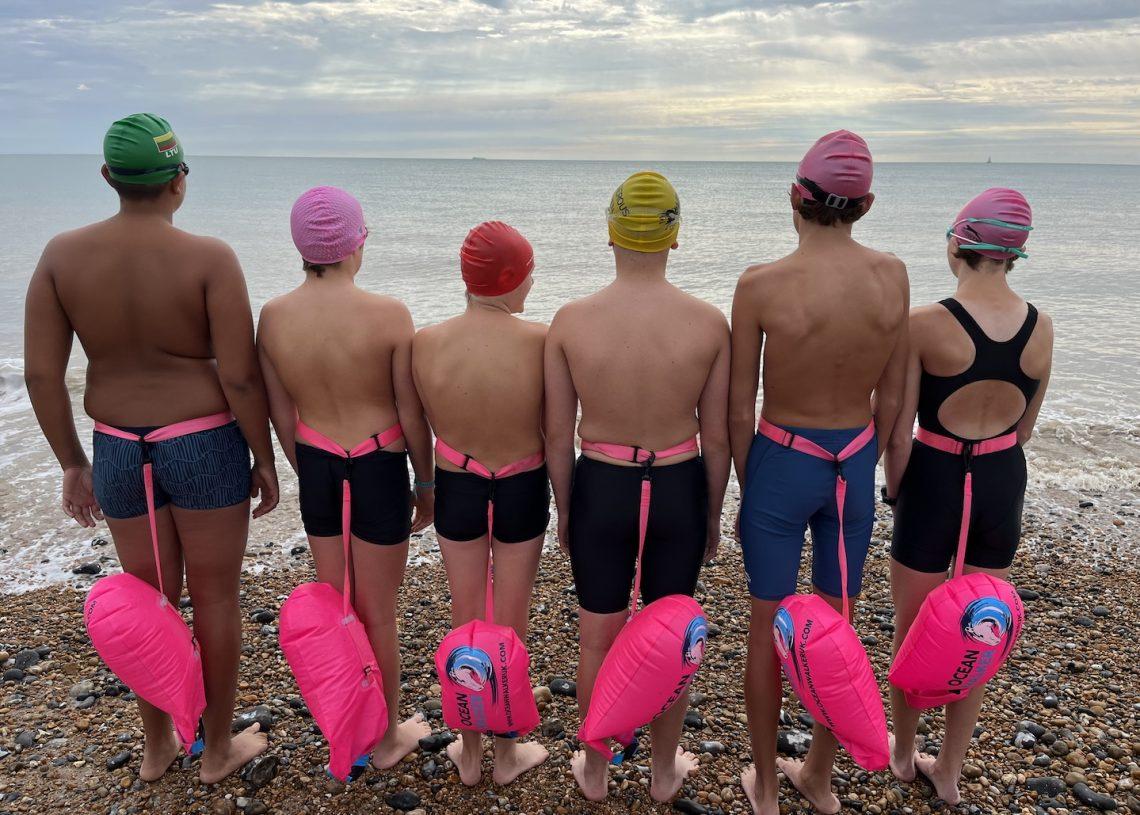
Have you noticed the increasing number of young people at swim venues, events and challenges? Not just young people, but children. It’s probably one of the most encouraging signs that swimming outdoors is not only growing, but also broadening in participation.
Back in September 2022, we asked how best to encourage children into outdoor swimming (Young Hearts Swim Free). It’s still true that there are no official open water swimming pathways, so what’s bringing more children and young people to open water, and why should we be celebrating this?
Breaking barriers
Getting more children and young people into open water has been one of outdoor swimming’s biggest success stories. It’s an encouraging example of how we can recognise and overcome barriers to outdoor swimming for a specific section of society.
As more children are being taught how to enjoy cold water safely, confidently and competently, they’re showing us just what they’re capable of when given the opportunity. We’re seeing children with disabilities that preclude them from taking part in mainstream swimming lessons swimming down the river at Level Water’s Bantham Swoosh, teenagers supporting their mental wellbeing with cold water dipping, and school kids crossing the English Channel.
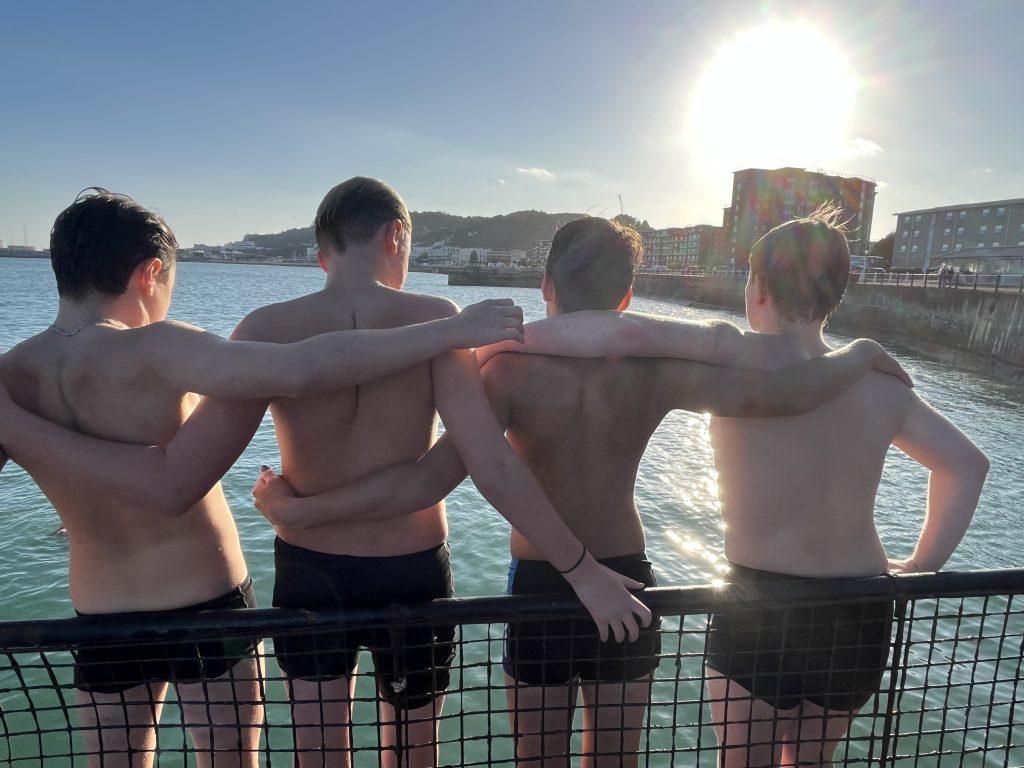
“Last year, we convinced New York Open Water to let us take a group of children to swim around Manhattan. We were the first children in the world to do it,” says James Allen, Headteacher at Beech Hall School. “We had the first kid to swim from Corsica to Sardinia, and next year, we’re going to have an all-female team swimming the Channel for the Centenary of Trudy Ederle. It feels serendipitous.”
Beech Hall is a small independent school in Cheshire whose headteacher loves open water swimming. It was while swimming a channel relay with triple crown open water swimmer Nikki Pope that the idea emerged to organising English Channel relays with groups of teenagers.
“We got talking about this stupid idea, and probably shouldn’t do this, but could we offer this to our children? So we did, and we ended up training two teams the following year,” says James. “We swam that summer, and the pilot said he’s never had a landing like Katie Anne had that first year with 300 French people cheering her on.”
‘We probably shouldn’t do this’
In a risk averse nation like ours, the combination of children and cold water causes much alarm. This isn’t without reason – children tragically drown every summer. But the mindset of prohibiting children from swimming in open water is no solution.
This brings us back to the argument for a right to swim. If we grant children the freedom to play in cold water during the summer, we foster their natural love of water and teach them how to handle it safely.
“In my view, it is absolutely crucial that families with their children are able to swim in inland water,” says Imogen Radford from the Outdoor Swimming Society. “It’s a fun, wonderful, active thing to do in so many ways, but also, it’s got such an important purpose in helping people learn how to swim safely and understand open water.”
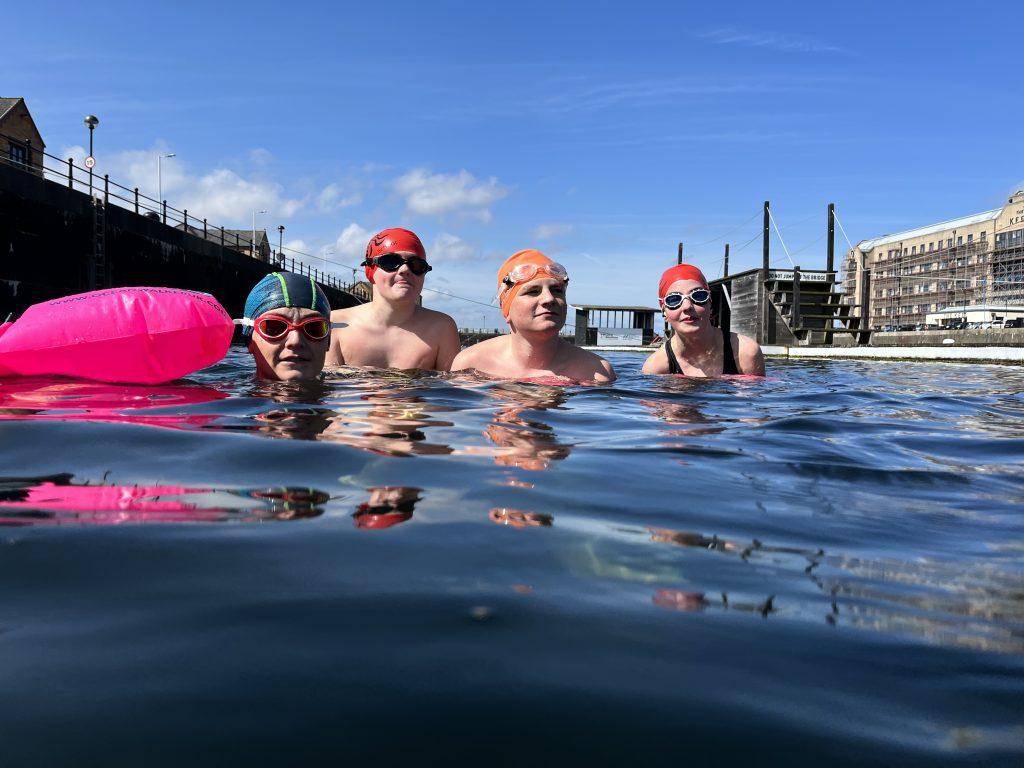
As well as teaching safety, playing and swimming in natural bodies of water brings children significant health and wellbeing benefits. We see improved fitness, concentration, academic success and self esteem.
“I saw a lot of correlation between training as a channel swimmer and improvements in the classroom,” says Nikki Pope, who along with her wife Cate, has been organising English Channel relays for teenagers since 2020.
James concurs. He gives the examples of students who have turned around their academic, social and wellbeing outlooks through open water swimming. It’s a combination of achieving, facing fears, exercise and being in cold water.
“Swimming sets children up for life,” says Jeremy Irvine, coach and Swim England Hertfordshire Open Water Manager. “They develop huge cardiovascular capacity, the stopwatch teaches them that hard work pays off and, when coupled with distance swimming in open water, they build mental strength and resilience.”
Into cold water
The cold factor is another area of consternation when it comes to children. This is partly a question of free will, and clearly nobody should ever be coerced into cold water. But there are also misconceptions about how well children handle the cold.
“I think when you couple the potentially dangerous activity with children for so many people, that level of risk is too high,” says James. “Our experience in the first year or two at Liverpool Docks was some very cautious staff who didn’t really want to let us put kids in the water because of the level of risk. Over the years they’ve come to trust us, and they recognise that our safety protocols are really good, and we do know what we’re doing.”
However, recent studies show that children have a smaller cold shock response and similar cooling rates to adults. The only real risk comes from their lack of subjective awareness of how cold they are, which means their supervising adults need to take responsibility for their wellbeing in cold water.
This is another huge change which has enabled more children to swim outdoors. Not only are open water event organisers, venue operators and safety support crew becoming better educated and more attuned to the specific needs of young open water swimmers, but also, there are more qualified open water coaches helping children get there in the first place.
“The growth in open water swimming in recent years has positively influenced traditional competitive swimming clubs,” says Jeremy. “Lots of clubs now have qualified open water coaches and actively encourage their swimmers to give it a go.”
Beyond horizons
This is a huge change since 2022. And it has opened up a whole new world of competitive and challenge swimming for club swimmers, offering not only opportunities for racing in open water, but also challenges where the achievement is to finish.
“At the age of 12, [Prisha] expressed her ambition to swim the English Channel. Four years later just after her 16th birthday, she reached France in under 12 hours,” says Jeremy, who coached Prisha Tapre alongside his son, Felipe. “Prisha became the youngest British-born Indian to complete the swim and featured on all the major Indian news channels plus UK radio stations. She won the 2025 Audentior Award for young achiever of the year, was invited by HRH Princess of Wales to attend the Carol Service at Westminster Abbey, and in August, Prisha presented an amazing TedX talk on ‘Swimming Past Stigma’.” Among the students he’s most proud of, James offers Rory. He explains how he went from a virtual non-swimmer to being part of the Manhattan relay team and then completing a Channel solo a month after his 16th birthday.
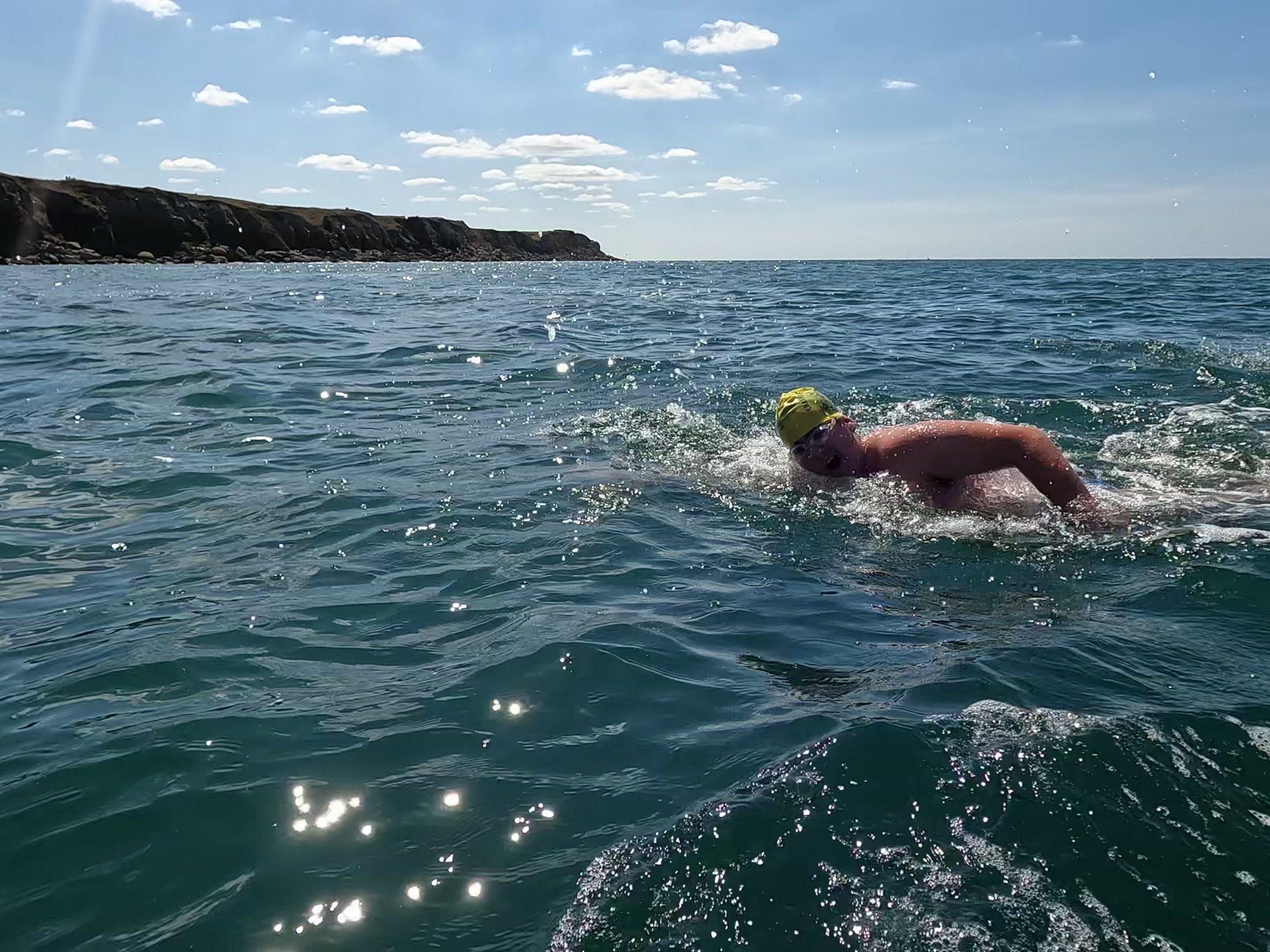
“Rory is just the best story about why we do this,” says James. “We’ve enabled him to find his thing. In every other walk of life, he would not be a natural athlete, but he is a phenomenal open water swimmer who has the grandest of plans, and he’s a super role model for our youngsters.”
Prisha and Rory’s examples show just how lifechanging swimming outdoors can be for children. They also carve the way for future swimmers. As more teachers and coaches learn how to support children into open water, we’re sure to see more swimming clubs and schools think beyond the pool, and more young swimmers at venues, events and challenges.
How can you get your child into open water swimming? Jeremy suggests getting in touch with your local swimming club. He is also happy to offer advice: openwater@swimherts.org