


Nuliajuk’s swim
Netflix’s new series, ‘North of North’, brings an Inuit sea goddess to the surface. Words by Elaine K Howley
Plunging into the frigid waters of Canada’s far-northern Nunavut territory is not widely recommended. But despite the chill, that place remains the domain of one particularly potent being whose story has recently received new attention thanks to an eight-episode series that debuted 10 April on Netflix.
‘North of North’, which was filmed in and around Iqaluit, the capital of Nunavut, in spring 2024, is set in the fictional town of Ice Cove, located somewhere on real-life Prince of Wales Island, about 2,500 kilometers north of Winnipeg.
The story unfolds as a young Inuk mother named Siaja Kudlak (played by Anna Lambe) realizes her marriage is not working and it’s time to figure out who she is.
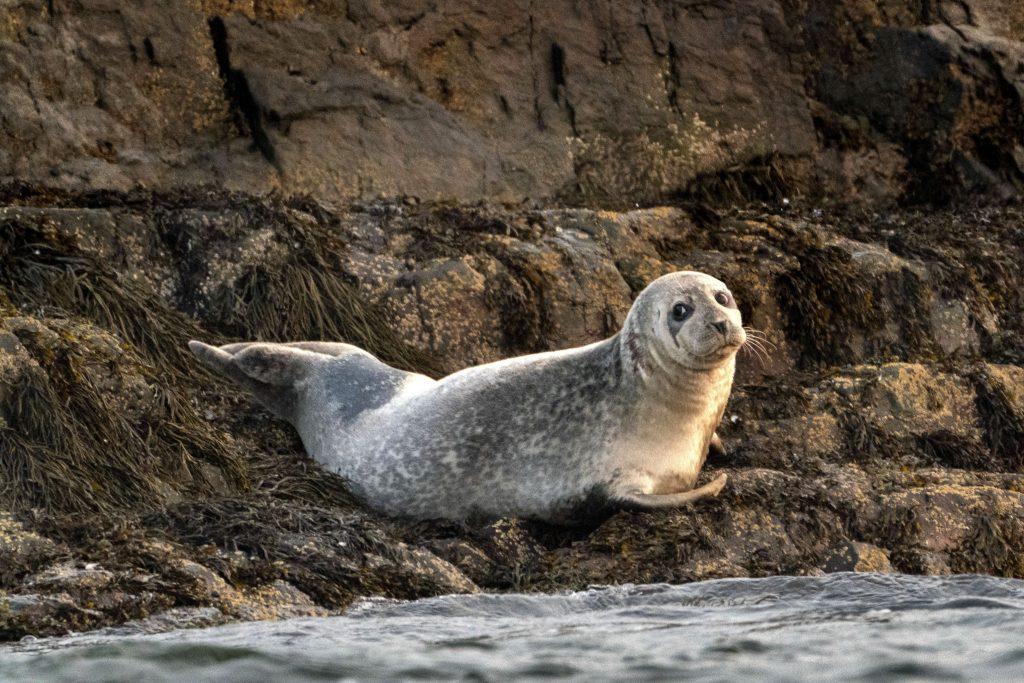
In a cataclysmic and catalytic scene in the first episode, Siaja, ever the faithful companion to her husband, Ting (played by Kelly Williams), is compelled to join him on the boat for a ceremonial seal hunt during Ice Cove’s annual spring festival.
But Siaja tumbles overboard as they pursue their prey. Deliciously self-absorbed, Ting takes no notice. But the camera follows the dark-haired beauty into the brine. There, her heavy clothing threatens to drown her. As she wriggles out of her boots, she suddenly comes face-to-face with a wild, underwater woman, whose long tendrils of dark hair and stunning face tattoos float ominously in front of her.
Revered by the various indigenous people scattered across the Canadian North, this goddess goes by a host of names – Nuliajuk, Taleelayuk, Takannaaluk, Arnajuinnaq, Uinigumasuittuq, and Sedna. And this looming sea goddess of ancient lore is far from mere fictional device.
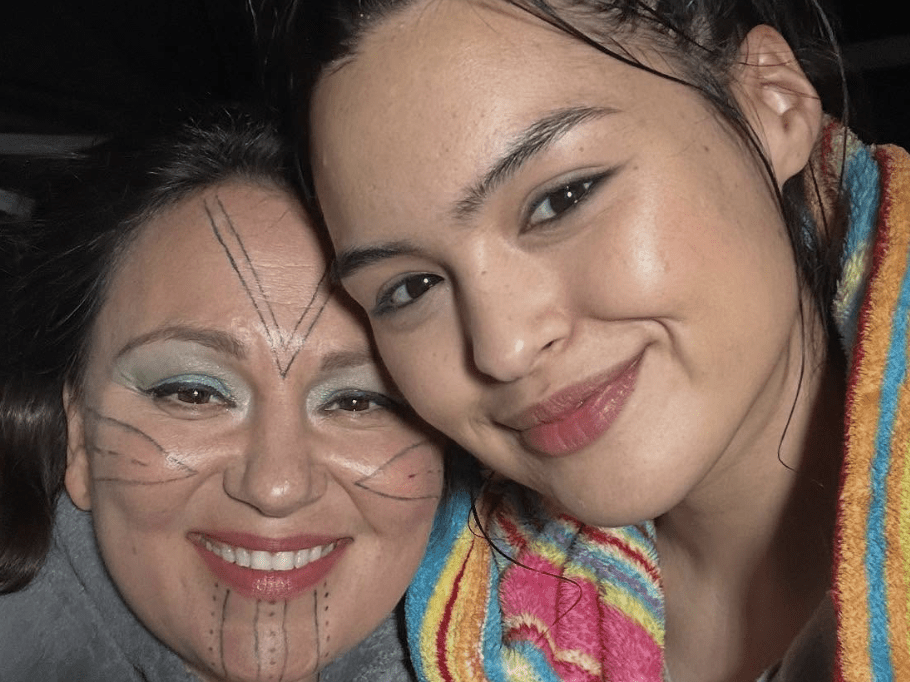
Rather, the emergence of Nuliajuk (played by Canadian singer Tanya Tagaq) from the depths hints at the bigger point of the Netflix series while simultaneously bringing one of Inuit culture’s oldest and most important creation myths to a broader audience.
Nuliajuk’s domain
Long ago, when there were no whales or seals and the Inuit were the only people on the land, there was a beautiful young woman named Nuliajuk.
Her beauty drew suitors from near and far, but Nuliajuk was not interested in marrying. One of her names, Uinigumasuittuq, translates to “one that never wanted to marry.”
But this was a problem for Nuliajuk’s family, notes Peter Irniq, of Inuit Naujaat, Nunavut. He told the Canadian Museum of History in Ottawa, “they wanted their daughter to be married so that the son-in-law could also contribute to hunting and provide food for the family. That is an extremely important aspect in Inuit culture.”
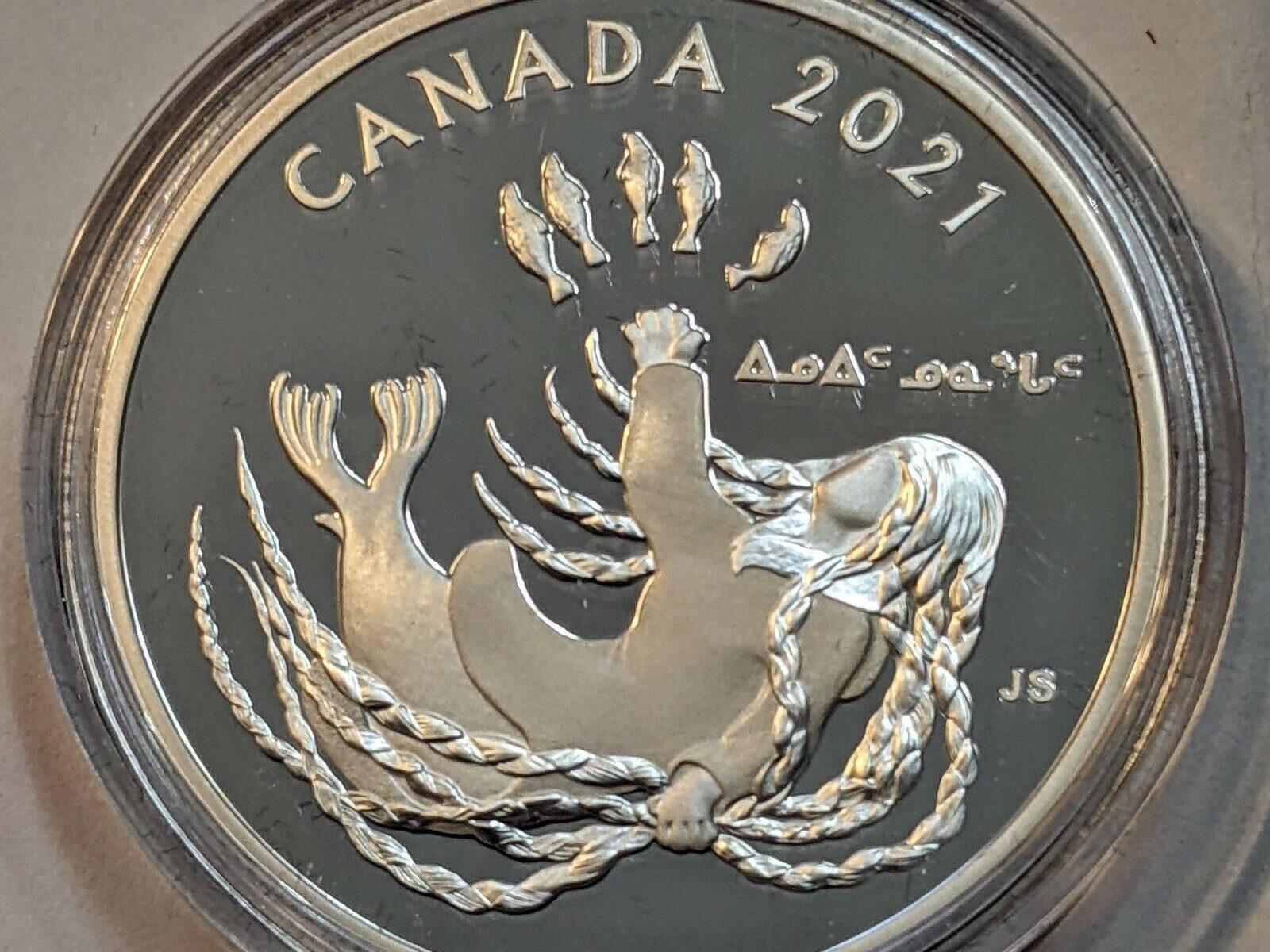
Finally, one day, while her father is away hunting, a handsome, mysterious man comes to the village. He convinces Nuliajuk to marry him and she leaves with him before her father returns home.
The young couple travels for five days and five nights and enters a harbour guarded by two enormous polar bears. But the marriage isn’t a happy one. Lonely, Nuliajuk misses her father, and before long, the handsome man she knew only as her husband shapeshifts into a raven. The implications of having married a bird-spirit are dire for Nuliajuk.
Meanwhile, Nuliajuk’s father returns home to find Nuliajuk gone. He sets out looking for her. After many days of searching from his kayak, her father comes across the Island of Birds and rescues his daughter. But her bird-husband sees them leaving and gives chase, bursting into the air as a terrible raven flanked by a flock of angry birds.
Father and daughter scramble into their kayak to row home, but the bird-man pursues. With each beat of his massive black wings, the wind whips and the waves jump. A tempest threatens to swallow the kayak whole. Just then, Nuliajuk’s father, still angry at her for leaving, makes the fateful decision to toss his daughter overboard.
She hits the water with a splash and sinks, dragged down by her seal-fur coat and boots. Like Siaja in ‘North of North’, Nuliajuk shimmies out of her outer layers and reaches for the surface. As her fingers curl around the edge of the kayak, her father swings a blade and chops off all her fingers at the first knuckle.
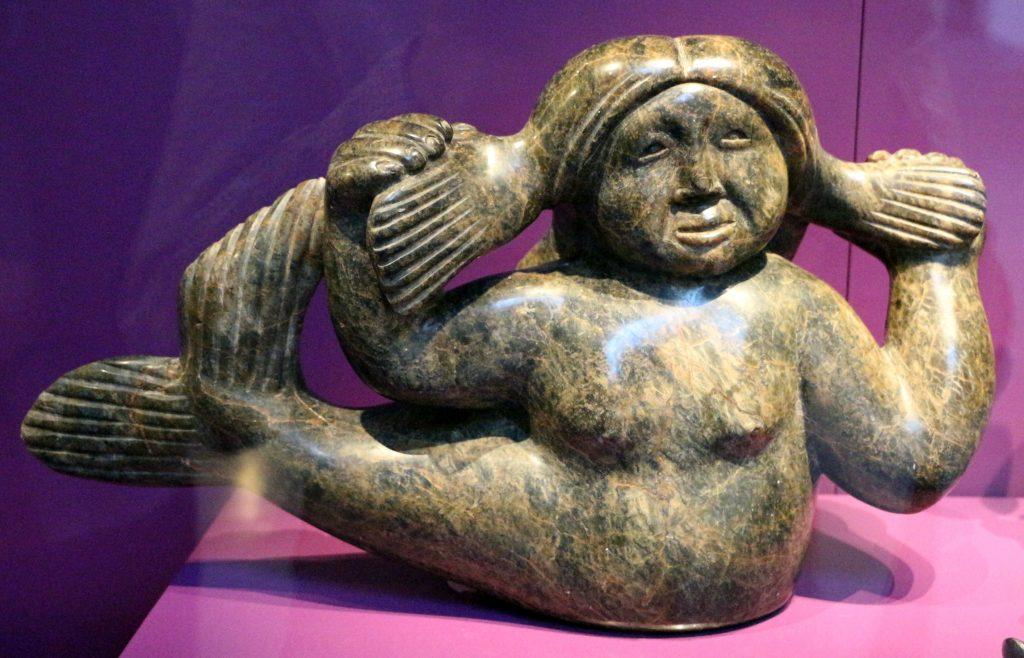
Her fingers drop into the water then immediately resurface as seals. She reaches again for the gunwale, and her father chops the second knuckles off. These fall into the water and become belugas, narwhales, orcas, walruses, and more.
In some versions, Nuliajuk loses her hands or an arm, but in all versions, the diversity of marine Arctic wildlife springs forth from her lost appendages as her blood seeps into the freezing water.
Unable to hold on, Nuliajuk sinks to the bottom of the sea where she sets up camp. There, she becomes “the boss of all living animals in the sea. She is a very powerful, powerful lady,” Irniq relays.
As such, Nuliajuk is the giver of life in these remote seal-hunting communities. In times of food scarcity, it’s still said that the seals and fish have become tangled in Nuliajuk’s ravenblack locks.
Shamans must appease Nuliajuk so that she will provide the sustenance and resources the people need to continue living at the top of the world, and the best way to do that is by combing her hair. Since her father chopped off her fingers, Nuliajuk can’t untangle her own hair. But once the shamans have pleased her, the seals that support the Inuit way of life once again become abundant.

Outdoor Swimmer
Outdoor Swimmer is the magazine for outdoor swimmers by outdoor swimmers. We write about fabulous wild swimming locations, amazing swim challenges, swim training advice and swimming gear reviews.