Environmental issue: wet wipes
Imagine swimming past a man-made reef of wet wipes! Misleadingly labelled as ‘flushable’, wet wipes are well known for causing problems in our toilets and sewers but are also a menace further downstream, says Susanne Masters.
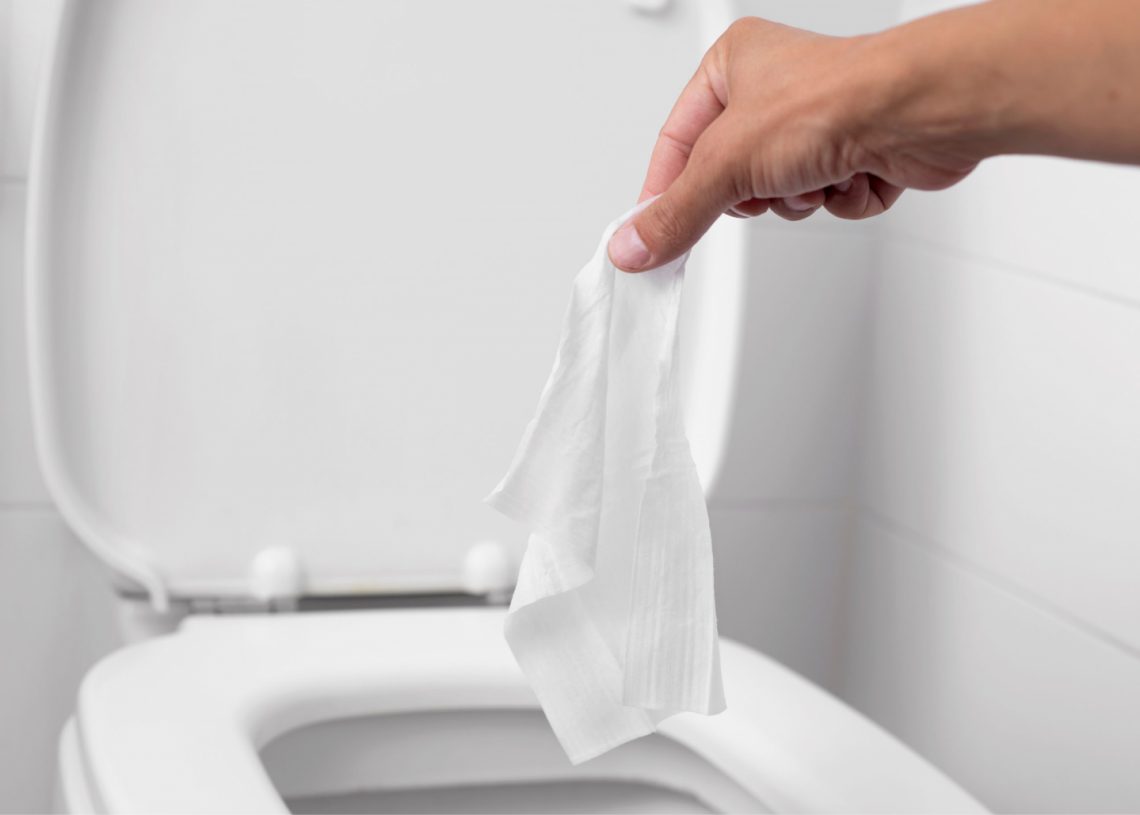
We need help to navigate the misleading labelling of wet wipes as flushable, when in fact most are not. Only brands with the certification mark ‘Fine to Flush’ are plastic free and break down in sewers. Fatbergs, compacted non-biodegradable solids like wet wipes combined with fat, have been well publicised as causes of sewer blockages. Wet wipes are also a menace further downstream.
Wanda Bodnar, a marine scientist who works at the Thames Estuary Partnership, illustrated the impact of wet wipes in rivers with an example from Hammersmith. “Here, due to a sewage discharge pipe and shape of the foreshore, a wet wipe reef or mound came into existence: the accumulated wet wipes raised the foreshore by one metre and also changed the morphology of the foreshore.
This has an impact on wildlife as the foreshore is a habitat for invertebrate species that live buried in mud, and wading birds and fish feed on these invertebrates. Accumulated wet wipes can effectively smother the foreshore.”
Are wet wipes an education issue? Or is the underlying problem really the misleading labelling of products? Shouldn’t we be able to trust a label that says something is flushable?
This article is from the March 2023 issue of Outdoor Swimmer. Click here to subscribe to the magazine. Read more from the March edition.