


Plunging into pura vida
Swimming holidays are great fun for all, but planning your own is something else. Regular contributor Liz Lowe shares her recent trip to Costa Rica
Opening the car door, I was prepared for heat and humidity, but not for the noise. A blanket of sound enveloped us – the mating call of male cicadas reverberating like a continual whistle through a trillion reeds.
We’d chosen a family-run eco-lodge near La Tigra as our first stop north of San José airport, hoping for an immersion into the lush, premontane rainforest. We certainly got it. Dipping in the pool, we absorbed the soundscape of the dense forest. I’d heard that sloths are frequently seen in the grounds and kept my neck craned towards the sky. Just before dusk, we followed the gaze of fellow guests to a precarious branch to see a huddled shape grasping out for leaves – our first sloth sighting. Sitting down to a traditional dinner of Casado – a plate of rice, beans, fried plantain, salad, meat or fish – we agreed it was a perfect first day.
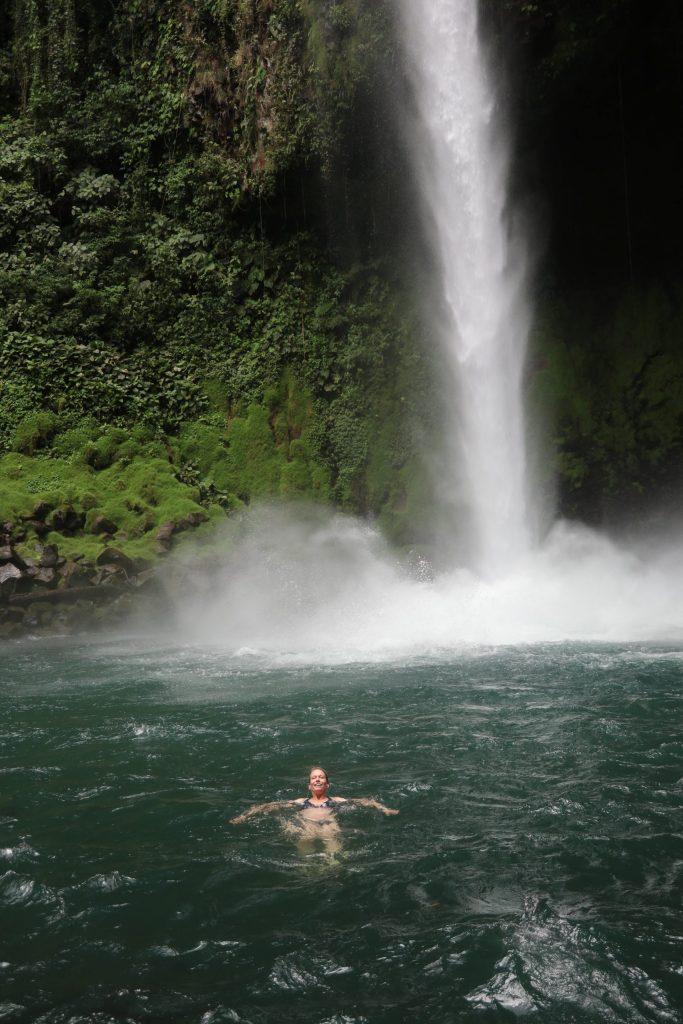
The next morning, we arrived at La Fortuna waterfall. Set within a protected biological reserve, the waterfall has a drop of around 70 metres and a swimmable plunge pool. We joined the slow procession down 500 steps to the base, before scrambling over slippery black rocks with the mist of thundering water on our faces. Most people tread water by the edges, so we only had to swim a few strokes into the velvety outwash to have the illusion of being the only ones there, staring up at moss-covered rock faces, dense green slopes and azure sky.
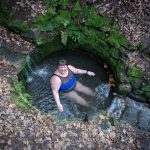
La Fortuna is known for its natural hot springs. There’s a free local spot about 15 minutes’ drive from the centre, and many hotels have their own pools, with some offering day passes. We stayed at Los Lagos – a lively, family-friendly resort with eight thermal mineral pools, three cold water pools and water slides for the kids.
Between thermal dips, we took a river safari float on Peñas Blancas River. On the raft, our guide, Hector, told us: “There are three commands – forward, back and chill. Mostly we chill.”
We floated through lowland tropical rainforest with Hector, dodging the poo of a troop of nomadic howler monkeys and spotting iguanas, toucans, white-faced capuchin monkeys and Jesus Christ lizards – named for their ability to skirt the surface of the water.
Hector spoke about ‘pura vida’; a uniquely Costa Rican expression used widely as a greeting, a farewell, to give thanks or just to say, ‘everything’s good’. Literally translated as ‘pure life’, it’s also a way of living and being. My Costa Rican Spanish teacher, Yuliana, later echoed Hector’s words. “Pura vida is definitely an attitude we’re very proud of. Costa Ricans have always tried to maintain that warmth and friendliness that identifies the country.” It perfectly encapsulates the peaceful, laid-back vibe of this welcoming place with no army and a profound respect for the environment.
Afterwards we enjoyed fried plantain, homemade cheese, cassava and banana cakes, fresh mango and sour guava juices in a nearby farmstead.
We experienced more Costa Rican specialities during a coffee and chocolate tour where we created our own chocolate bar and sampled freshly brewed coffee. Unable to compete with larger countries on volume, Costa Rica focuses on quality and is known for producing premium Arabica coffee.
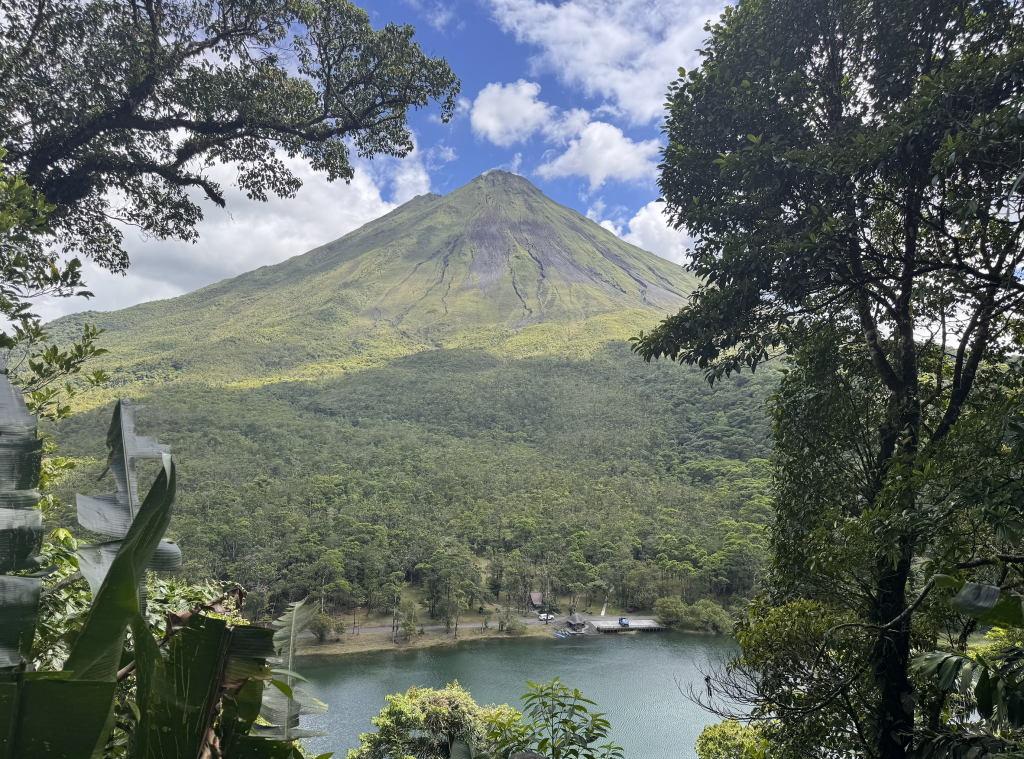
Arenal Volcano presides over La Fortuna, and we went for a closer look. The volcano has been quiet since 2010 but remains classed as active and is closely monitored. We spent a night at the Arenal Observatory Lodge, adjacent to the national park, which contains many hiking trails, including the lava trails of the last major eruption in 1968.
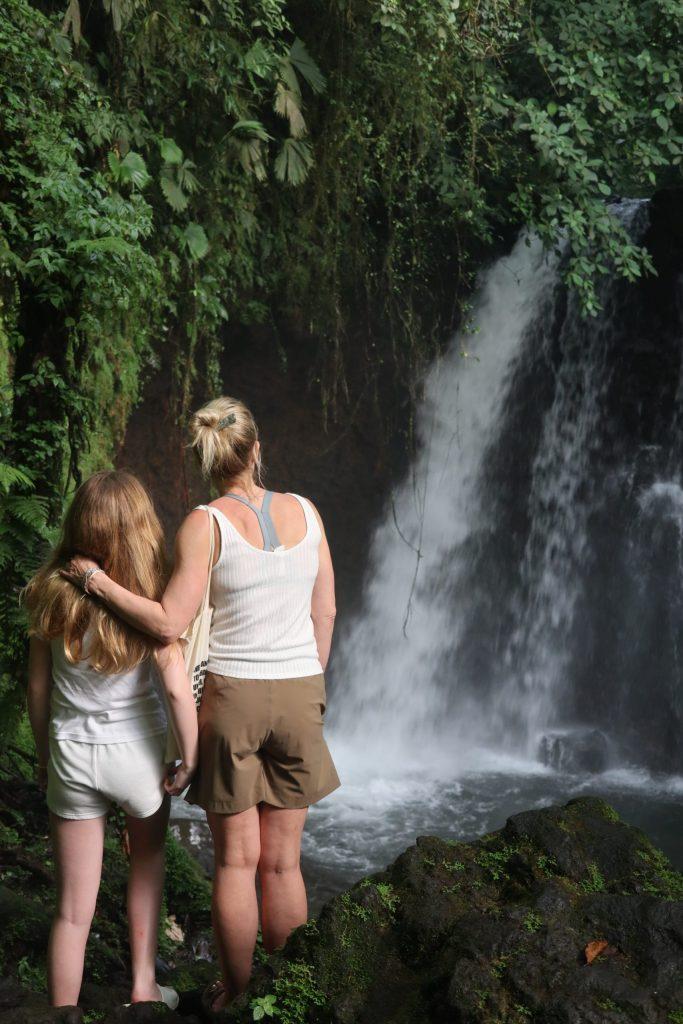
At the Lodge, we walked through the rainforest to Danta Waterfall and paddled amid the spray and glistening moss. Some of us also braved The Nest, a 28-metre-high observation tower with a robust disclaimer at the bottom. We held our nerve long enough to absorb stunning views of Lake Arenal and the volcano, relieved to return to ground level and listen to birdsong from the garden pool and hot tub.
The following day we circumnavigated Lake Arenal, crossing Arenal Dam. Built in the 1970s as part of a hydroelectric project, the dam nearly tripled the size of the lake, making it Costa Rica’s largest. Sustainability is high on the national agenda with more than 95% of Costa Rica’s electricity coming from renewable sources, and the lake remains a significant contributor. It’s also a water-sports destination for windsurfing, kitesurfing, boat tours, kayaking and paddle boarding. If planning to swim, seek local advice as access can be tricky, depth unpredictable and the water choppy.
Leaving the lake, we ascended into the cooler air of Monteverde’s main hub, Santa Elena. The region sits on the continental divide between the Pacific and Caribbean oceans and is an area of incredible biodiversity, with over 3,000 plant species recorded. People come here to experience the misty, ethereal cloud forests where one tree can form a habitat for over a hundred species. Epiphytes – plants that grow on other plants – thrive here, with over 800 species recorded.
The tree canopies teem with life and Monteverde offers some novel ways to get up close, which is how I found myself in Treetopia Park harnessed up ready for a three-kilometre zipline circuit. With ziplines ranging from 140 to 750 metres long, and at some points nearly 100 metres above the forest floor, I was far from my comfort zone but as my children hurtled into the mist across the treetops, I had no choice but to follow.
Treetopia also offers rainforest trails incorporating six hanging bridges – one made of glass – which provides a more sedate immersion into the cloud forest. There are over 400 bird species. Thanks to our guide, we saw a nesting pair of resplendent quetzals. It was only later we realised how lucky we’d been to see these rare birds.
The darting hummingbirds were mesmerising. We watched one near its nest – an incredible structure built using pliable lichen and spiders’ webs. These beautiful birds have shoulder joints swimmers would kill for, enabling quick directional changes and backwards flight.
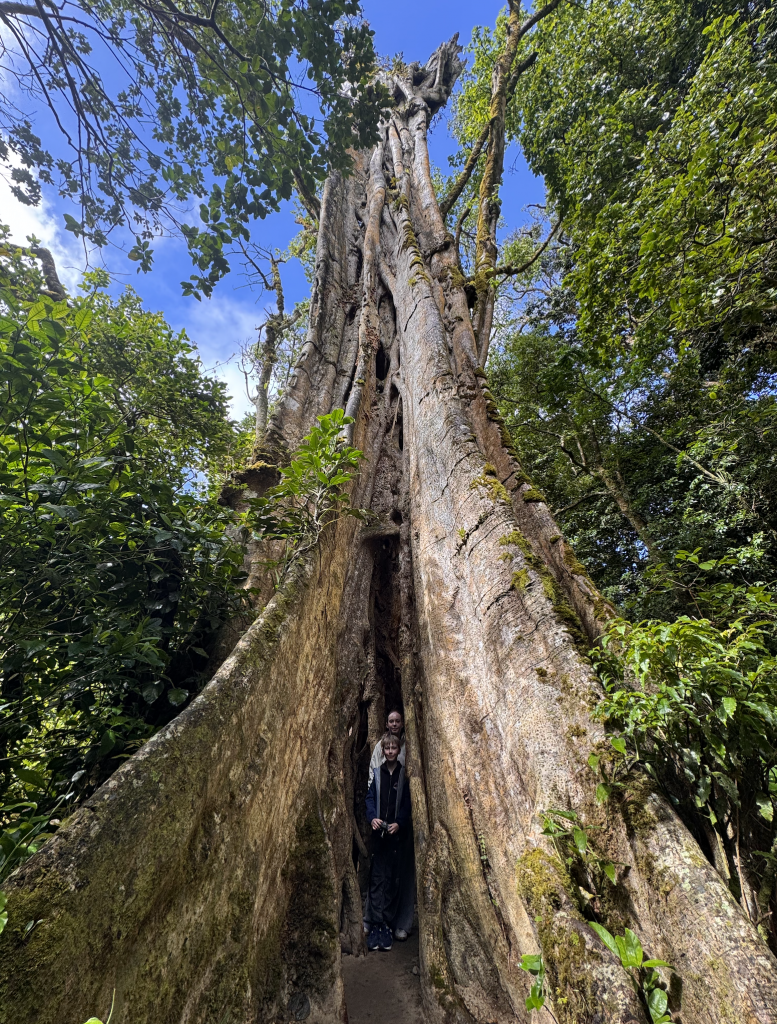
In Monteverde’s Curi Cancha reserve, we experienced a ground-level perspective. Our guide, Jorge, positioned his scope to show us a flowering orchid the size of a blade of grass. It was one of over 450 species found in Monteverde, and without him we would never have seen it. We stepped over tiny avocados discarded by monkeys, stood inside ancient fig trees, admired iridescent jewel beetles and narrowly avoided a terrifying-sounding tarantula hawk wasp.
Puntarenas’ Pacific coast was our next destination, and we broke up the journey with stops at roadside ‘sodas’; small eateries serving traditional food, fresh juices and lemonade with crushed mint.
We passed several kiosks advertising ‘Caldosa’ before pulling over out of curiosity. Ceviché, citrus-cured fish, is a national favourite and Caldosa is the street-food version. We watched the stallholder crush a bag of corn chips and ladle in chunks of white fish in lime juice spiked with fresh herbs and chilli. It was delicious.
Costa Rica’s Pacific coast has some great surfing beaches, and currents and riptides can be strong, so it’s worth doing some research before heading for a swim. We had a brief stay at a beach resort near Jaco with access to palm-studded Playa Blanca. We swam until the sun set, watching out for the red flashes of Scarlet Macaws overhead.
Further south, Manuel Antonio is famous for its national park and diverse wildlife. Even our hotel proved to be a wildlife haven, with iguanas on the walls and a mafia of capuchin monkeys trawling the balconies for snacks.
In the park, we followed our guide, Danny, whose keen eye and scope again revealed a hidden world. We saw sleeping bats, sloths, turtles and nesting birds. And finally – the sea swim of dreams in a calm jungle-fringed bay with pale gold sand. Our two-week trip took us from rainforest to cloud forest to coastal jungle. We left with a real sense of pura vida, a renewed awe for the world – and a lot of coffee and chocolate.

Outdoor Swimmer
Outdoor Swimmer is the magazine for outdoor swimmers by outdoor swimmers. We write about fabulous wild swimming locations, amazing swim challenges, swim training advice and swimming gear reviews.