


I survived: Ana Little-Saña’s story
US marathon swimmer Ana Little-Saña tells us her experience of taking on the Catalina Channel crossing – a swim that landed her in hospital the following day
In July, US marathon swimmer Ana Little-Saña took on the challenging 20.5-mile swim from Catalina Island to the Southern California mainland. But a day later, she was in hospital. Ana’s lungs had partially collapsed during the swim, and she was suffering from a rare condition called subcutaneous emphysema, where air gets into tissues under the skin, causing swelling.
“My presentation was extremely unusual – doctors had not seen it before in long distance swimmers,” says Ana. “It was so unique that they’re writing a medical case study on what happened.”
Ana wants to raise awareness of this injury in distance swimming. She wonders if other swimmers have experienced it but, like her, assumed the swelling was down to something else. We hear her story.
Facing the swell
I spent the days before my swim feeling at peace. I felt so strong and capable, I’d checked the forecasts, and felt like a child waiting for Christmas morning.
Right before leaving for the boat launch, I got a tsunami threat alert on my phone. Are you kidding me? I thought. But, as we were driving to San Pedro, I was reminded of how badly I wanted this, and whatever was going to happen, I made peace with the outcome of my swim.
I’m not a particularly confident swimmer. Strong and capable, but not confident. Consistency builds confidence, I would remind myself throughout training, and I was consistent. Still, I felt like I had something to prove, and all I could think about during the boat ride out to Catalina was failing.
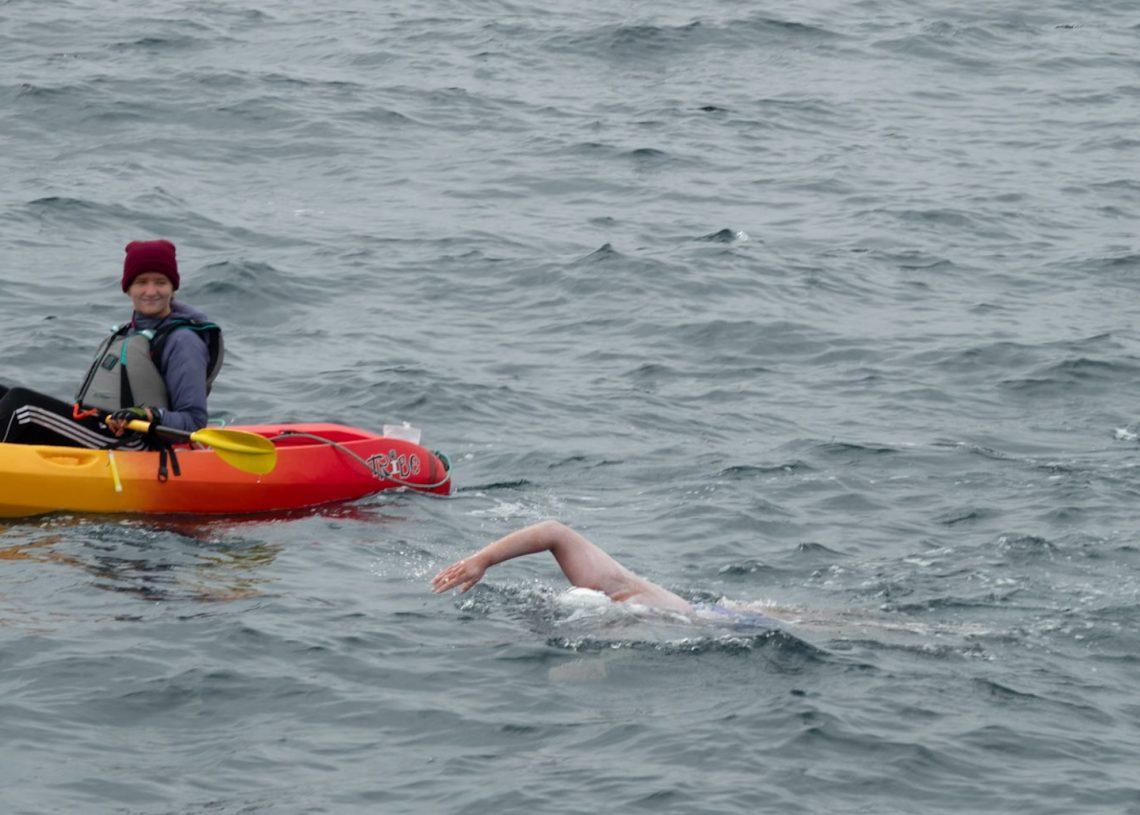
As the boat approached the start, my mood shifted and excitement consumed me. The stars were bright, and the water was beautiful and clear. As I’d pictured in my head a million times, I lowered myself into the water, smiling as I swam towards the beach.
The first hour went by so fast. During my first feed break, I saw a shooting star. The milky way was visible and I saw my crew on the boat watching me. I felt like the luckiest person alive.
At hour eight, I was given a much anticipated nectarine. I flipped on my back in pure joy. As I ate the most delicious nectarine on the planet, I felt like my tongue and throat were swelling.
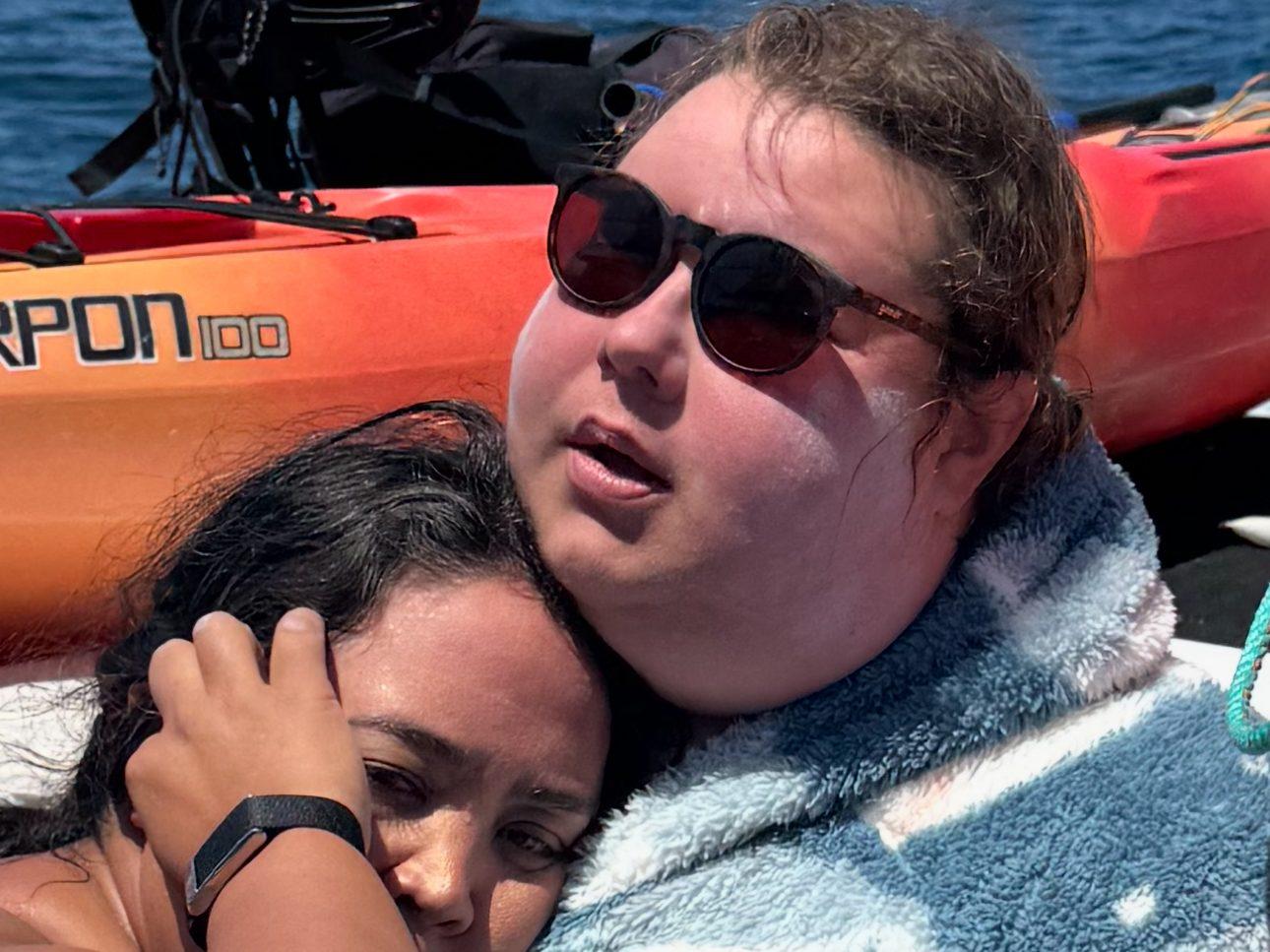
At hour nine, my coach and crew chief offered me my mirrored goggles. She thought I was swimming with my eyes closed, and told me to keep them open. My face was already swelling at this point.
At hour 10.5, I told my kayaker, “my throat is really sore from the salt”, then I stopped talking. This change in disposition was the only hint that something was going wrong – I was still swimming strong. My crew had no idea I was suffering.
People had warned me about the swelling in your tongue and throat. I wondered why people didn’t tell me that ‘salt throat’ feels like you’re breathing through a straw. I was so mad, but all I could do was swim as hard as I possibly could.
At hour 12, I was picking my head up more and more to gauge how far I was from land. When I finally saw the beach, I started crying, and felt for the first time the severity of the swelling in my face.
My crew swam the final 200m with me. My coach told me to take it slow, that I didn’t have to run on to the beach. But I couldn’t help myself. I ran towards the cliff and experienced the biggest rush of euphoria and relief.
Let’s take a photo, someone suggested. I didn’t want to. “I feel so swollen, I look like a freak.”
“You look like a Channel swimmer,” someone responded.
The aftermath
I now know that my lungs partially collapsed during my crossing, and oxygen travelled into my neck, face and chest. It was incredibly dangerous, and I’m lucky I made it across the channel.
Initially, I wasn’t going to share my experience. I didn’t want the narrative of my swim to be about almost failing when I felt so strong and capable. How could I have been in danger when I felt so good?
In retrospect, I realise how much toxicity there is in marathon swimming about pushing through when our body tells us to quit. I should have listened to my body. I should have been honest with my crew about what was going on. There’s no shame in not finishing. There will be always be another swim – until there isn’t.
I hope to learn more about subcutaneous emphysema. I have a theory that this happens to more swimmers, but only the severity of my case caused me to seek medical attention.
I’m very sad that my first channel crossing is so bittersweet. Despite this, I’m so proud of what I accomplished. I learned that in the most difficult and extreme circumstances, my body and mind are capable of so much more than I give myself credit for.
I will not swim tomorrow, but I will live to swim another day.
If you have experienced shortness of breath coupled with swelling during a long-distance swim, Ana would love to hear from you: alittlesana@gmail.com

Outdoor Swimmer
Outdoor Swimmer is the magazine for outdoor swimmers by outdoor swimmers. We write about fabulous wild swimming locations, amazing swim challenges, swim training advice and swimming gear reviews.