Madoc
EXTRA,  FEATURES,  March 2026,  Premium,  Readers' Swims

Never stop exploring

Raised by the sea in Western Australia, Madoc Lanfear Appleby has found challenge, calm and meaning in open water swimming

The ocean has always felt less like a destination and more like home. I was born in Burton upon Trent, but my life really began when my family moved to Perth, Western Australia, shortly after my first birthday. Growing up near the coast meant the sea shaped weekends, friendships and routines. From early swimming lessons in Fremantle to long days at the beach, water has been a constant presence.

At six, I joined Coogee Beach Surf Life Saving Club. That decision quietly set the course for everything that followed. Surf lifesaving taught me how quickly the ocean can change, how to read conditions, and how important it is to stay calm when things don’t go to plan. I’m still an active patrol member, and Coogee remains my local beach, a place I can slip into the water almost instinctively.

When I was nine, I joined swimming squads in Fremantle with the Water Bears. I enjoyed the discipline of training, but when I stepped into competitive swimming at 13, the pool became a tougher place. I was a late developer and smaller than most, and racing between lane ropes felt unforgiving. Progress came slowly, and confidence didn’t always keep pace with effort.

Madoc
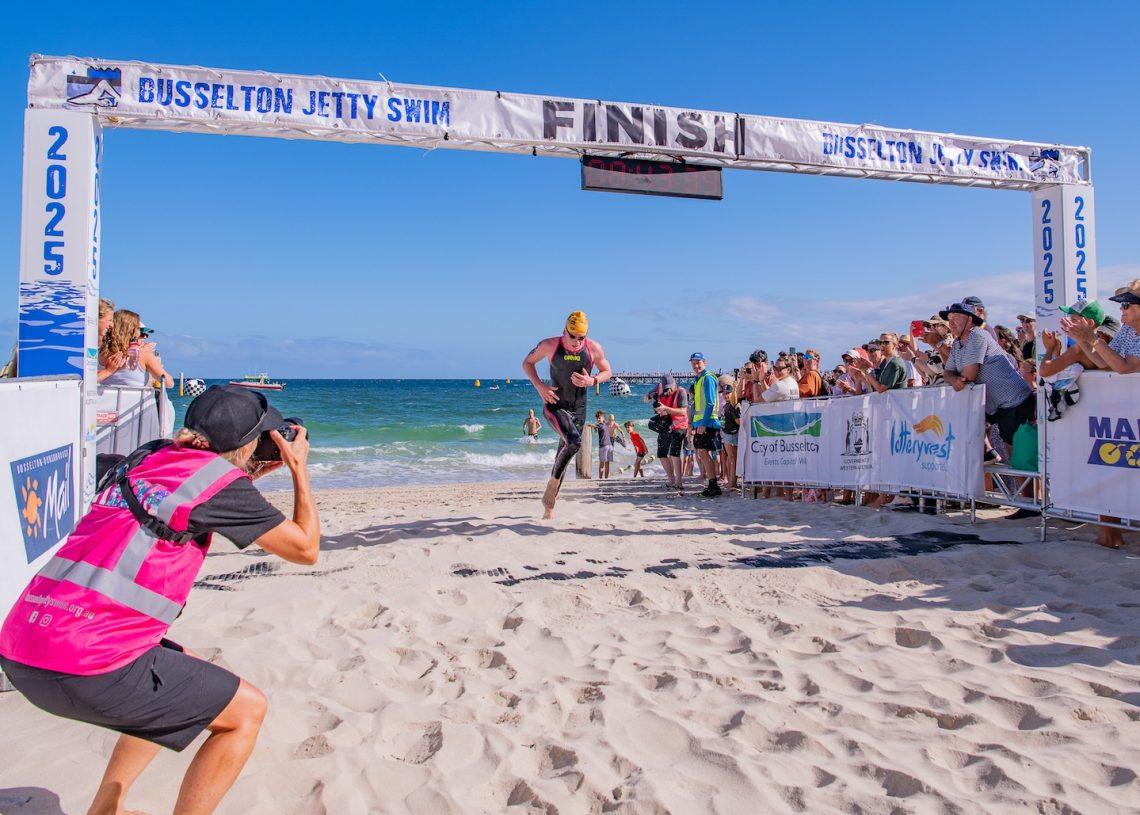
Madoc realised open water was the version of swimming that suited him best

That same year, I entered my first open water event: a 1.25km swim at Leighton Beach. Somewhere between sighting buoys and spotting stingrays sliding beneath me, something clicked. There was space to move, freedom to adapt, and no clock dictating every moment. I finished knowing I’d found the version of swimming that suited me best.

Open water swimming has shaped my life ever since. Through surf lifesaving, nipper carnivals and competitive ocean swims, I was drawn to the challenge of the unpredictable. I love the tactical side of open water: drafting off others, navigating buoy turns, adjusting to swell, chop and current on the fly. It rewards awareness as much as fitness.

In 2021, I took on my first Rottnest Channel Swim, a 19.7km crossing from mainland Perth to Rottnest Island. I swam as part of a team of four with schoolmates Jacob, Matt and Joel, raising money for Sock it to Sarcoma in memory of our friend, Tom, who had passed away from the disease. That crossing was emotional and unforgettable. It showed me what swimming can mean when it’s about more than personal goals.

We returned in 2022, stronger and more confident, and by then the idea of a solo crossing had started to settle in my mind. In 2023, at 17, I completed my first solo Rottnest Channel Swim. The scale of it was confronting. Hours alone with your thoughts, managing feeding, fatigue and conditions, with no one else to lean on in the water. It was relentless, but it was also grounding. One stroke at a time is more than a cliché out there, it’s the only way forward.

Since then, I’ve completed the 25km Port to Pub Ultra Marathon Swim in 2024 and another Rottnest Channel solo in 2025. Each swim has reinforced the same lesson: big distances are built from small, consistent decisions. Keep moving, stay present, adapt when things change.

Madoc
He’s taking one swim at a time, always exploring new places

Away from swimming, I’m currently studying for a Bachelor of Nursing degree and working as a swimming instructor and lifeguard. I enjoy travelling and anything that keeps me near the water, from snorkelling and surfing to boating. I also enjoy hiking, although completing the Yorkshire Three Peaks once was enough to confirm that my strengths probably lie closer to sea level.

In 2026, I’m taking on two more solo crossings: the Rottnest Channel and the Port to Pub, which I’m using to raise funds for FightMND. Although these swims are labelled ‘solo’, they are anything but individual efforts. Each crossing depends on a skilled and committed team: a skipper, paddlers and support crew who manage logistics, feeding and safety. Without them, none of this would be possible.

The cause behind these swims is deeply personal. My Nanna, Rita Appleby, grew up in Bradford, Yorkshire, and had a lifelong love of swimming. In June 2015, she was diagnosed with progressive bulbar palsy, a form of motor neurone disease. Rita was fiercely independent and loved being active and social. Losing the ability to talk, walk and swallow was incredibly hard, but she refused to let the disease take everything. When she lost her speech, she communicated through handwritten notes. She taught herself to use an iPad and social media so she could stay connected with people. Her determination to adapt, to keep engaging with life despite the disease, still inspires me every day.

Training for long-distance swims is demanding. The kilometres add up, motivation fluctuates, and there are days when the water feels heavy. But swimming gives me clarity. In open water, over long periods, my mind settles. It’s grounding, where I find balance. As for what comes next, I’m taking one swim at a time. I want to keep travelling, exploring new places, and discovering new water. If swimming continues to open those doors, I’ll follow it.

Support Madoc’s swim – visit support.fightmnd.org.au

Stay up to date with The Dip, our free weekly outdoor swimming newsletter.

Outdoor Swimmer is the magazine for outdoor swimmers by outdoor swimmers. We write about fabulous wild swimming locations, amazing swim challenges, swim training advice and swimming gear reviews.