EXTRA,  FEATURES,  November 2025,  Premium

Refuge in the cold

Register to get 3 free articles

No spam Unsubscribe anytime

Want unlimited access? View Plans

Already have an account? Sign in

Filmmaker Judy Irving tells Rowan Clarke how cold water provides refuge from life’s biggest challenges

For the past four decades filmmaker Judy Irving has found solace, friendship and joy in the cool waters of San Francisco Bay. Among her fellow swimmers, she also found inspiring stories that tell of the physical, psychological, and spiritual power of cold water immersion.

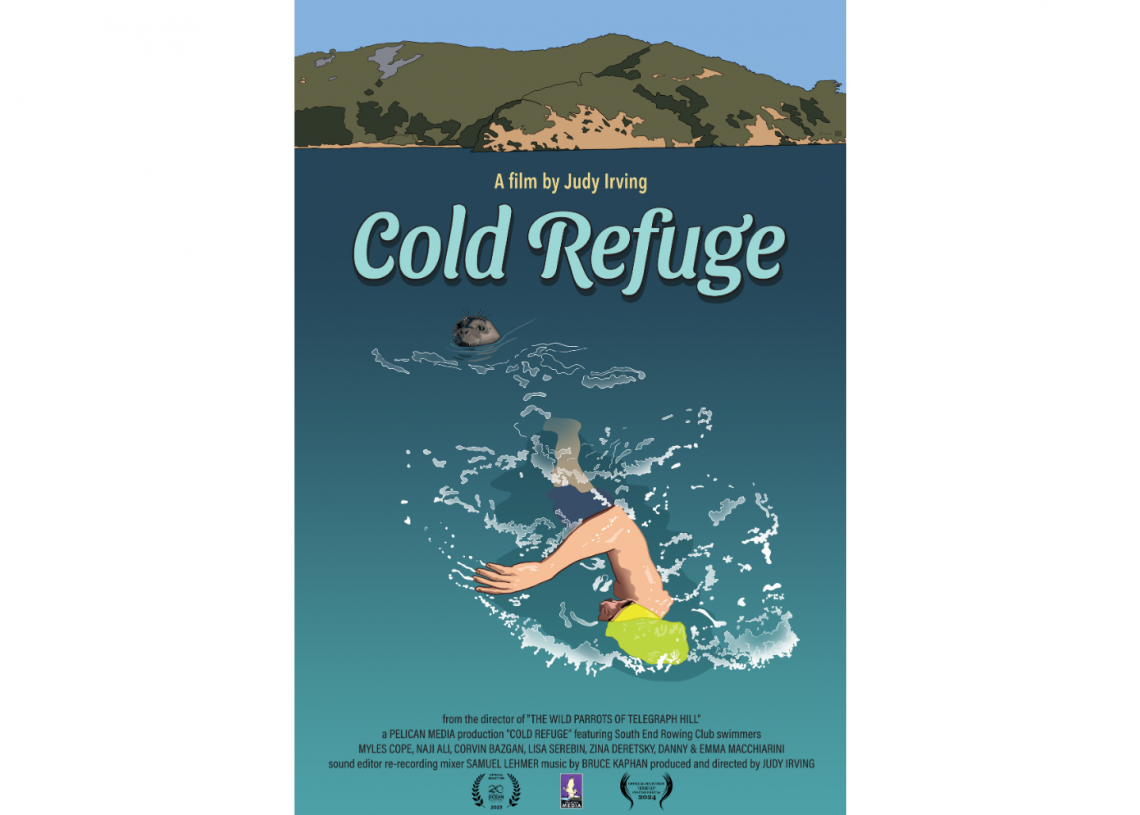
It’s these incredible stories that she brings to life in her most recent feature-length documentary, Cold Refuge. We spoke to Judy about how being in cold water helps mitigate some of life’s most serious challenges.

Stepping into cold water

Standing on the beach contemplating a swim in San Francisco Bay’s beautiful Aquatic Park, Judy is on the lookout for sea lions and harbour seals. If they’re out by a certain buoy or showing interest in a swimmer, Judy says, she gets herself into the water by telling herself that by the time she gets in, the seal will have moved on. This is where Judy’s idea for a film began. As a member of the South End Rowing Club, Judy observed the many ways swimmers encourage themselves to get into water that wasn’t just cold, but full of natural inhabitants, too.

Real swimmers with real challenges inspired Judy’s documentary

“Originally, I was just going to make a humorous little film about how people convince themselves to go into the cold water,” she says. “What do they say to themselves? How do they go in? Some people go in backwards. Some people imagine they’re being chased – anything to get into the cold water. That’s how this project started.” But, as she began to film fellow club members, they told her about other swimmers, like the man with visual impairment who swims tethered to a sighted swimmer, and another who was training to swim from Alcatraz despite being paralysed from the waist down.

“I started thinking, wow, they have real challenges, ongoing challenges much more dramatic than how you get in cold water,” says Judy. “So I switched my focus to people who have hurdles in their everyday lives, and how the cold water doesn’t make those challenges go away necessarily, but mitigates them, makes them more tolerable and gives people joy.”

Swimming over hurdles

The personal stories in Cold Refuge are at once extraordinary and familiar. The family that swims together after a bereavement, the woman with cancer, the attorney with chronic stress. As outdoor swimmers, we recognise both their struggles and the solace they find in cold water; many of us have faced similar hurdles ourselves. And yet watching these stories so beautifully portrayed is a breathtaking reminder of how powerful natural water can be in the most extreme of human struggles.

The film shares personal stories, like swimming with cancer

“A friend of mine lost her beloved grandson to a brain tumour,” says Judy. “The night before his first major surgery, she was so freaked out, she went for a cold December swim at midnight under the full moon. She felt the moon and water permeate her soul and calm her down, so that she could go to the hospital and be calm and supportive. I think many people have a story to tell like that.”

The stories in Cold Refuge are so full of hope. Even in the face of tragedy, fear and loss, each swimmer shows aspiration, optimism and triumph over adversity. Myles Cope, for example, was an athletic 24 year-old when a terrible accident paralysed him from the waist down.

“He had to adapt, and part of the way he did that was to dive off a high fishing pier in San Francisco and swim to train for Alcatraz,” says Judy. “Eventually, he swam from Alcatraz to shore with just his arms. It’s incredible not only how the brain can rewire itself, but also how your muscles can do that, and also just how determined people are to work through their challenges, hurdles, worries and woes.”

Naji Ali battled societal pseudoscience and racial bias before learning to swim

Of course, those hurdles aren’t always physical or even emotional. In the film, Naji Ali explains how he had to battle personal humiliation as well as societal pseudoscience, segregation, inequity and racial bias before he could even contemplate learning to swim.

“People endure so many humiliations, and African Americans have had to learn how to steel themselves to those kinds of horrible things,” says Judy. “Naji is now head coach at a place down the peninsula teaching young people of colour how to swim.”

Refuge in water

The film explores the physical benefits of cold immersion with which we are becoming so familiar. But, for Judy, it’s the spiritual connection that is perhaps the most profound.

“When you’re out there in the world of open water, away from your abstract, digital life, you’re experiencing the world you live in in a way that very few people are doing these days,” she says. “I live on Telegraph Hill in San Francisco, and I can see the bay from my house, and just looking at it, I feel calm. Or if I see pelicans flying over overhead, I feel calm. I think that’s what indigenous folks must know, and why they would be critical of contemporary urban existence. We need more of that connection to the real world that we were born into and that we’re part of.”

Being part of the world, animals within a fragile ecosystem, is a recurring theme in Judy’s work, which stems from her love of the natural world. Her critically-acclaimed film The Wild Parrots of Telegraph Hill is about the relationship between a homeless street musician and a flock of wild parrots; Pelican Dreams focuses on California’s brown pelicans and the people who know them best.

“I’ve always loved animals – my grandfather taught me to love birds when I was about six years old,” she says. “But to be immersed in cold water with harbour seals and sea lions, that’s a whole different story. You realise this is their habitat, they call the shots. I just love the challenge. Every time I go in the water, I think, am I going to get bitten today? It’s always a triumph when you finish a swim and walk out of the water onto the sand and you’re still alive!”

Swimming in a world of wildlife. Photo by Colin Gift

San Franscico Bay is home to all kinds of sea life, including anchovies, rockfish, leopard sharks, sea stars, anemones and, of course, jellyfish. Rather than putting off the swimmers, though, they are a source of conversation.

“People tell each other, either on the beach or in the locker room, watch out for this or that. Or there’s a sea lion out by a certain buoy or a harbour seal nudging a swimmer right now,” says Judy, whose film contains amazing footage of these awesome aquatic mammals.

“I can feel some kind of alignment when I go in the water, and I’ve been in there for a while,” she says. “We all started as sea creatures, and this reminds me that we’re not so different.”

Always changing

Growing up on the east coast, Judy learned how to swim in open water, swimming in the Long Island Sound east of New York City. Despite having swum outdoors all her life, though, she found the experience of filming Cold Refuge life-changing.

“I realised that it’s incredibly powerful for people, and I respect my movie stars who are in Cold Refuge so much,” she says. “I think they taught me about how we can meet challenges and live full lives no matter what nature is throwing at us. Cold water swimming has broadened my appreciation for the human spirit.”

For Judy, the only weird thing about how powerful and wonderful it is to swim in cold water is non-swimmers’ disbelief that we do it.

“It is growing in popularity, but it’s still a niche activity here. If you interview folks on the street, and even in San Francisco where everybody supposedly likes to stay hip and fit, they say, Oh no, I wouldn’t try that, there are creatures in there and you can’t see the bottom,” she says. “Most people who don’t swim in cold water think that we’re a cult. They think, there she goes again, talking about the cold water.”

But, even if you were one of these nay-sayers watching Cold Refuge, you might start to understand the draw. And, for outdoor swimmers well versed in the power of cold water, the stories in this beautiful, thoughtful and deeply personal film are nothing short of astonishing.

Cold Refuge is available to stream on Amazon, Kanopy and Apple TV+ pelicanmedia.org

Stay up to date with The Dip, our free weekly outdoor swimming newsletter.