


Swimming seeps into British culture
Ella Foote dives into a new exhibition celebrating swimming, f loats through a lecture about faith and learns about the history of private swimming pools. It seems our love of swimming has sent ripples into all corners of art, culture and lifestyle
Outdoor swimming as a trend has gone far beyond sport or wellness; it has now trickled out of books into museums, exhibition spaces, theatres and music. In recent years there has been a boom in swimming books, some telling us how to do it and while others share personal stories of achievement or discovery. Outdoor swimming has been seen in art, films, plays and political acts. It has started to shape and inspire creative expression and become part of the fabric of British life. If a television show isn’t about swimming itself, characters will plunge into cool water as part of their everyday life; even a recent Paddington Bear film featured swimming across the English Channel.
As a passionate swimmer who gets to slip into a swimsuit almost every day, I love it. Seeing others find joy in the world of water and all the endless connections is what feeds this magazine and our community. It means friends send swimming-themed cards and gifts on birthdays and daily there is something new happening in swim circles. Of course, it isn’t all sunshine and clear water, I am tired of answering questions about sewage and bored of the change robe banter but all that can fade away when submerging into the next swimmy thing.
Making a splash
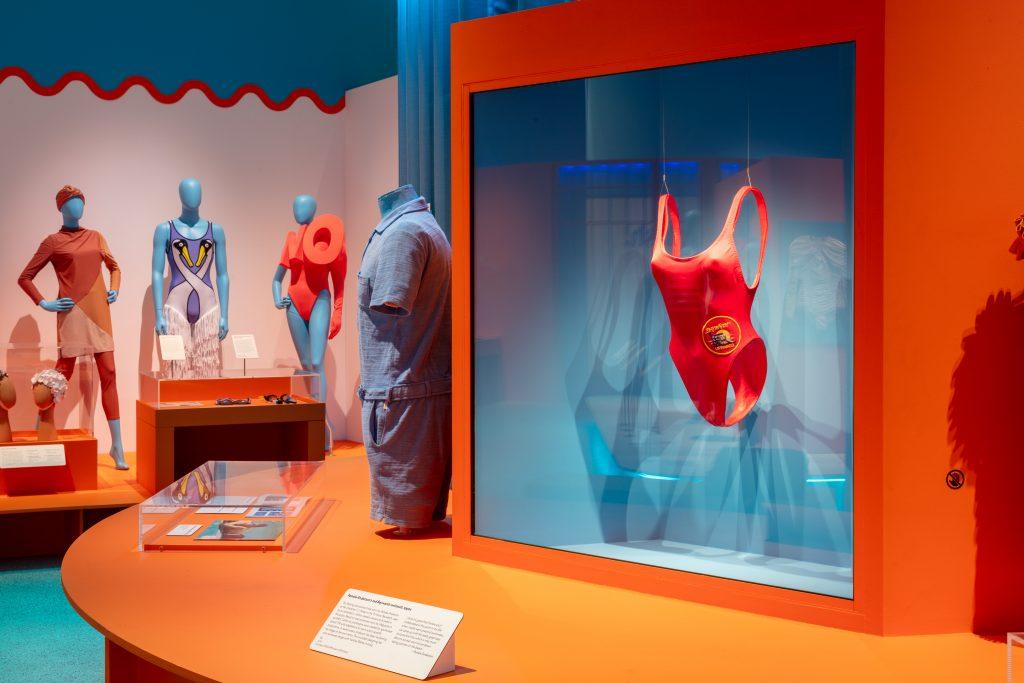
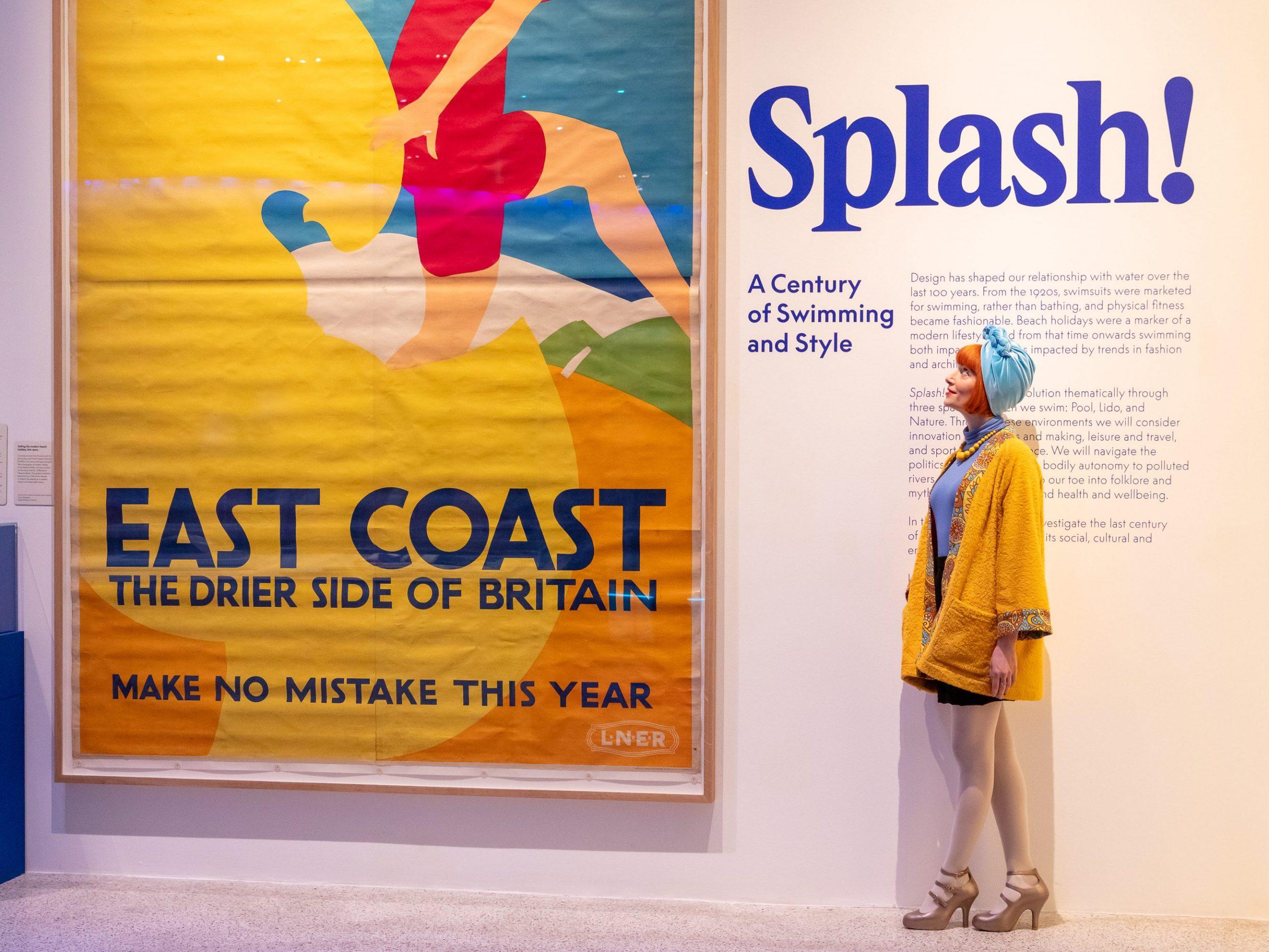
This summer the Design Museum’s major exhibition is all about swimming. Splash! A Century of Swimming and Style, is an examination of our enduring love of the water over the past 100 years. It’s a joyful, colourful and remarkable collection of over 200 objects from Pamela Anderson’s red bathing suit from Baywatch to men’s Speedos from the 1980s. I particularly loved a pair of bathing slippers from the early 1900s. As well as fashion, swimsuit design and lido love, there are sporting objects like an Olympic gold medal awarded in the 1924 Paris games. There is a piece of history or point of interest for all corners of swimming, including outdoor swimmers.
The exhibition was curated by Amber Butchart who specialises in the cultural and political history of textiles, dress and design. She is often known for her work on the BBC’s Great British Sewing Bee and, more importantly, loves to swim in her local tidal pool in Margate.
“I am a really terrible swimmer,” says Amber. “But I love being in the water and I swim all year around in my local tidal pool. It is perfect for me because it is safe and I don’t need to worry about being swept out to sea. I explore tidal pools a little in the exhibition and find the idea of them being a combination of human intervention with nature really interesting.”
Like many swimmers, Amber finds swimming helps her perspective. “It completely centres me,” she says. “If I haven’t been in the sea for a while I can start to feel a bit scratchy. When I am in the water, I am part of the horizon and everything falls into perspective. In winter you get this huge endorphin rush but generally, I guess I am more of a Victorian bather than swimmer. I won’t be out there in a wetsuit, but in a bikini and neoprene gloves and socks, floating around and paddling.”
Amber has always been interested in the link between design and the seaside, seeing the seaside as a fashionable space. In 2015, Amber wrote a book called Nautical Chic, which explores the relationship between the sea and our wardrobes. “I looked at fisherman, sailors, pirates and more to see how their clothing influenced the way we dress,” says Amber. “Then during and after the pandemic I was fascinated how there was a huge upsurge in outdoor swimming, and I found myself reading classic swim books like Waterlog. With the new interest in swimming and the tensions around lifestyle items like a DryRobe, it seemed like a ripe and extraordinary time to look at swimming through the lens of design.”
It is the first time Amber has exhibited at the Design Museum and her main hope for all those that visit is they leave wanting to get into some water. “We uncover some really interesting stories in the exhibition,” says Amber. “Especially around men’s swimwear. There is a section of the display that is called ‘Subverting the Gaze’ where we look at a Soho Boutique called Vince, which was opened in the 1950s by a man called Bill Green. He was a photographer for Physique magazine and at a time when homosexuality was still illegal, he created these posing pouches that double up as swimwear and they are so popular that he ends up selling them. He was hugely influential in Carnaby Street and there was a real shift in menswear. This leads into the work of designer Peter Travis who worked for Speedo in the 1960s and he also had this aesthetic appreciation of the male form, which led to what we know as Speedos today. It was a interesting story to research and share.”
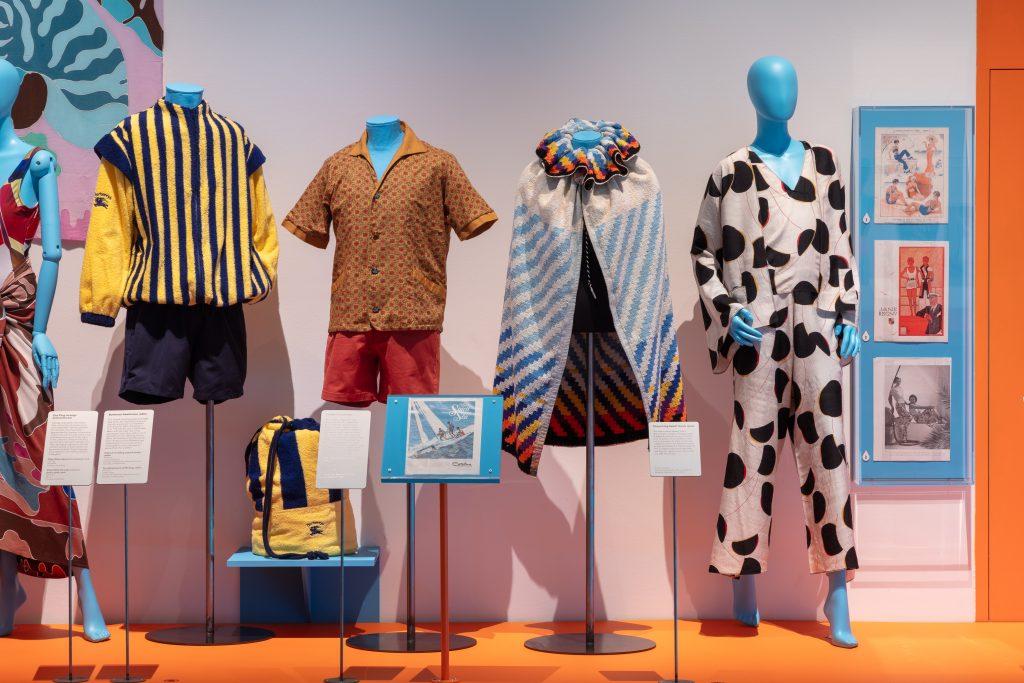
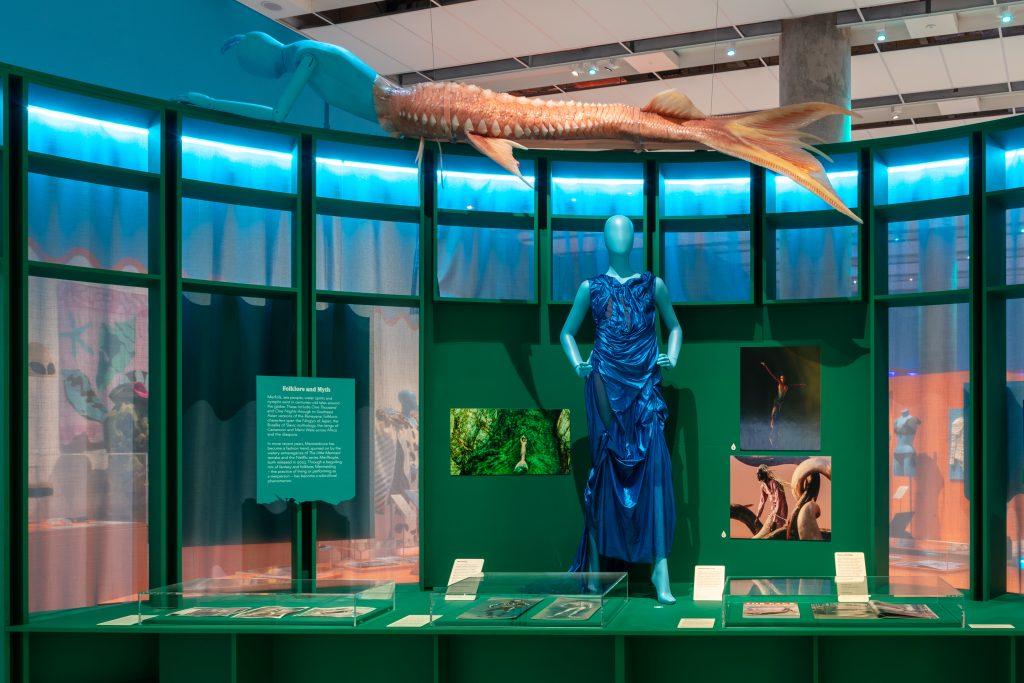
The exhibition begins in the 1920s when swimwear began to be marketed for swimming rather than just Victorian bathing and beach holidays became popular. There are three in-depth sections that reflect the pool, the lido and nature. It dives into the detail of our relationship with swimming as well as sports performance, architecture and folklore. “I love the mermaid elements,” says Amber. “I had to go to Florida for work and I became obsessed with going to see the Weeki Wachee Mermaids, a roadside attraction that has been operating since the 1940s so being able to include mermaid-lore and stories I just loved.
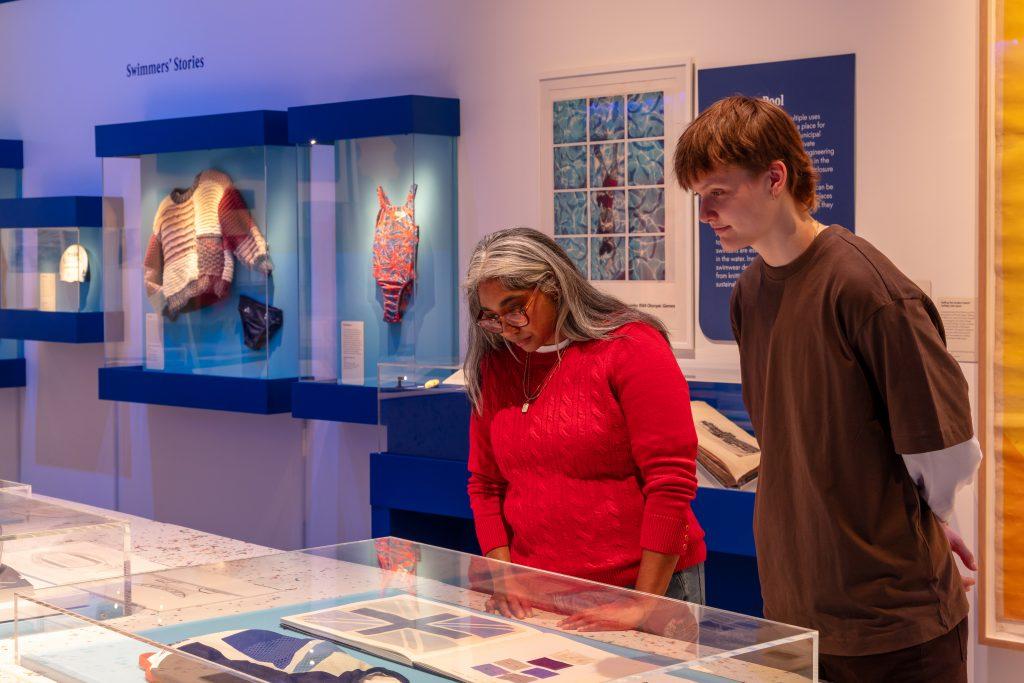
My favourite bits of the show are about our social history, looking at the rise of mass tourism in Britain to places like Lowestoft and Blackpool. But also the Margate rental swimsuits in the 1920s, which is social history that has been forgotten. It meant if you were visiting the seaside in the 20s and you either forgot or didn’t have a swimsuit, you could rent one from the council. It is an idea that is alien to us today!”
South of the river
Meanwhile, on the south side of the River Thames, passionate swimmer and founder of the Garden Museum Christopher Woodward hosted an evening looking at The Swimming Pool Garden. “I have this beautiful fantasy in life to be a swimming pool correspondent in the way you have art critics,” says Christopher. “I dream of just travelling from garden-to-garden writing about water and the shape of a swimming pool.”
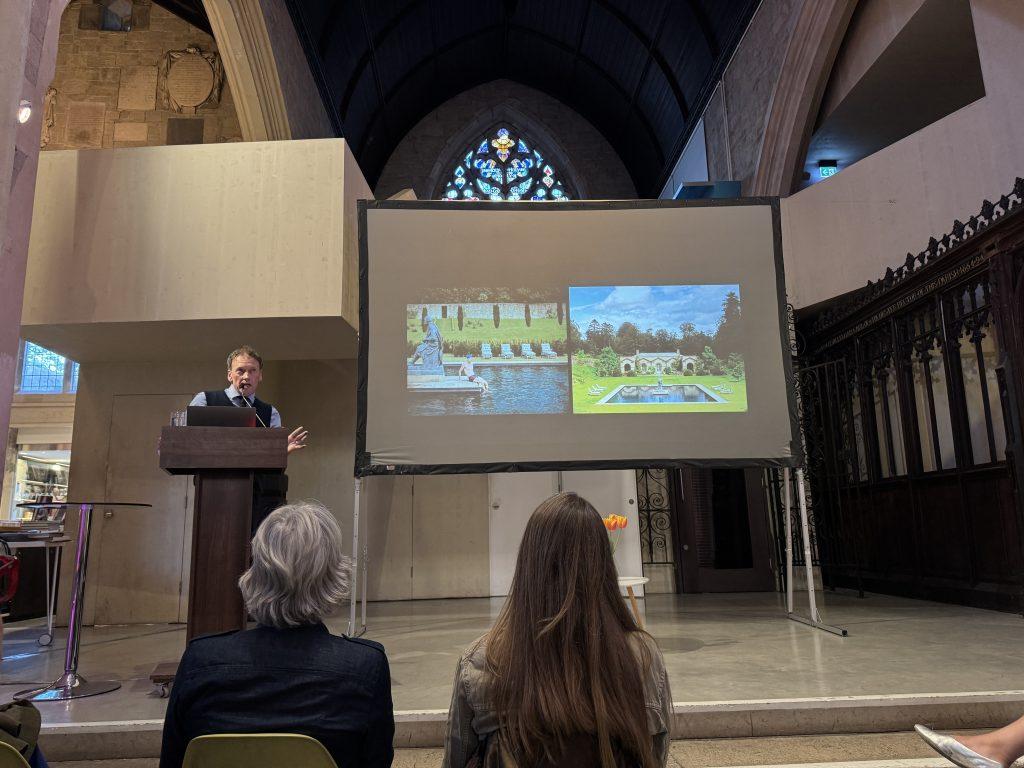
The evening was a joyful and eccentric ride through garden design, love of the water, love of pools and architecture. I am not sure how many in the audience were swimmers or gardeners (or both), but I did bump into fellow swimmer and artist Rosalind Hobley. The talk was a delight as it focused on a Golden Age of swimming pool design and desire to have a pool of one’s own in the 1930s. It celebrated a time when swimming was less about changing robes and sewage but a “more elegant affair”. Christopher explored the historic tanks and asked whether people were swimming or bathing and the distinction between. He is a man who loves to lap up lengths in a pool and the evening was an indulgent examination and fascinating history of pools in private gardens.
Christopher’s insightful and academic look at swimming reminded me of a lecture I attended last autumn at Gladstone’s Library, which we featured in our March issue. The lecture, Liquid Faith: heeding the Wild Swimmers, was presented by The Reverend Professor Ian Bradley, who has continued to explore the subject, recently hosting a weekend looking at how the boom in wild swimming might have a message for churches. Ian’s lecture compared swimmers gathering waterside like those gathering for Sunday service in church; in fact, the most recent reported figure of people swimming outdoors outnumbers those who attend church. Ian has written 35 books about spirituality of water and so his intellectual and spiritual interest in the “wild swimmers” was both captivating and amusing as a swimmer myself.
As swimming continues to captivate imagination and inspire people from artists to academics, us swimmers will continue to swim, whatever the weather and whatever the conditions. I guess there is no such thing as “just swimming.”
Splash! A Century of Swimming and Style is on at the Design Museum, London until 17 August. designmuseum.org

Ella Foote
Ella is renowned outdoor swimmer and journalist. As well as leading the editorial, digital and experiential outputs for Outdoor Swimmer she is also Director of Dip Advisor, a swim guiding business helping people enjoy wild water. Ella also teaches swimming to children and adults, is an Open Water Coach and RLSS Open Water Lifeguard.