

SwimSafe: creating confidence in open water
Vivienne Rickman has been working with the SwimSafe team in North Wales and shares how programs like this help children to stay safe in and around open water
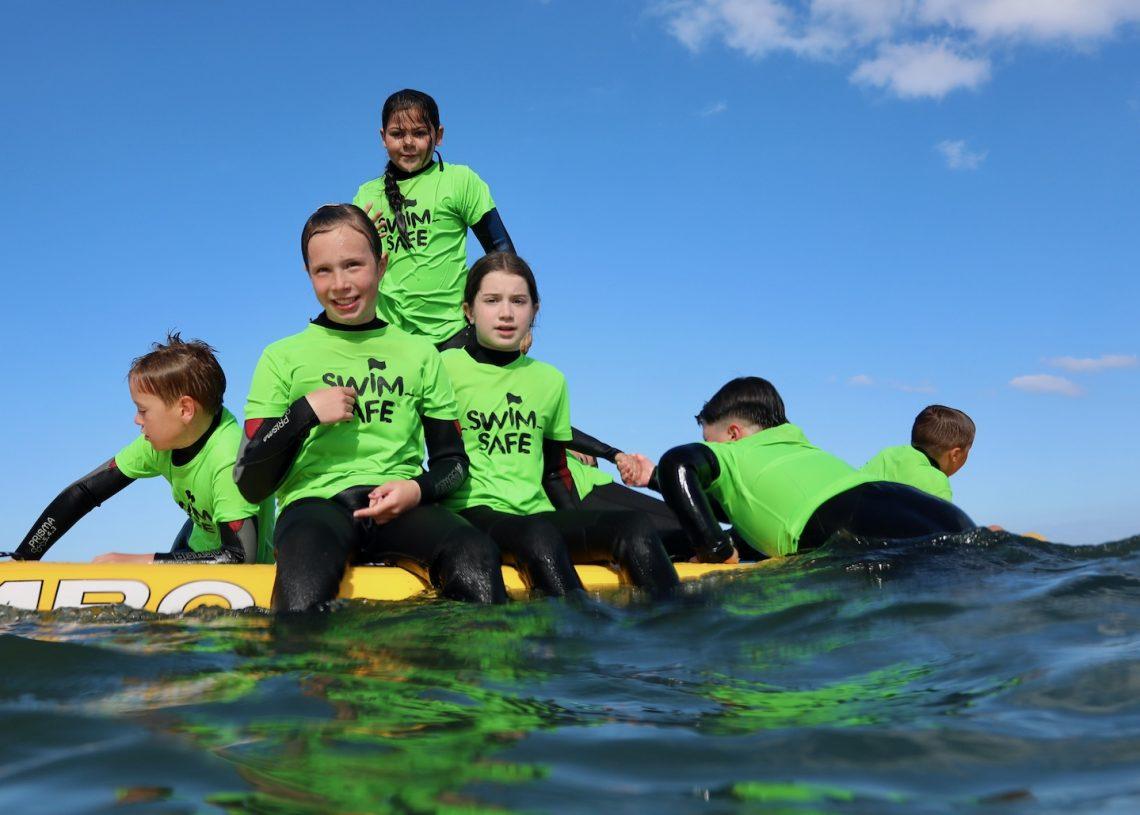
The components of a warm summer day at the beach are unmistakable – the rhythmic sound of waves breaking on the shore, gulls overhead, and the laughter of young people splashing at the water’s edge. Porth Eirias, in North Wales, is home to a beautiful sandy beach and is often busy with families enjoying the coast. Yet for the past few years, throughout the summer and well into autumn, it has also become a vital place of learning, as local children take part in SwimSafe, a nationally recognised water safety programme.
Launched in 2013 by Swim England and the RNLI, SwimSafe aims to help children learn how to stay safe in and around open water before they might ever need to be rescued. The programme focuses on supporting young people with the knowledge, skills and understanding to manage risk safely, giving them the confidence to make informed decisions outdoors. It offers children the chance to build confidence and lifesaving skills, learning directly from real conditions with support from qualified instructors.
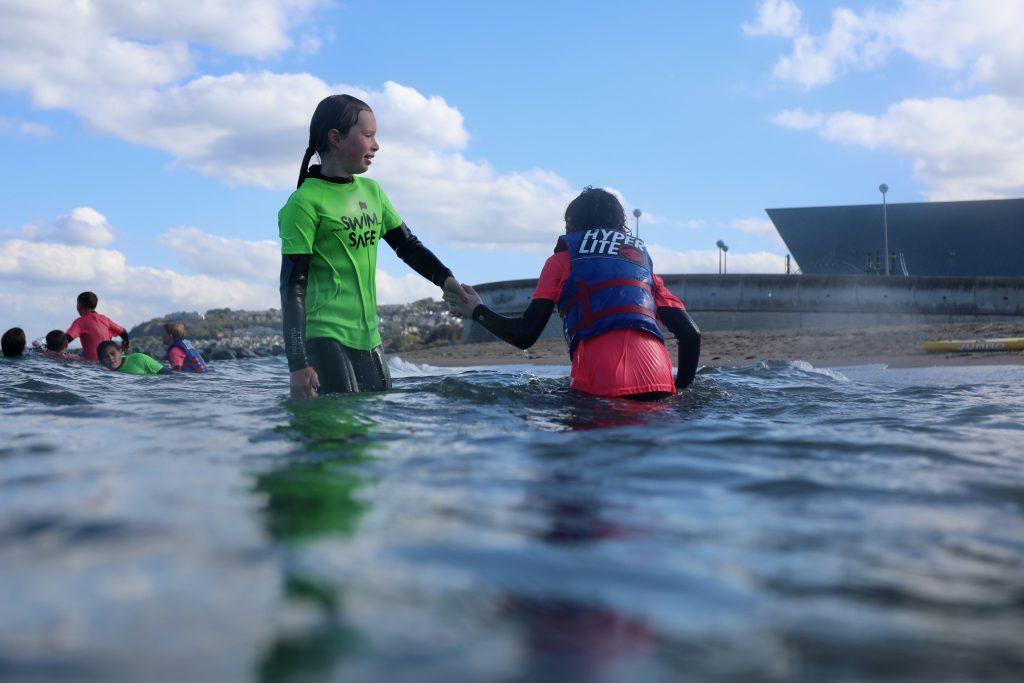
I joined the Ffit Conwy Leisure Development SwimSafe Team last June, delivering the programme at Porth Eirias in partnership with Conwy County Borough Council, Swim England, Swim Wales and the RNLI. The team brings together an impressive breadth of experience, including watersports instructors, swimming teachers/coaches, and beach lifeguards. This diverse expertise means the programme is practical, and grounded in reallife experience of the coastal environment.
“Swimming outdoors is completely different from swimming in a pool. The water is cold, visibility can be poor, and conditions change constantly. Our goal is to make sure children don’t just know how to swim, but understand risk, recognise danger and know exactly what to do if something unexpected happens.”
Why outdoors?
Outdoor swimming has surged in popularity in recent years. Lakes, rivers and beaches across the UK are busier than ever, and young people are naturally drawn to the freedom, excitement and sense of adventure that open water offers. The joyful laughter heard during SwimSafe sessions is testament to that attraction.
However, most children still learn to swim almost exclusively in indoor pools. These environments are warm, calm and predictable, with static depths, clear visibility and constant lifeguard supervision. While pool swimming is great for developing technique and water confidence, it does not prepare young people for the complex realities of outdoor water.
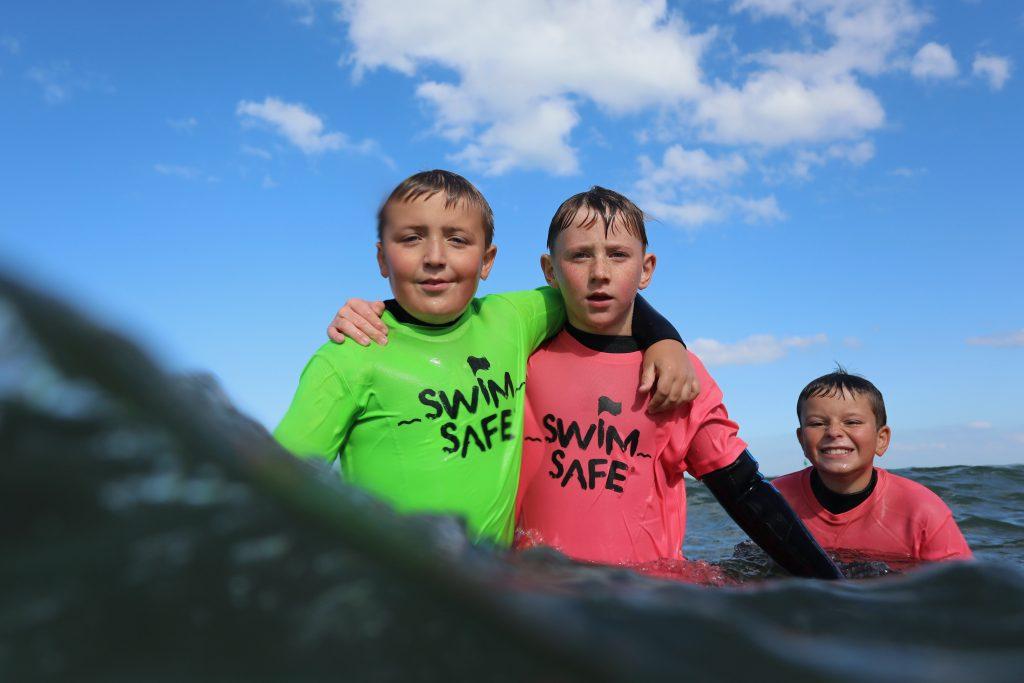
SwimSafe exists to bridge that gap. The programme focuses on staying safe in open water, where tides, currents, wind, waves, temperature and environmental factors are constantly changing. Without an understanding of these conditions, even strong swimmers can find themselves at risk.
Young people are often missing the knowledge they need to assess danger, understand how multiple risks can combine, and take action to help themselves or others. SwimSafe places this understanding at the centre of learning, having knowledge can transform danger into a managed risk.
On dry land
At Porth Eirias, Ffit Conwy runs SwimSafe sessions for local schools; they are free, removing financial barriers that often prevent access to outdoor safety education. Each session combines practical water experience with structured learning on the beach itself. The emphasis is not on controlling the environment, but on understanding it and developing respect for it.
Before entering the water, children take part in interactive learning covering:
Weather and forecasts: Where to find reliable forecasts, how to read them, and how wind strength and direction affect swimmers. Particular attention is given to offshore winds and how they can carry swimmers away from shore.
Tides: What they are, how to find tide times, and how tides reshape the beach and sea throughout the day. Children learn to connect the tide times to visible changes on the beach.
Rip currents: What they look like, how they form, and how they behave, as well as why swimming against a rip is dangerous.
Cold water shock: What happens physiologically when cold water hits the body, how breathing is affected, and how to control panic.
Float to Live: The RNLI’s simple but lifesaving technique of floating on your back, calming the breath, and conserving energy.
Natural and man-made hazards: Including submerged rocks, steep drop-offs, debris, jellyfish, how different open water venues differ and how to find up-todate information about pollution or sewage outflows.
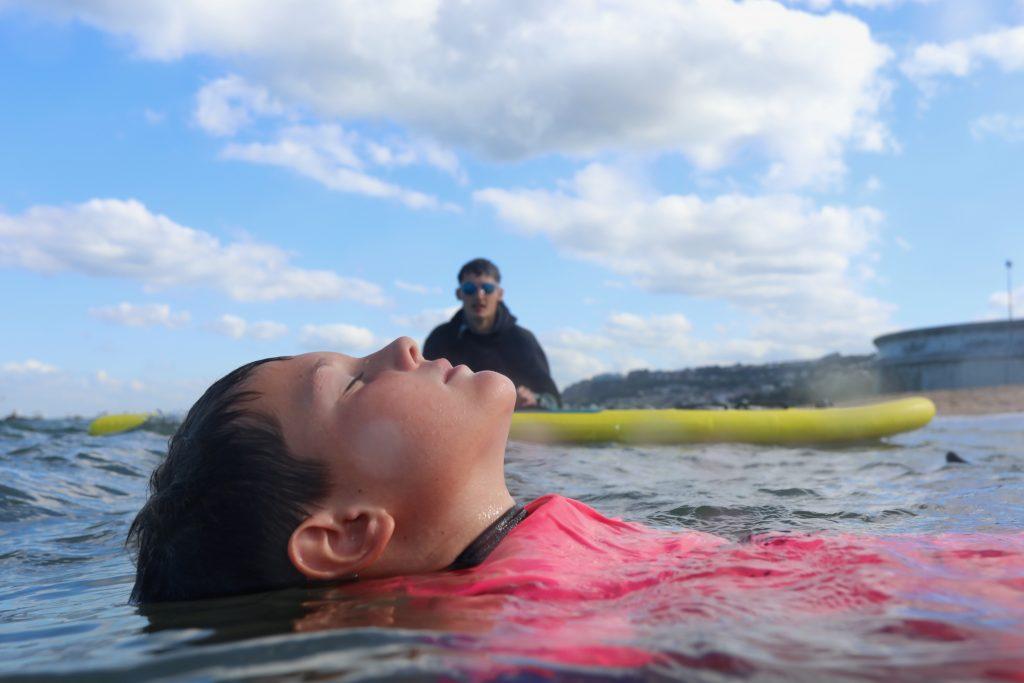
Crucially, children are taught that risks rarely exist in isolation. Cold water, wind, waves and currents often overlap, increasing risk if they are not recognised early. SwimSafe sessions are structured to ensure young people understand how risks combine, and how to respond when things don’t go to plan.
In the UK, most drowning incidents occur when people intentionally enter the water but misjudge conditions, panic, underestimate cold water, or attempt to rescue others without appropriate skills. Teaching young people to recognise these scenarios before they experience them builds awareness that can prevent tragedy.
Into the sea
Once changed into wetsuits, booties and rash vests, sessions move into the sea. For many young people, this is their first experience of swimming outdoors. Even with wetsuits on, their reactions make it very clear just how cold the water feels. “That moment when the cold water hits your chest, that’s where learning really begins; it’s when everyone understands why we talk about cold water shock and controlling your breathing.”
In the water, young people practise a wide range of skills, including:
Safe water entry: Learning how to approach waves and check the seabed beneath their feet.
Cold water acclimatisation: Entering slowly and regaining control of breathing.
Floating: Using the Float to Live technique to stabilise the body.
Treading water: Conserving energy while remaining visible.
Raising the alarm: Learning how to call for help clearly and effectively.
Swimming in the sea: Understanding how buoyancy, wetsuits and water movement change technique.
Survival strokes: Swimming strokes that focusing on staying calm and conserving strength.
Choosing safe exits: Always keeping an eye on the shore, reading wave patterns, and sandbanks before leaving the water.
It’s important, that once young people understand hazards and risks, they are able to practise what to do when something goes wrong. We give them a range of to scenarios to explore both on land and in the water, such as…
What to do if caught in a rip current? Don’t fight it. Float, regain control, then swim parallel to the shore.
If exhausted or panicking? Float to Live. Conserve energy. Call for help.
If a friend is in trouble: Do not enter the water. Call 999. Shout to them to float on their back.
Although these scenarios may be hypothetical, the sea reinforces them. Children feel water pulling at their legs, experience uneven footing, notice how wind affects their movement, and they may be feeling the cold gradually effecting their energy. It’s a very practical lesson in managing risk.
Swimming where they live
This autumn, when Ysgol Pant Y Rhedyn faced transport challenges that would have prevented pupils attending sessions at Port Eirias, the SwimSafe team adapted by taking the programme directly to the school’s local beach at Llanfairfechan.
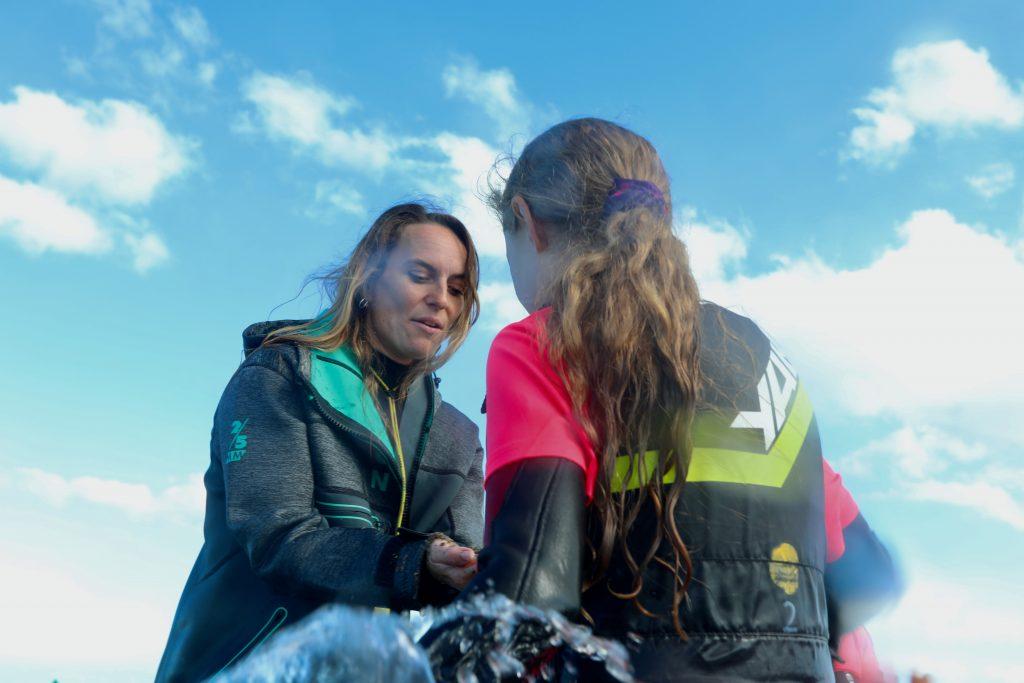
Delivering SwimSafe in the environment where children actually swim with their friends after school and during holidays, made the learning even more relevant. Young people learned about the specific hazards of their own beach, including the risks around access points, how the tide could leave them stranded and how the direction of the wind could effect them in the water.
Over two days, members of the local community stopped to watch, many expressing appreciation and thanks to the team. Their reactions highlighted something important: communities recognise the value of children being both safe and having access to swim outdoors.
The right to swim outdoors
For generations, swimming outdoors was a part of childhood, especially in coastal communities. However, tragic headlines, and increasing concerns about safety have unintentionally restricted young people’s access to water.
While the risks are real, keeping children away from rivers, lakes and seas does not make them safer, it leaves them unprepared. We hear consistently that research shows outdoor swimming supports mental health, builds resilience, aids independence and deepens respect for the environment.
“Young people deserve the right to swim, not just in warm, predictable pools; they deserve the right to understand risk, make informed decisions and handle difficult situations independently. With SwimSafe, they practise these skills with experienced professionals in the water alongside them.”
Impact across the community
As we looks ahead to the coming year, Outdoor Activity Development Officer Roger Pierce reflected on the programme’s impact:
“We can look back knowing we’ve helped 900 children from 30 schools, as well as many more through holiday sessions, understand that open water needs respect but is also something to be enjoyed. Learning these skills early builds confidence and encourages a lifelong connection to the coast.”
Parents and teachers frequently report that children return home more aware, more confident and more thoughtful about decisions around water. Some children even pass their learning on, teaching siblings and parents about tides, rip currents and Float to Live.
Risk cannot be removed from outdoor environments. But it can be understood, respected and managed. And if just one child remembers to Float to Live, to call for help rather than panic, or to check which way the wind is blowing before entering the water, then SwimSafe may already have saved a life. Ultimately, SwimSafe is about more than water safety. It is about empowerment. It is about ensuring young people have the skills they need to enjoy the freedom of outdoor swimming, safely, confidently and for life.

Outdoor Swimmer
Outdoor Swimmer is the magazine for outdoor swimmers by outdoor swimmers. We write about fabulous wild swimming locations, amazing swim challenges, swim training advice and swimming gear reviews.