


When swimming erases memory
Dr Mark Christie reports on the strange phenomenon of Transient Global Amnesia (TGA) in open water swimmers
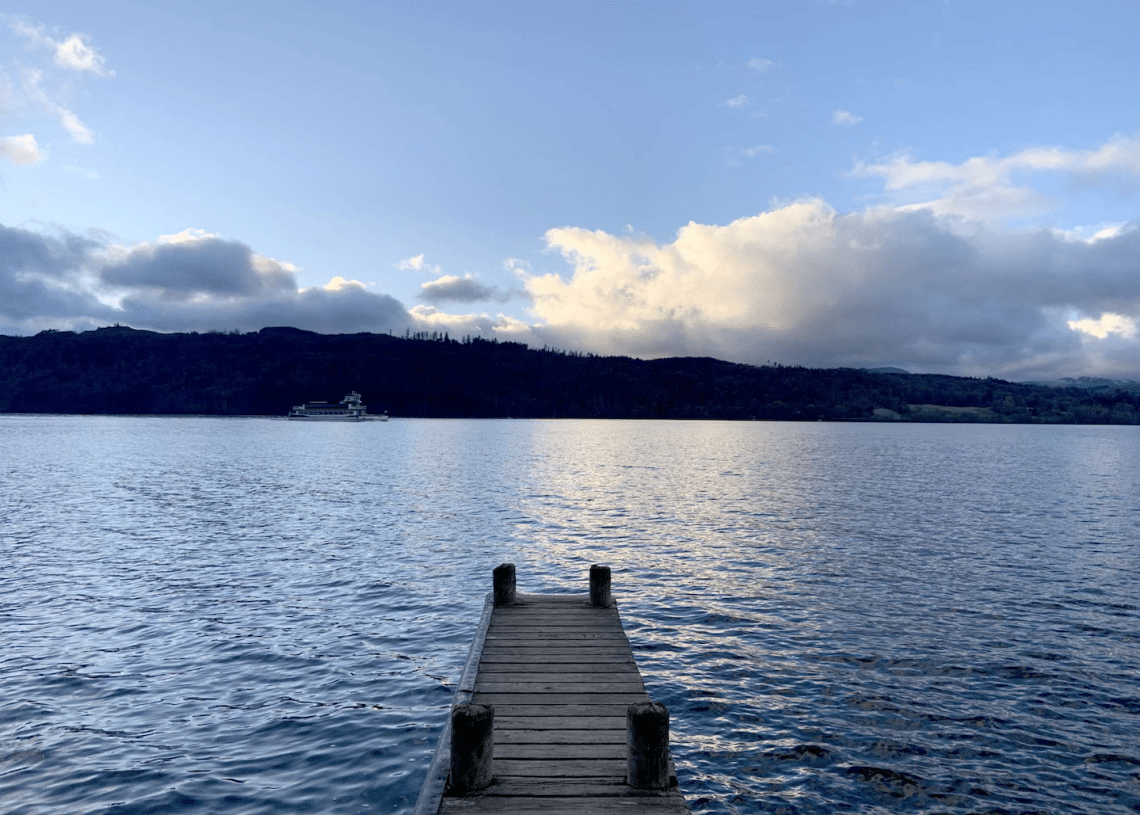
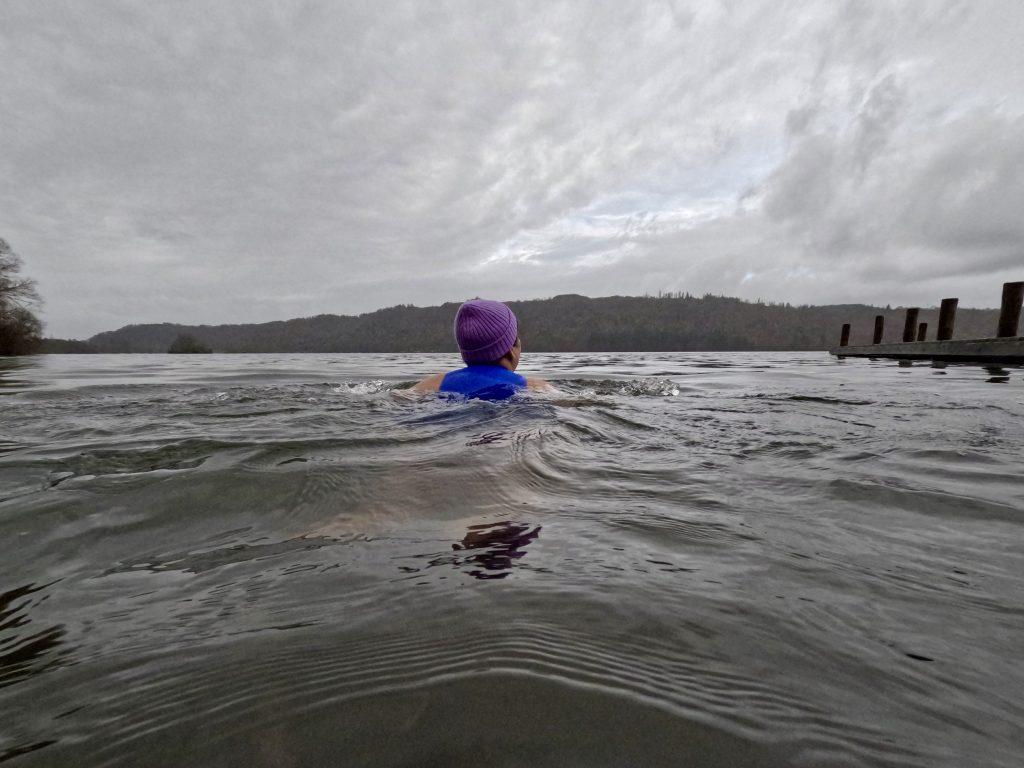
A dull, if mild, early December day. Swimmers and dippers were already gathering at the shore to go into Windermere’s bracing waters. But Beth was running late. Grabbing her kit from the car, she dashed across to meet her friends and hastily changed. Now attired in her usual swim costume, she proceeded to have a dip in what was considered a water temperature around 7-9ºC – “cold, but not freezing cold,” said Beth. However, after a short while she had an inkling she should get out. That’s where her memory gets rather foggy, even fragmented – seeing her kit bag on the shore, she wasn’t sure if she’d been dipping, or was about to dip.
Wind forward 20-25 minutes, and she became aware she was sat in the on-site café – which she recognised, even if she couldn’t figure how she had got there – where fellow Blue Tit swimmers were monitoring her behaviour. Fellow swimmer Daisy described her as ‘calm’ if ‘confused’ as the friends explained what had happened, and, importantly, arranged for a family member to collect her. Beth asked lots of questions (e.g., “why am I here?”, “how did I get here?”), as she gradually tried to make sense of her situation.
Fortunately, she quickly recovered – within seven hours – and sought medical attention.
So what had Beth experienced?
Well, whilst open water swimmers are familiar with cold shock, after-drop and hypothermia risk that can follow immersion in cold water, a small and emerging body of evidence suggests that, in rare cases, cold water swimming may trigger something perhaps far more unsettling, and even mysterious: Transient Global Amnesia (TGA).
Within academic circles, TGA has been noted in some other contexts, but its association with the sport of open water swimming has hitherto been rarely explored. Intriguingly, TGA most commonly affects adults aged between 50 and 80 years, with most at risk in their 70s (Nehring et al., 2024) – a point of interest given that many open water swimmers and dippers also fall within this age bracket.
Essentially, TGA is a sudden and temporary disruption to memory formation. During an episode, a person can remain physically capable, but show signs of confusion and disorientation, repeatedly ask the same questions and struggle to recall recent events. Both ‘anterograde’ – inability to form new memories – and ‘retrograde’ amnesia (loss of memory of recent events prior to the episode) can be present concurrently. TGA episodes usually resolve within a few hours, and no later than 24 hours – according to the limited research on the topic. The exact causes and mechanisms are still the subject of speculation, although Spiegel et al (2017) highlight that conditions including venous flow abnormalities and epileptic phenomena, amongst others, are probably implicated. Yi et al (2018) suggest migraine sufferers are six times as likely to be at risk of a TGA episode.
The fact that Beth had been somewhat flustered on arrival and before entering the water may implicate another recognised potential trigger – stress. In a study involving 113 patients demonstrating TGA symptoms, Döhring et al (2014) found that 18% had reported experiencing emotional and psychological stress directly beforehand. A study in Finland also highlighted emotional stress as a possible factor, as well as physical exertion and water contact/temperature (Komulainen et al., 2023).
Regarding physical exertion, Beth’s effort level was low – merely dipping, and not for very long. So that brings us to whether cold water is implicated. In Beth’s case, the water temperature was cold, but something she’d experienced before, and certainly higher than when she experienced a first TGA incident using a cold tub at home one winter.
A recent study in Ireland involving nine female sea swimmers aged 55-82 (Tuohy and Polania-Zuleta, 2025) demonstrated known signs of TGA symptoms – confusion, shortterm memory loss, repetitive questioning and disorientation – which the researchers associated with immersion in cold water (temperatures were noted as 9-18ºC in these cases). Beth’s experience appears to have similarities to the findings of this study.
Notably, some researchers (e.g., Ffrench et al, 2023) also caution that cold water shock and hypothermia can potentially be implicated in TGA.
Beth also disclosed that she lives with an inner-ear condition associated with dizziness, although she’d not experienced symptoms that morning. Whether this made her more vulnerable to a TGA episode is again open to speculation but cannot be ruled out. Interestingly, Beth’s hospital consultant agreed TGA was the most plausible explanation, whilst encouraging her to continue her regular dips, arguing the health benefits far outweighed the downside risk of another episode.
TGA remains an intriguing and poorly understood phenomenon. For researchers and swimmers, there is still much to learn about why it occurs, and whether cold water itself – or a combination of physical, psychological and environmental factors – might sometimes provide the trigger. Whilst reading this article may concern swimmers, Nehring et al (2024) describe TGA as a relatively ‘benign condition’ whilst acknowledging both sudden onset and loss of memory, if only temporary, can provoke anxiety for swimmers and colleagues who witness an episode.
Meeting Beth piqued my interest to delve further. Posting on Facebook, I was surprised at the response, which prompted myself and two colleagues to undertake a qualitative study involving 11 swimmers and 11 witnesses, recently published in Sports Medicine, which worth a read (see reference list). Beth’s account and the emerging research reinforce several important safety messages:
- Swim with others
- Recognise and act upon unusual cognitive symptoms
- Seek support if signs of confusion develop
- Avoid driving yourself home afterwards
- Seek medical advice
Swimming with others is a sensible precaution, as the onset of TGA when swimming alone could have serious consequences.
Mark’s research on transient global amnesia, and many other issues, is featured in his new book, ‘One Man and his Tow Float’, on sale now in Kindle and paperback.
Suggested further reading Ellott, D., Christie, M., & Smith, M. (2026). A Descriptive Analysis of Transient Global Amnesia Cases in Open Water Swimmers. Sports Medicine.

Outdoor Swimmer
Outdoor Swimmer is the magazine for outdoor swimmers by outdoor swimmers. We write about fabulous wild swimming locations, amazing swim challenges, swim training advice and swimming gear reviews.