
Are barefoot shoes good for outdoor swimmers?
As we transition into autumn and winter, Vivobarefoot’s Mark Esteban-Protheroe has advice on finding robust, grippy and well-fitting barefoot shoes for outdoor swimmers
What happens to our feet when we go back into closed shoes in autumn?
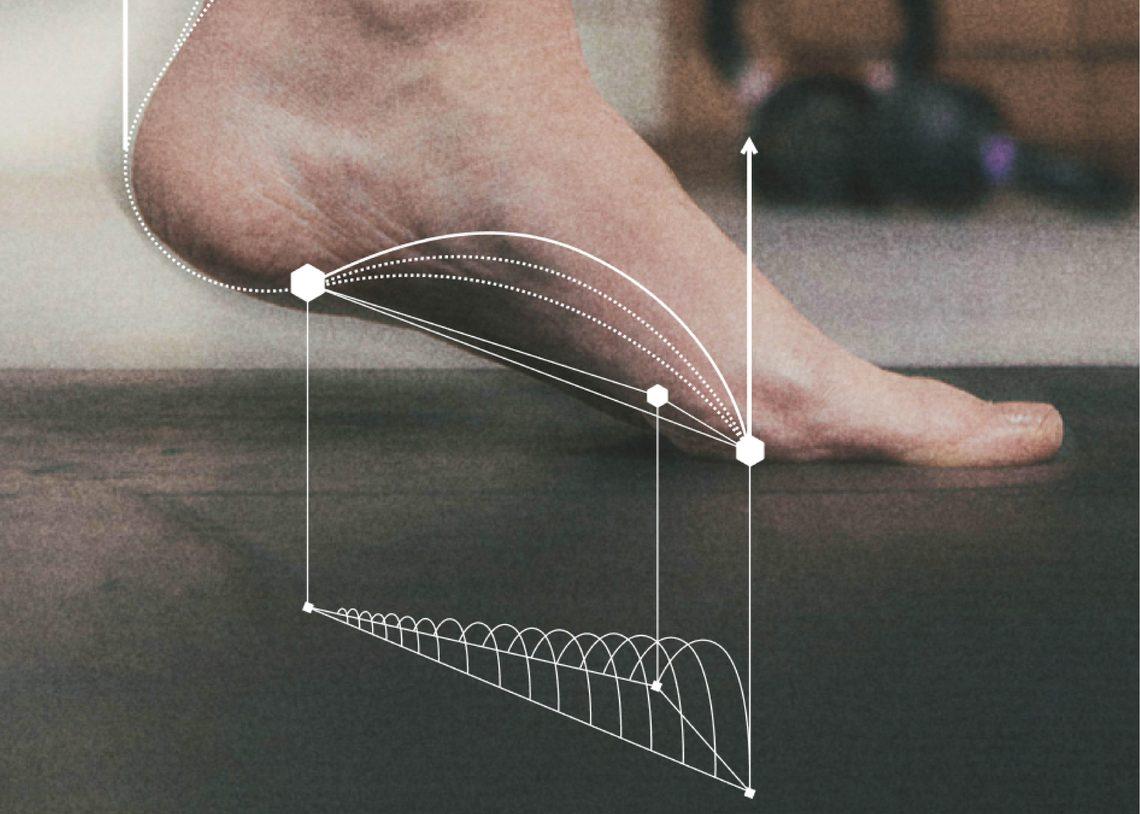
Your feet lose function rapidly. How quickly depends on your age, how constrictive the shoes are and how many hours a day you wear them, but you’ll lose ligament elasticity almost straight away, and there’s some soft-tissue adaptation, too. The more lasting changes, like a narrower forefoot, reduced toe splay and alignment shifts, typically develop over months and years.
What should a well-fitting shoe or boot feel like?
Put the shoe on and, if it has laces, tie them up. Stand with your weight over your feet, pull your heel to the back of the shoe and keep your foot relaxed. Then check, or get someone to check, that you’ve got a small finger’s width to a thumb’s width at the front.
When should we try shoes on, and in what socks?
Towards the end of the day. Even on a cold day, feet expand with heat, a tiny bit in length but mainly in width. Try shoes on in the socks you’ll actually wear, and I recommend merino wool. If you can only shop in the morning, allow for your feet swelling later.
How much does grip matter?
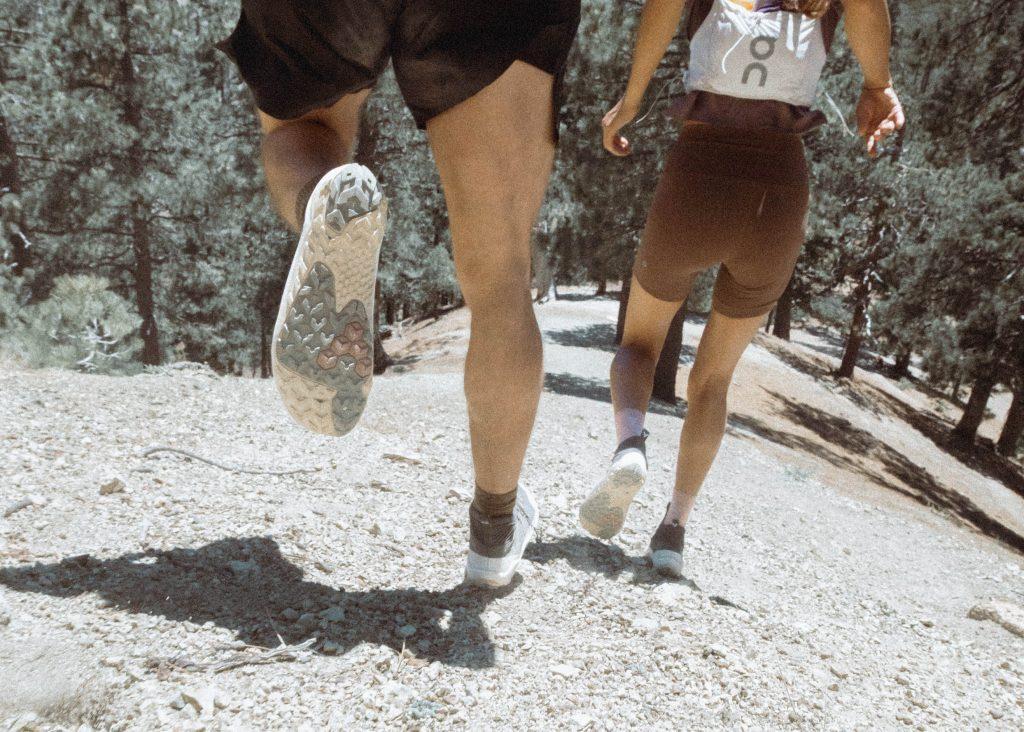
It’s incredibly important, whether you’re walking or running. It’s where most injuries happen. Slipping leads to something called inappropriate muscle action, and that goes for an elite athlete, a walker or a swimmer on the walk to the water. I’d look for the outdoor Vivobarefoot ESC Michelin® outsole; it’s a high-performance, zero-drop barefoot rubber sole built in collaboration with Michelin for extreme off-trail terrain and wild environments. It’s good for most surfaces.
Are wellies a good option for short walks?
It depends on the welly and the surface. I’ve seen some with incredible grip, so I’d leave that to the swimmer’s decision-making skills.
How should we dry and warm our feet?
When I was running cross-country in the 80s and 90s it was cold, wet and muddy, and the key was always speed. Dry your feet as best you can, as quickly as you can. Put on a good-quality merino wool sock, then dry footwear, and get out of there.
Does cold affect balance, and does it raise the risk of slips?
Of course it does. Again, it’s all about speed, because it only gets worse if you hang around. Whether it’s fatigue or cold, numb feet, my advice is small strides in slippery environments. You’re less likely to slip, particularly in a good-quality shoe or boot.
Any advice for chilblains, poor circulation or Raynaud’s?
Get some proper medical advice, but if you have these conditions and you’re in a cold environment, speed is of the essence. Get on as many layers as possible, dry your feet and put on a nice pair of socks and shoes. Regular movement, whether that’s walking, running or swimming, is good for circulation.
How do we care for soaked, muddy or salty footwear?
Consistency is key, even on days when your shoes haven’t got wet or muddy, because they’ll have taken up sweat. Every time you come in, take the shoes off, take the insoles out and put both near, but not on, a heat source. You don’t want to dry them too quickly. Reproof them every two to four weeks, depending on the time of year, and only when they’re fully dry, so you’re not sealing in moisture.
Why are they a poor choice for the walk to a swim spot?
The main thing is grip. They’ve got none, which on its own is reason enough. With flip-flops, you have to claw to keep them on. Crocs tend to be too big, and there’s a massive amount of padding between the sole of your foot and the floor, which creates a disconnect and can lead to imbalance. As for slides, the name is the giveaway: they slide on easily and slide off easily. With all three, activating your toes to keep them on is another good reason not to wear them. When you’re moving, you’re supposed to be relaxed, and in that type of footwear you just aren’t.
Is there ever a good time to wear them?
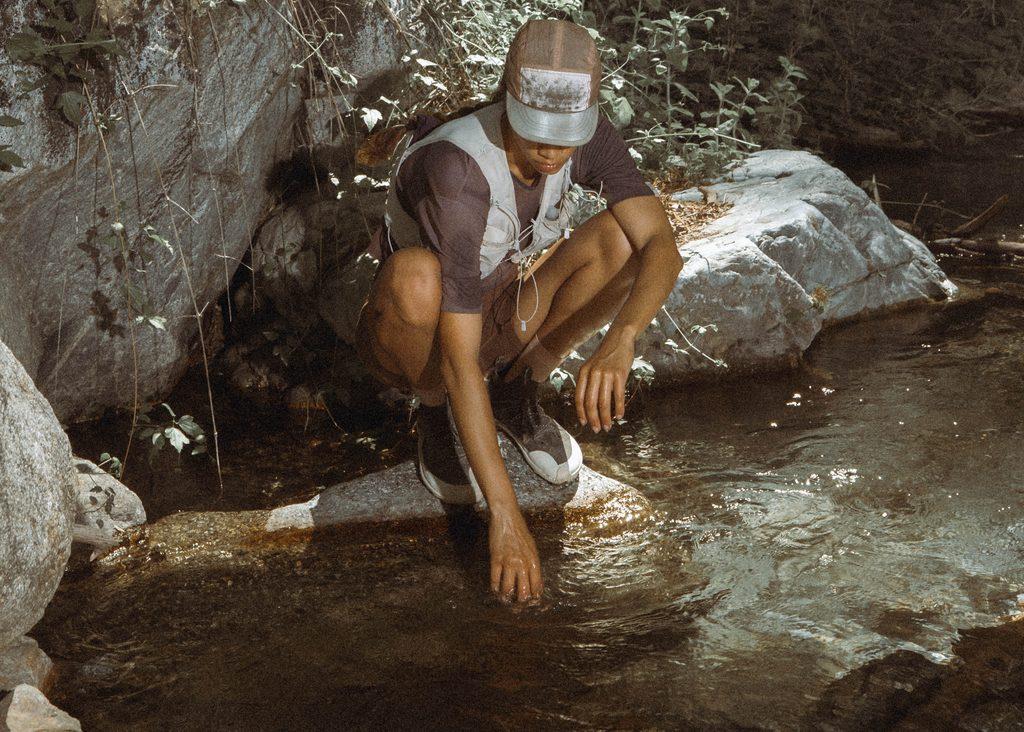
On a flat surface or a pool deck, I’d actually be barefoot. I’m assuming it’s a hot, sunny day, so you don’t need footwear. Your foot is supportive enough.
What’s the biggest footwear myth?
Cushioning doesn’t cushion you.
What are the benefits of barefoot shoes?
They encourage more natural foot movement and toe splay, strengthen your foot and lower-leg muscles, improve balance and proprioception, and give you better sensory feedback from the ground. If you’re running, they’re more likely to promote a midfoot or forefoot gait and potentially better posture. The toe box is non-negotiable: it must be asymmetrical and wide so the big toe can do its job.
Do they feel different at first?
Yes, and that’s a good sign, because it means they’re doing something different from the other shoes on offer. Whatever your age, buy the pair you’ll spend the most time in. Walking puts roughly your body weight through your feet. You might ache, but you won’t break. It’s an awakening, with some mild discomfort you’ll recognise as good, a bit like going back to the gym. You’re waking your feet up.
Could they help our swimming, or cramp?
I haven’t researched this; it’s just my instinct as a coach. Once you become competent at something, you become relaxed. As your feet and ankles get closer to what they’d have been had you never worn shoes, especially if you do the supplementary exercises we recommend, like toe yoga and the deep squat, you’ll become more relaxed walking and running. That’s got to translate to swimming.
Which Vivobarefoot styles would you recommend?
Our whole outdoor range is worth a look. There are different types of grip depending on the season, and there’s something for everyone.
Mark works for Vivobarefoot and coaches running technique, specialising in helping people transition to barefoot shoes. You can get support from Mark at Vivobarefoot, Neal Street, London.
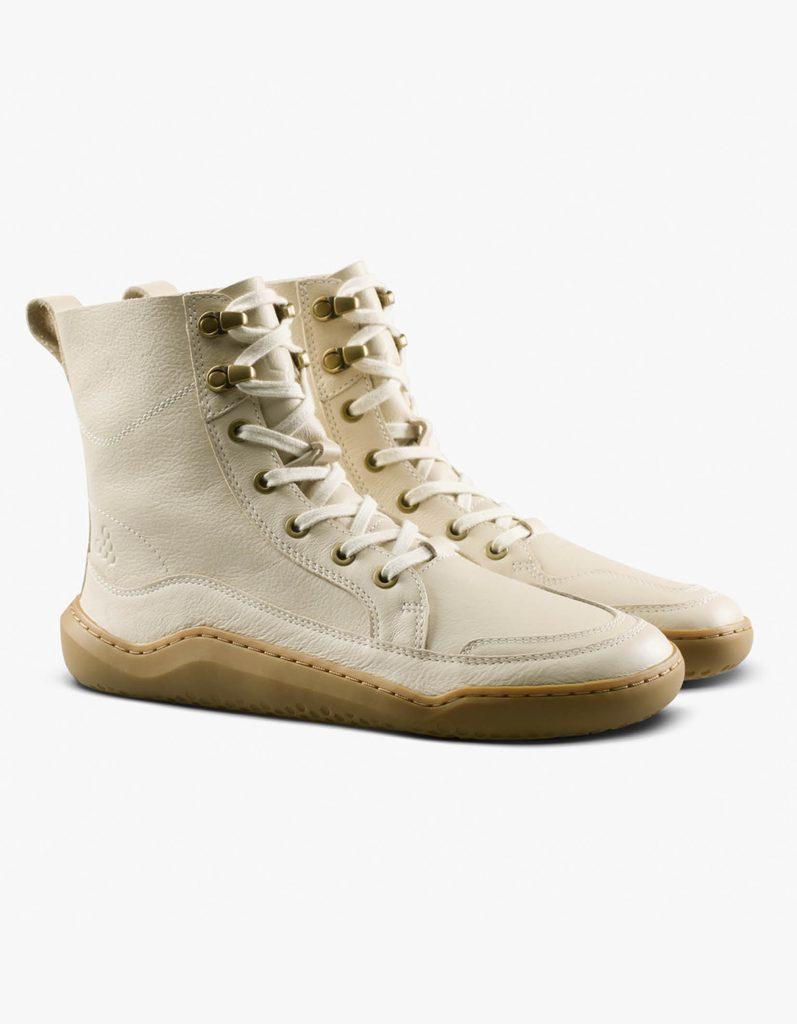
VIVOBAREFOOT Gobi Boot II
£160
More of a street boot with decent sole and barefoot style – great for urban swimmers! The leather, a wild hide, is soft and yet supportive. They have a style that can be worn with anything while still offering comfort and that barefoot feeling. With a simple design and all over leather, they are easy to care for – just keep up weather proofing with stand boot polish.
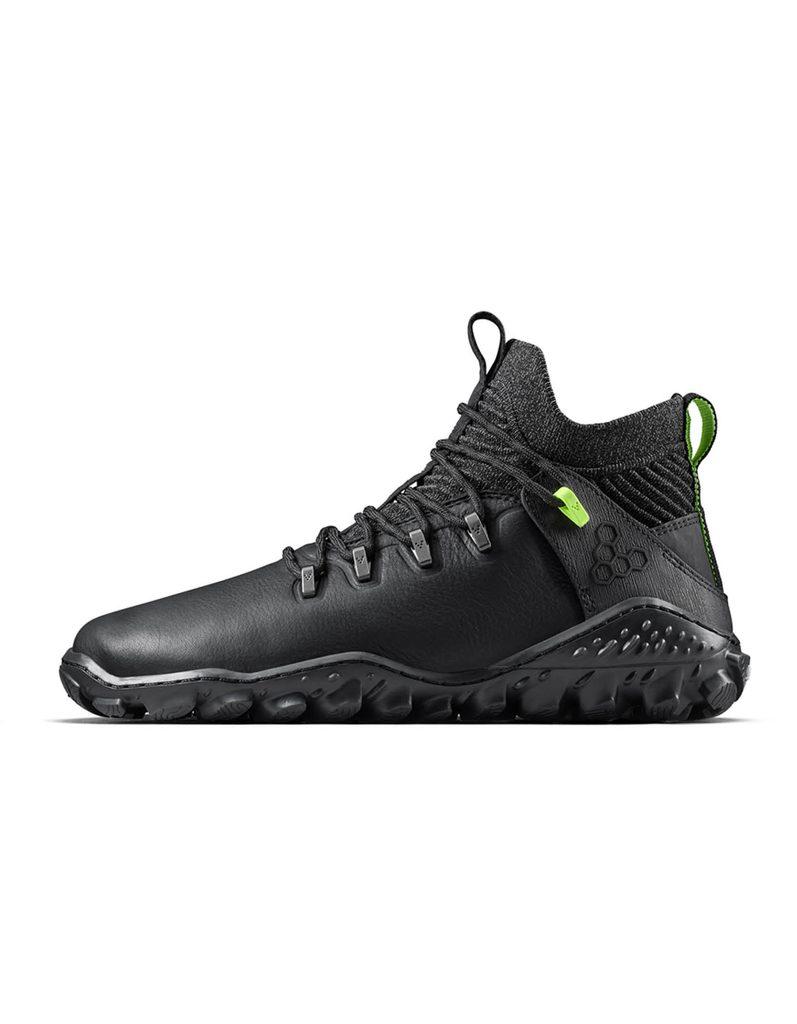
VIVOBAREFOOT Magna Forest ESC
£180
Designed for trekking and fast hiking, these are brilliant boots. They don’t feel like a rigid pair of walking boots at all; slipping them on is more like putting on a thick and comfy pair of socks. I love the collar made from a little wool, which hugs the ankle, offering warmth and flexibility, while the Michelin outsole has incredible grip. The wild hide leather is tough, flexible and waterproof and gives the feet the space needed to move on all sorts of terrain. I wore these on a trip to Scotland across mud, rocks, sand and seaweed and felt confident and supported throughout. They’re easy to get on and off with cold fingers so they’re also great for before and after swimming.
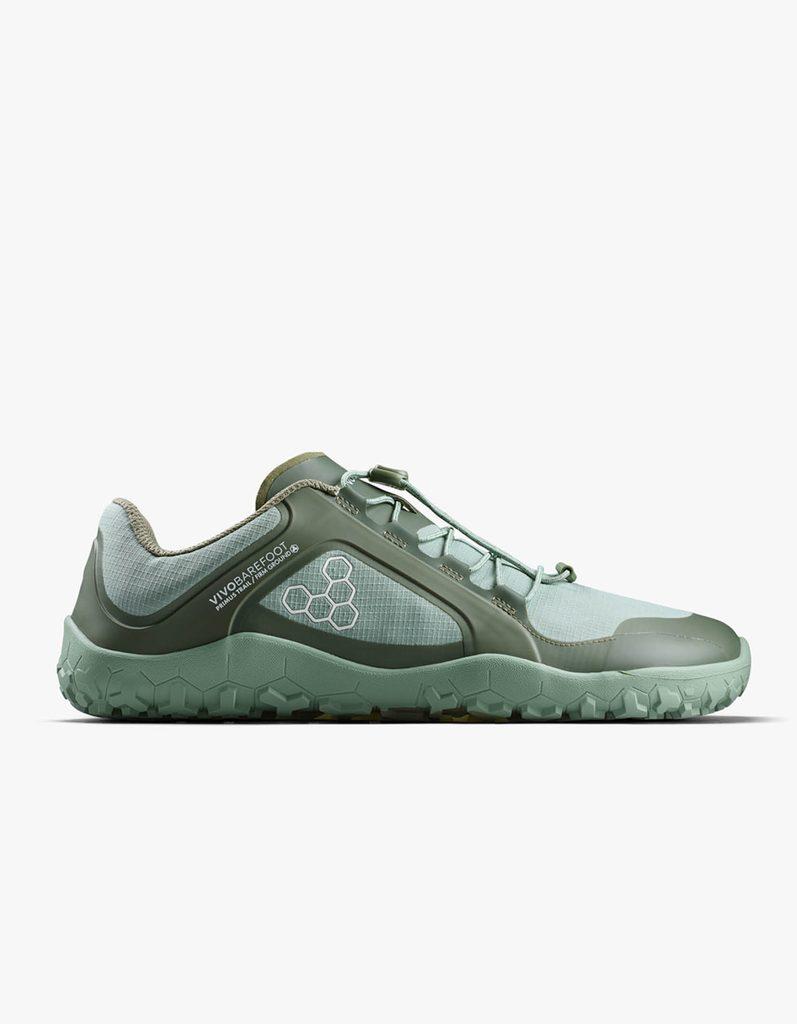
VIVOBAREFOOT Primus Trail Flow
£130
I wear these lightweight, versatile barefoot shoes almost every day. They are incredible for the gym, providing a solid, flat base for heavy lifts. Lately, I’ve been looking into how they affect ankle flexibility, and I’m convinced they offer massive benefits for swimmers. I am prone to foot cramps during pool sessions – especially during kick sets or when wearing fins. Using the Primus Trail Flow for my land-based training forces my feet and ankles to work naturally. By building up tendon resilience and ankle mobility on land, I’m noticing a difference in the pool. It’s a hard benefit to measure, but I like thinking that my everyday footwear is actively making me a stronger swimmer.
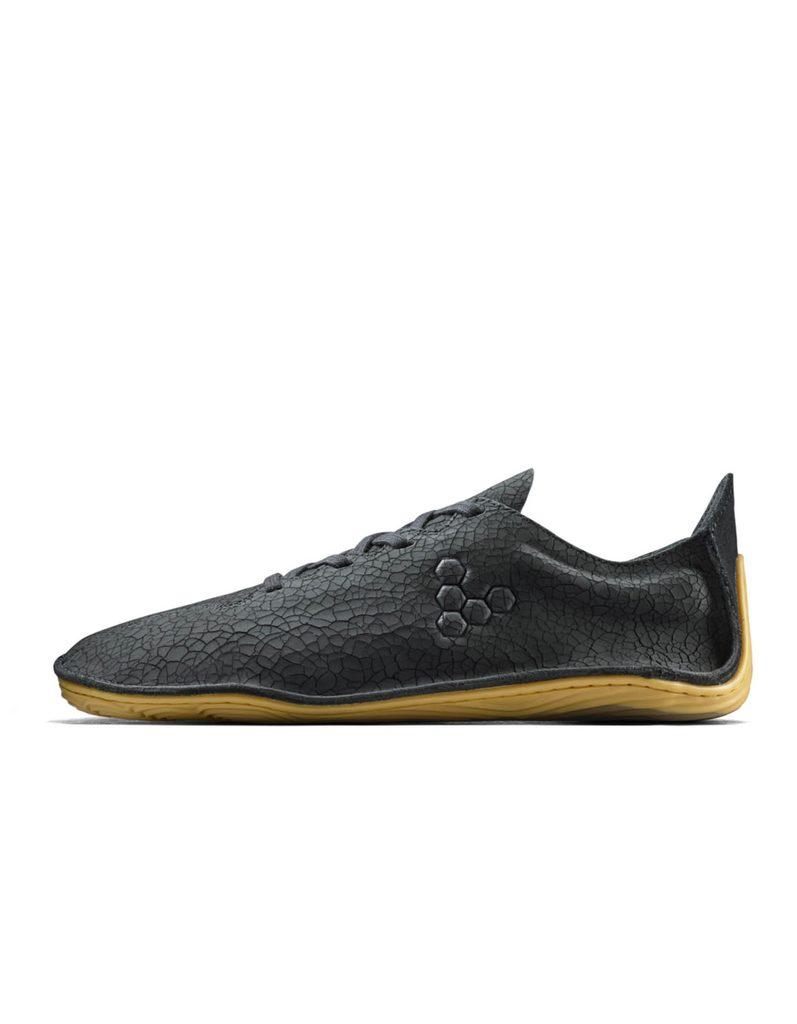
VIVOBAREFOOT Sensus II L
£130
As swimmers, we can spend hours in the pool with free, unconstrained feet. Slipping into a tight trainer after a session feels restrictive. These barefoot shoes feature a wide, foot-shaped toe box that lets your toes splay naturally. The wild hide leather upper and soft footbed are built for sockless wear; on warmer days or when you’re jumping straight into the car, you can pull them straight on after you dry off. The flexible 3mm sole lets your foot and ankle muscles work hard during commutes, building a stronger foundation for your next pool session.
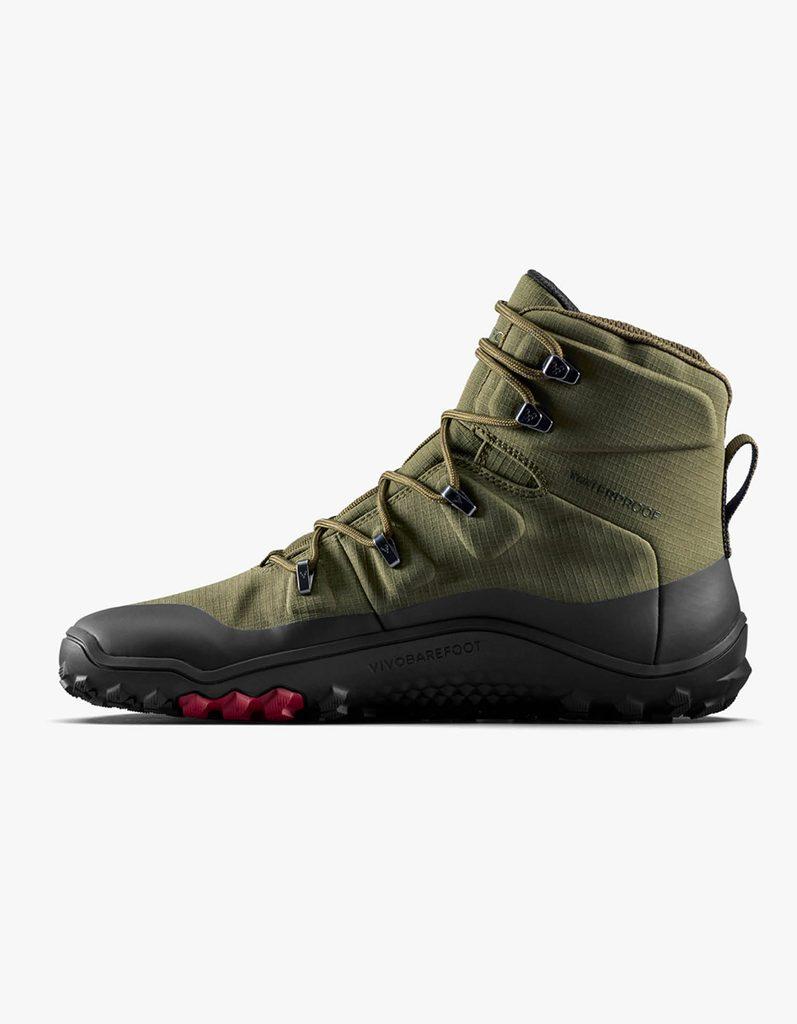
VIVOBAREFOOT Tracker Textile AT II
£180
I’ve worn these lightweight and flexible boots on a few hikes now. My feet are quite wide and have bunions, and I was surprised by how narrow these shoes are, considering the fact they’re barefoot shoes. The first couple of walks were very sore and it’s taken a few wears for them to break in and start feeling comfortable. They still pinch sometimes if I wear them for too long, so I do think they’re suited to narrower feet. However, they feel very sturdy and they’re definitely waterproof! Just make wider versions, please, Vivo!
All products are reviewed independently by our editorial team. If you buy a product through a link on this page we may receive a commission.

Jo Tinsley
Jo is the Gear Editor for Outdoor Swimmer and also writes news and features for the website. A keen open water swimmer and long-distance walker, she loves seeking out lakes and lidos close to her home in the Mendip Hills, Somerset. She is the author of The Slow Traveller, editor and founder of independent magazine, Ernest, and has previously tested outdoor clothing and kit for BBC Countryfile Magazine, BBC Focus and Ernest Journal.