Beginner swim training
COACH,  December 2024,  EXTRA,  FEATURES,  Premium,  Top Tips,  Training and Technique,  Training Sessions

Basic swim training: a quick guide for beginners

Register to get free articles

No spam Unsubscribe anytime

Want unlimited access? View Plans

Already have an account? Sign in

Pool-based training sessions can be confusing and intimidating if you’ve never swum in a club environment. Here’s a short introduction to pool training and how a session is structured. 

Why should I do training sessions rather than just swim? 

A training session is a way of using your time in the water efficiently to help you move towards your swimming goals. Swimming is a complex activity that requires a combination of strength, fitness and technique to do well. A structured training session should deliver more benefits more quickly than simply swimming steadily for the same amount of time. Ideally, each training session should be part of an overall training plan that’s designed to help you achieve your swimming goals. 

What does a training session consist of? 

Most sessions start with a “warm up” of between 5 to 20 minutes of low-intensity swimming. This may include drills or exercises to help improve your swimming technique. 

The warm up is followed by one or more “sets”. These are blocks of swimming designed for a particular purpose such as sprinting, skills or endurance. You may see them labelled as Set 1, Set 2 etc. or perhaps “prep set”, “main set” and “second set”. The combinations are limitless. These sets may take up 50 to 80% of the session time. 

Typically, you will finish a training session with a “cool down”. This is a period of slower swimming that helps bring your heart rate down and start your recovery. 

That sounds too complicated. Is it really so much better than just swimming? 

Just swimming can be useful for building endurance and mental resilience. It can also be relaxing and a good way to switch off from life’s pressures. However, it doesn’t give much scope for improving your technique or swimming at different intensities, both of which should increase your speed and fitness. A well-structured training session can be fun and give you a great workout. If you want to swim further or faster, you will achieve your goals quicker if you do the right training sessions. 

OK, you’ve convinced me. How do I get started? 

You can find plenty of suggestions for both swimming sessions and training plans with a series of sessions online, including on our website. However, getting started can be tricky if you are not familiar with the way swimming sets are described and the language used. It may also be hard to find sessions that exactly fit your requirements. That said, a good approach is to just dive in and try some training sessions. You will learn by doing. It doesn’t matter if you don’t get it exactly right to start with. You will also pick up ideas that you can use to create your own training sessions. 

Can you give me an example? 

It’s useful when starting out to have an idea of your comfortable long-distance swimming speed. As you get more experienced you will practise swimming at different speeds and learn how those feel, but comfortable is a good place to start and build from. This session will give you an idea of what that is. 

Pre-swim 

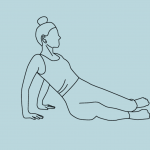
It’s a good idea, especially if you’ve been at a desk all day, to do some gentle mobility exercises before you swim. Try doing some arm swings, trunk rotations and leg swings and stretch yourself as tall as you can. Try to relax and calm your mind. 

Warm up 

Swim steadily for 5 to 10 minutes. Enjoy the sensation of being in the water. Swim slowly enough that you don’t get out of breath. Relax. 

Set 1 (or prep set) 

Swim 4 x 50m with 20 seconds rest after each 50m. Try to go faster on each swim so that your first 50m is the slowest and the fourth is your fastest. Note how long each 50m takes you. Can you make the difference between your fastest and slowest more than 15 seconds? 

Set 2 (or main set) 

Swim the following at a strong but comfortable pace on your main stroke. Try to maintain your speed as the distance increases. For example, if it takes you 2 minutes to swim 100m, it should take 4 minutes to swim 200m and 8 minutes to swim 400m. 

  • 100m + 10s rest 
  • 200m + 20s rest 
  • 300m + 30s rest 
  • 400m + 40s rest 

Keep a note of all your times and work out your pace per 100m for each swim. In training, swimmers often use pace per 100m as a benchmark and it’s a good measure to use to track improvement. If you find your pace decreases as you increase the distance, it suggests that you started too fast. Repeat the exercise another day and see if you can be more consistent. If you want to extend this set, you can swim a further 300m, 200m and 100m with the same rest intervals. 

Cool down 

Do 5 to 10 minutes of easy swimming. Include some backstroke and breaststroke. Swim as slowly as you need to bring your breathing and heart rate down. 

Stretch 

Try to spend 10 to 15 minutes stretching after your swim, either immediately at the pool or later when you get home. 

Is that it? 

In essence, yes. As you gain experience you will start including swims at different speeds and on different strokes. You will also learn swimming drills and exercises that you can do to help improve your swimming technique. There’s a lot to learn but don’t be put off. You don’t need to know everything before you start. You will learn as you go along. Good luck and enjoy the journey. 

Stay up to date with The Dip, our free weekly outdoor swimming newsletter.

I started Outdoor Swimmer in 2011 (initially as H2Open Magazine) as an outlet for my passion for swimming outdoors. I've been a swimmer and outdoor swimmer for as long as I remember. Swimming has made a huge difference to my life and I want to share its joys and benefits with as many people as possible. I am also the author of Swim Wild & Free: A Practical Guide to Swimming Outdoors 365 a Year, I provide one-to-one support to swimmers through Swim Mentoring and I'm the creator of the Renaissance Swimmer project.