

How improving posture can improve swimming
Effective breathing is central to swimming performance, so improving posture is one way to positively impact your swim technique, says personal trainer Liz Lowe
A simple way to feel how posture can impact your swimming, and daily life, is to try breathing with an overexaggerated slouched posture. Sitting or standing, let your shoulders and head slump forward. Now try taking a long smooth inhale and exhale.
Next, take shoulders back and away from ears, coming to an upright position with neutral spine. Again, take a long smooth inhale, and notice the difference. For most people, the first position leads to a shallower, restricted breath that can feel a bit stuck in the chest area. In contrast, once the posture has been reset, the breathing muscles can function better.
Effective breathing is central to swimming performance, so improving posture is one way to positively impact your swim technique.
Poor posture can also limit shoulder mobility, which can reduce stroke efficiency. Again, you can test this by performing the upper-body stroke movements first with upright, neutral spine and then with slumped forward-head posture. The likelihood is that the second position limits shoulder range of motion.
In general, strengthening the back and core can help build better posture. Some swimmers have more developed chest muscles anyway, in which case strengthening the back of the body also makes sense for muscular balance. Working on thoracic spine (upper back) and neck mobility is also beneficial, as many of us experience tightness here, and again this can negatively impact swim movements.
Exercises for better posture:
Superman (to build strength)
Lie face down, legs together or slightly apart, arms extended overhead. It’s fine to bend the elbows and work up to fully extending the arms, or even to keep arms by sides, palms down. To minimise neck tension, keep neck and spine aligned and gaze down. Lightly brace the core and squeeze the glutes.
Option one: raise torso and arms only. Option two: add the legs, providing your lower back feels alright when doing so. Hold for 2–3 seconds and lower back down, repeating up to 10 times for 1–2 sets.
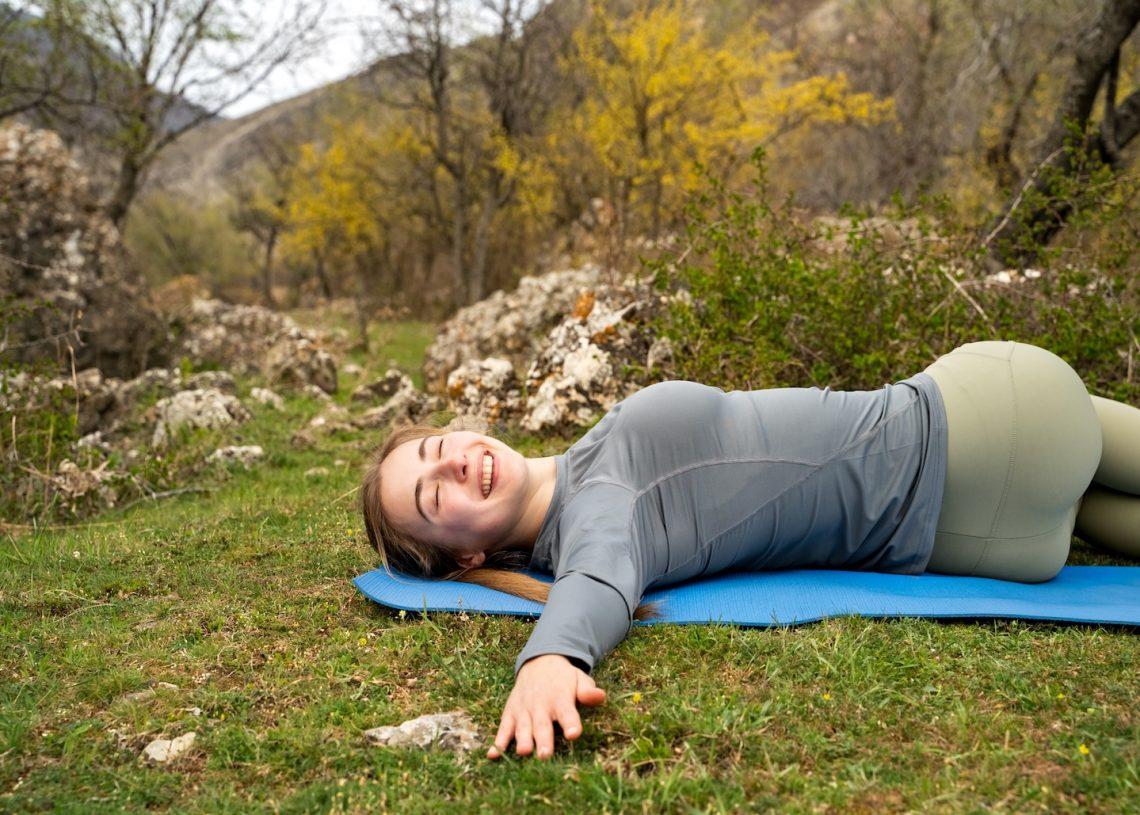
Side-lying archers (for thoracic mobility)
Lie on your side with bent knees and hips stacked (rest the top knee on a block or similar, to keep hips in place). Extend arms at shoulder height, stacking one on top of the other. Peel the top hand away and take it across the body, letting your head and gaze follow it to the other side. Pause in the end stretch, then reverse the movement. Try 5–10 each side for 1–2 sets.
If you are currently experiencing any pain or are working with a current or previous injury, please consult a healthcare professional before trying any new exercises. Similarly, if anything causes pain, or just doesn’t feel right, please stop the exercise and seek professional advice.

Outdoor Swimmer
Outdoor Swimmer is the magazine for outdoor swimmers by outdoor swimmers. We write about fabulous wild swimming locations, amazing swim challenges, swim training advice and swimming gear reviews.