


Six moves to ease screen-time stiffness
A short selection of exercises targeting common areas of tightness associated with prolonged screen time. This sequence is designed to help mobilise the upper back, neck, shoulders and hip flexors. Words by Liz Lowe
Try this quick routine as a movement break after time at your desk or on your phone and see how you feel!
Elbows-on-chair upper back stretch – 30–60 seconds
Can help improve upper-back extension mobility.
- Kneel in front of a chair, with elbows resting on the seat.
- Take hips back to heels.
- Let the torso come towards the floor.
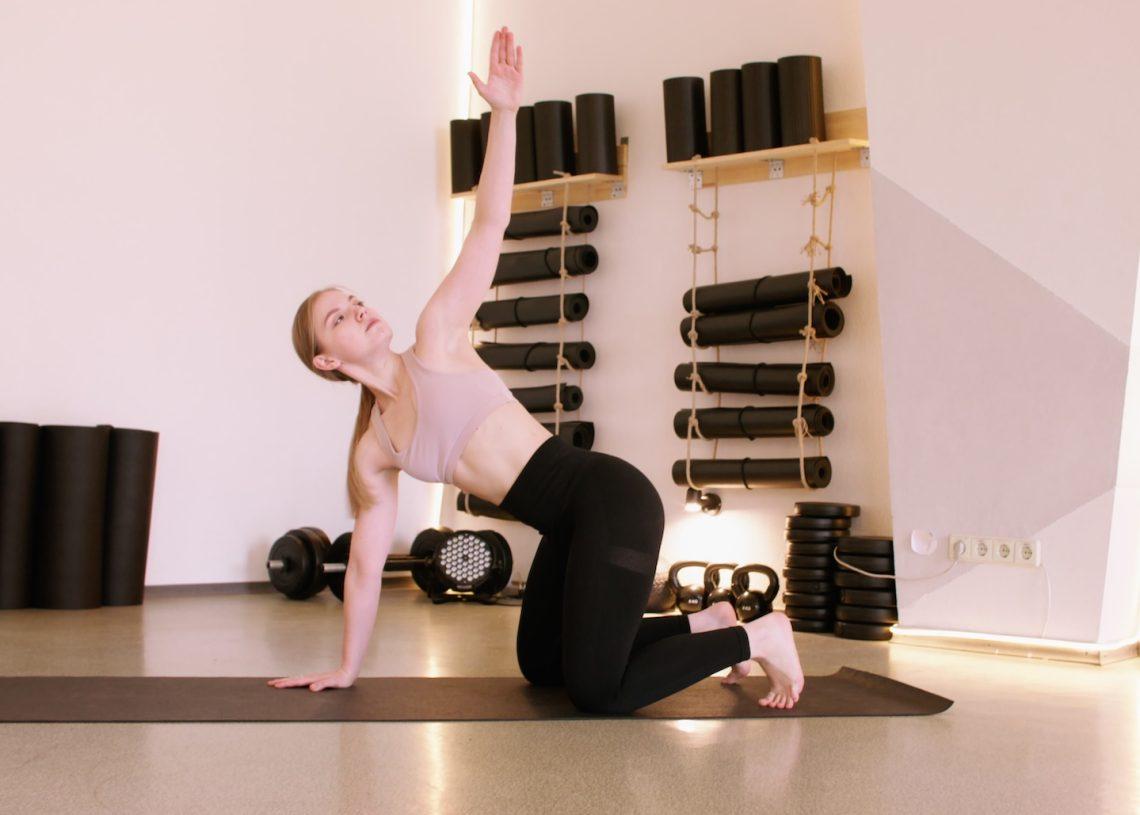
Quadruped thoracic rotation – 5–8 reps per side
Targets upper-back rotation.
- Begin in four-point kneeling position.
- Place the fingers of one hand behind the head and guide that elbow towards the ceiling, rotating through the upper back as far as is comfortable.
- Take the elbow back down and towards the elbow of the planted hand.
- Repeat the move, trying to avoid too much input from the hips.
Chin tucks – 5–10 × 3–5 seconds
Useful for improving awareness of forward-head positioning while strengthening the deep neck muscles.
- Pull your chin straight back (not down), as if giving yourself a double chin.
- Hold briefly and repeat.
Doorway pec stretch (single arm) – approximately 30 seconds per side
Stretches the chest muscles, which may feel tight with prolonged keyboard and phone use.
- Place one forearm on a doorframe.
- Holding the forearm in place, adjust foot position to angle the torso away from the arm until you feel a stretch across the chest.
Wall slides – 8–10 reps
Focuses on mobility of the shoulders and shoulder blades.
- Stand with your back against a wall, avoiding arching the back.
- Keep arms and wrists against the wall if possible.
- Slide arms overhead and back down, slowly and with control.
Couch stretch – 30–60 seconds per side
Stretches the hip flexors, which can feel stiff after prolonged sitting.
- Place one knee on a cushion or pad in front of a wall or couch, taking the other leg in front to come into a halfkneeling position.
- Lean back slightly until you feel a stretch in the front of the kneeling thigh.
- A similar stretch can also be done without any equipment by coming into a half
kneeling position, taking hold of the back foot and gently drawing the heel towards the buttock.
Disclaimer
- If you are currently experiencing pain or are managing a current or previous injury, please consult a healthcare professional before trying new exercises.
- Only perform movements that feel appropriate for your body and current level of function.
- If any exercise causes pain, significant discomfort, or does not feel right, stop the exercise and seek professional advice.
Stay up to date with The Dip, our free weekly outdoor swimming newsletter.

Outdoor Swimmer
Outdoor Swimmer is the magazine for outdoor swimmers by outdoor swimmers. We write about fabulous wild swimming locations, amazing swim challenges, swim training advice and swimming gear reviews.