
Marine meditation: is freediving a natural extension of outdoor swimming?
Is freediving the preserve of the super-human or a natural extension of outdoor swimming and a gateway to a new world of adventure? Anna Hattersley spoke to freediving coach Emma Farrell and four of her former students to find out.
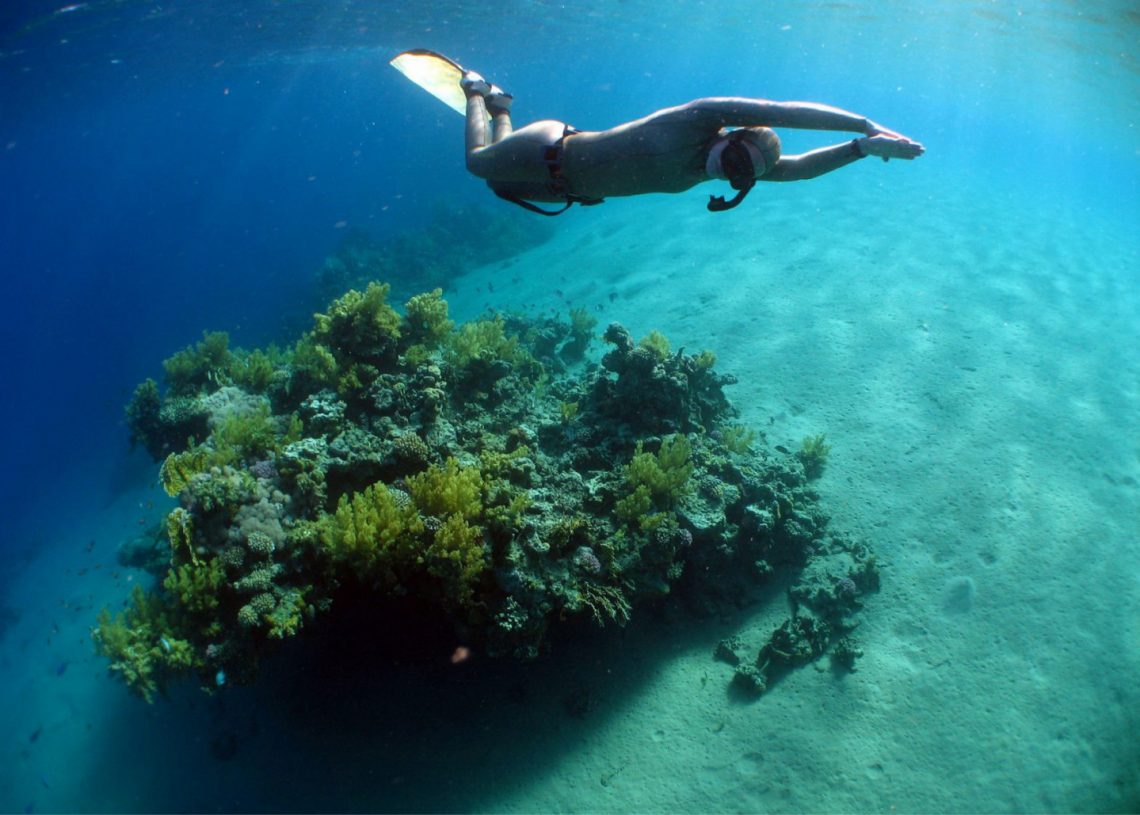
Freediving, also known as breath-hold diving, is swimming, exploring and playing beneath the water without breathing apparatus. This allows you to move through the water silently, focussed and connected with the underwater world. Freediver Clare particularly loves following fish as she dives and describes the joy and beauty of gaining “access to different landscapes and worlds – there is something wonderfully alien about it.” Free from scuba gear, you are “unencumbered”, she says. Freediving is about “being self-reliant, enabling you rather than a piece of equipment, to expand your horizons and access greater fluidity in the water.”
According to coach Emma Farrell: “It is more of an active meditation than it is an extreme sport”. She has been teaching freediving for 20 years and is the author of One Breath: A Reflection of Freediving. People travel from all over the UK and abroad to learn to freedive at her training centre, Go Freediving, at Vobster Quay in Somerset.
She has coached children and adults, the oldest being a man in his eighties who thought it would be a laugh and took to it like a fish. Emma aims to make the sport as inclusive as possible. “It doesn’t matter what you think of yourself physically, emotionally, capably, anyone can learn to freedive,” she says.
An inclusive sport
Darren Edwards suffered a spinal cord injury in 2016 in a climbing accident, which left him paralysed from the chest down. He says he is a testament to the sport’s inclusivity. “The most challenging aspect of freediving wasn’t anything to do with my disability, which underwater felt less hindering than on land, but to do with my trust in how long I could hold my breath.”
Darren says: “On countless occasions on the first morning of that first day, I would convince myself that I needed to turn back and head for the surface, only to find that I had more oxygen than I realised. Dive by dive, I learnt to trust my body, and I ventured further.”
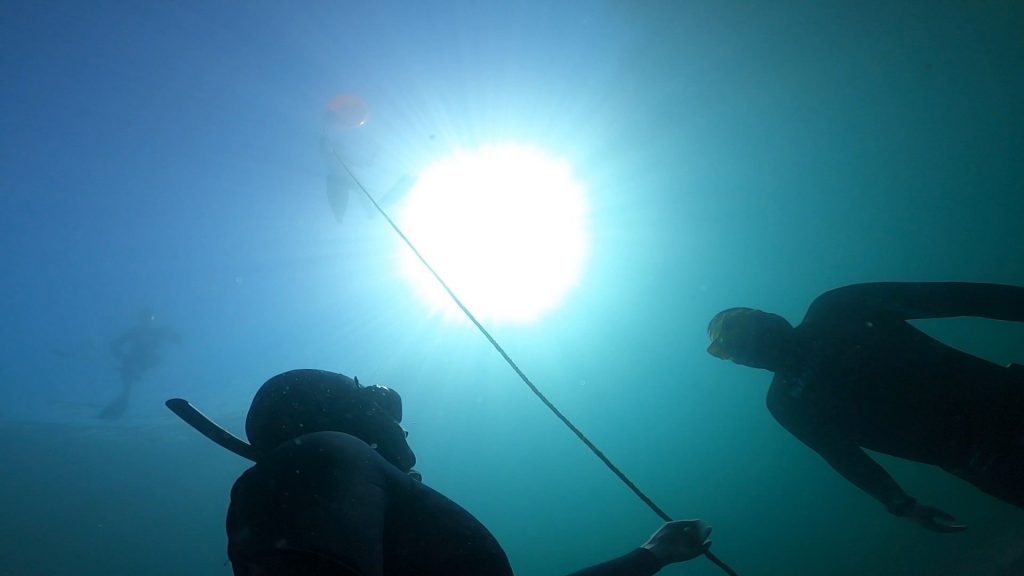

Freediving has answered Darren’s call for adventure and the outdoors. “I came to realise that, even though I had lost climbing and mountaineering as part of my life, I had discovered a sport in which I could still test myself physically and mentally – all at the same time!”
I asked what Darren would say to someone considering freediving. “It is going to help you to build self-belief, build resilience, conquer self-doubt, and most importantly,” he said, “prove that you are capable of far more than you’d ever think possible.”
Freediving can transform lives
Emma has had numerous students transform their lives after learning to freedive, quitting jobs or moving countries. She wants “more people to learn how to breathe properly. It is a gateway to themselves and a gateway to changing their lives. When you have awareness and control over your breathing, it opens so many doors within you that then open doors outside of you.”
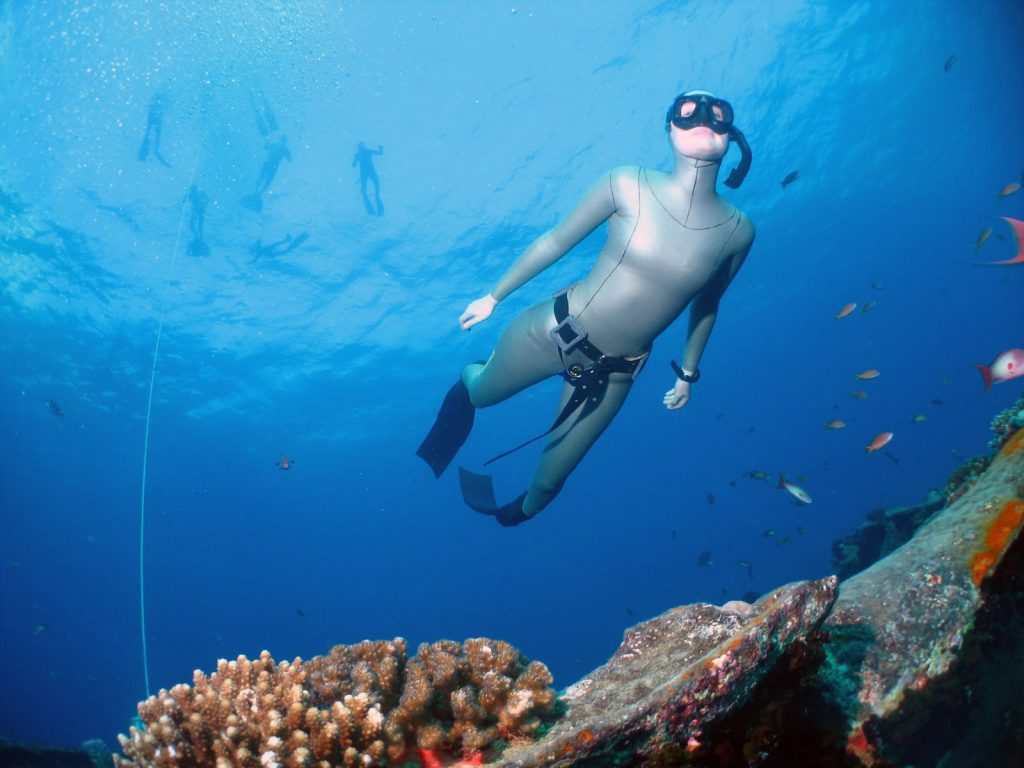
In spite of the challenge, or perhaps because of it, another common theme that arises when talking to freedivers is an all-encompassing peace and tranquillity. “What I love about freediving,” Emma says, “is the peace and the relaxation. My head is very, very busy. I find it very difficult to meditate, even though I know I should. I find it difficult to relax because my brain is always going, but when you are freediving, you are forced to concentrate so intensely on what your body is doing and your environment that you may only be underwater for a minute but that minute can feel like it goes on forever.”
GP Lucy Middleton says that the breathing techniques she has learnt for freediving have given her “accessible peace… If I am feeling spun out, I can immediately access that feeling of being underwater, of being peaceful.” She now shares this new understanding with her patients.
“I realise how much people over-breathe and how much that drives anxiety, some pain disorders and lung problems,” Lucy says. “I take what I have learnt and use it in my clinical consulting. It has given a whole other dimension beyond the swimming. If I could prescribe it, I would!”
Overcoming fears of deep water
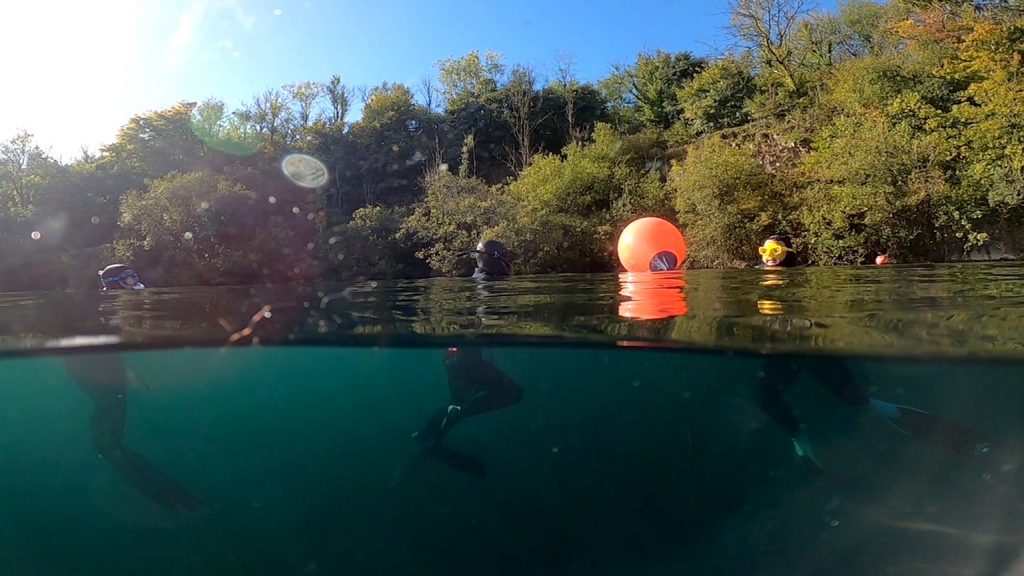
Lucy has long held a fear of what lies beneath deep waters and freediving helps her overcome this. “Kelp used to totally freak me out,” she says, “but when you get down on a level with it, it’s suddenly beautiful and sculptural. The light is amazing.” She relishes the freedom that freediving offers her to explore underwater gullies and caves around the coast of south Devon where she lives.
Another of Emma’s former students, Rachel Nashed, loves the “total immersion both mentally and physically in another world. You cannot think of anything else. I am happiest under water so for me there is a natural progression from all my swimming.” She appreciates the strong bonds of friendship made through freediving and the interesting, non-judgemental community of freedivers that she has met.
That is not to say that freediving is all straightforward. Clare described the frustrations of being unable to equalise the pressure in her ears as she dived, which sometimes left her hanging on the rope while friends swam deeper. Emma says it took her a year to be able to equalise her ears. Twenty years ago, people said that she would never be able to learn, but she was determined to freedive so persisted and proved them wrong.
While there is less gear than scuba diving, there is more kit than for your average outdoor dip, which Lucy admits brings more faff and cost. However, Emma still has fins from when she began 20 years ago so says that if you take care of your kit, it can last a long time.


How to learn to freedive
For anyone interested in learning, Emma’s advice is to find a teacher who has qualified with a recognised freediving body, such as RAID (details below), and look for testimonials from students. The cost may be an obstacle to some, but safety is paramount. Emma explains that the danger of learning from YouTube clips and a bit of googling is that you do not learn to breathe properly and so risk hyperventilating.
An accredited freediving course will teach you to be a competent buddy who can perform rescues, as well as an all-round freediver who can breathe correctly and dive safely. Diving safely and confidently may not just save your life but will enhance your experience of the underwater world.
It is a world for dreamers and adventurers, an escape from everyday life. Freedivers speak of calm, connectedness and beauty, as well as challenge, transformation and adventure. It is a more inclusive sport than may first appear, a ticket to another dimension. “Most of the people I know who love outdoor swimming, love nature and appreciate all those little moments of awe,” Lucy says. “Freediving is like that but amplified.”
Read more: Go Freediving courses at Vobster Quay; International Association for the Development of Apnea (AIDA); RAID; Scuba Schools International (SSI).
This article is from the April 2023 issue of Outdoor Swimmer. Click here to subscribe to the magazine. Photos: Emma Farrell and Lucy Middleton.

Outdoor Swimmer
Outdoor Swimmer is the magazine for outdoor swimmers by outdoor swimmers. We write about fabulous wild swimming locations, amazing swim challenges, swim training advice and swimming gear reviews.